What Lies Ahead for Broadway in 2026?
The 2025/26 season will include six new musicals.
 Click for Tickets
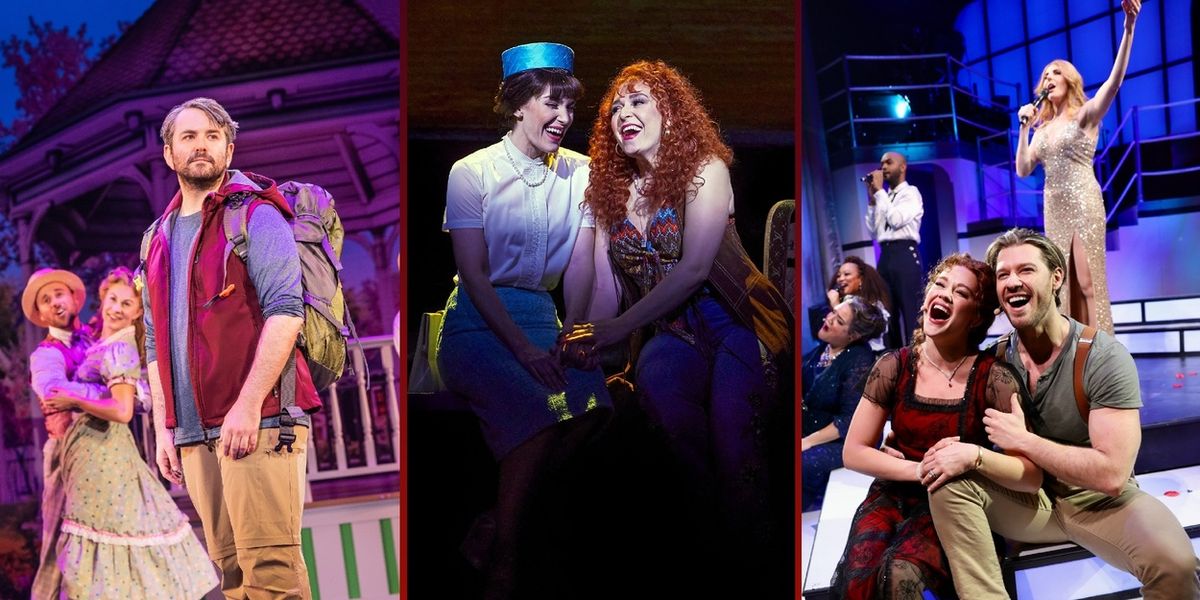
Earlier this week Titanique and Beaches: The Musical announced in quick succession that they will be taking the St. James and Majestic Theatre’s, each for a limited run this spring into summer. That, combined with Schmigadoon, which has announced a spring run on a similar model, means that of the six musicals eligible for the Tony Award for Best New Musical, three of them are limited runs.
Ostensibly, this season is now complete with these announcements, putting the total number of new productions this year at 33, compared to last year's 42. 33 new productions in a season would be tied for the lowest alongside the pandemic affected 2019-2020 season, as well as the 2017-18 season. And the breakdown by type of show is even more worrying, the aforementioned six new musicals, only eight new plays. The only category in the double digits is play revivals, of which there will be 11 this season. Additionally, there are only a handful of open ended runs.
But why all of these limited runs? Shows with celebrities in them make sense, they have busy schedules, and setting aside 16 or 20 weeks to rehearse and perform in a Broadway show is a non-trivial juggling act. But increasingly there has been a trend of limited runs, even absent celebrity casting.
The philosophy is that it will increase demand by creating artificial scarcity, but there is little evidence that this works as a format for a new musical. Even revivals, like last year's The Last Five Years starring Nick Jonas, which closed at a significant loss. Other limited run musicals like Days of Wine and Roses and Illinoise in the past couple of years have similarly struggled. Operation Mincemeat has made that work as a model, but they have not been operating as if they are a limited run, but rather an open-ended run, because at the end of the day it is nigh-on impossible to make back a full Broadway musical capitalization in a 16 or 20-week run.
The pillars of this industry are the long-running musicals anyways, over the past two years, shows that ran for at least one full year have accounted for the vast majority of grosses. It’s those long running shows, which typically are musicals, that keep larger casts, orchestras, and backstage crew members employed for longer stretches of time, they make Broadway a career for hundreds of people. They also build Broadway as a brand. A 20-week limited run does not build a brand that will last in five years the same way a 2-year run will.
It stands to reason that some of this is a real estate crunch. Hits from past seasons have continued to run, chasing recoupment that for some of them may never come on Broadway. And that begs the question, is this type of lighter season here to stay? If shows are continually making enough money to clear expenses and continue to do so for a while, but not making enough money to pay back their investors, what else can shows do but have these extended runs?
Musicals also have higher running and capitalization costs compared to plays. The average new musical at this point costs $20 million to get to Broadway. The only show in the last five years to recoup a $20+ million capitalization is MJ the Musical, and to date no new musical that has opened in the last three years has announced recoupment. But a season that is light on musicals is hardly new, in fact, compared to the 2017-2018 Broadway season, their seven new musicals of the season, though they weren’t limited runs at time of opening, it does all line up well with the theatre availability at the time. Looking at today, theaters that might not always have longer running shows now do, like the Lyceum and the Belasco with Oh, Mary and Maybe Happy Ending, respectively.
What is concerning is theatres that have had musicals in the past, like the August Wilson and the Winter Garden, have pivoted towards limited runs and plays in the past year, and both of them have a play booked for the spring. Plays in the larger houses and musicals in the small and mid-sized theatres, it’s a significant departure from the standard Broadway playbook of the last 70 years.
Broadway isn’t dying, but it is hurting more than it has in quite some time. As budgets continue to climb, and the pressure to cut costs grows, it is the job of the producer to figure out new strategies to make their productions successful. Maybe that solution is more formally using Broadway as a launchpad for a tour, as seems to be the case for Beaches. Or maybe as the Covid affected musical development pipeline recovers more formally, more fully developed shows will come to New York, which hopefully will correlate with greater financial success.