

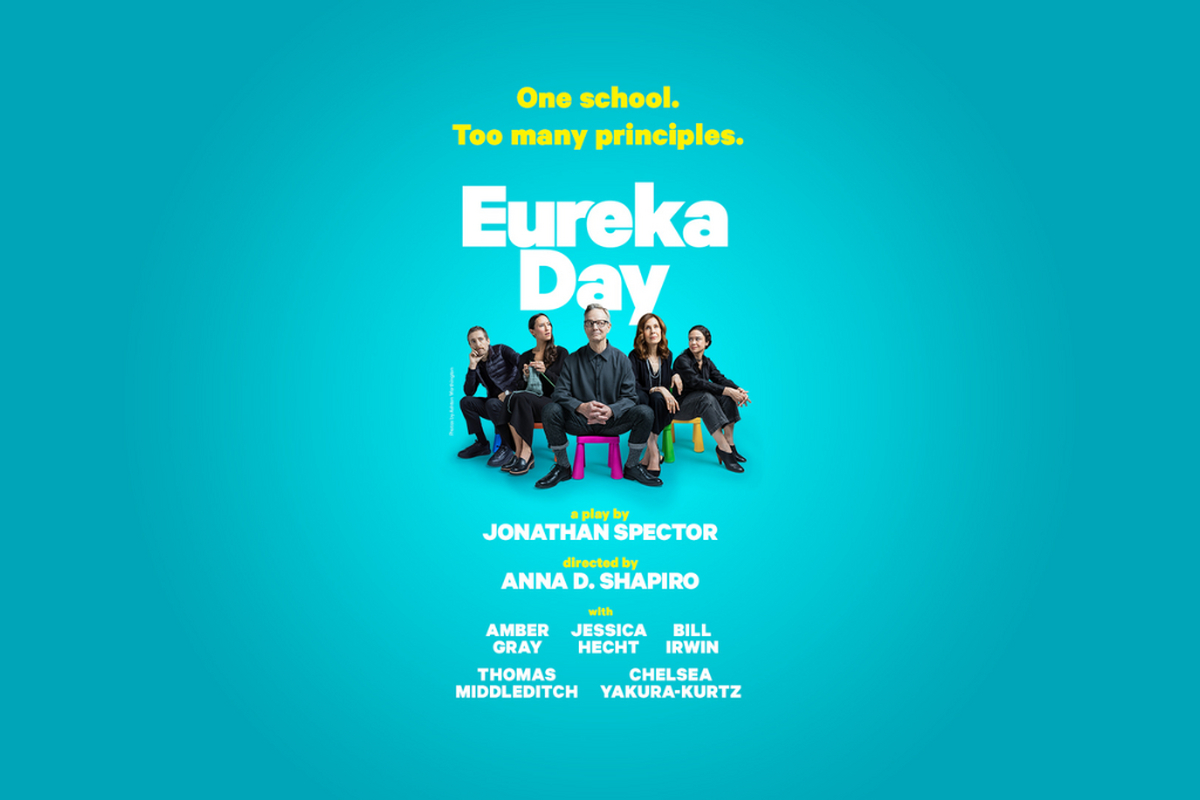




In Eureka Day, the Jabs Are Verbal, Too
8 / 10
Hecht and Gray are excellent here and throughout, as is Shapiro’s whole company. They’re not clowning — though there’s a delightful wink of a moment in which Irwin’s Don waxes misty-eyed over the “actually quite subtle” mime work of a former colleague. Rather, they’re performing that crucial aspect of theater, its function as a space of civic practice, quite literally a place where we rehearse the hardest conversations, where we experiment with how to put together a community. In his script’s epigraph, Spector quotes from Eula Bliss’s On Immunity, where Bliss herself cites a doctor who describes a certain vaccine as “important … from a public health standpoint” but “not as critical from an individual point of view.” “In order for this to make sense,” writes Bliss, “one must believe that individuals are not part of the public.” It’s this cognitive dissonance, so widespread and so clamorous and so tragically American, that theater, by its very nature, is always addressing, and in Eureka Day that essential refutation takes on explicit and eloquent form.