


Review: TROUBLE IN TAHITI and THE SEVEN DEADLY SINS, Opera Holland Park
Two contrasting works provide a devastating critique of 21st century life
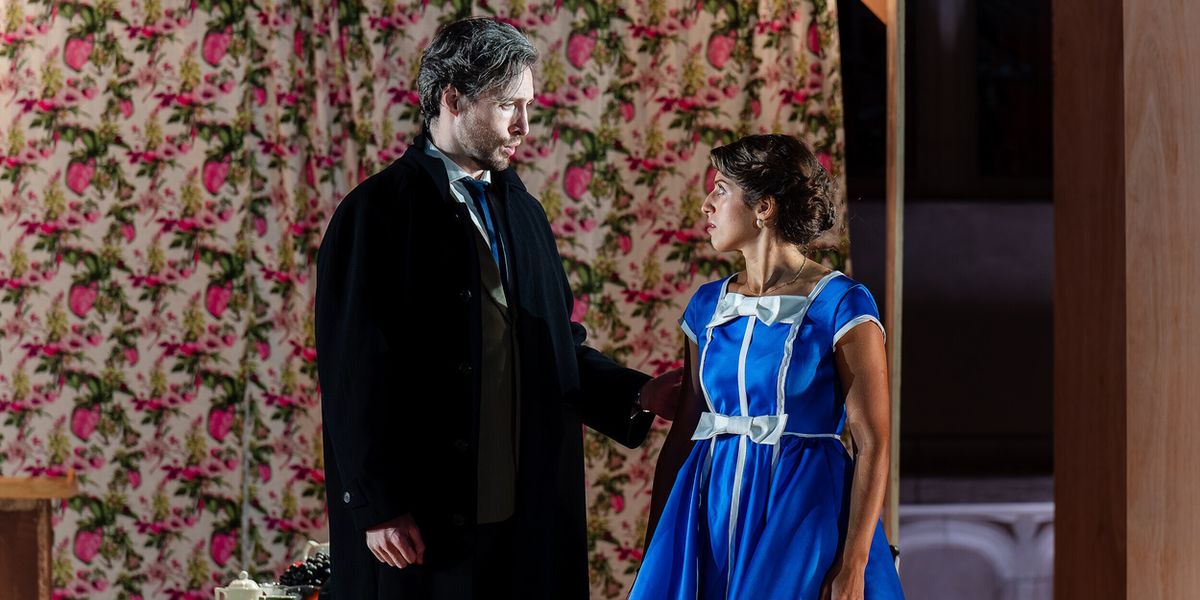
 To a man of a certain age, Leonard Bernstein’s one act opera, Trouble in Tahiti, holds some of the terror one usually only encounters at a Chekhov or an Ibsen. There are your faults, slowly revealed, convincingly, even appealingly, presented, but no escape offered, nor even a scrap of vindication. Like Sonya and Vanya, Dinah and Sam seem destined to their fate, not quite miserable, but empty and unfulfilled - in some ways, that hollow fate is worse. “Is that me?” bubbles up into one’s mind, unannounced. You gulp a little and keep going.
Like those two masters of psychological ennui, Bernstein gives us some light relief too, with a fierce and funny critique of suburban life, an aural equivalent of Richard Hamilton’s Just what is it that makes today's homes so different, so appealing? That collage was made in 1956 and the opera was created four years earlier, but such is its searing indictment / illustration of anomie, that it could have been yesterday. Issues like work-life balance, the division of childcare responsibilities, sexual harassment in situations with a severe power imbalance and even, indeed especially, the crucial role in honest face-to-face communication plays in fostering empathy, are all packed into its 40 minutes. A lot more too, but that's enough for now!
It would make a fabulous play, but it’s not, it’s an opera, possessed of a dazzling jazz-inflected score that, on my third viewing of a production, I could actually feel peeling back the plot. Bernstein could write any kind of music, but his greatest genius was in putting it in service of storytelling, whether on Broadway, in Hollywood or in teaching kids about classical music.
It’s quite the challenge to pull all that together and, one might say, especially so for a company that focuses on emerging talent - and on its debut production of a fully staged opera to boot.
I have never heard the score played better, Lewis Gaston conducting Opera Prelude’s 16 piece orchestra to find all the vicious barbs, the poignant moments and the lilting satire that lies in the music. One act opera it may be, but this is no boutique operation and surely demands a return to Opera Holland Park next season.
Clover Kayne, Alex Haigh and Khaled Issa have a lot of fun with their chorus of radio jingle singers, nailing the emptiness of post-war consumerism with every product they extol, every home they claim to be so different, so appealing. Their voices are a little overwhelmed by the orchestra at times, but this is a one-off performance and I’m sure that could be addressed were later performances planned.
The weight of the story falls the two disaffected, disagreeable spouses, still in their mid-20s - this is the 1950s remember! Jack Holton could have stepped out of an early season of Mad Men (Peiyao Wang’s costumes are perfect) and, if he lacks Don Draper’s dangerous charm, he’s supposed to. Alexandria Moon is wonderful as Dinah, her acting superb in her infantalising doll dresses and her mezzo-soprano filling a space that can be a challenge even to seasoned campaigners.
Their meeting on the street, sensitively staged by director, Valeria Perboni, is understated, but still devastating, as the two people who woke up together and will fall asleep together, lie brazenly to avoid spending any time at all in each other’s company in the daytime. You see - terrifying!
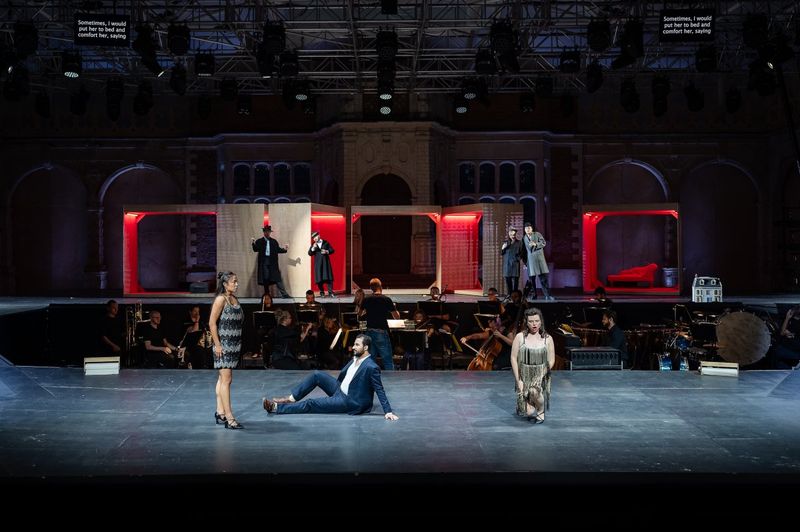
The second production is a staging of Kurt Weill’s ballet chanté, The Seven Deadly Sins, with a libretto by Bertolt Brecht, sung in the 1933 German with all that comes with that information.
I was unfamiliar with the specificities of this work, indeed, this genre, so it took some time to attune myself to the methods employed.
Two Annas constitute the protagonist. They are self-described as one person: the sensible, cautious Anna I (Stepanie Wake-Edwards) who does most of the singing; and the flighty, sexy dancer, Anna II (Yanki Yau), who does not commit the sins, but suffers from them in Weill’s biting inversion. It’s not so much a William Gilbert playful topsy-turvy piss-take, but a brutal condemnation of a world in which up is down and guilty is innocent. The mind could not help but wander to USA 2026.
That’s partly prompted by an episodic plot that takes the Annas to seven American cities in which Anna II is accused of the seven deadly sins, all of which are committed by her accusers. Video projections (like Brecht's banners) tell us of the cities and the sins, but they’re quite hard to see and they come quickly in a swift-moving plot.
All the while, as Weill’s discordant but never unpleasant score takes us off-centre, Anna’s family read her letters, sit in judgement and spend the remittances intended for a house on the Mississippi.
That’s a lot to take in (there's a few steps of ballet too) and sometimes one can lose one’s place, but it’s never less than engaging and it stabs that Brechtian finger in your chest demanding your response to it all. Because it’s happening now too.
So it’s an evening full of delights in which not quite everything works, but more than enough does. What comes next for this company? I’m not sure, but it won’t be dull!
Photo images: Julian Guidera
Sign up for all the news on the Fall season, discounts & more...
.jpg?format=auto&width=300)





Reader Reviews
To post a comment, you must register and login.