Exclusive: Washington National Opera Forges Ahead Following Kennedy Center Split
General Director Timothy O'Leary says the company is rebuilding its infrastructure while maintaining artistic commitments.
 Click for Tickets!
The Washington National Opera is moving forward with a renewed focus on its long-term future, and General Director Timothy O'Leary has shared some updates on the company's transition following their split from the Kennedy Center, artistic priorities, and growing public support in a conversation with BroadwayWorld this week.
O'Leary described the current moment as one defined by both urgency and optimism, pointing to a surge of encouragement from audiences, artists, and donors as the company works through major operational changes. "We are just completely inspired by the groundswell of support that we've experienced from our community," he said, noting that the support has come not only from Washington-area audiences, but also from across the country and abroad.
One major marker of that momentum, O'Leary explained, is the company's recent launch of a new website, which has helped drive a significant increase in individual giving. "We're now up to having received more than 1,200 donations on our website from around the country and around the world," he said, adding that donations have ranged "from $5 to $100,000."
O'Leary also emphasized that the company has entered a demanding rebuilding period, requiring the rapid creation of new administrative systems alongside the preparation of a full season. "The metaphor is building the airplane while flying it," he said. "We've had to recreate an entire administrative and financial infrastructure."
That includes establishing payroll, health insurance, and other internal operations that had previously been handled differently under the company's former structure.
Despite the behind-the-scenes demands, O'Leary said the WNO remains committed to maintaining its artistic standards and honoring its commitments to performers and staff. He cited the upcoming production of Scott Joplin's Treemonisha, directed by Denyce Graves, as a current example. Though the schedule has shifted and only three performances will take place, O'Leary noted that artists will still be compensated as originally contracted. "We're paying everybody what they were contracted for, even though we're only able to do three performances," he said.
O'Leary described the first rehearsal process of the year, which began this week, as a major source of inspiration for the company. Treemonisha features new orchestrations by Damien Sneed, along with dramaturgical and libretto work by Kyle Bass, and includes Cafritz Young Artist alum Viviana Goodwin in the title role. O'Leary called the rehearsal room "a room full of such palpable energy, goodwill, excitement, and determination."
He also connected the story of Treemonisha to broader national themes, particularly as the United States approaches its 250th anniversary. "Treemonisha is the story of formerly enslaved Black Americans in the Reconstruction era mapping and building a new future," he said. "It's an important story to tell in our 250th anniversary year as a country."
The company's 2026 programming, he added, was designed with that national milestone in mind. "This was the idea from the beginning," O'Leary said. "We decided during calendar year 2026 that everything we did would be either American or have important American themes."
Alongside Treemonisha, the WNO's spring season includes Robert Ward's The Crucible, which O'Leary described as "one of the great works of the American stage," noting that it remains timely due to its focus on fear-driven civic behavior. "It's about the American metaphor for living in a climate of fear," he said.
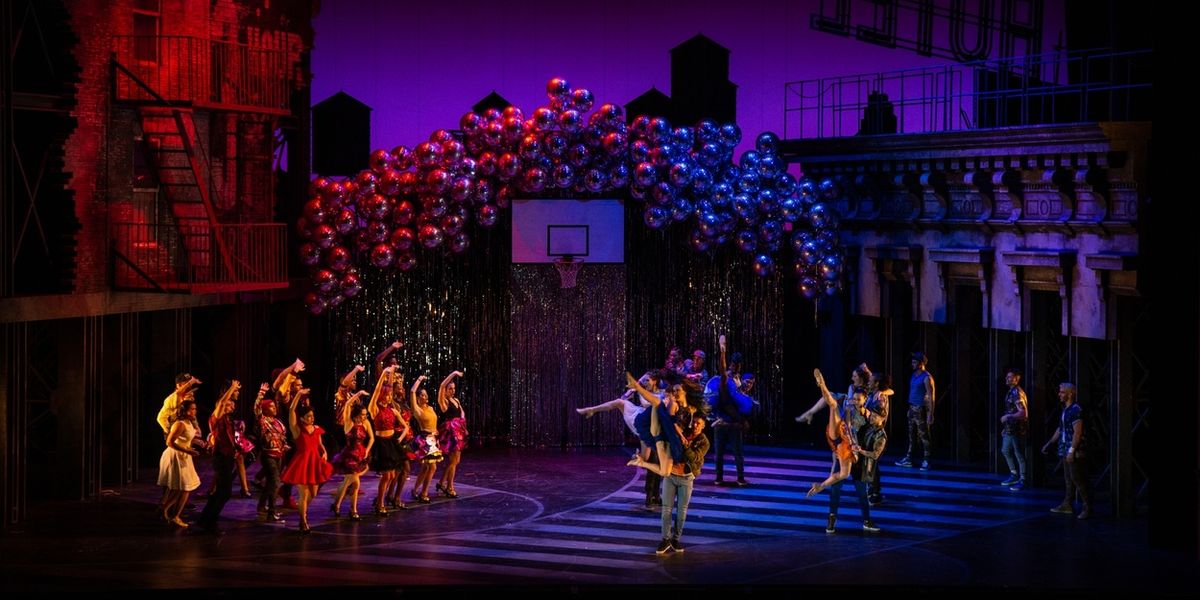
The company will also present Leonard Bernstein's West Side Story in May, a production that has drawn significant attention due to its performances at both the Baltimore Lyric Opera House and Strathmore. O'Leary noted that Baltimore was chosen specifically because it can support a fully staged version of Francesca Zambello's large-scale production. "It's a great opera house that has all the capabilities of housing this major production," he said.
O'Leary also framed West Side Story as part of a broader mission to bridge audiences into opera, describing it as "one of the great works of all time," and suggesting that it often functions as Bernstein's operatic achievement. "Many would say that West Side Story is Bernstein's great operatic masterpiece," he said.
He also addressed the artistic advantages opera companies can bring to musical theatre works, particularly in terms of scale. "Opera companies have inherently a different economic model," he said. "It's not a profit-driven model. And therefore, the mission itself is to provide the audience with the human forces, all of the large casts and orchestra, that it takes to put on a really big work like this."
While O'Leary declined to confirm future musical theatre titles, he suggested that the WNO's artistic approach will remain wide-ranging. "We love the grand operas, we love the smaller scale operas, we love the classics, we love the new, and we love the American musical theater," he said.
Looking ahead, O'Leary described the WNO's long-term success not simply in financial terms, but in its civic and cultural purpose within the nation's capital. He pointed to the company's founding ideals and the broader role of the arts in Washington, D.C. "The founders created Washington D.C. as the new capital city [and] intentionally put the institutions of power together with the institutions of arts and culture," he said, describing opera as an art form that can strengthen civic life through shared storytelling experiences.
"There's something about the intense shared emotional experience that audiences have through the combination of music and theater that actually has civic value," O'Leary said.
He also emphasized that the WNO's future includes continued efforts to expand its audience base, particularly among younger and first-time attendees. "One of my favorite elements of my work is introducing the art form to people, especially if they're like, 'This is not for me,'" he said, adding that WNO has already made "a lot of progress" in recent years with "new audiences, diverse audiences, younger audiences."
O'Leary described the WNO's current production identity as one shaped by Zambello's approach to balancing traditional opera expectations with modern theatrical storytelling. "There's always something surprising... exciting," he said. "Whatever you are afraid of about what you think opera might be like if you haven't come, we're not that."
When asked about widely reported conversations with the Kennedy Center regarding assets, data, and the WNO's endowment, O'Leary did not provide specific details but confirmed that discussions are ongoing. "We're working with them," he said.
Washington National Opera's spring season continues with Treemonisha and The Crucible, followed by West Side Story performances in Baltimore and at Strathmore.
Photo: Todd Rosenberg from the 2019 Lyric Opera of Chicago production of West Side Story, directed by Francesca Zambello
Prefer BroadwayWorld in Google Search?
Add us as a preferred source so our stories show up more often in Top Stories and Google’s AI answers — for you.
Sign up for all the news on the Fall season, discounts & more...
.jpg?format=auto&width=300)