


Josh Rivera on Why THE ROCKY HORROR SHOW Still Feels So Radical More Than 50 Years Later
The film & TV star discusses finding Rocky's humanity, collaborating with Sam Pinkleton, and why this show gives audiences “the power and permission to be themselves.”

|
|
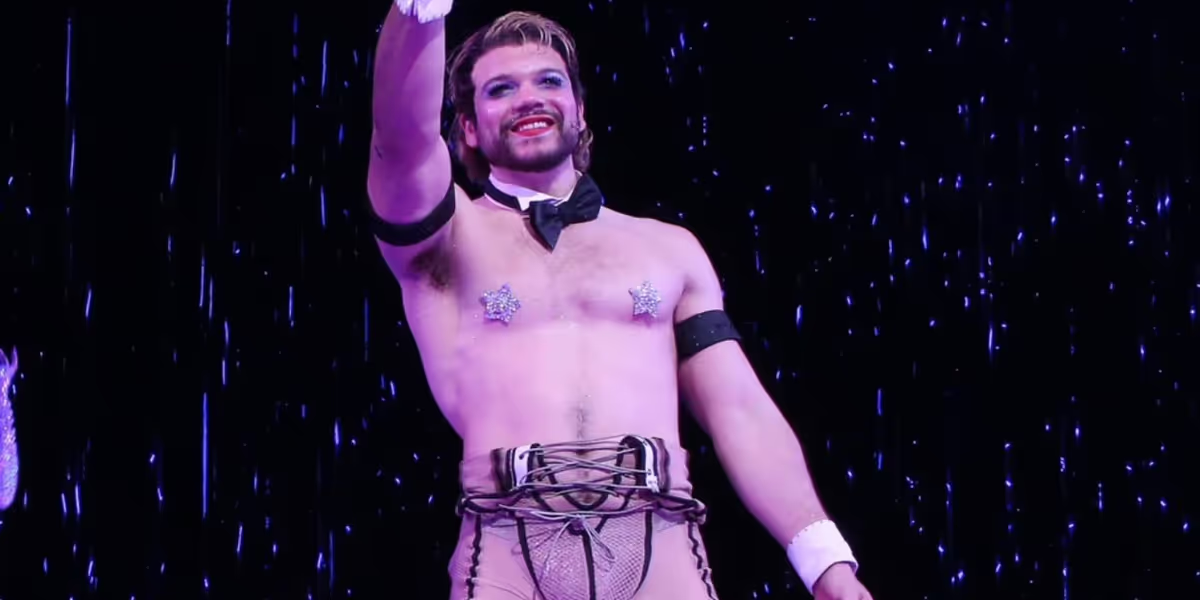
For Josh Rivera, making his Broadway debut isn’t simply about stepping onto one of theater’s biggest stages. It’s about joining a piece of theater history that has spent more than five decades encouraging audiences to embrace the parts of themselves they’ve been taught to hide.
Known for his acclaimed performances in West Side Story (2021), The Hunger Games: The Ballad of Songbirds & Snakes, and American Sports Story, Rivera now takes on one of musical theater’s most iconic creations as Rocky in Roundabout Theatre Company's camp-tastic new revival of The Rocky Horror Show. Directed by Tony Award winner Sam Pinkleton, the production reimagines the cult classic for a new generation while preserving the rebellious spirit that has made it a cultural phenomenon.
For Rivera, there was never much question about why The Rocky Horror Show should be his Broadway debut. “There’s this chaotic and zany element to the whole thing that veils a thread of real sincerity and heart,” Rivera explains. “It speaks to so many people in ways that vary by individual. When I saw it for the first time I felt it was one of those really special pieces where you either get it or you don’t, but if you get it you fall utterly in love with it, and I felt lucky to be a part of that camp.”
That emotional connection became the driving force behind pursuing the role. “It’s special to me. I just love the material,” he reveals. “It felt very right to pursue it. I wanted dearly to play a part in creating something singular, bonkers, loud, and honest.”
Much of that creative freedom, Rivera acknowledges, stems from Pinkleton's collaborative approach to the material. Rather than arriving with every answer already decided, the director built an environment where everyone contributed to shaping the production. “Working with Sam really inspired me because of how much he values the input of the people around him,” Rivera states. “There’s few people in this world that are better suited for the task of adapting The Rocky Horror Show, but even then, he wanted to make sure the show was made by all of us.”
That philosophy also helped balance the challenge of honoring one of musical theater’s most beloved cult classics while offering audiences something fresh. “It’s all about identifying the heart of the source material,” Rivera suggests. “What are the core principles that make it so magnetic? I believe the show is meant to speak to the uniqueness and weirdness in the viewer. It’s meant to challenge the binaries and social standards we’re used to. And it’s meant to be fun.”
“If we can successfully pull on those threads, the actual material itself is quite versatile and can take many shapes,” he continues. “I’ve been really pleased with the way that existing fans have received it so graciously.”
While Broadway marks a new chapter in Rivera’s career, he says joining a company filled with accomplished stage performers, screen actors, and drag artists never felt intimidating. “Honestly it largely didn’t,” he says. “Sam and the rest of the company were pretty much immediately able to facilitate an environment where the culture is to respect, protect, and welcome each other to explore possibilities.”
“There are Broadway veterans, there are screen veterans, there are drag veterans, it’s very dynamic,” he adds. “We all have our strengths and weaknesses and share the common goal of making material that means something to us and impacts those we get to share it with.”
Though he does admit there was one unexpected adjustment. “The only thing that really affected my confidence and preparation beyond my usual approach was how little clothing I wear in the show,” Rivera admits.
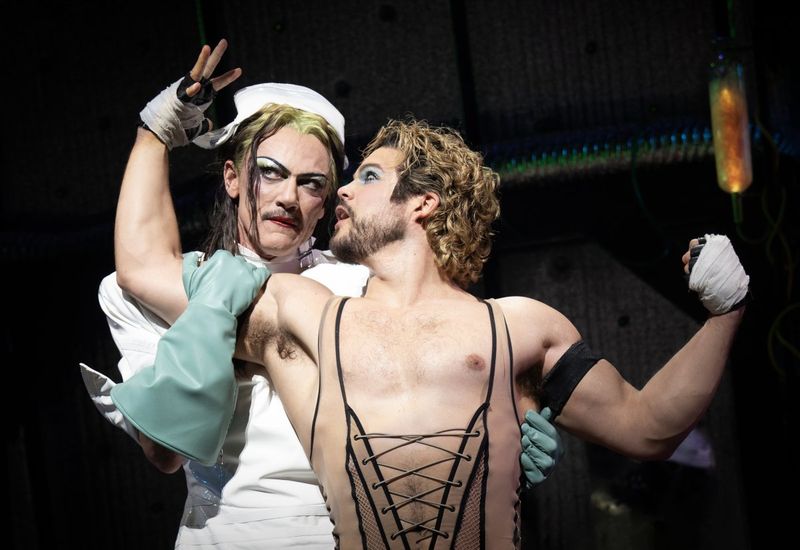
Photo by Joan Marcus.
Unlike many of Rivera's previous roles, Rocky offers remarkably little dialogue. Instead, nearly everything about the character is communicated physically. “It’s been a real blast and challenge to navigate physical comedy and story telling,” Rivera says. “It’s also been quite the departure from my usual strategy. Generally the text first and foremost is what I go to for information about my character, but in this case I think I have maybe seven or eight lines in the thing.”
Rather than seeing those limitations as obstacles, Rivera embraced the creative possibilities. “The blessing there is that I had so much room to play with what this character could be, and the circumstances are so bizarre that I found that the more sincere I could make him, the more the comedy could pull through.”
His interpretation begins with a surprisingly simple premise. “He’s literally a horny newborn baby,” Rivera explains with a laugh. “During rehearsals I thought a lot about how frustrating, terrifying, and charged puberty is. I built the character by trying to imagine myself going through puberty in my current body without any life experience or competence with the English language at my disposal.”
“I guess what I learned is how scary and complex that would be in practice,” he emphasizes.
Looking beyond Rocky's famously sculpted physique, Rivera sees one of the show’s most emotionally vulnerable characters. “How curious and bare he is,” Rivera posits. “He has no sense of cultural norms or sexual taboos. He is learning everything as he goes, developing his own excitements and fears.”
That emotional openness becomes central to Rocky's relationships. “He learns that sex is a means to be seen and cared for. That’s why I believe he develops an attachment to Janet, as she is the first one who’s curious about him back. In many ways I find him to be one of the more ‘human’ people in the show.”
That honesty also distinguishes Rocky from many of Rivera’s previous performances. “Rocky doesn’t have a lot of room for subtext,” he points out. “I don’t think he is aware that people can say something and mean something else. Everything he does has urgency and energy. Excitement and fear. It’s all happening at once and it is physically very ‘loud,’ so to speak.”
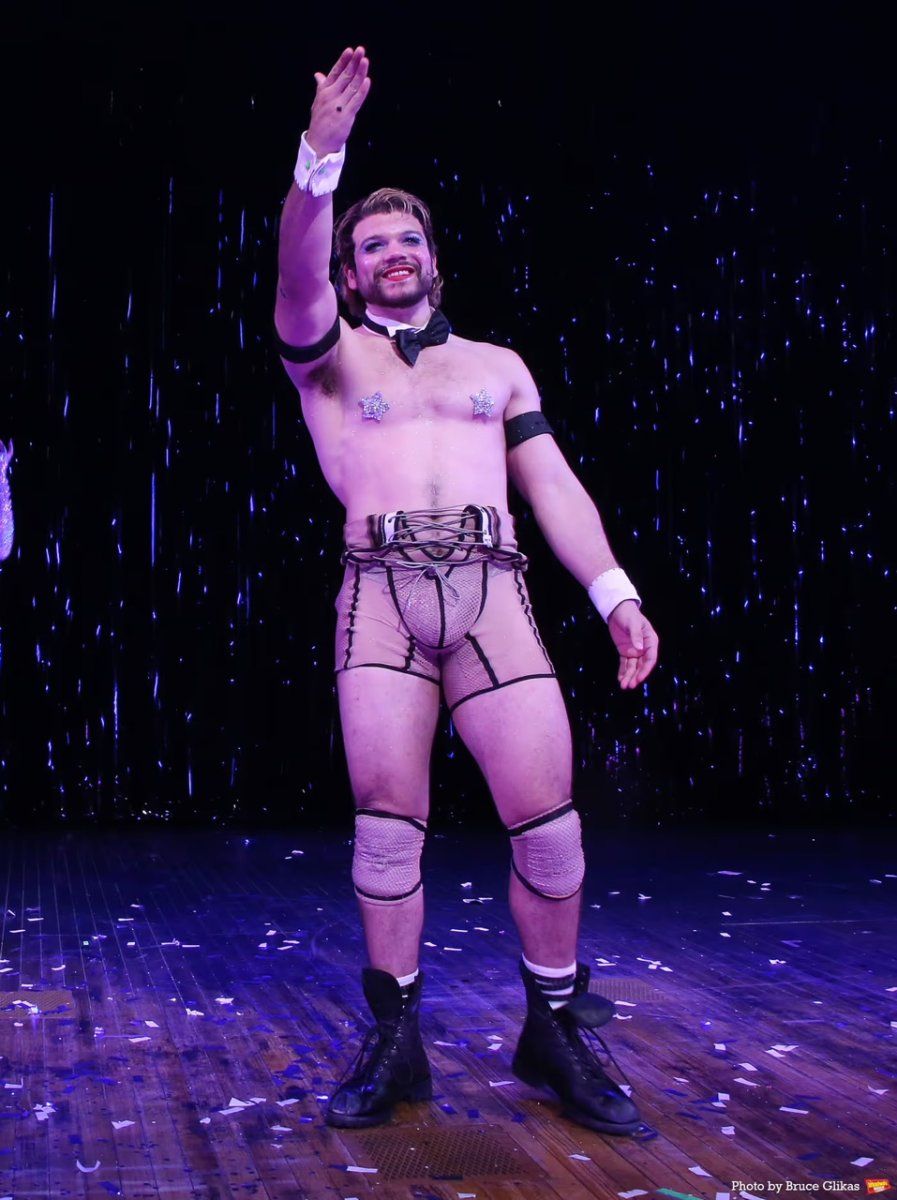
Photo by Bruce Glikas.
“What I've loved about Chino in West Side Story, Sejanus in The Hunger Games: The Ballad of Songbirds & Snakes, and Aaron Hernandez in American Sports Story is the amount they allowed me to play with multiple subtle intentions simultaneously,” Rivera reveals. “But what’s been so fun about this role is that Rocky’s intentions are so simple and honest. There’s no room for duplicity or subtlety. I’m throwing myself at every objective as sincerely and energetically as I possibly can.”
For Rivera, that same honesty lies at the heart of why The Rocky Horror Show continues to resonate with audiences decades after its debut. “I believe that most people have some gooey, honest part of themselves that they hide from others in fear of being othered and something about this show celebrates letting it out,” he declares.
“Humans are dynamic creatures, but the world we live in is built for efficiency and psychological simplicity,” he continues. “At times it serves us to be a puzzle piece or cog in the larger machine for safety.”
Then comes the message that has defined The Rocky Horror Show for generations. “ROCKY HORROR says f**k that,” Rivera stresses. “It’s a liberating piece for anyone who’s ever felt like an outsider.”
After living inside the world of the show, Rivera believes its cultural significance has only become clearer. “It’s largely reinforced my belief that ROCKY HORROR gives people the power and permission to be themselves,” he affirms. “There’s obviously a big intersection with queerness, and fluidity, and for a lot of people that power and permission goes an extremely long way.”
Listening to fans’ personal stories has only strengthened that conviction. “I’ve gotten to hear a lot of unique stories about people's experience with the film or play, and a common thread is that it’s made people feel safer in their own skin,” Rivera says. “I felt that way when I first saw it too. I couldn’t even really articulate why. I just was so hypnotized by how thrilling it all was. It just made me feel less self conscious about my perception of myself.”
Asked what he hopes first-time audiences take away from this revival beyond the spectacle, Rivera’s answer is beautifully concise. “Don't dream it, be it," he advises, echoing the show’s memorable mantra.
As for what he hopes Broadway audiences discover about him as they watch him make his debut? “That I'm hot and funny too,” he suggests with a wink and a grin.
Roundabout’s acclaimed revival of The Rocky Horror Show is scheduled to run through November 29, 2026 at Studio 54.
Photo Credit: Bruce Glikas
Prefer BroadwayWorld in Google Search?
Add us as a preferred source so our stories show up more often in Top Stories and Google’s AI answers — for you.

Sign up for all the news on the Fall season, discounts & more...
BroadwayWorld Merch
Shirts, mugs, phone cases & more

.jpg?format=auto&width=300)
.png?format=auto&width=365)




