


Review: HARRY POTTER AND THE CURSED CHILD at Dr. Phillips Center For The Performing Arts
Harry Potter and the Cursed Child will always be a great production to watch because it’s great theatre in its stagecraft and in its performances.
By: Albert Gutierrez Jan. 29, 2026
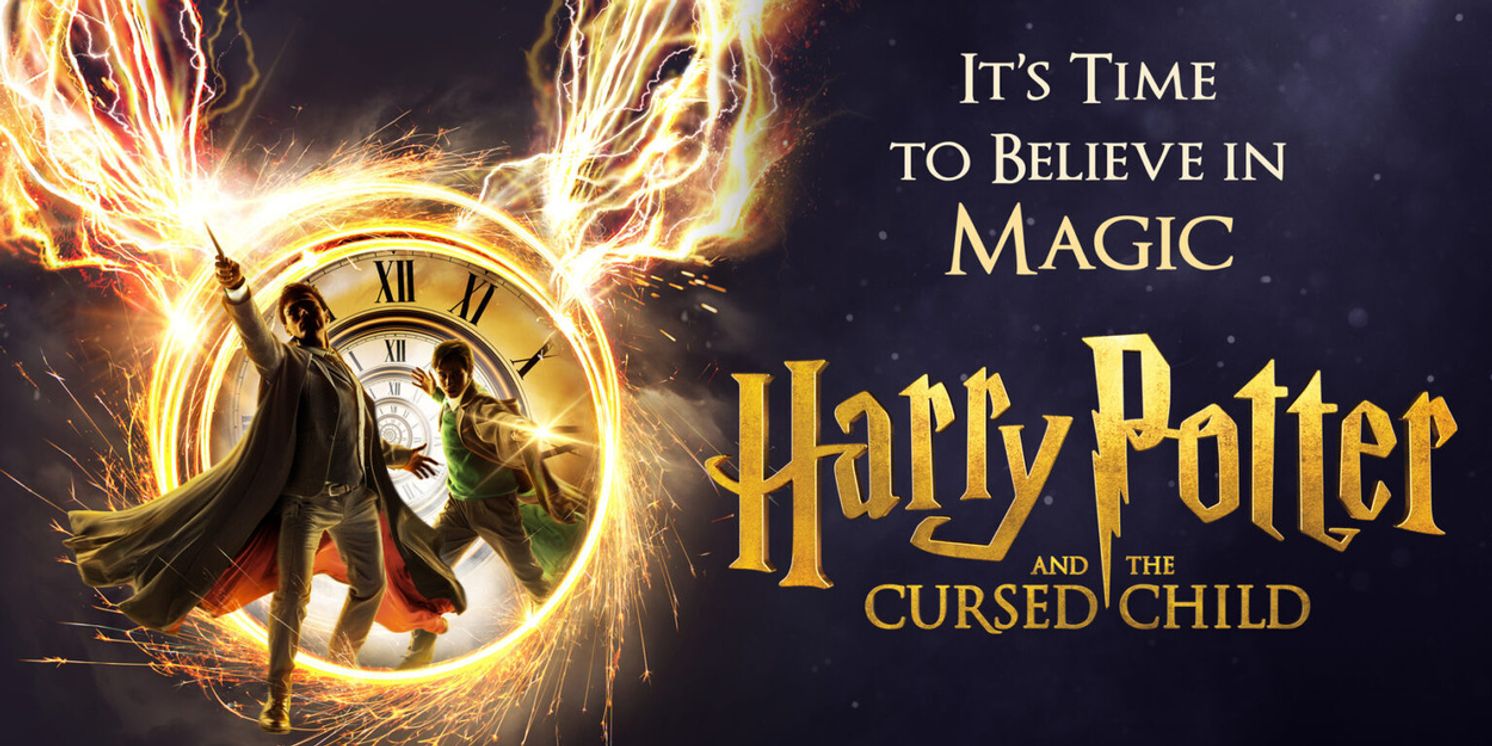
Harry Potter’s therapist must make bank. The Boy Who Lived had been orphaned at a young age, endured a traumatic childhood in an abusive household, then had a neverending target on his back for seven years of adolescence spent in a boarding school. Seven years of his life told across seven books (and eight film adaptations), all of which have been met with captive audiences who delighted in watching every possible problem thrown his way be solved not just by magic, but by sheer will and endurance. Surely, once all was well, he would need to see a therapist once a week just to process this. Then, after everything that happens in the stage play Harry Potter and the Cursed Child, this hypothetical therapist could probably retire early and not take any more clients because Harry James Evans Potter has just unlocked a boatload of new trauma: Parenthood.
It seems strange to check in on one of literature’s favorite young-adult heroes now at the same age as his first generation of fans. Children who read the original 1997-2007 Harry Potter books and followed their fandom into the 2001-2011 film series are now having families of their own. They’ve aged out of the target demographic for the franchise, but are still eager to share their Hogwarts House sorting for anyone who may – or may not – ask it. (I’m a Ravenclaw, by the way.) One way the franchise has continued to age with its first generation of fans was through the creation of the 2016 two-part stage play Harry Potter and the Cursed Child, which now celebrates ten years of updating audiences with “Where Are They Now?” for the original characters, while also introducing “The Next Generation” through new legacy characters.
And, if I may be frank, it’s not very good.
Narratively, the two-part play always read more as a “what if…” possible future for these characters, but never felt true to the “canon” of what made the Harry Potter books so beloved: a character’s journey across his relationship to others, not a character’s lived experience based on the requirements of each novel’s plot. Unfortunately, this two-part stage play doesn’t afford its audiences the breezy prose of a novel, so it instead falls into a trap of relying more on plot than on character, one which draws more inspiration from Back to the Future than from the Wizarding World. Even more frustratingly, the play chooses to focus the majority of its plot on an impulsive plan devised by two fourteen year olds rather than delving more into the already-rich neuroses of its cast of characters. As a result, we get a contrived and convoluted episode of “As the Wizarding World Turns” filled with twists and turns that don’t always warrant an audience’s collective gasps, with pay-offs not fully worth it by the end.
And, if I may be frank once more, it plays very well.
On a technical level, Harry Potter and the Cursed Child turns up the brazzle-dazzle in every production, serving a truly spectacular depiction of the Wizarding World that absolutely is made for the stage. Effects are plentiful and whimsical. Costume changes and transformations genuinely leave the audience with that “how did they do it?” wonderment. The orchestral score by Imogen Heap is equal to the now-timeless themes first composed by John Williams. Scenes move swiftly, peppered with transitions and choreography that ensures no moment is ever wasted on the stage. Lighting is evocative of both the darkness of the material and the aura of the characters. And all the actors deliver performances that elevate the material into something worth cheering for by the end, imbuing in their stage interpretations of these characters new and different layers. As one audience member mused at intermission, “The scenes are spectacular, but the story is not.” In short, Harry Potter and the Cursed Child most definitely should be watched for everything but the plot.
Early into the production’s West End run, the hashtag #KeepTheSecret was thrown about liberally in the marketing as a way to encourage audience members to keep mum on particular characters and plot details that could spoil the story for prospective ticket buyers. It was meant to emulate how audiences were often told to not reveal the twist to Agatha Christie’s The Mousetrap, which for the last seventy-four years has done a remarkable job at not spoiling the twist ending for any newcomer to the play. If I may be so bold, Harry Potter and the Cursed Child’s various plot twists are nowhere near as iconic or surprising as the Christie play. However, in the interest of journalistic integrity, as a critic I shall refrain from sharing too much about the plot and characters.
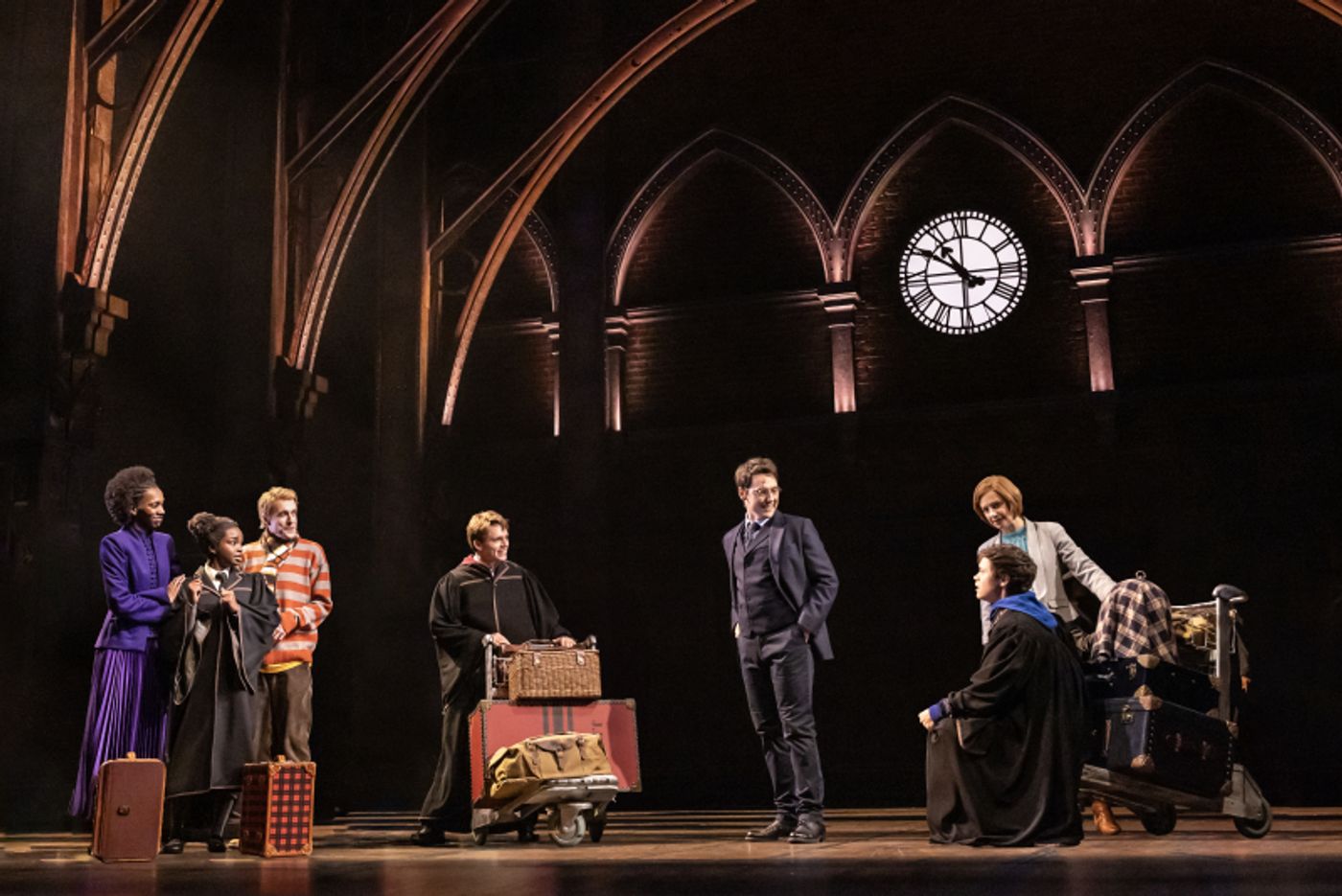
We start the play with a scene familiar to most every Harry Potter acolyte: the epilogue of Harry Potter and the Deathly Hallows. Harry Potter (Nick Dillenburg), his wife Ginny (Erica Sweany), and good friends Ron Weasley (Matt Harrington) and Hermione Granger (Ebony Blake / understudy Rachel Leslie on Media Night) are at the King’s Cross station seeing their children off for another year at Hogwarts School of Witchcraft and Wizardry. For Harry and Ginny’s middle child, Albus Severus (Adam Grant Morrison), he is nervous as to where he might be sorted among the four Houses at the school: Gryffindor (the brave), Hufflepuff (the loyal), Ravenclaw (the intelligent), and Slytherin (the ambitious). His cousin, Rose Weasley (Naiya Vanessa McCalla) accompanies him on the train, but opts not to sit with him in a compartment that is shared with Scorpius Malfoy (David Fine), son of Harry’s former school nemesis Draco Malfoy (Ryan Hallahan).
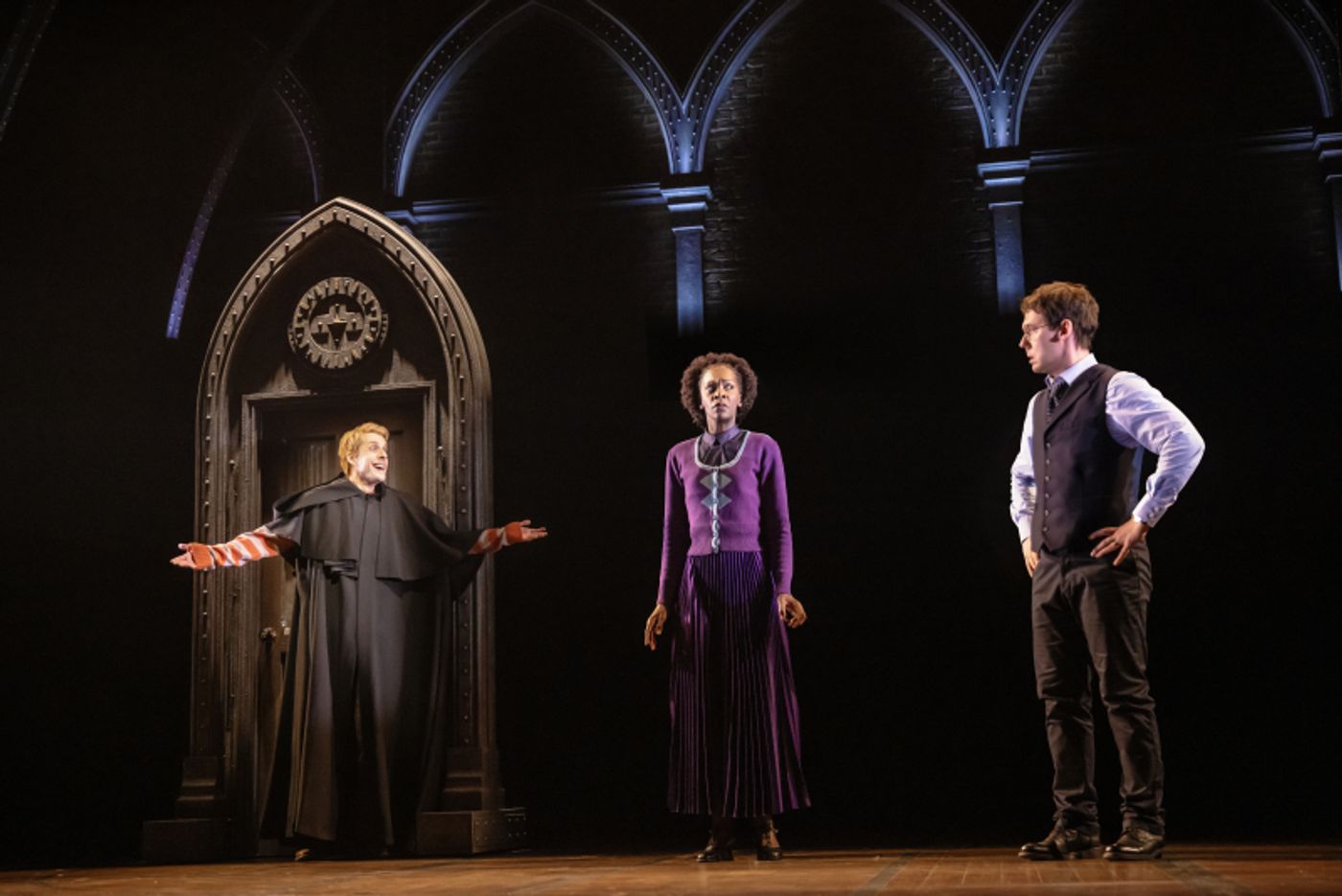
Upon arrival to Hogwarts, Albus’ cousin Rose gets sorted into Gryffindor, while Scorpius and Albus are both sorted into Slytherin. Scorpius, already an outcast because of the continuing rumors of his paternity, finds a friend in Albus, who’s unexpected sorting seems counterpoint to the traditional “heroes” of Hogwarts – as well as his father’s entire bloodline – being sorted as Gryffindors. It becomes a lonely few years for both boys, relying on friendship with each other than with their classmates. Albus must grapple with being the Slytherin-sorted son to The Boy Who Lived, while Scorpius loses his mother Astoria between school years, and is still subject to continued whispers that Lord Voldemort might be his father.
After Amos Diggory (Larry Yando), old and frail, makes a direct if futile appeal to Harry Potter to use a Ministry-seized Time Turner to save his son Cedric from death, Albus decides that such a plan might actually be what will solve everyone’s problems. Amos could have his son back, Harry wouldn’t live with the guilt of not saving him, Albus would thus have a better relationship with his father, and Scorpius could be seen as a hero rather than an outcast. Albus, Scorpius, and Amos’ niece Delphi (Julia Nightingale) decide to embark on a plan to steal the Time-Turner themselves in order to save Cedric. Needless to say, the best-laid plans of mice and men often go awry. And, to be fair, this was not a great plan to begin with. It’s exactly the type of plan one would expect a pair of fourteen-year-olds to do: impulsive, without consideration for all the possible consequences, and definitely not the best-laid out. Scorpius and Albus return to a modified present-day that somehow erases Rose Weasley, so in their efforts to go back to the past and change things once more, they end up creating a future far worse than anyone ever anticipated.
It’s difficult to analyze the plot deficiencies of Harry Potter and the Cursed Child without spoiling key plot details, but readers shouldn’t worry too much about these deficiencies when it comes to whether or not they should see the show. As I mentioned before, this is not a show you watch for the plot. This is a show with nostalgia baked directly into its characters. It’s a show that takes full advantage of the theatrical stage as a storytelling device. And it’s a show that, even if I’m loathe to admit, does actually have several redeeming qualities in terms of characterization. We can’t expect our childhood heroes to be just as perfect as we remember them from the books, especially as these heroes were far from perfect themselves. Harry Potter may have been The Boy Who Lived, but he was also stubborn, reckless, and hot-headed when he wanted to be. Hermione Granger may have been the smartest student in all of Hogwarts’ history, but she was also fairly self-righteous and occasionally ruthless and vindictive if someone wronged her. Ron Weasley was Harry’s best mate, but had been wildly insecure and turned easily jealous, whilst having – as Hermione once put it – the emotional range of a teaspoon. As a result, seeing these now-mature versions of these characters face a whole variety of adult problems made the more ridiculous aspects of the plot a bit more bearable. Harry’s struggles with parenthood, Ron’s continued insecurity when around Draco, and Hermione’s sheer stubbornness even as an adult helped to give us more layers to characters we already knew from their (and our) youth.
Likewise, the play’s focus on the “next generation” characters of Albus Severus Potter and Scorpius Malfoy gives us two richly-developed young characters that actually go through their own emotional journey throughout the play. Their arcs – both together and solo – almost justifies some of their questionable choices, but mostly because it’s within some of these more outlandish scenes that we get some true moments of contemplation for these characters. Unlike Harry, Ron, and Hermione, we’re not afforded seven books to get to know Albus and Scorpius. We only have a two-part play to learn what makes them tick, how they react and respond to each other, and how they relate to their parents. Harry Potter and the Cursed Child offers at best a CliffsNotes approach to what could be a great four-book series (covering the plotline of this play) with the promise of three more to cover the further Hogwarts adventures of Albus, Scorpius, and even Rose. The Potter fandom have largely already shipped Albus and Severus together, with the play itself adjusting its own libretto to now suggest it. Upon condensing the material from the original two-play structure in the West End, the Broadway version cuts about 90 minutes of content for pacing purposes, but also rewrites a few lines here and there to better convey the implied romantic interest between Albus and Scorpius. For a franchise that didn’t even tell the fans Dumbledore was gay until after all seven books were published, having these subtle hints and shifts in narrative within Harry Potter and the Cursed Child proves to be a step in the right direction for authentic queer representation and visibility in the Wizarding World.
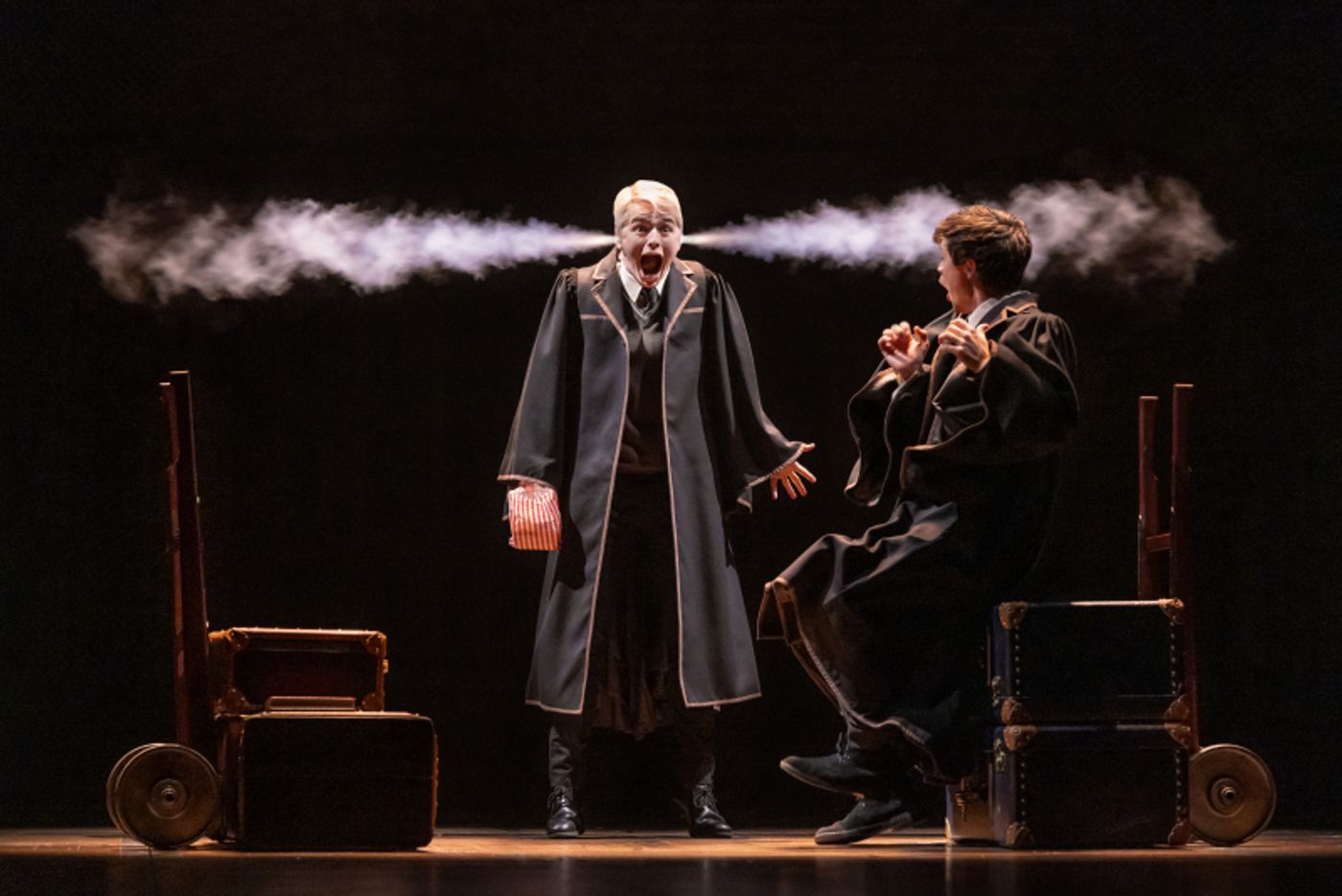
The touring production of Harry Potter and the Cursed Child continues to use this condensed, one-play version of the story. Whereas the two-play version ran five hours, and the Broadway rendition cut it down to three-and-a-half, the needs of a touring production on a strict schedule has also pared down this story to a fairly thrifty, though still long, two hours and forty-five minutes (not including a fifteen-minute intermission). I’d like to say that the condensation works in the play’s favor, but having seen the original West End production and knowing what was omitted, the tour only serves to highlight more of the play’s plotline inconsistencies and my grievances for them.
Act One in this touring production runs eighty-five minutes (compared to its original two-act format as Harry Potter and the Cursed Child, Part One), cutting out various flashback scenes of young Harry, the characters of Lily Weasley Potter and Bane the Centaur, and paring down lines of dialogue to make scenes run faster. Act Two now runs at eighty minutes, with its original Part Two intermission point hitting exactly at the forty-minute mark, with the same cutting applied as in Part One. It’s especially apparent within the first twenty minutes of Act Two, as well as the last twenty minutes of the play itself. Scenes now run at a breakneck pace, exposition dumped quickly in lines that Scorpius, and later Hermione, say with such rapid pace one would hope even the other characters caught it all. Turning five hours into less than three have essentially made the plot of this play fairly nonsensical. It’s essentially now a “greatest hits” compilation of every melodramatic cliché known to man: the parent who doesn’t understand their teenage child, the outcasts who think one change will solve all their problems, the heretofore-unknown relative popping up out of the woodwork, the bully and his victim begrudgingly working together against a common enemy.
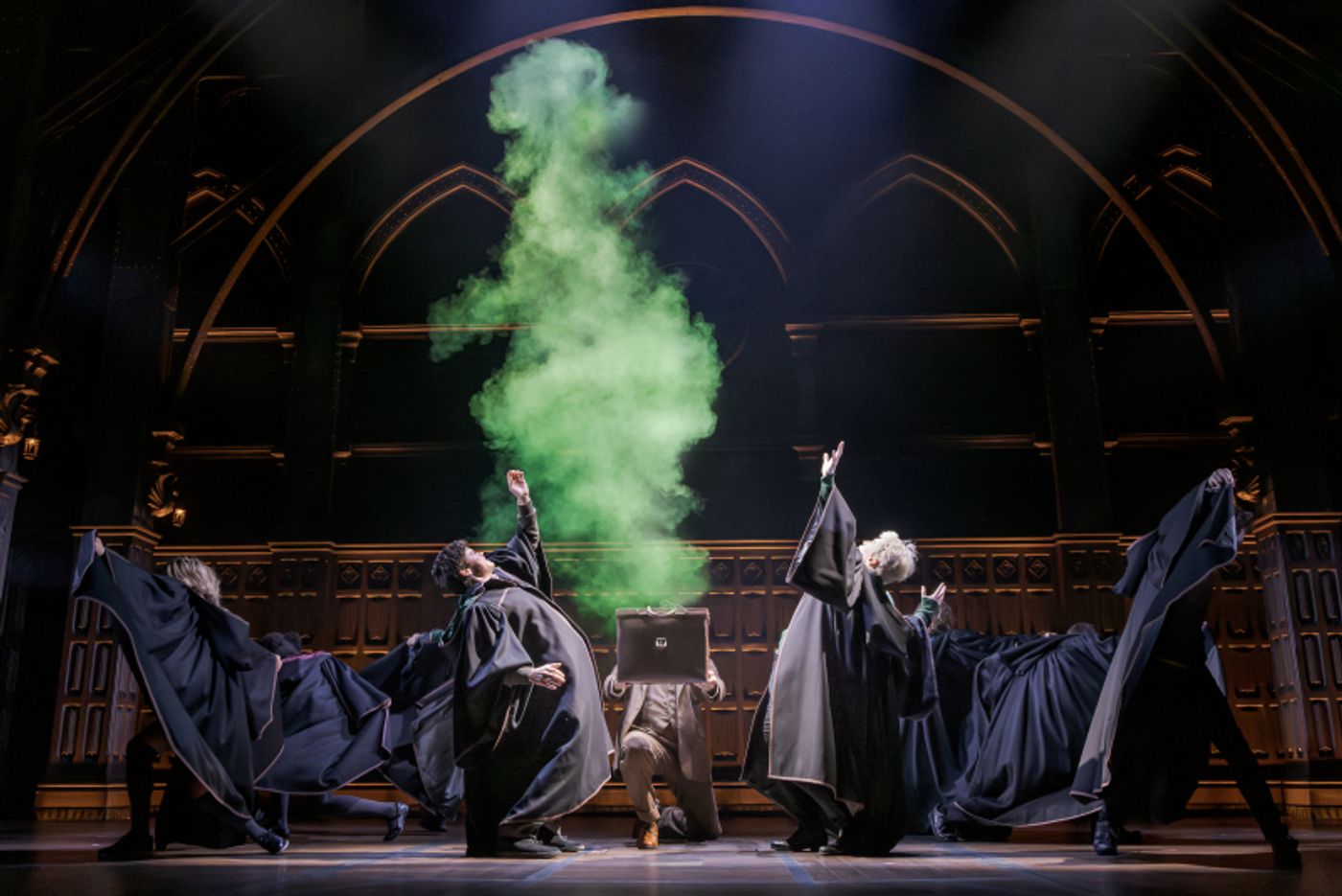
If it weren’t played out so damn well on the stage, I’d have walked out after Act One. But that’s the strange thing about Harry Potter and the Cursed Child. It’s not a great story by any stretch, but it’s still great theatre. I’ve seen Dr. Phillips Center’s Walt Disney Theater transformed into a variety of worlds for both touring and local productions. Harry Potter and the Cursed Child continues with that trend, but somehow makes that space feel like it was still made specifically for that production. The set design takes full advantage of every theatrical trick – be it the rotating floor or the moving beams or the wirework. And the reverberating effect every time the Time-Turner was used was always felt within the audience, as if we were being transported with the characters themselves.
The staging was very faithful to the original as I saw it at the Palace Theatre in London, albeit with a few compromises I somewhat expected for a touring production. A scene in Act One that famously uses an in-stage pool now implies water where there is none. Wire work that should have featured Albus and Scorpius was now a pre-recorded projection of the actors, presumably to cut down on the time needed to rig them up on the wires. One particular scene in Act Two requires a black-light illumination – instead of blanketing the entire theatre in black light, only the immediate stage was painted as I doubt Dr. Phillips Center would enjoy having their balconies, mezzanine, and orchestra walls all splashed with magical graffiti.
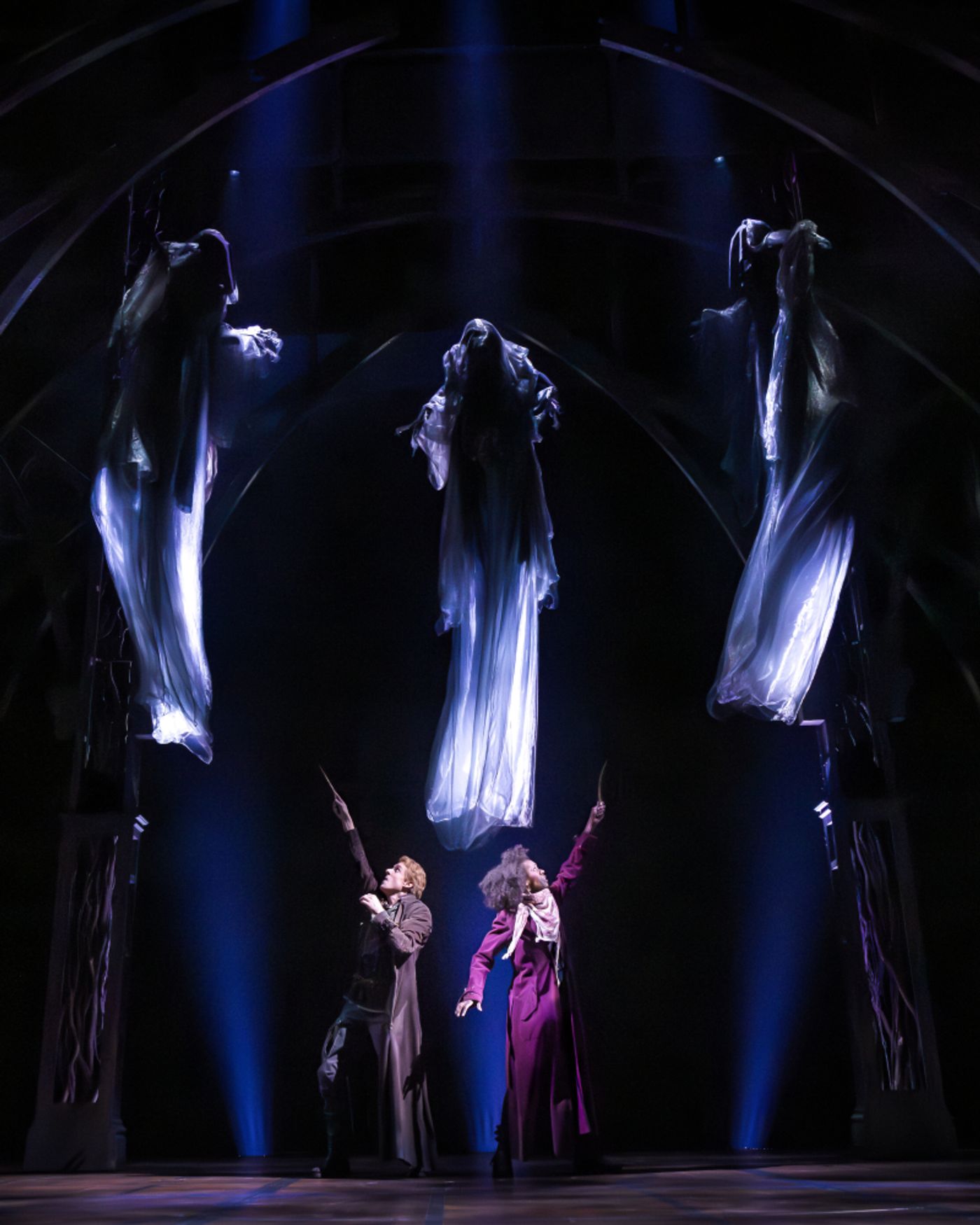
The magical effects also were on par with the West End production. Working with fire has never looked so spontaneous or natural, even if part of me knows it’s contained and highly controlled for the safety of all those on stage. And even some other of the show’s noteworthy magic came across as impressively on tour as it did in London. Transformations from a polyjuice potion was actually met with applause by the audience, who presumably weren’t expecting the effect as they saw it. Heck, even I was taken aback by one particular wirework effect involving Dementors, feeling it just as chilling at Dr. Phillips Center as it was at the Palace.
Part of the reason I’m also still fairly forgiving to Harry Potter and the Cursed Child is its use of a pre-recorded, fully orchestral score to make this stage play feel just as cinematic as the beloved 2001-2011 films had been. Imogen Heap’s themes are as memorable as those by John Williams, so I was glad to have that same set of music helping to really highlight the emotional highs and lows of the characters in this play. Even the choreography – robes swishing dramatically, stairs and furniture moving sometimes magically, characters adding some theatrical flourish with looks and turns – created some of the best transitions between scenes. At other points, it only helped to heighten the emotional stakes: the looks of longing or regret, the prolonged eye contact between two characters on a stairway, the sheer fun of running across the stage with the robe billowing in the wind. Harry Potter and the Cursed Child will always be a great production to watch because it’s great theatre in its stagecraft and in its performances.
The company of players for this production consists of seven principal performers and a plentiful ensemble that’s twenty-eight strong. The twenty-eight ensemble players themselves not only create the background action of the entire Wizarding World, but more than half of them also take on a variety of minor roles. These include vintage characters like the Sorting Hat or Professor McGonagall, as well as newer ones like Hogwarts students Polly Chapman and Craig Bowker. Yet we spend the most time with our core group of seven performers portraying Harry Potter, Ron Weasley, Hermione Granger, Ginny Potter, Draco Malfoy, Albus Severus Potter, and Scorpius Malfoy.
Nick Dillenburg, understudy Rachel Leslie, and Matt Harrington had the unenviable task of creating their own interpretations of how the adult, thirtysomething versions of Harry, Ron, and Hermione would play out on the stage. None of them ever try to imitate the characterization as depicted by Daniel Radcliffe, Rupert Grint, or Emma Watson, which is definitely in the stage play’s favor. We’re not expected to see a clone of the film actors on the stage. As a result, Dillenburg, Leslie, and Harrington are able to be more free in their interpretation of the adult versions of these childhood heroes. Through these performers’ interpretations, Harry can now be just as hot-headed as the text suggests. Hermione’s far more calculating and controlling than her childhood self. And Ron has definitely evolved to a much more emotionally-attuned husband than his adolescent “teaspoon” self had been.
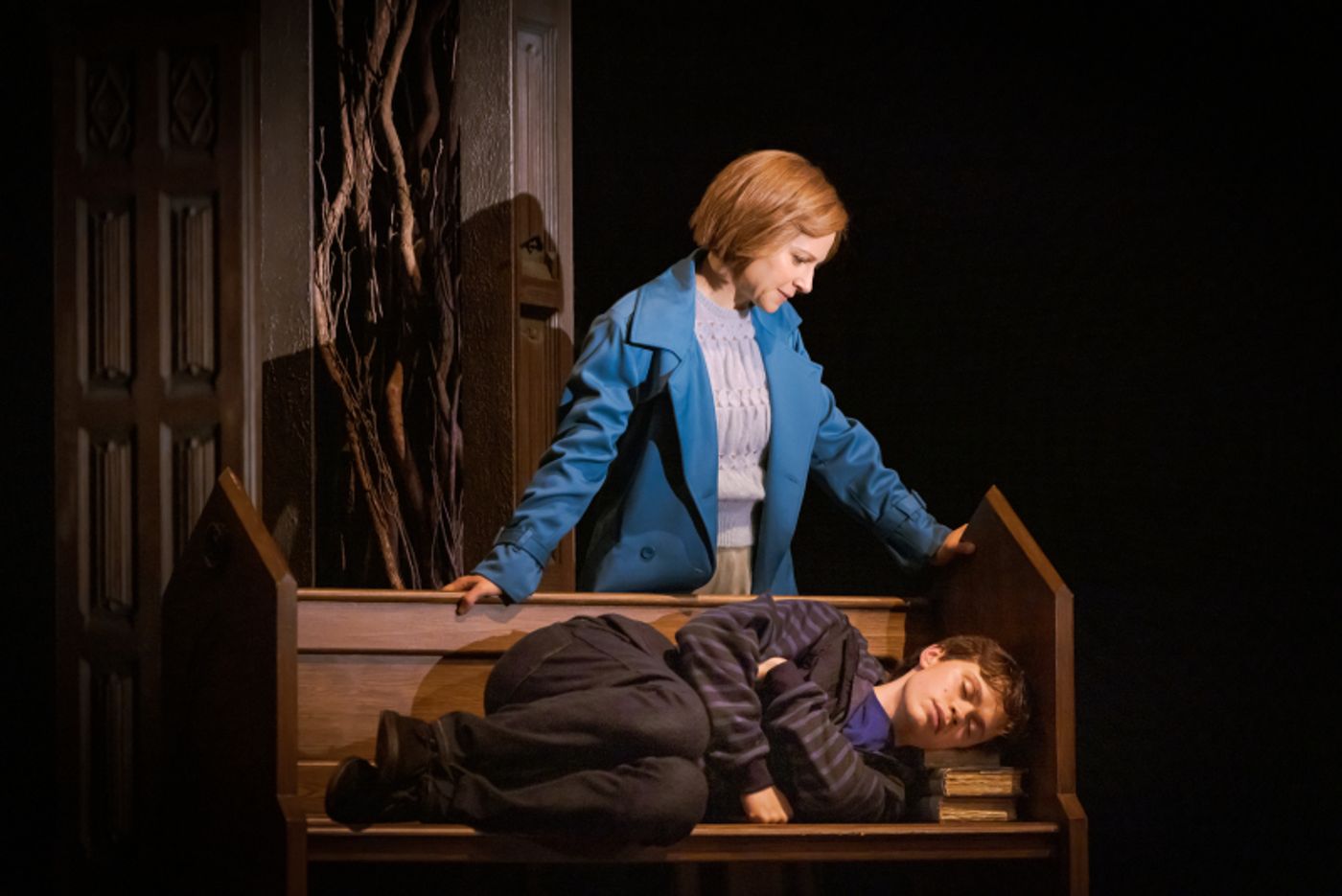
Perhaps most impressive among the adults was Ryan Hallahan’s portrayal of Draco Malfoy. Harry’s nemesis had often been underwritten even in the books, devolving from the casual school bully into a “wait till my father hears this” exaggeration, though showing some growth by the final two books. Hallahan thus chooses to lean more into Draco’s newer, protective side as a father compared to his juvenile bully past. There’s a bit more bite to him too, delivering lines opposite the Trio with enough sass to garner audience reaction without ever putting a pause in the scene. In addition, Hallahan was able to actually make Draco seem more sympathetic a character than Harry is, particularly in terms of how both Draco and Harry approach fatherhood.
I wish I could say that Ginny Weasley, as portrayed by Erica Sweany, was as welcome a surprise in her adult form. Unfortunately, the character still suffers the same fate here as she does in the books: idealized, but not fully defined beyond her relationship to Harry. Sweany knows how to turn the role into that of a caring mother and wife, but Ginny is so threadbare a character that the role doesn’t take full advantage of Sweany’s talents within it. It’s just another one of the play’s many sins: the plot-heavy story leaves little room for character growth, leaving certain roles as developmentally-stunted even if the performers are great.
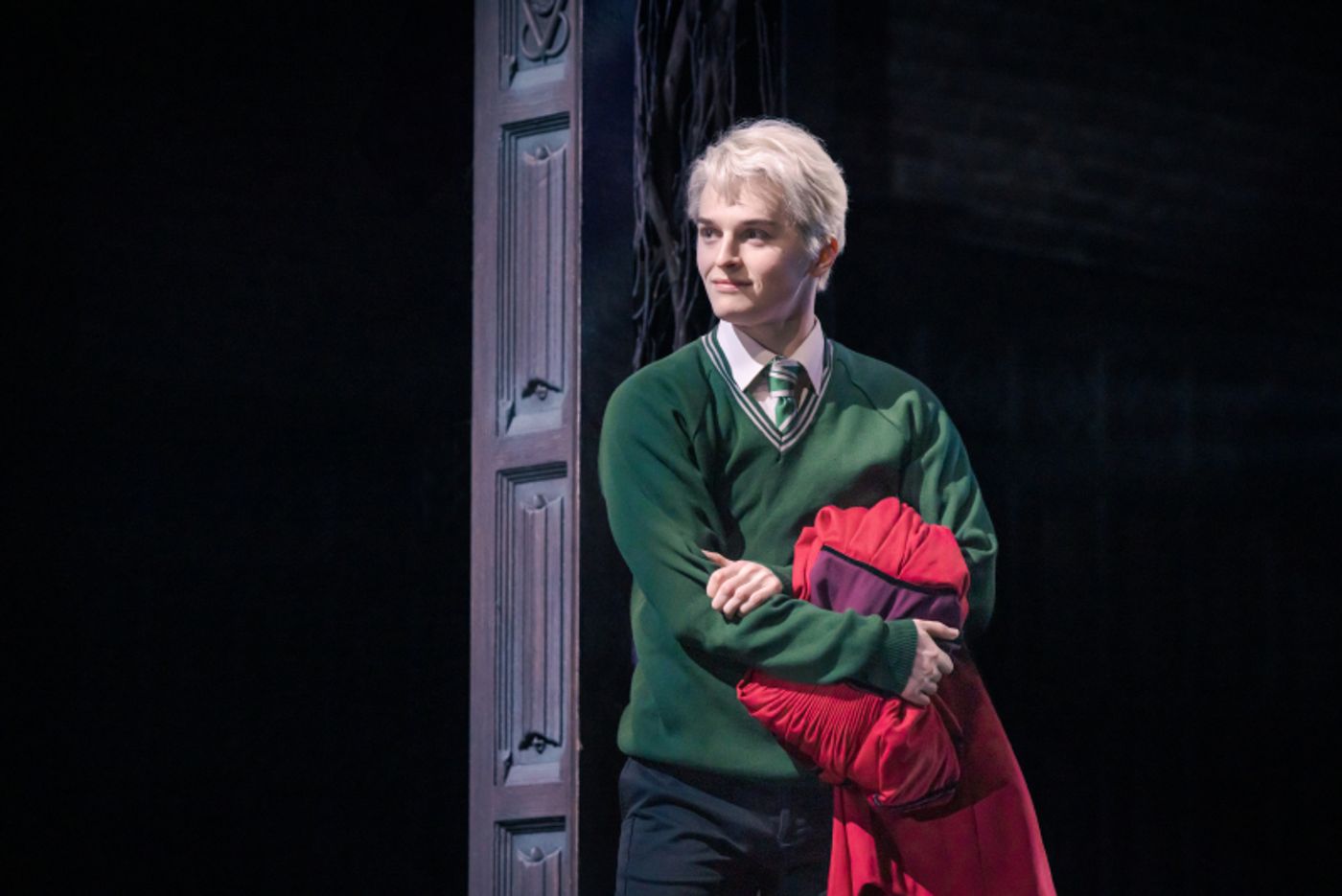
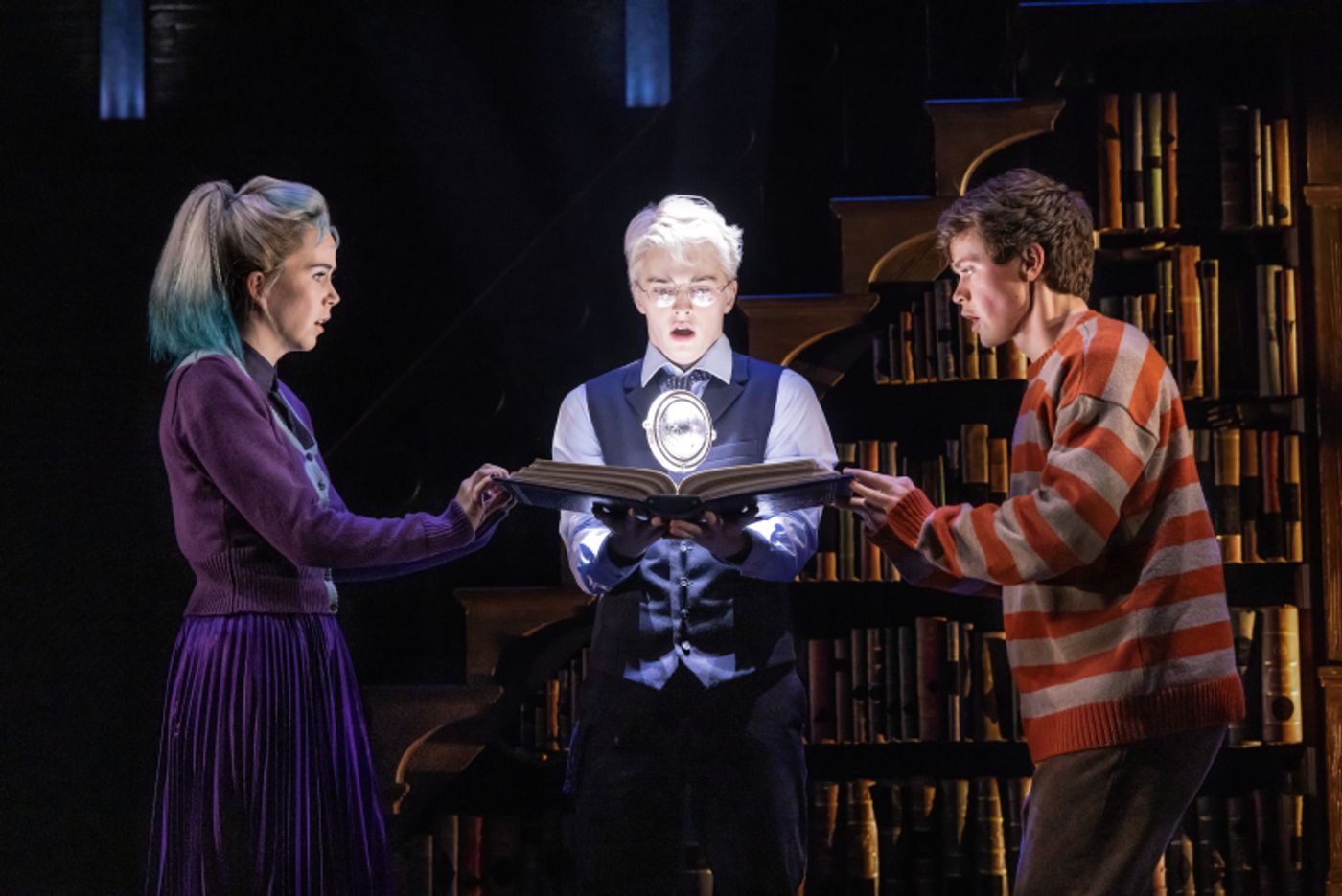
Fortunately, as I’ve already mentioned before, the play still knows how to give us compelling, rounded depictions of their primary two new characters. Adam Grant Morrison and David Fine absolutely make both Albus and Scorpius, respectively, their own. Even if they’re reciting largely the same dialogue I’d encountered already in the West End production, their approaches to the characters still made them feel fresh and new, as if different acting choices turned them into different characters than they were across the sea. Adam Grant Morrison’s approach to Albus is very much the “stiff upper lip” British personality, but one also knows how to use micro-expressions to his favor. He’s very good at acting through what he holds back in a scene, letting the audience recognize what’s simmering beneath the surface. Thus, when he does lash out – at a few key points in both acts – it feels earned for both his character and the performance.
Thanks to David Fine, Scorpius becomes the standout character in the entire play. I may have had plenty of qualms for Harry Potter and the Cursed Child being plot-heavy and character-light, but Scorpius is the one exception to this all. Fine is able to make this a character worth rooting for from beginning to end, turning him into the sensitive, poetic soft boy everyone just wants to see happy by the end. Given the cards he was dealt, Scorpius could easily have just become an irritant, anti-hero, chip-on-his-shoulder rebel forever in the shadow of his father and his rumors. Instead, Scorpius is an unexpected light in the darkness. He’s sprightly, energetic, way too honest about his emotions, but fully justified in sharing them. And Fine’s approach makes the character the heart and soul of the entire play.
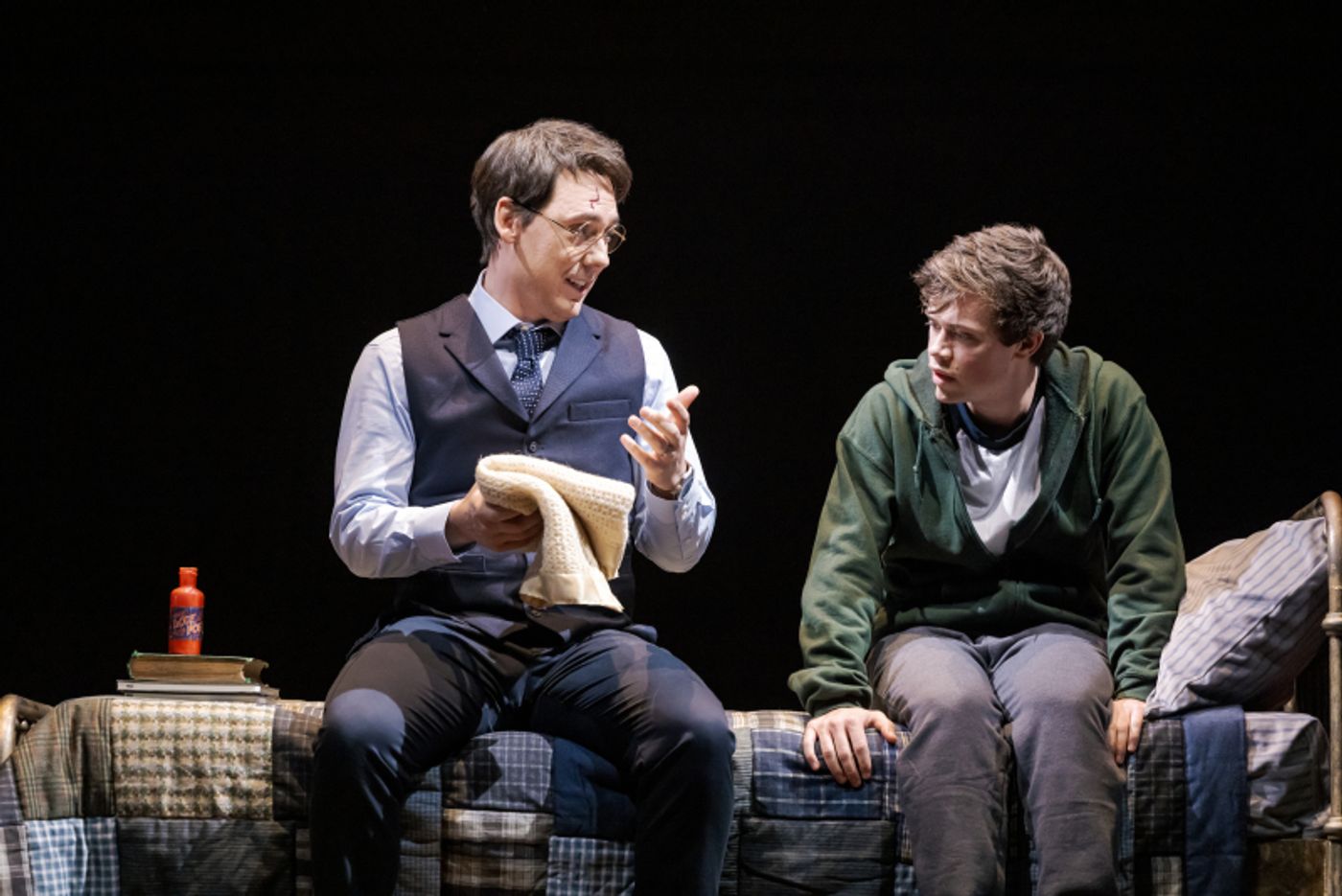
Fine’s contradiction – a character we’re meant to think is Cursed, but turns out to be Beloved – ultimately becomes the key to understanding Harry Potter and the Cursed Child. In terms of storytelling, the play is clumsy, over-plotted, and far too reliant on spectacle-driven twists that don’t always honor the emotional progress of the characters we’ve spent seven books, eight films, and nearly thirty years getting to know. It prioritizes momentum over meaning, preferring plot over psychology. Yet as theatre, it is undeniably effective. This is a production that understands the live stage as its medium and exploits it fully by delivering moments of awe that remind audiences how theatre can do things that film simply cannot. Harry Potter and the Cursed Child may not be a good story, but it tells it well, and that distinction matters.
The reason the play works at all is because of the sheer strength of its production values and the commitment of its cast. When you look at all the design elements – sets, lighting, illusions, choreography – and combine it with performers who move through that space with the same ease as one breathes, it create a cohesive, immersive world that feels both magical and meticulously controlled. There is a sincerity and clarity to the characters even if the material might suggest otherwise. Through their performances, characters gain depth and honesty that the libretto othewise is in need of. And even when the narrative becomes nonsensical or rushed, the acting and stagecraft still manage to keep the audience engaged, on the edge of their seat wanting to see what happens next. In that sense, Harry Potter and the Cursed Child earns the audience’s applause by the end not because of its subpar writing, but because everyone on that stage made the writing bearable.
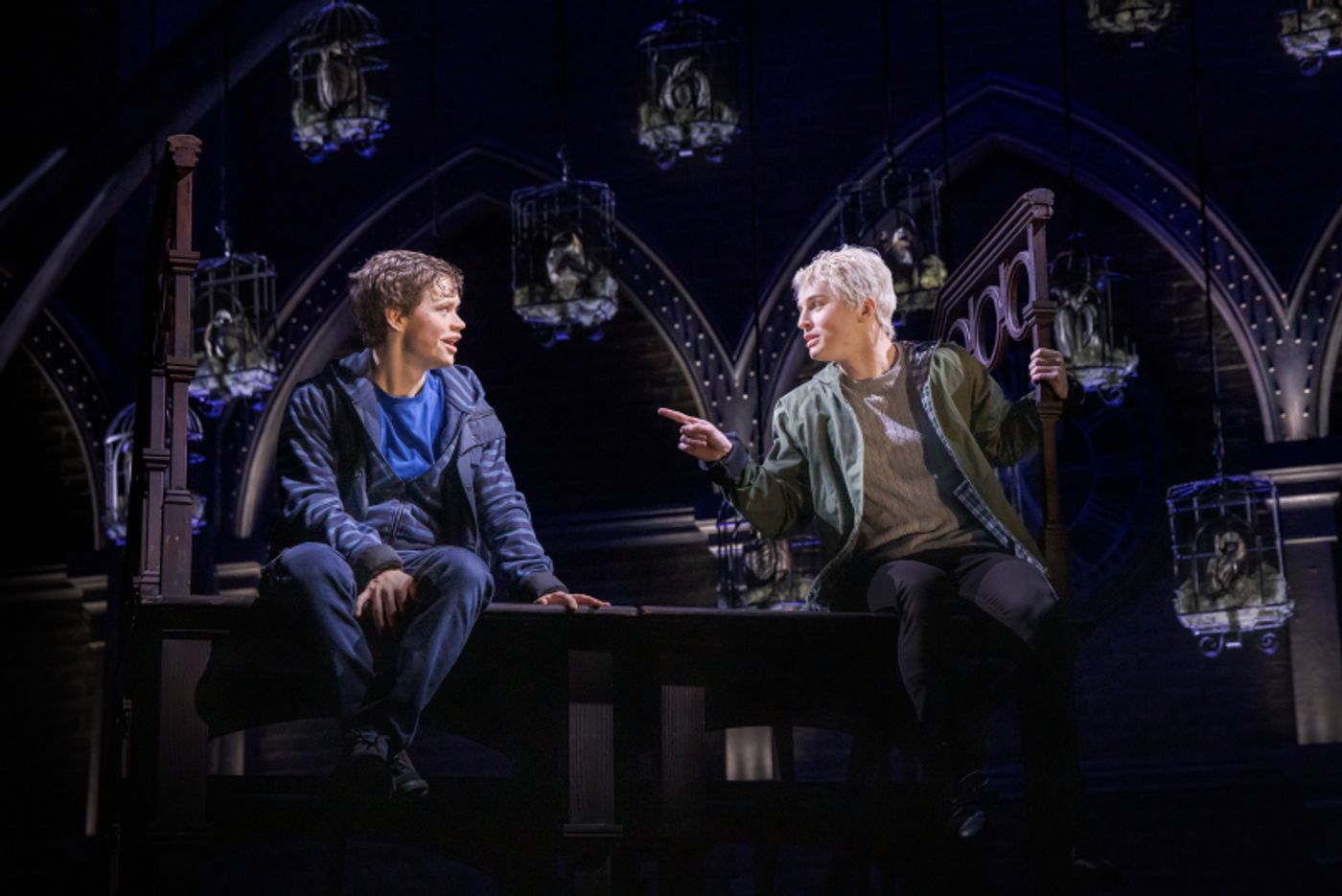
Perhaps the greatest kindness I can offer this play is to simply not consider it “canon.” Like Alexandra Ripley’s Scarlett – a critically-maligned 1991 novel that was touted as the official sequel to Gone with the Wind – Harry Potter and the Cursed Child functions best when treated as a speculative extension of the franchise, not an in-universe continuation. Scarlett never matched the literary power of Mitchell’s original novel, nor did its 1994 miniseries rival the cinematic heights of the classic 1939 film. However, taken on its own terms, it remained a fun and watchable “what if?” spread across four nights of broadcast television. Harry Potter and the Cursed Child occupies that same space within the Wizarding World: it’s not essential, not authoritative, but sure is entertaining when freed from that weight of expectation. If anything, the characterizations of Albus Potter and Scorpius Malfoy does merit further examination in other forms of entertainment: be it novels, a streaming YA television series, or elsewhere. In the meantime, the weird and wonderful mess that is Harry Potter and the Cursed Child will have to satisfy us for now.
HARRY POTTER AND THE CURSED CHILD plays at Dr. Phillips Center January 24 through February 15. Tickets can be acquired online or at the box office, pending availability. Guests who purchase their tickets online can receive an additional 10% off at checkout by using the promo code POTTER10, valid for all performances and showtimes.
Reader Reviews
Videos