


Review: DARK FAIRY TALES at Wroclaw Mime Theatre
If fairy tales once belonged to the forest and childhood nightmares, Bad Fairy Tales gives them back their teeth — and cranks the volume up to 11.
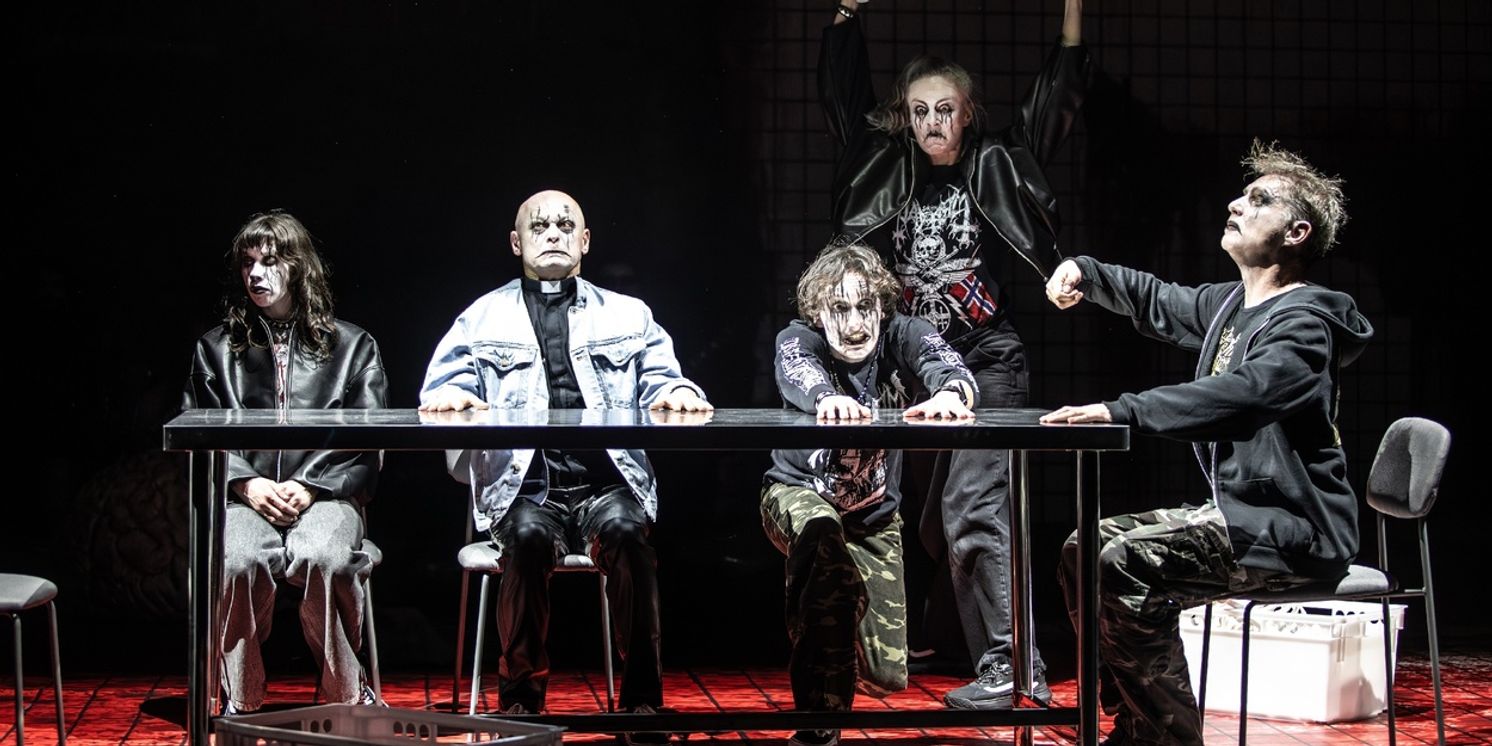
If fairy tales once belonged to the forest and childhood nightmares, Bad Fairy Tales gives them back their teeth—and cranks the volume up to eleven. Marcin Liber presents a world where darkness exists in two frequencies: the archetypal, demonic darkness of folklore, and contemporary metallic darkness—noisy, relentless, and uncompromising. Surprisingly, they blend so well that you begin to wonder if they had always been cousins.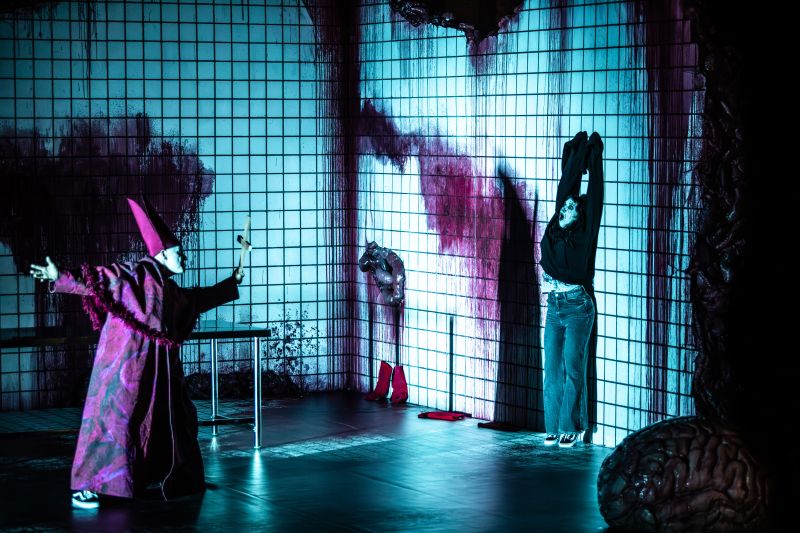
In the new production by the Wrocław Pantomime Theater, almost the entire company is on stage. The atmosphere is electric, physical, and vibrant. A metal band from Wrocław (THVN) plays live, propelling the performance into a dimension I would never have associated with theater—let alone pantomime. When I was in my twenties, I worked in a concert hall, and whenever a metal band was booked, we used to say, “The devils are playing today,” and I would politely ask for the day off. This time, there was no escape. I was forcibly plunged into metal darkness. It turns out I can handle devils now.
The show runs for about 90 minutes without intermission — a succession of short stories and one longer narrative told in episodes. Darkness is its organizing principle, and not just 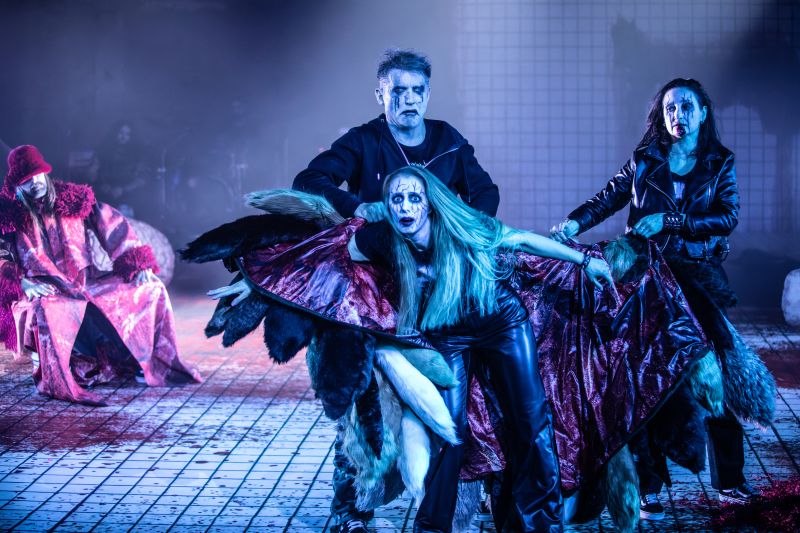 in a figurative sense. Two types of darkness dance together: folkloric, demonic darkness and contemporary metal darkness—amplified, relentless, industrial. I have to confess that the latter was new territory for me, and it proves that theater has a way of making you feel at home in places you never planned to visit.
This is where the performance becomes most intriguing: metal as a contemporary metaphor for the archetypal darkness embedded in fairy tales. I personally prefer a darkness that whispers and seeps in rather than one that crashes and pounds (don’t worry — earplugs are provided), but here metal is used as a theatrical tool with consistency and intention. The motifs are clear, the imagery coherent, and the references purposeful. If at times the metal feels excessive, it is very much by design—and necessary.
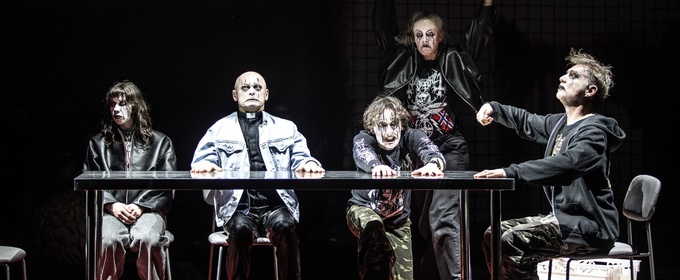
Mirek Kaczmarek’s set design reinforces this aesthetic: blood, a death table, heavy fabrics, and costumes that amplify the expressive power of pantomime rather than neutralize it. The program notes that mimes no longer wear white faces—but here they do, just not in the classical sense. White functions as a visual accent within metallic iconography, another coded element in the genre’s vocabulary.
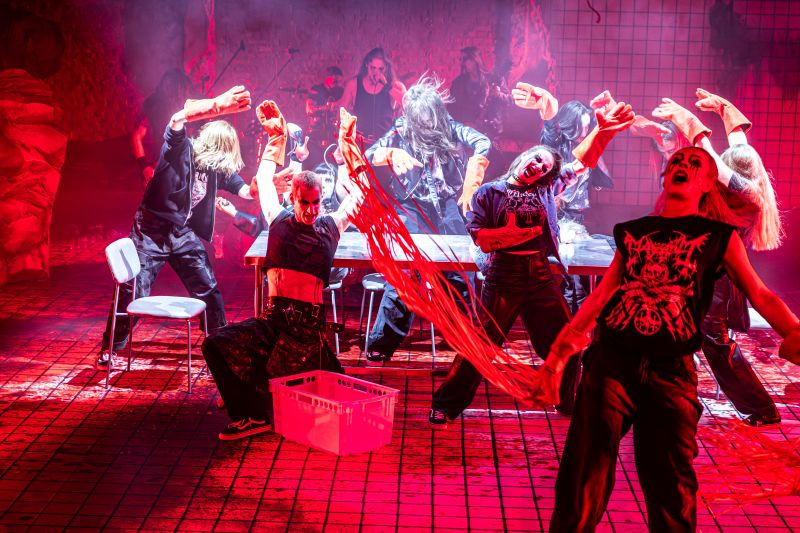
The strength of this production lies in its coherence. Liber is drawn to the biting fairy tale: sordid, malevolent, demonic. Despite numerous pop-cultural references — The Texas Chain Saw Massacre, Saw, and knowing nods to metal culture — the action never loses its footing. The structure works like a kaleidoscope of fairy-tale miniatures, each distinct yet submerged in the same tone of “metallic darkness.” There is also humor—absurd, black, deadpan — which serves as a reminder that fairy tales have always been violent, grotesque, and wildly inappropriate for children. Darkness has never been a niche aesthetic. It has always been existential.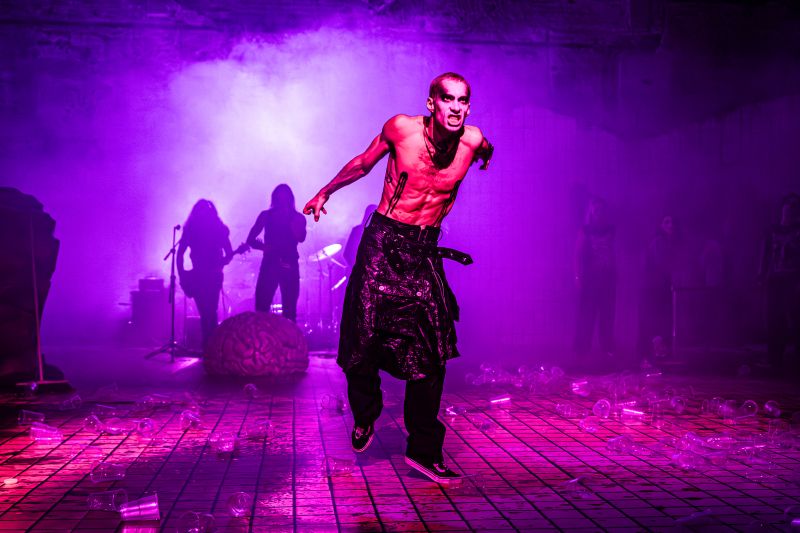
The whole ensemble feels like a box of cursed Lego bricks — strange on their own, sharp, and suddenly dangerous if you step on them by accident, in the dark. Two performers deserve special mention: Jan Kochanowski, whose physical mastery borders on the kaleidoscopic, and Jakub Pewiński, who at times seems to defy gravity itself. Their performances aren’t merely virtuosic—they perfectly align with the show’s metallic demonology, where the body becomes the primary carrier of myth and menace.
One thing is certain: metal works in theater as both language and tool. Did I enjoy it? Let’s just say I left fascinated and mesmerized—and slightly amused that I survived an encounter with metal I would have fled from fifteen years ago. Theater has that power: it forces you to confront demons you might otherwise spend a lifetime avoiding.
Photo: Natalia Kabanow
Reader Reviews
Otrzymuj wiadomości z Broadwayu na WhatsAppie
Otrzymuj najnowsze aktualności, wiadomości i ekskluzywne treści bezpośrednio w aplikacji.

Videos