


Guest Blog: Director Aleksandr Spilevoj on Identity, Language and Understanding in SORRY FOR MY ENGLISH
'So who is that person on stage then? A character or a performer?'
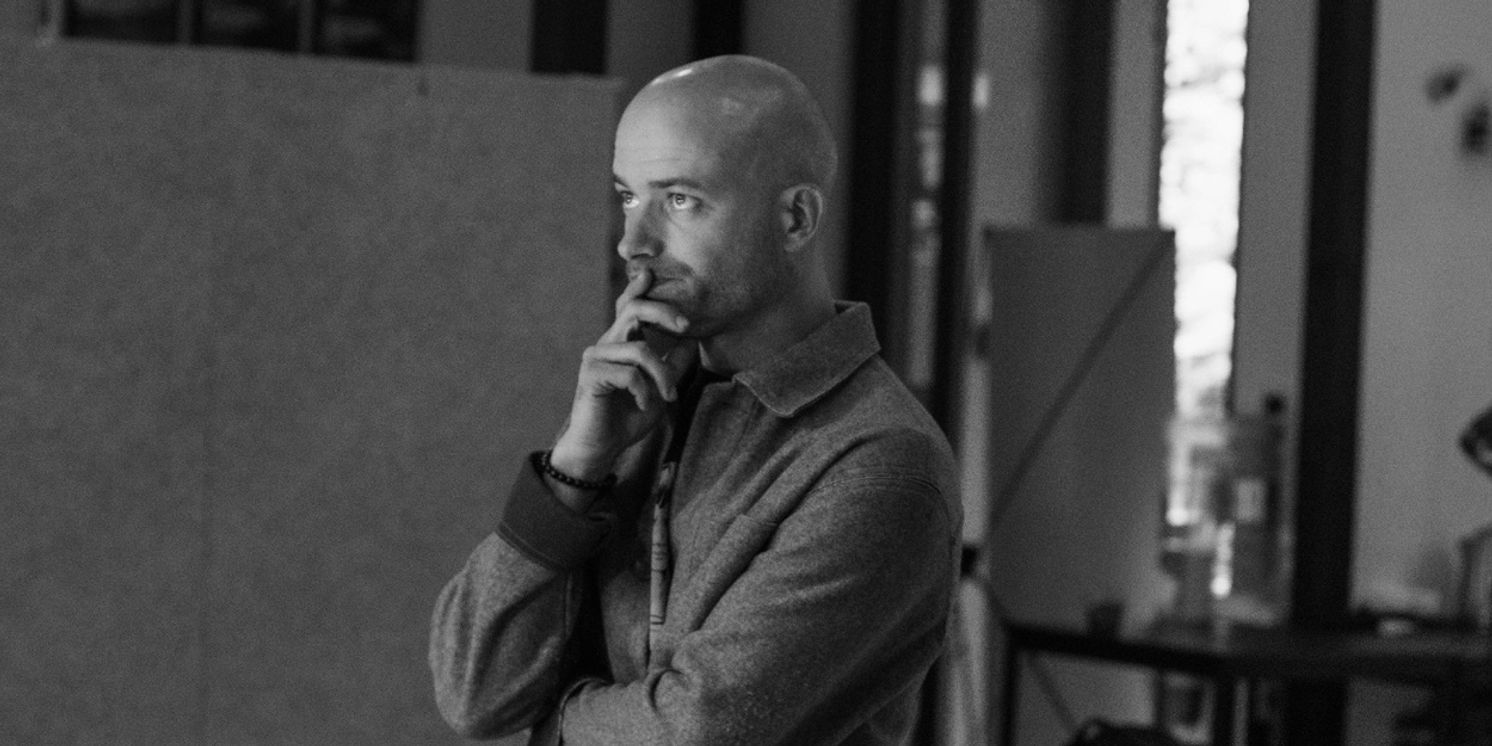
In the play Sorry for my English, the same question of identity resounds again and again: who am I? We are social beings, so the question "who am I?" usually becomes relevant when we find ourselves among people, when we introduce ourselves to others. When I lecture, I am a teacher to my students. When I stage a performance, I am a director to my colleagues. When I go to vote in the parliamentary elections, I am a Lithuanian citizen. And to my mother, I will remain simply a son for the rest of my life.
My identity seems to be constantly changing depending on who I encounter, who surrounds me, and what kind of connection I create with the people around me.
The actors in the play Sorry for my English are people who were forced to find themselves in new environments and forge new connections. Therefore, their identity began to form a new in the new environment. And since they found themselves in countries where their native language is not spoken, it became even more difficult to create and present themselves.
Identity suddenly shrank to very simple sentences: I am an actor. I have a dog. I love music. I feel pain. My acquaintance with them also began with their very simple (but complex) attempt to identify and name their identity. I met different people, different stories, but a very similar feeling of loss that united them.
And then we all flew to rehearse in Warsaw. Different, lost identities, trying to get to know themselves and introduce themselves to each other and to the new world they unexpectedly found themselves in.
We agreed that we would create a performance based on the principles of stand-up comedy. And in stand-up comedy, there are almost no characters. People come on stage under their own names, without special costumes, without glued-on moustaches, wigs, without alien fates and the words of a character written by a playwright, which they may even deeply contradict inside. We tried to go this route too.
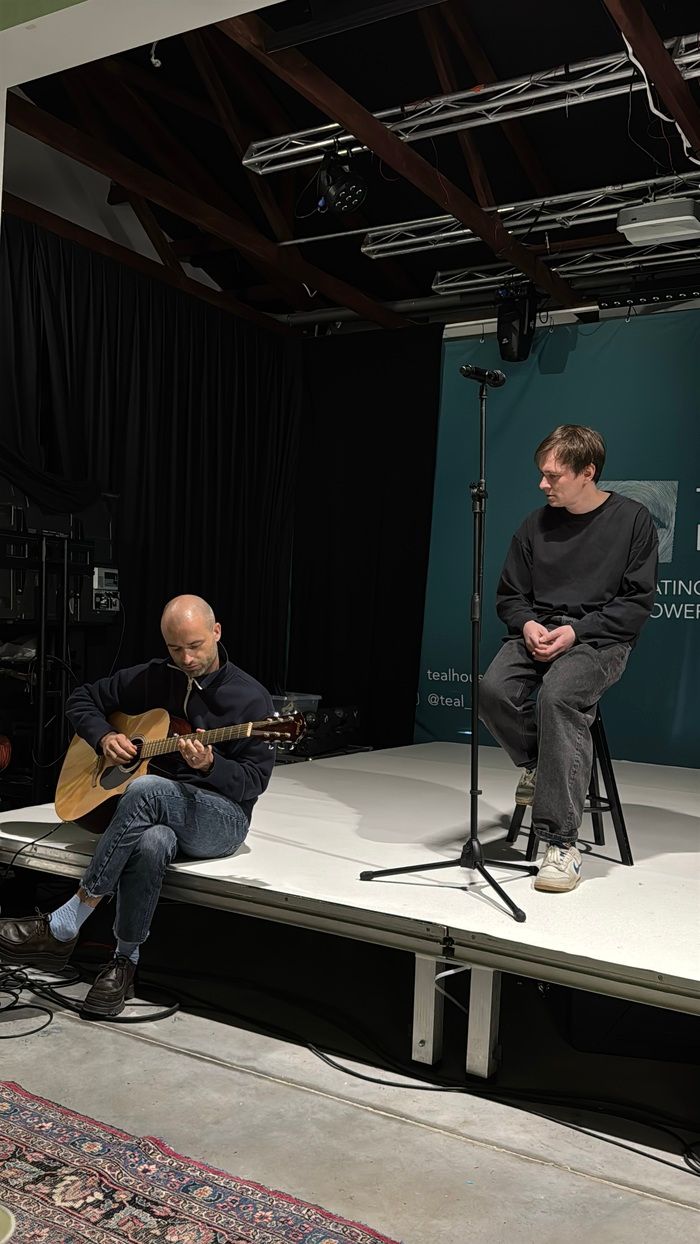
Photo Credit: Aleksandr Spilevoj
But very quickly the question arose: who then acts in our performance, if not the characters? The actors themselves? At first it seemed so. But it soon became clear that this is not entirely true. Because in their monologues there are facts that I hyperbolised or even created when I wrote the dramaturgy of the performance, so they do not correspond to their real experiences. So who is that person on stage then? A character or a performer? Whose identity is this?
We were looking for the answer to this question all the time we were creating the performance. The actors in the performance are looking for exactly the same answer in their everyday lives, living in new countries, creating themselves in new languages, expressing themselves in new social roles.
And now I look at the world, which is changing so quickly that I can no longer understand it.
I don’t know if tomorrow Greenland will still be a Danish island, and I will still be a civilian director working in the theatre, and not a soldier in the trenches protecting my country from a Russian invasion?
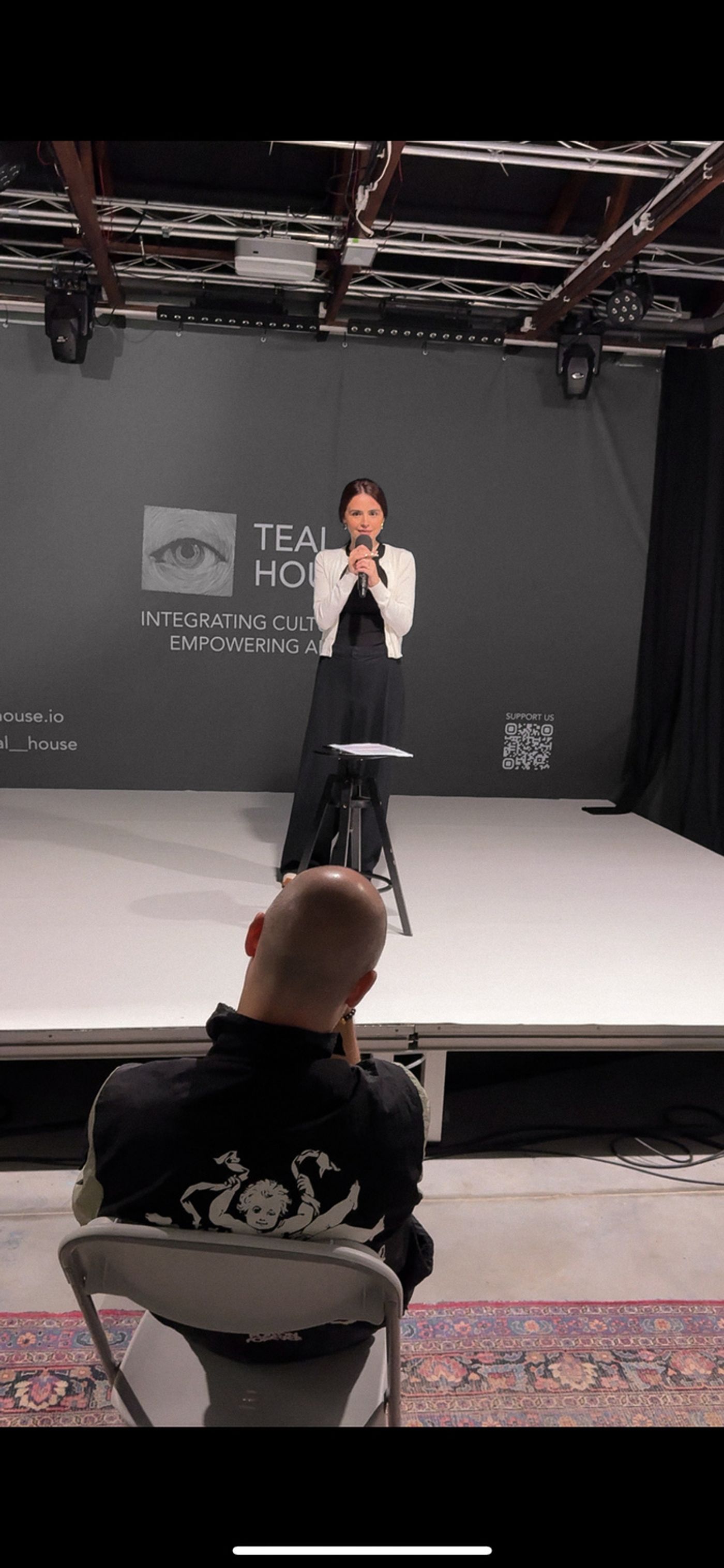
Photo Credit: Aleksandr Spilevoj
I don’t know if we will live in a democratic European state, or if we will welcome a new order and face a new world in our own home? And in this constantly fluctuating world, the same question arises again: who am I?
I am not a refugee. But the world turns so fast, people change so fast that sometimes it becomes dizzying and the answer disappears, becomes outdated and irrelevant. I can’t find it. But I am looking. And I will look. Maybe one day I will understand it. Or I will feel it.
Forgive me if this text of mine and the search for identity seemed too confusing to you. In the play, the actors make it much more fun. However, I have an excuse – I am not an English speaker, so: “Sorry for my English.”
Sorry For My English runs at the Tabernacle Theatre from 30-31 January
Main Photo Credit: Denys Sharuda
Videos