


Review: DIALOG-WROCŁAW INTERNATIONAL THEATRE FESTIVAL
New edition of epic festival.
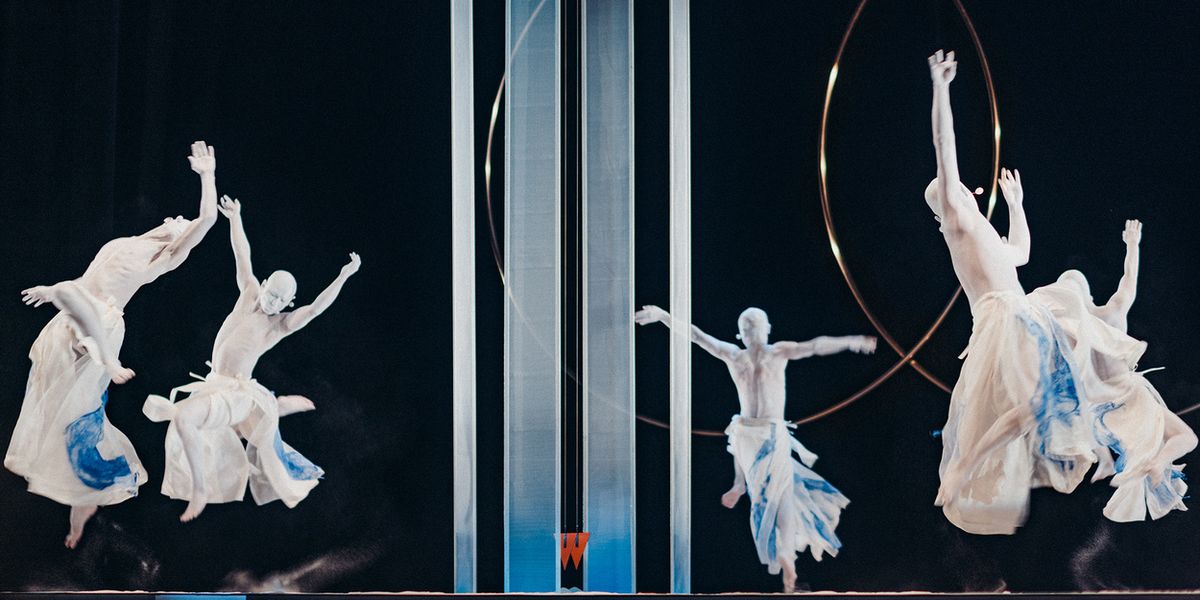
Dialog-Wrocław was born from a bold idea. In 2001, faced with a still-divided Europe, 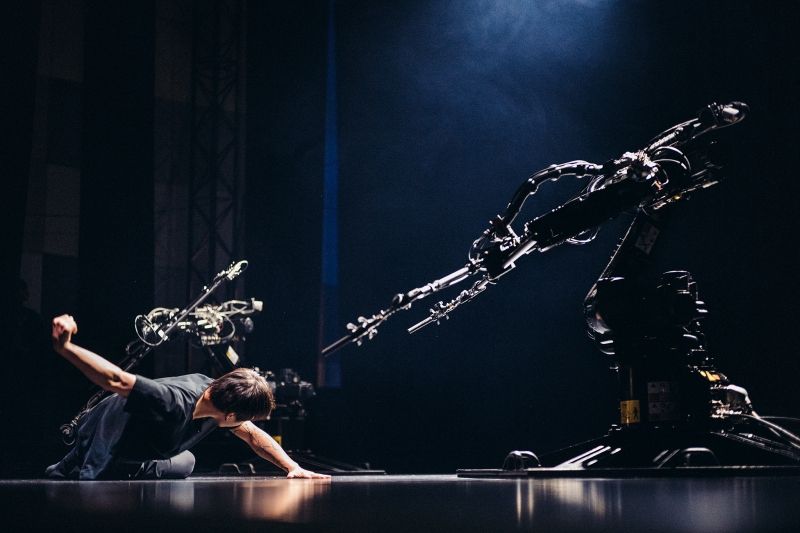 Krystyna Meissner thought: Let’s make them talk. On stage. She thus created a festival where each day was a conversation—two performances facing each other, clashing, responding, arguing without a word.
Initially, it was simple: a Polish play, a foreign play. But very quickly, borders lost their importance. What mattered were the questions distilled by the performances: Who are we becoming? What are we afraid to admit? And why does theater still have the power to awaken the shadows we seek to conceal?
The greatest voices in international theater were present—the visionaries, the agitators, 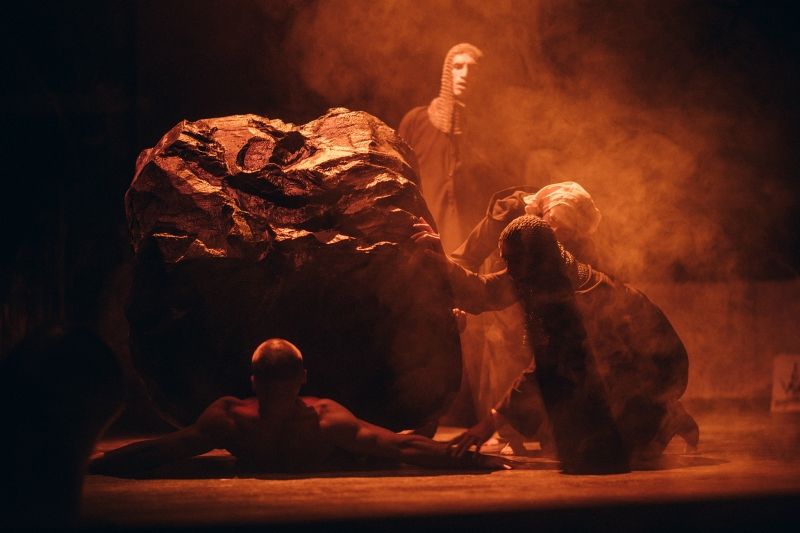 those who see the stage as both a laboratory and a battlefield. Polish masters joined them, and for a time, Wrocław became a beacon for all those who aspired to more than pretty light shows and conventional endings. Time passed, the world changed, and the festival evolved with it. After twenty years, Meissner passed the torch to Mirosław Kocur. The latter opened new perspectives—towards science, technology, and unprecedented ways of understanding art. But the very essence of the festival remained intact.
I had planned to see everything, but the universe had other plans. So I'm adding the spokesperson’s (Tomasz Domagała’s) comments to fill in the parts of the story I missed.
The eleventh edition of the festival opened with a reflection on what connects science and art. The outstanding physicist, Prof. Melvin Vopson, in a short lecture, spoke about creativity as a shared space of using reason and emotions — a place where observation becomes an act of creation.
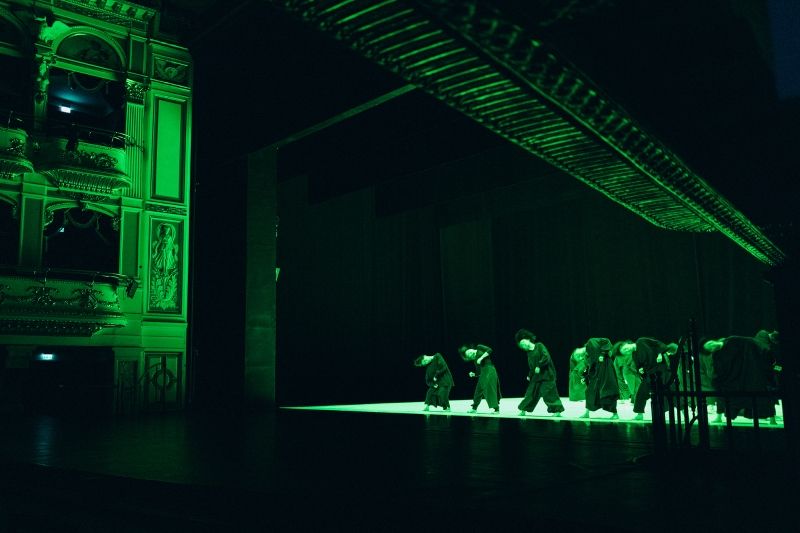 This year, the Dialog-Wrocław International Theatre Festival turned out to be a peculiar laboratory of human memory. In the performances, past and present, body and thought, reality and illusion met. Among the many offerings, four titles resonated the most fully: Kofman. Double Bind by Katarzyna Kalwat, Chronicles by Gabriela Carrizo, The Little Theatre at the End of the World: Opus III by Ezequiel Garcia-Romeu, and Groundhog Day by Marcin Wierzchowski.
Kofman. Double Bind from Nowy Teatr in Warsaw opened in an unexpected way the space between philosophy and life. The performance is not a classical biography — rather a surreal story about how memory shapes a human being and how one tries to reconstruct oneself from the fragments one carries in one’s mind. Everything here is suffused with boundless loneliness, which Maja Ostaszewska, playing the title role, confronted masterfully.
The Belgian ensemble Peeping Tom, in Chronicles, transported viewers into a closed bunker/cave. The men inside try to understand the catastrophe that unfolds before our eyes. From the bodies of dancers, Gabriela Carrizoshe creates sculptures, and from sounds — memories. Chronicles are, therefore, both an apocalypse and a dream of a world that has passed. On its ruins arise questions about the meaning of our existence or the 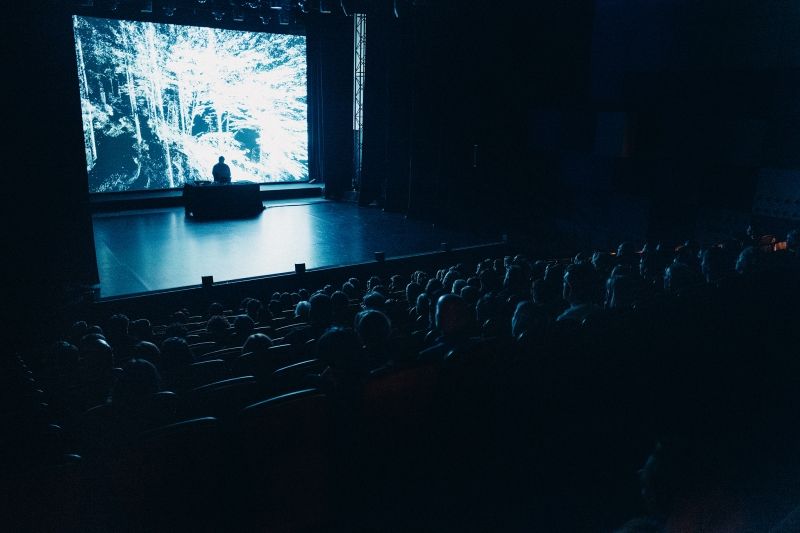 strength of human desire that refuses to accept death.
The French Théâtre de la Massue from Nice, in The Little Theatre at the End of the World: Opus III, told the story of the decline of industrial civilization. On a white stage, among tables covered with fabric, three puppeteers created a miniature world — a rusty machine — in which a tiny figurine of a human wanders, trying to find itself in its own fate. Minimalism met poetry, and small objects and mechanisms allowed the viewer, inexplicably, to feel on their own skin the weight of the experience of the portrayed era.
Little Theatre from The End of The World: Opus III can therefore be called both a lament and a prayer for lost harmony. Garcia-Romeu does not speak of the end of the world, but of the end of an era and… of the illusions that anything can be repaired without a profound change in human mentality.
On the opposite pole of emotions was Groundhog Day from Wrocław’s Capitol Theatre. The director, Marcin Wierzchowski, known for his sensitivity to the human being, read the film’s original as a parable about the laborious maturing toward goodness.
 Other performances in the programme of the 11th edition of the Dialog-Wrocław Festival formed elements of a broad panorama of contemporary theatre. Krzysztof Warlikowski, in Elizabeth Costello. Seven Lectures and Five Moral Tales, treated Nobel-winning literature as a moral mirror, while TAO Dance Theater, in its formally dazzling performances 16 and 17, turned movement into pure meditation on the body. Taiwanese artist Huang Yi, in the project Voices. Objects. Puppet., examined the possibilities of creation and the relationships between human and machine. In subassemblies, Ryoichi Kurokawa juxtaposed nature with the city, creating a hypnotic image of the catastrophe of humanity, which we could experience almost physically. Luk Perceval, in Sex, Money and Hunger, extracted from Zola a universal story of heredity and the desire to preserve memory. In Totem, Ushio Amagatsu transformed silence and the movement of butoh dancers into an unexpected rite of passage — the final, spiritual gesture of a master.
When one looks with distance at the entire programme of the 11th edition of Dialog-Wrocław, it forms a coherent composition of performances based on the unending question about the condition of contemporary human beings.
Once again, the Dialog-Wrocław Festival proved that it is not merely a showcase of 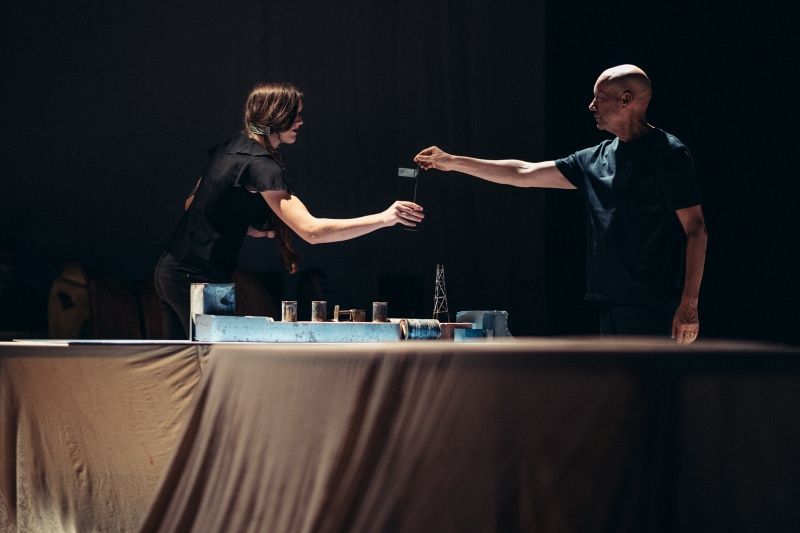 outstanding theatre, but above all a space of encounter. Here in Wrocław, different languages, aesthetics, and traditions connect into an unending sequence of questions about the human condition. One may say, in the spirit of Prof. Vopson’s words, that science and art, reason and emotion, reality and illusion are not opposites but orientation points of two paths that cannot exist without each other — leading to the same goal: understanding the world and oneself. And theatre remains the most sensitive laboratory of this process.
Photo: Festival
Otrzymuj wiadomości z Broadwayu na WhatsAppie
Otrzymuj najnowsze aktualności, wiadomości i ekskluzywne treści bezpośrednio w aplikacji.

Reader Reviews
To post a comment, you must register and login.