


Broadway Deep Dive: Telly Leung Unpacks His Career Onstage and the Roles That Led to MASQUERADE
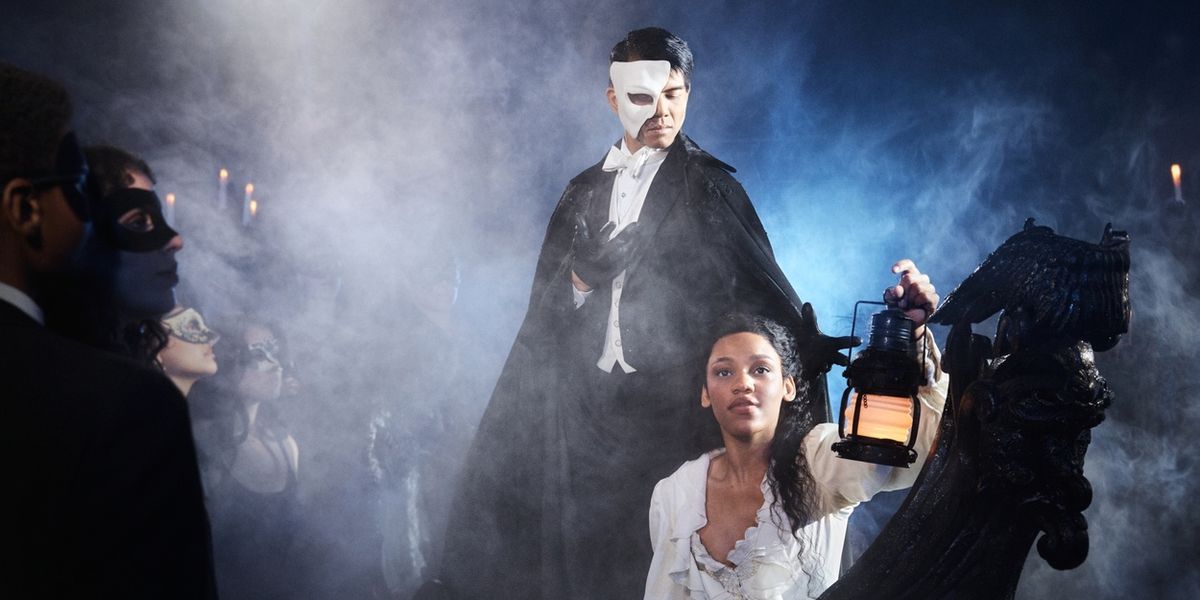
Leung plays 'the Phantom' in Masquerade off-Broadway.
Do you have a burning Broadway question? Dying to know more about an obscure Broadway fact? Broadway historian and self-proclaimed theatre nerd Jennifer Ashley Tepper is here to help with Broadway Deep Dive. BroadwayWorld is accepting questions from theatre fans like you. If you're lucky, your question might be selected as the topic of her next column!
Submit your Broadway question here!
Current star of Masquerade Telly Leung discusses with Jennifer Ashley Tepper playing the Phantom in the immersive production, the full circle from Rent fan to Rent actor, Gavin Creel’s leadership during a production that never was, and much more.
Telly Leung: Sometimes the best interviews happen when it’s just like, two friends chatting.
Jennifer Ashley Tepper: I know! That’s the best, because you really feel like you're just a third friend at the table, you know?
Hello BroadwayWorld readers! I am so excited to be here with Telly Leung: multi-hyphenate, Broadway actor, my friend of many years! We're going to chat about Masquerade. We're going to chat about Telly's career and aspirations for the future and background and jus dot a lot of theater nerd-ing out as we always do when we chat.
My first question is about how you’re currently starring in Masquerade as one of the Phantoms! What are you allowed to tell us about that experience and how did you first get involved?
Well, at the beginning, I wasn't allowed to share very much, because part of the mystique was about: how are they going to reimagine Phantom of the Opera? For the first three months or so of us doing the show, we were kept under tight lock and key about what we could reveal. Now that we’re open to the world and so many people have come to the show, including the “Phans” [Phantom fans], things are a little bit different. At first, we tried to keep a lot of things a secret, including which actors performed during which pulse. But within a week of starting public performances, the fans had already shared this information online. They posted about which Phantom was paired with which Christine and even drew intimate maps of the building! The Phans have us all beat.
So now I can share more—of course, with some secrets still held because I don’t want to give any spoilers that ruin the performance for those who haven’t seen it! But what I can tell you is that this is an immersive reimagining of The Phantom of the Opera. And it’s not literally Phantom of the Opera. We even have a different title: Masquerade. It’s the show you know and love but it’s completely told from the Phantom’s point of view. [Director] Diane Paulus’s wonderful concept around the production is that even though The Phantom of the Opera ran on Broadway for 35 years and became the longest running Broadway show in history, the Phantom is very angry that the show has closed. He never got to tell his side of the story. So what he decided to do is take over Lee’s Art Shop in New York City, turn it into his theatrical playground, and invite you all to a masquerade ball, where he gets an opportunity to tell his side of the story from his point of view.
When audience members come to see our show, they are entering our mind as the Phantom. And I say “our mind” because what’s unique about this theatrical structure is that there are six different entry times when you buy a ticket and six different performances of the show each night. Each has a different cast with a different Phantom and Christine that take you through the journey of the show you love, but through the Phantom’s perspective.
One thing I love so much about Masquerade is that it feels like it embraces fan culture—and Phan culture. It’s partially a professional carrying forward of fan fiction dreams about the show. Telly, you’ve been in so many shows that have had really unique and large fan bases, from Rent to Wicked—and now Phantom. What has it been like interacting with these fandoms?
You’re right; I have had a lot of experiences in projects with huge fan bases. As an artist, it’s very humbling. The biggest one was Glee because that was an international pop culture phenomenon. It’s amazing to realize you’re a part of something that has helped kids who feel like outsiders feel like they belong. Glee helped some young people come out of the closet and embrace who they are. It allowed them to embrace the glee club nerd or theatre nerd in all of us and it promoted arts education. And there are now a generation of viewers who know who Burt Bacharach is because Glee did a whole episode on that. As an artist, it’s wild and very humbling to be a part of that.

I feel that every night playing the Phantom, knowing that so people have such an emotional relationship to the show. It might have been their first Broadway show, they might have seen Michael Crawford. Or they might have flown to London to see Ramin Karimloo and Sierra Boggess. But I know that so many people have an emotional memory about Phantom. So there’s an extra level of wanting to deliver for those people who already gave Phantom a special place in their heart. In order to do that, I have to bring myself to it. I have to make my love for storytelling palpable for people in a room.
This is such an intimate version of the show. All of the cast members in Masquerade talk about how there’s no way to fake it during this production. Audience members are inches away from you. You can never check out. Sometimes when you do a show on Broadway eight times a week and there’s a distance between you on stage and the audience in the dark, you realize that you’re doing the show but you’re accidentally thinking about what you’re going to eat for dinner that night. You cannot do that in this version of Phantom. You have to be completely present, not only with your scene partner but also with the sixty people in the room that are experiencing the show. They are all coming from different backgrounds and have different existing familiarity with the piece. For some people, they saw Phantom of the Opera on Broadway thirty times. And then for others, this is their first introduction to Phantom ever; Masquerade is how they’re being introduced to this story. There’s an added level of responsibility to it, and I embrace the challenge. That’s what makes it exciting. I’ve never done theatre like this.
What’s your own personal history with The Phantom of the Opera? I know you grew up in New York. Did you see the musical as a kid? Had you sung any of the score before?
Yes! When I was a kid growing up in New York City, I would always ask my parents to get me a combined birthday and Christmas gift of tickets to a Broadway show, since my birthday is in January. When I was in high school, I started saving up my own money to see shows. I’d go to TKTS or sleep on the street to get $20 rush tickets to Rent. When I was in junior high, my mom and dad had to take me but later on, I’d go by myself and get a rush ticket to Chicago.
The first time I asked my parents for tickets to a show, I told them I wanted to see Hal Prince’s Show Boat. My poor dad snored through the entire three hours of that production while I was completely engrossed. I thought that production was unbelievable. My dad is an immigrant to America and English is his second language, and on his one day off from working at the restaurant, he took his kid to a Broadway show. The show just wasn’t in his wheelhouse and he ended up fast asleep.
So then I decided I wanted to make my parents take me to a show that would be entertaining for them, as non-native English speakers. That’s how we came to see Phantom of the Opera, with all of its spectacle. My mom worked as a seamstress so when she saw Phantom, she fell in love with all of the costumes. She just couldn’t believe the clothes. Phantom is one of those great musicals where you don’t have to understand very word to get the story. To the credit of the creators, including director Hal Prince, you can put the show on mute and still understand what was happening.
The two times I saw Phantom as a kid, I saw Davis Gaines as the lead. He was stellar.
I always love hearing your stories about growing up in New York and the shows you got to see. One of my favorite things about you as a friend, as a human, and as an artist, is you are still a fan. Even though you’re now a professional, being a true fan of theatre hasn’t left you. Will you share about your experience rushing Rent and then being in Rent? What was that full circle moment like?
Rent is the show that made me want to do theatre when I was 16 years old. The first few shows I saw were Cats, Phantom, Les Mis, and those sorts of productions. I loved them and I thought theatre was wonderful, but I could never see myself in them. It wasn’t until I saw Rent that I could see myself in theatre.
I understood the music. I understood the people. I’m a New Yorker and I lived in the city with those people. I rode the subway with them. I knew the world and I felt I could tell the story of it. Rent made me feel like being on a professional stage someday was not beyond my reach. I don’t know if I actually said those words out loud when I was 15 and saw the original cast of Rent. But subconsciously, that’s what clicked for me.
I was one of those Rent-heads who slept on 41st Street outside the Nederlander. I got there at four in the morning and and waited for the box office to open at 10am. I made friends on the line. I was the recipient of several of those $20 tickets—the summer of 1996, after Rent won the Tony for Best Musical, I must’ve seen Rent thirteen or fourteen times.
I didn’t realize it was that many!
It was many, many times. I saw the original cast. Then I saw Marcy Harriell as Mimi, Sherie Rene Scott as Maureen and Michael McElroy as Collins. I saw Norbert as Roger. I was obsessed.
The last time I saw you, we were at the book signing of [original Rent music director] Tim Weil. Tim wrote a new book called Making Rent for which you wrote a wonderful foreword. I was telling you this, as we were sitting there at the Strand. We were sitting there before this live conversation between Tim and [original Rent director Michael Greif], in this packed room filled with theatre people, friends of Jonathan Larson, and people who had worked on the original production of Rent. There were folks there from the original Rent band and people like Michael McElroy and Jay Wilkison who were part of the final Rent cast. It was the most New York event I think I’ve ever been to. And in some ways, even though I worked on the show, I sat there and I felt mostly like a fan. I wasn’t experiencing Michael Greif and Tim Weil as collaborators and colleagues; I regressed back to teenage me, watching these icons of theatre who made the thing that made me want to do this. They changed the trajectory of my life with this piece of art that they made.
And, it came at exactly the right time in my life. I went to Stuyvesant, a math and science school in New York City. I was not supposed to grow up and do theatre. I was supposed to go to Harvard and be a math major or pre-med or pre-law. Theatre did not seem like what was in the cards for me. It was definitely not what my immigrant parents had in mind for me: to go into show business. But then Rent single handedly changed my life.
You work now as a director as well and you work with students and young people. Thinking about that as well as your teenage self, what led you to Carnegie Mellon? And for young people today, what do you want to tell them about, while they’re in the process of selecting a college or a path for themselves after school? What do you wish you yourself knew at the time and what do you want to communicate to them now?
It’s a very different time now. When I was applying to college, there was no internet. You couldn’t google a college. There was no google! You had to buy that giant Princeton Review book of the top 500 colleges in America and talk to your guidance counselor. Then you’d have to snail mail request that brochures be sent to your home. And if you didn’t have the money to travel and visit those colleges, all you could do was look at the pictures in the brochures and try to imagine yourself there. So that was my college research.
So, did I decide to go to Carnegie Mellon? Not really. My acting teacher at Stuyvesant had a friend that was a professional actor. She came and coached us in acting class. She had gone to Carnegie Mellon and I asked her about her experience. I didn’t know about the other alumni that had come out of that school or that it was the oldest degree granting university for drama in the country. I just knew that I needed to apply to seven colleges and that she told me about that one. I figured I might as well make Carnegie Mellon one of the seven.
I didn’t know what I was doing at the Carnegie Mellon audition. I wore blue jeans and a sweater with a hole in it.
Very Rent, actually.
I didn’t have any kind of college prep or audition prep. I went to Colony Music myself and picked up sheet music for songs that I liked. For people reading this that don’t know about Colony, you should do some research about what that was. It was in the Brill Building! It’s where we went to buy sheet music or to, you know, look at the Korean cast recording of Evita on the shelf that we hoped to save up money to buy one day. That store was our access to the theatre world.
In addition to saving up my allowance money to go see shows, if there was a class that was taking a field trip to see a show, I would try to elbow my way in. That was my college research. So my advice to people today who aspire to do this is that they have no excuse not to do the research. They have the internet, Google, Instagram…
So many people write me on Instagram who are aspiring actors. I especially hear from a lot of young Asian actors asking: how do I do this? And I always say to people: I might not get back to you right away but I will reply to you. I reply to everyone. I feel like it’s my responsibility now that I’ve been working in theatre for decades. It’s my responsibility to pass it on and give it back.
I myself didn’t really have a means to talk to professionals who did this unless I met them by chance at school or stage doored. I definitely talked to a lot of actors at the stage door when I was a kid. I will never forget having a conversation with Alice Ripley at the stage door when I was a teenager. She told me about what it was like to do a show eight times a week and she was just so cool. She hung out at the stage door and talked to people so that was how I found out about what the world was really like.
For the next generation, my advice is to take advantage of all of the information and materials that are at your fingertips. Everything is so, so much more accessible than it was back in 1998. So find the people and ask all of the questions. The worst you can get is a no. But somebody will help you. Most likely me.
There are plenty of people like that wouldn’t be here if other people hadn’t shared their experience, even if just through a brief stage door interaction like the one I had with Alice Ripley. It was so encouraging. It made me realize that there were normal human beings who were professional theatre artists. It wasn’t something untouchable and unreachable. I’ve never told her that before and I should at some point.
What you’re saying resonates so much with me because I just got back from Florida Junior Thespian Festival. I was with thousands of middle school theatre students and the thing I found myself saying a lot was that they should take advantage of what’s great about the internet. Young people today can become interested in a specific musical theatre writer or actor and learn about everything else they’ve done. They can find more songs by that artist on YouTube or streaming services. There’s so much at their fingertips because of the internet.
You also made me think earlier about how part of the origin story of BroadwayWorld has to do with Phantom of the Opera. Rob Diamond started a Michael Crawford fan site back in the day because he was one of those “Phan”s. And that eventually led to creating BroadwayWorld. And being able to gather with other theatre fans on the internet, whether it’s on Instagram or TikTok or BroadwayWorld or somewhere else… that is an amazing thing that young people can use as a resource.
When it’s not amazing is when people forget that there are human beings behind the keyboard. It’s easy for us to forget that there are people reading those words and comments who are working on the thing.
Totally. What you post on the internet is public to everyone. There’s nothing wrong with thinking that a production you just saw wasn’t your favorite. It’s actually enriching to discuss things you didn’t like about a show with your friend over dinner or over text and dissect it. That’s a great part of art. But putting something on the internet for everyone to see that’s cruel about why you didn’t like a performance? Like if you wouldn’t announce it from the top of the TKTS steps, why are you announcing it on the internet?
You know who was also really amazing back in the day? I remember being a Stuyvesant High School student and Anthony Rapp came to speak to us. This was at the height of the popularity of Rent, which was already so influential to me, and Anthony Rapp came to speak to the LGBTQ+ club.
Anthony came to speak to this group of teenage LGBTQ+ students and allies. In the 1990s, being out or even saying you were an ally was a big deal. So him coming was huge. The after school club had one little classroom to meet in and there were 10 kids who were part of the club but that day, students were packed in and lined up out the door who wanted to hear Anthony speak. How amazing is that? It speaks to the power of theatre. He really made a difference that day. And maybe people were there because Anthony was famous for Rent and Adventures in Babysitting and everything else. But we were all really affected by him making himself feel accessible and like a human being. He changed minds that day through that conversation. Even if what got people in the door was his celebrity, the conversation he led and the space he held for people was life changing. I’m not sure if he knows just how life changing that was, but it left such an impression on m that I’m still remembering it 30 years later.
So much of what you’re talking about also speaks to the fact that theatre, no matter how much technology is involved, is always passed down between people. No matter what technology comes, it’ll always be influential to have people mentor you and to mentor other people.
Yes. People after the pandemic were all saying that theatre was dead and nobody wants to go out anymore. But look at what’s actually happened. People yearn for live theatre more. Masquerade is happening when it’s happening and it’s been so successful because it’s intimate and we’re actually sharing space and air together. Masquerade only happens the way it happens one time. It’s a very visceral, tangible experience. We are literally touching the audience members.
Nothing is ever going to replace theatre. No pandemic is going to kill that. No AI is going to replace that. If anything, things like actually make us yearn for the real live theatre experience more.
Absolutely. Is this the first time you’ve done an immersive show of this sort?
Yes. And I confessed to Diane Paulus that my main reason for taking the job was to “stalk” her and learn every immersive directing trick in the book. Although I’m not going to give up performing because I still love it, I’m starting to direct more. And because I’d never done anything immersive, I wanted to learn what it was like as both an actor and a director. How do you put it together and what are the thought processes that go into creating an immersive show? How is it different than putting a proscenium production on its feet?
I learned a lot. What I didn’t expect was that it would renew my love for acting. Once I start a performance of Masquerade, there are two hours and 15 minutes where I have to be completely engaged. There’s no walking offstage and checking out. No matter where you are in the playing space, you are always only seconds away from engaging with an audience member or a scene partner or a piece of scenery. And every day, the show changes because the 60 people in your pulse change and the energy changes as a result.
As an actor, it feels like doing a stage musical but it also feels like on-camera acting. It feels like there are 60 cameras watching you the whole time, one for each audience member, and you have to keep acting and storytelling until someone yells cut… but nobody yells cut for two hours and 15 minutes.
That’s a fascinating way to think about it.
It’s challenging to stay in that for two hours and 15 minutes. It’s also exhilarating. And it’s something I’ve never done. How lucky to do something new at age 46 as an actor.
I’ve been lucky enough to see you play so many roles over the years. Is there any part you played at a younger age that you’d want to return to, having a different perspective?
I actually did that with Allegiance, and it was powerful. Allegiance opened on Broadway in 2015. When I first started that show with the first reading, it was 2010. Then in 2022, I revisited my role in London with George Takei reprising his role as well. It was fascinating to be playing the same character, but many years wiser. Allegiance in a pre-Trump, pre-pandemic world in 2015 also felt like a completely different show than it did in 2022. Honestly, when it opened on Broadway, it was probably ahead of its time. London audiences in 2022 received the show in a completely different way. We collectively changed as a society based on those two big things that happened in the seven intervening years. I was singing the same words but the show felt different and I felt different.
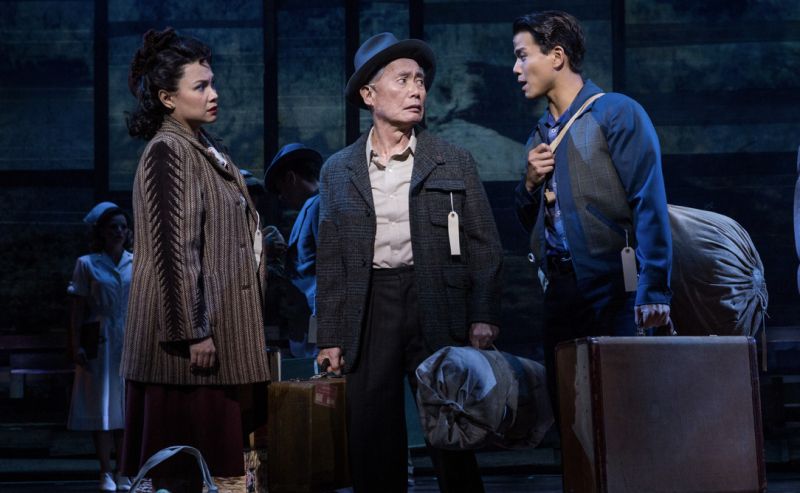
The London production also felt like a proper goodbye to the show for me. I didn’t feel finished with Allegiance when we closed on Broadway after four months. It wasn’t until later, after the London production and the pro-shot, that it felt like we had made the impact we intended. The live captured version is actually being shown not only in theatre classes but also in American history classes.
Thank God for live captures.
People know me from Rent and they know me from Allegiance, because those are the two shows I’ve done that received live captured. How cool is it that those things get to live on? I’ll be old and gray and people will still be like: you’re the guy from Allegiance, you were wearing a little green hat in Rent.
Before you started Allegiance, what kind of research did you do about the Japanese American internment camps? I know you were working hands on with George Takei. Did you mostly draw on his experience or was there other research involved? And then also, did you have the experience of speaking with people who came to the show who were in the internment camps?
It was remarkable. I did historical research and learned about the events that happened. Then there was actor-friendly research like talking to George and asking him and other people who lived through that experience questions. What did the air smell like? What was the dryness like? What was it like when there was a sandstorm in the middle of Arkansas? What did it feel like to live in a crowded barracks with all of those people?
There was one day when our director Stafford Arima taped out in the rehearsal room to show exactly how big a barracks would have been. He placed a bunch of cast members inside of the space so we could understand what it felt like. We were performing the show on a big Broadway stage, at the Longacre, but doing that exercise helped us to keep in mind the actual space our characters would have been inhabiting. That tactile, sensory stuff is helpful as an actor. George Takei also works that way and when he thinks back to the internment, he thinks about big band music. He remembers that’s what the record players were playing. When he hears it, he is transported back to that time, so that genre was incorporated into our score.
There were many people who came who had been in the internment camps. It was remarkable to talk to them. Sometimes George had people come to the show who had been in the camp with him and his family. And sometimes audience members would talk to us and say things like, “Grandma always told us about this and now I’m understanding it more because of your show.” It was quite powerful.
Are there lessons from your acting career that you’ve drawn on as a director? As you’ve started to direct more, are there certain things you’ve found yourself using, like setting up visceral interrogations of the space for your own actors, for example?
Well, I’m still a baby director. So I look forward to expanding my knowledge. I’m actually getting my MFA in directing at the moment from the University of Idaho. I’m doing that virtually at the same time as I’m doing Masquerade. It’s a wild experience. I’m trying to learn as much as I can. There are wonderful theaters like Theatre Raleigh that have given me chances to direct things. I got to direct Yellow Face there and I’m going to be directing something else there this fall. I love that place so much. I’m so grateful to Lauren Brady for giving me a shot to flex my director muscles. I’ve also directed at the University of Michigan twice. I directed Rent at UC Irvine. I directed at my alma mater, Carnegie Mellon, and it meant a lot to me to do that. I’m very grateful to those places for letting me find out in practice what I love about directing.
As an actor, you don’t get to have the kind of collaborative conversations with designers that you have as a director. I relish that part. I love collaborating with people in a room who know more than me. As a director, I know what I want the lights to feel like, but I can’t tell you which equipment to use to make that happen. I love partnering with great lighting designers to figure that out together. And it’s the same with scenic and costume designers; it’s so rewarding working together to figure out how to convey each moment. My mom’s a seamstress, and I can’t sew a button. But what I do know is the art of storytelling, from my many years as an actor. And I know as a theatre fan what an audience member would want to experience while watching a show. And I do have the leadership skills to rally the troops.
When we were doing the Godspell revival together, it felt like Lindsay Mendez and I were the mom and dad of the cast. We were always cheerleading the company. I have also learned a lot about what it means to lead a team from being part of productions that were artistically successful but not commercially successful, like Allegiance. The thing that they don’t teach you in college is that when you’re the leading man of the company, you’re also leading the morale. Sometimes there’s a blizzard and the audience is 60% full but you have to encourage everyone to go out there and give 100%. That knowledge has also informed the way that I direct and lead a room.
I’ve also found that I really enjoy pieces about identity. I have so many identities myself that are important parts of me. I’m a part of the LGBTQ+ community, the Broadway community, the Chinese American community, the AAPI community. Sometimes the intersection of those identities meshes well and sometimes they really conflict. And I find myself drawn to stories that dissect and interrogate that. That’s why I loved directing Yellow Face at Theatre Raleigh. It’s why I loved directing Titanic at Carnegie Mellon. Titanic is all about how one identifies with the class they think they’re in, and how those lines get very blurred and broken in the face of disaster. When an audience sees a show that I’ve directed, I’d love for them to interrogate those kinds of boundaries we all put on ourselves based on our identity. I want them to think about how powerful those boundaries can be because they give us a sense of self and of community, but also how limiting they can be and how conflicting they can be.
You reminded me of something that I think about a lot when I talk to young people, which is that I wish everyone had the opportunity to do jobs in the theatre that are not the thing they end up doing. Or even, as a professional, I wish there were more opportunities for people to spend a day in each other jobs. When I went to NYU, I wish I’d taken classes in things like sound design, not because I think I would’ve been good at it, but because I think it makes you a better collaborator. It helps you to talk to people working in those positions and understand what they’re doing so you can be better at your own job. I wish young people had more opportunities that weren’t grades-based to learn about other jobs within their field of study.
I fully admit that when I was a music theatre major at Carnegie Mellon and we had to do crew during sophomore year, I was like: this is just them getting cheap labor out of us! But now I wish I’d paid more attention. I wish I took it more seriously because as a director, I would have learned more if I’d paid attention and gotten more comfortable working on a set.
We have to talk about Godspell! The other day I was in the craft supplies drawer in my apartment and I found Godspell confetti. Confetti from 15 years ago! I was a fan of yours before we ever met while working on Godspell. Can you take us on the Godspell journey because I know there were many chapters for you. How did it start?
I was about to leave Wicked in Chicago. I played Boq in the first Chicago company of the show back in 2005. That’s when the audition to do Godspell at Paper Mill came up. It was one of the most unusual auditions I’d been to, because we were not only asked to sing a Stephen Schwartz song, but we were also asked to take one of the parables from The Book of Matthew and prepare it in a theatrical way. I played the piano and scored my own storytelling and also tap danced. I spoke a little bit of Cantonese and did some impressions. I basically just threw spaghetti at the wall to see what would stick.

I tried to show the team my bag of tricks, and the director Danny Goldstein ended up thinking he could use my specific tricks because I was cast. I was glad to have a job when I came back to New York after Wicked, but I didn’t expect anything special from it. And then it ended up being this phenomenal experience. I had never done devised theatre and Danny insisted we put together Godspell in a way similar to how the original group put it together at Carnegie Mellon where the show began. They basically took all of these parables and devised a way of telling them in a theatrical way that made them accessible for everyone, and we did the same. We put our own spin on each parable. We learned each other’s bags of tricks and what we all did well, and figured out how to use them. It felt like we were the cast at SNL. We pitched ideas to each other. We actually had a graveyard of ideas we never used, which ended up getting hung up backstage at Circle in the Square when the show eventually went to Broadway. It was a wonderful way of working and it forced everyone to check their ego at the door because it was always about the best idea wining. It was just as important to listen to other people’s ideas as it was to pitch your own ideas. Even though you might have doubts that an idea would work, it was important to give your all to trying it because you owed that to your collaborators.
I met some amazing friends during the Paper Mill production of Godspell. That cast included Robin De Jesús and Sara Chase and Uzo Aduba, who ended up doing all iterations of the show. It included Joshua Henry, in his first Equity job, coming out of the University of Miami. He was a recent graduate.
My favorite story is that my dressing roommate on the show was Robin De Jesús and he was about to leave Rent, where he was playing Steve and understudying Angel. He was leaving Rent so he could do this new rap musical written by this guy who had graduated from Wesleyan. He told us that it was about people in Washington Heights and he played the demos from the show in our dressing room. I thought they were amazing. Of course, it turned out to be In The Heights and the songs he was playing were by Lin-Manuel Miranda. Robin told me he thought I’d be great at his track in Rent and I should try to get an audition to replace him. That’s how I found out the job was going to be open and got an audition for it—and I ended up getting Rent.
Then Robin did In The Heights off-Broadway and when he found out the show was going to move to Broadway and they needed an understudy for Christopher Jackson as Benny, Robin suggested Joshua Henry since he knew him from Godspell. That’s how Josh got In The Heights. We joke that we all owe Robin 10%.
That sounds like the epitome of being an amazing collaborator. He was looking out for people on stage and off.
Exactly. It all built upon this mutual love and respect that we had for each other because of how we worked on the production. If you’re going to recommend someone, you have to be able to stand behind that person. Then In The Heights turned out to be Robin’s first Tony nomination and all of that.
There are so many people who were involved in that Godspell revival who went on to amazing things.
Yes. That cast also had Julie Reiber and Anika Larsen! It was a stellar company of people.
It’s something about Godspell. So many people that have been part of the show have also gone on to incredible careers. I feel like it’s because you have to take ownership of the piece and make it your own so it brings together people who are very multitalented.
That production was supposed to come to Broadway, produced by Adam Epstein. He saw the show at Paper Mill and wanted to move it to New York. Some company members were going to change for Broadway. Gavin Creel was going to play Jesus. Diana DeGarmo was going to join the cast. Josh Henry and Uzo Aduba and I were still on board.
One day I was at a costume fitting for the show and as I left, I got a call from my agent, who told me the production was canceled. At this point, there were signs all over the city that said “Prepare Ye…” to advertise that Godspell was coming. Our marquee was up at the Barrymore. David Korins’ set was designed for a proscenium stage and it was going to look beautiful there.
Then the production was canceled. It was around the time of the 2008 financial crash and investors were holding onto their money in a different way, so they couldn’t capitalize the Broadway transfer.
Gavin Creel was the one who said, “You guys, this can’t be the way this ends.” He gathered all of us in Central Park for a picnic. We laughed and cried, we ate food and shared space, and that seemed like a proper goodbye to the show. Of course, Gavin organized us there because he was such a leader as a leading man. And it’s exactly what Jesus would have done.
I don’t know if I ever told you this, but I tried to steal one of those Godspell “Prepare Ye…” signs from a parking garage. I was working on [title of show] at the Lyceum at the time and right next to the Lyceum stage door there was a giant Godspell ad. I had no involvement with the Godspell revival yet but I was just so devastated for everyone working on it, and wanted the Broadway revival that never was to be remembered. I tried to steal the sign, but I was caught. I didn’t get to take it home.
You know I would’ve helped you steal it!
I know you would have!
We should have gone at four in the morning and gotten that sign.
And then our production finally did happen on Broadway. The canceled production was in 2008 and then it took a few years for the rights to be released and everything to line up so that Ken Davenport could pick up Godspell and make it happen. It just goes to show that everything was supposed to happen the way that it did. Now when I think about Godspell, I can’t picture it in any space other than Circle in the Square. Booking that theater forced [scenic designer] David Korins to rethink the show and out of that came things like hidden trampolines and pillow seats. All of these elements that came out of being in the round ended up making the show more innovative and fun and whimsical. The pillow seats also added a sense of community, since they were filled with people who had won the lottery. Those were our cheaper, more accessible seats for people who couldn’t afford a full price ticket.
That cast was also filled with stellar people. Hunter Parrish and then Corbin Bleu played Jesus. Lindsay Mendez ended up being my heart. Nick Blaemire was the best dressing roommate. There was Celisse Henderson and Julia Mattison, Corey Mach and Eric Michael Krop, George Salazar and Joaquina Kalukango… just an amazing group of people who made up our cast. Joaquina later won a Tony Award for Paradise Square.
I feel like one of the luckiest parts of that experience for me was that I got to see Julia go on for all five female roles. She covered the entire female half of the cast and I still can’t believe she went on in every single role. It’s the example I talk about when discussing how lucky people are to see an understudy. Julia is so multi-talented and is now a Broadway writer too, with Death Becomes Her. And in a show like Godspell that depends so much on making the role your own, she made five roles her own.
Because Julia was a swing, she sat and watched the show a lot. We all learned how funny she was, as we got to know each other. So often, we’d try something new and look at Julia and go: “Funny?” We inherently trusted her so we’d always check with her if a new bit was good. In so many ways, her now Tony-nominated Grammy-nominated role behind the table makes perfect sense because that’s what she was doing during that time too. She was sitting behind the table taking notes, with us testing material out on her.
We only have a few minutes left, but honestly I feel like we could talk for so much longer!
We really could.
One other thing I wanted to ask you is: separate from things you’re working on yourself, is there any art you’ve found particularly inspiring recently? Theatre or books or film or TV or anything else? Songs you’re listening to?
Actually, I feel like I can’t finish this interview without crediting you for teaching me about all of the phenomenal normal music that you cover on your solo albums. Still every time I hear an Indigo Girls song, I think: I only know their work because of Telly’s album. If you’re reading this and you haven’t listened to Telly’s albums, listen now!
But anyway, what in the theatre or pop culture world are you finding inspiring these days?
You know what? People may think this is a basic answer, but I will say that the Heated Rivalry phenomenon is amazing to me. Here’s this TV show made out of Canada with pretty much unknown actors, and it’s so well done that it doesn’t matter that there’s not a celebrity or a major known brand attached. You don’t need all that to be a hit. You just need really good acting and storytelling and people will notice. You’ll grab people’s hearts and they’ll tell other people about it, and then all of a sudden, you’ll have a phenomenon.
It’s inspiring to me. Yes those boys are sexy and there’s all of that. But so often on Broadway, people also think you can’t sell tickets to a show without a huge celebrity or a well known brand. And as a theater maker, it reminds me that isn’t true. It’s about the work. It’s about being good and moving people. You don’t need all of that stuff, in any medium, that show business often tells you you need. You just have to make something great and people will notice.
It’s a little bit like Jonathan Larson and Rent. Nobody knew the people involved in that and look what happened.
So many landmark musicals sounded unlikely to be hits at the beginning. Think about Oklahoma! with Rodgers and Hammerstein starting out as new partners and a title that sounded crazy before we got used to it and opening with no legs or laughs, just an older woman churning butter. Rent and Oklahoma! and so many other major musicals didn’t have the ingredients everyone said they needed at the time, and look what happened.
Now that I’m making theatre not just as a performer but as a director, a producer, a collaborator in other ways, I try to keep that sensibility as a compass. Is the show well done and is it moving people? Whether it sells a lot of tickets or we become millionaires or famous from it is out of our control, but what’s in my control is: is it good and are we moving people? And if we’ve done that, we’ve done everything we can to make it a hit and it’s possible it will become one.
Is there anything else you want to share with BroadwayWorld readers?
.jpg?format=auto&width=800) Since this interview is Masquerade-centric, I want to say that I’ve never worked with a company like the one at Masquerade. Talk about ego-less theater making! I’m playing the Phantom of the Opera and I share the role with five other people. There’s not even a curtain call at our show, that’s how immersive it really is. How the show begins and ends is completely unique.
Since this interview is Masquerade-centric, I want to say that I’ve never worked with a company like the one at Masquerade. Talk about ego-less theater making! I’m playing the Phantom of the Opera and I share the role with five other people. There’s not even a curtain call at our show, that’s how immersive it really is. How the show begins and ends is completely unique.
What’s happening at Lee’s Art Shop is really special. Yes, The Phantom of the Opera is one of the most profitable pieces of IP in the world. But Masquerade is something new. The way that it unfolds around you is new. The show took a very long time to cast because everyone had to be fully vetted to make sure they were very game to make this thing. The creation of the show was really, really hard. They gutted a landmark building, so there were New York City contractors and theatre builders working together to build a show. When we were tech-ing the production, it was a hard hat zone. We could only tech on floors that were finished. The building flooded at one point.
It was not easy to make this piece of theatre, and that’s not even touching on the fact that there are six casts running around simultaneously doing the show. It’s planned out so that each audience of 60 never knows that there are other groups of 60 in the building with them. It’s an immense feat of theater making that’s happening. And it wouldn’t be possible without all of the human beings in that building that are actively making theatre in a way that never existed before.
I’m really excited to be part of something new, and if it’s successful, then when is immersive Wicked coming? I think immersive Mamma Mia! is on its way already. But when is immersive Hadestown coming? Because I think we’re making something that could spurn new ways of engaging in the theatre. We are expanding our audience’s expectations of what happens when you go to the theatre. At Masquerade, you don’t sit there in the dark with a Playbill in your hand. That’s one way to experience theatre, but here’s a different one, and it’s inches from you. You are in it with us. You have to get dressed up and wear a mask and buy into the whole thing. You can’t just sit back. You’re walking up flights of stairs with us—and if you need an elevator, there’s that too—but you’re really going around the building with us.
I never expected to be able to work on something like this. I didn’t think immersive theatre was in the cards for me. Maybe it’s because I ooze musical theatre out of my pores so it took something like Phantom to bring me to immersive theatre, but I’m so thankful for it.
I cannot wait to see it this week. You’ve definitely made me even more excited.
I can’t wait for you to see it. I can’t wait to haunt you.
Telly, thank you so much for all of this. You have amazing stories.
You get old enough and it doesn’t feel like name dropping or something, it just feels like sharing the stories are one of the best parts of the gig. Years ago, I did this tour with Chita Rivera, where Corey Cott and I were her backups. Every night, she’d tell stories about Tommy Tune and Ben Vereen, about John Kander and Fred Ebb, and the talks over drinks after the show would be just as much a part of the experience as the show itself. She was always so excited to share the memories of her buddies.
Leung's Broadway credits include: Aladdin, In Transit, Allegiance, Godspell, Rent, Pacific Overtures, Flower Drum Song. Regional: My Best Friend’s Wedding (Ogunquit), Angel in Rent (The Hollywood Bowl), Boq in Wicked (Chicago company), The Taming of the Shrew (Shakespeare Theatre). International: The Wedding Banquet (Taipei), Allegiance (London), Jesus Christ Superstar (Tokyo). TV: Marcel on Warrior (HBO), Wes the Warbler on Glee (Fox). BFA Carnegie Mellon University.

Weekly top stories - unsubscribe anytime.
|
Powered by

|
.gif?width=300)



Comments
To post a comment, you must register and login.