


Richard Maltby Jr. Reflects on Completing His Trilogy With ABOUT TIME Off-Broadway Premiere
About Time will run through April 5 at the Marjorie S. Deane Little Theater.
Do you have a burning Broadway question? Dying to know more about an obscure Broadway fact? Broadway historian and self-proclaimed theatre nerd Jennifer Ashley Tepper is here to help with Broadway Deep Dive. BroadwayWorld is accepting questions from theatre fans like you. If you're lucky, your question might be selected as the topic of her next column!
Submit your Broadway question here!
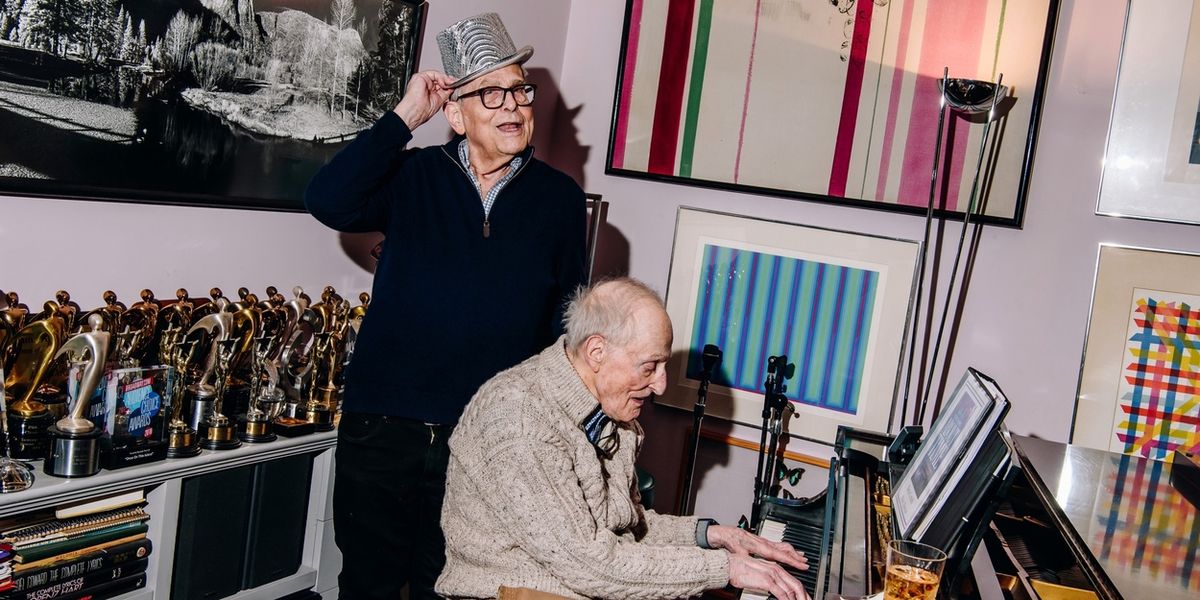
Tony Award winner Richard Maltby, Jr. discusses with Jennifer Ashley Tepper About Time, his new revue written with collaborator David Shire which, alongside Starting Here, Starting Now and Closer Than Ever, completes the writing team’s trilogy. They also chat about friendship with Stephen Sondheim, how Off-Broadway has evolved since the 1960s, the role Yale University has played, and more.
Richard Maltby, JR.: You know it’s a very interesting thing about your Untold Stories of Broadway books, Jennifer. I thought about this when I was at the Barrymore recently, seeing a show. There was still some Ring of Fire history on the walls. We had about 36 stringed instruments. We had three people who did nothing but tune the instruments. And that was all written out and printed on the wall. So every show that has been at the Barrymore since has seen that.
Jennifer Ashley Tepper: I don’t know if I’ve ever told you this, Richard, but I thought about it during the recent blizzard. You probably remember that there was a big blizzard during the run of Ring of Fire. I was an NYU student at the time and I thought: I have to go see Ring of Fire tonight because if I don’t, who will? The subways weren’t running so I walked uptown 40 blocks in the snow and saw the performance that night with about 200 people in the audience. I loved it. I loved your beautiful direction.
And now you’re currently in rehearsal for the off-Broadway premiere of your new musical, About Time. You’re directing in addition to having written the book and lyrics. Tell us about the show.
David [Shire] and I are known for these two revues that we wrote. It started out with Starting Here, Starting Now, which is really a compendium of songs from shows we’d written, which seems to hold together as a show. It moved from a night club run at Manhattan Theatre Club to a run off-Broadway. Barbra Streisand recorded the title song. It was a big deal that the show became what it did, considering it was just a collection of songs. We actually wrote some new songs for it. Most of the songs were from shows and we felt they had a certain innocence about them and that maybe we needed to show a more adult side, too. So we wrote “I Don’t Remember Christmas” and “Flair” and put those in the show. We played at a little theatrical restaurant on 46th Street called Barbarann and ran for a few months.
Later on, I started collecting ideas in a file. People would tell me stories or things would occur to me and I’d jot them down and put them in this file, which I called ‘the Urban File'. Over time, I’d take them out and sometimes I’d write a stanza. Sometimes I’d give it to David and we’d start working on something slowly. A new show began to coalesce around a bunch of songs. By that time, David and I were both married. We had children. These songs were about the second time around. They were older but wiser songs. And within that, they were about the complexity of human existence. Everybody has a platter that’s not big enough for all of the things that they have to do. You spend all of your time moving the platter around really fast to keep all of your things on it. These ideas became an off-Broadway show called Closer Than Ever. It ran for over 300 performances.
People have often described the songs in both shows as story songs. They are dramatic songs. They are theatre songs. And they’re all very specific about a stage in life. The idea kept coming up that if you put them in chronological order, there was a sort of biography of a whole life in the work. And that slowly made us begin to think that we should finish it. Maybe we should write a third revue to complete the story of these two, and make a trilogy—or a triptych—of revues that would tell a complete story. We call the trilogy Life: A Musical. This show, About Time, completes it. I like to refer to it as ‘the show of a lifetime’. That’s self-congratulatory but it’s also what it is.
It’s a show about a lifetime. It’s about anybody’s lifetime but on a different level, it’s about David’s and my lifetime. It’s a legacy work about our lives. We met at Yale and we’ve been working together for more than 60 years. We’ve developed a vocabulary and a body of work that is uniquely ours. So About Time is the show of a lifetime.
This third show in our trilogy also stands by itself. It’s an entertainment in its own right. And creating it turned into a process that we didn’t really expect. We didn’t expect that our songs for this show would be quite so personal. The things you think about when you’re a little older are not what you think you’re going to think about. The things you think you’ve learned turn out to not be the things that you’ve learned. The issues have the same complexity and unexpectedness and hilarity as the ones you had earlier in life. At the end of About Time, one character says to another, “Oh, Dan, isn’t life just hilarious?” And in truth, that’s kind of the message of the show.
So aș a result, we have this new revue. If you liked our other ones, you’ll like this. And if you don’t know the other ones, you should come and get to know this. We’re immensely proud of it. We also have a wonderful company of really amazing performers. What could be bad?
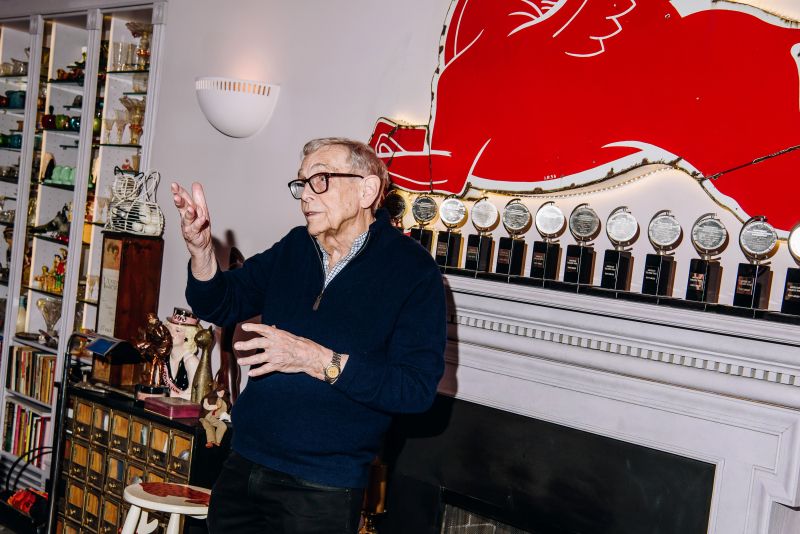
“What could be better?” It’s historic how long you and David have been writing together for. And it’s incredible that you’ve written these three pieces that fit together over such a long period of time. I’m curious to know how you selected which songs would make it into About Time. Was there any material you were sad to lose along the way? And also, within About Time, which song is the newest and which did you write the longest amount of time ago?
We started with a lot of songs from different shows and projects and thought: this is a body of work that could certainly be its own show. We did a presentation at 54 Below of a lot of them. It went very well but they didn’t hold together. They were a grab bag of things. The other two shows, Starting Here, Starting Now and Closer Than Ever were collections of songs that had distinct themes. Suddenly we were in the position with About Time of having a theme and needing to find the right songs that would fit into the theme. In many cases, that led to us realizing we needed to write a new song because there was something we wanted to address that we’d never written about before. We hadn’t addressed the fact that you’re suddenly spending your life in the kitchen wondering why you walked in—that your brain doesn’t quite function the way it used to.
As far as old songs and new songs, there is one number that was cut from Big, “Little Susan Lawrence”, that we put into About Time intact because it stood by itself. And then there was another song with even older components. At the end of the 1960s, we were involved in a project which we call 'The John Reed Project’. John Reed was the only American to be buried in the Kremlin Wall. He was an American communist in the pre-1912 period when there was something romantic about being a revolutionary. He was one of the most rabid and interesting figures; he is the center of the movie, Reds. For this musical about him, we wrote a bunch of songs; some had lyrics and some just had melodies. In the course of doing research for About Time, our music director Deniz Cordell, found a little stash of songs and one was this incredible melody David wrote for The John Reed Project. We listened to it and it fell into a place with an idea I had for a lyric.
The song is now about the horrors of the world that we are in, including the debasement of language and the fact that people use words with specific meanings and pretend they have other meanings. Anything can mean whatever people want it to mean. And given that, what do you say to your children about the simple facts of morality? How do you tell your children: tell the truth, don’t lie, don’t steal, don’t hurt somebody? You used to be able to say: don’t lie because it’ll come back to hurt you and it won’t work out. But now we see that the President of the United States is the biggest liar we have. Everybody surrounding him is a collection of liars, cheats, scoundrels, charlatans, fakes, and phonies. So how do you talk to your children about moral codes with that going on? They’re not stupid; they watch the news. So the song about all of that is called “What Do I Tell The Children?” It’s in the second act and it sort of sneaks up on the audience. They don’t know that it’s coming and it gets a huge hand at every performance because it’s one of those things that everybody feels and yet no one has really articulated in a song.
Musical theatre used to be apolitical. No more. You can’t even do a musical about Betty Boop now without being political. Subterraneously, even in comedy or lighthearted numbers, there’s a political reality present in everything because of what’s going on in the world. We address it ourselves right at the beginning of About Time. When David and I were working, I kept thinking about what the audience would be feeling. When you come to see this kind of entertainment, given what the world is, you feel like you need permission to acknowledge what’s going on outside. So the opening lines are: “Times are bad/ Turning on the news makes you scream/ Seems as if the whole world’s a god-awful dream/ … Time to write a show tune”.
You have to be who you are in the time that you’re living. There was once a time when entertainment was its own defense. But now it seems like you have to acknowledge the ways that the world is terrible. We’re acknowledging that and saying that maybe it’s also time for a laugh or two, a return to the thing that holds you together with your family and makes you feel alive. We circled around it but when you get right down to it, that’s the meaning of life. When you get to a certain point, you start wondering: what’s the point? The answer is incredibly profound and also astonishingly simple minded.
I feel so lucky, as such a super fan of yours and David’s for so many years, to have a new musical on the boards in New York City, written by you two. It’s very exciting. I can’t wait to sit in an off-Broadway theater with other audience members who love your previous shows and watch the full production.
I wanted to talk with you about how off-Broadway has changed since you and David started bringing shows to New York. Obviously Broadway has changed too, but as far as off-Broadway, you’re definitely one of the longest running teams in history as far as the time in between your off-Broadway productions. Your musical The Sap of Life was off-Broadway in 1961 and here you are, 65 years later, with a new off-Broadway musical.
Can you speak about your off-Broadway beginnings?
The off-Broadway movement was relatively new when we came to New York. The Threepenny Opera revival, which was a milestone production, was only a few years old, and it was still running. [This production opened in 1955 and ran until the end of 1961.] The Fantasticks opened in 1960. Nobody had ever done anything like what The Fantasticks did. It opened in a tiny theater in New York, and wasn’t a success. It went to East Hampton and then came back to New York and started selling out. The show wound up running off-Broadway for over 40 years. That opened the door.
You could do an off-Broadway show in the 1960s for a budget of $25,000. We tested The Sap of Life out at Williamstown because we had connections there. Then we played a little theater off-Broadway and got pleasant reviews but not “must see” reviews.
[The musical played a theater called One Sheridan Square in the West Village, which boasted an earlier life as a jazz club called Cafe Society. As Cafe Society, Billie Holiday and Lena Horne performed within its walls. The venue was later the home of Charles Ludlam’s Ridiculous Theatrical Company. Most recently, the Axis Theatre Company has presented shows there.]
So, we only lasted six weeks—but in the second week, Steve Sondheim came to see the show. Later that week, he came back and brought Jerry Robbins. Then he came back again and brought Hal Prince. Then he came back again and brought Leonard Bernstein. So suddenly we were picked up by this belief in us. The Sap of Life was recorded and if you listen to it, you can hear just how breathtaking the piano playing is. When David hears it, he can’t believe he used to be able to play like that.
David’s piano music had to have been astonishing for those hearing it back in 1961. I love it but I took it for granted [because I heard it often]. Those hearing it for the first time though… they had to have their socks knocked off. That’s why Steve came back all of those times.
I once asked Steve, “Was that true? Did you come back all of those times to keep hearing the music?” And he said, “Yes, it’s true- David’s work was very different. But I also liked the lyrics.” He said, “Not a day goes by that I don’t quote a lyric from that show to myself.” I asked what it was and he said it was this lyric in The Sap of Life that went: ‘While plucking the plums out of the tree/ Flip a few pits back to me’. It was about a guy who set off to sow his wild oats in the big city and his younger brother who tagged along. I can’t imagine why Steve liked that line. I can’t even imagine why he would have noticed it. But I’ll take it.
We got to know Steve very well because even though he had written West Side Story and Gypsy, he considered himself a failure because nobody would take him seriously as a composer. He invited us over to his humble townhouse that West Side Story bought him. We’d have dinner and then afterwards, he’d play what he was writing and we’d play what we were writing. That lasted for most of the 1960s. We’d go and visit and he’d play “Pretty Little Picture” from A Funny Thing Happened on the Way to the Forum and “Moon in My Window” from Do I Hear A Waltz? and we’d play our songs from The River.
[“Travel” and “Song of Me” from The River, which never came to be produced, later made their way into Maltby and Shire’s Starting Here, Starting Now.]
I just remembered: there’s actually a song that we wrote for The River that’s in About Time and that pre-dated The John Reed Project. So actually that’s the oldest song in About Time.
Your and David’s song, “Travel”, appears on Sondheim’s list of songs he wishes he wrote. Is there any song on your own mental list by another writer that’s something you wish you’d written?
Leaving aside Sondheim’s canon, one that comes to mind is “You’re So Vain”. The comedy of that lyric! “You’re so vain/ You probably think this song is about you”. That’s delicious; I would kill to have written that.
I have to mention “Sunday”. It’s unavoidable.
But you know, we wrote “The Story Goes On”, which is not too shabby!
[“The Story Goes On” is from Baby, which opened on Broadway in 1983. The song was introduced by Liz Callaway.]
We talked earlier about Yale and I have to mention the connection between About Time and the Yale class of 1959, which was our class. When we did that concert of the show as it developed at 54 Below, one of our classmates, Bob Semple, who writes for the New York Times, came. The show went really well, even though we didn’t think we could use a lot of the songs [moving forward].
At that time, Bob was on a committee that was organizing our 65th reunion from Yale. And he thought: why don’t Richard and David present some of these songs as part of the reunion? So they invited us to put that together and gave us some money to do it… and we decided we’d knock everyone’s socks off. We wanted to give them an hour-long show of all new material. Our Yale classmates are our exact demographic. That was such a great opportunity.
We brought up six Broadway performers, including Jason Danieley, Lynn Wintersteller, and Dan Jenkins. The audience didn’t know what hit them. It was really wonderful. Afterwards, there was a dinner and everyone came up to us and said how moving and funny the show was. It was a sign to us that we were [onto something].
With the topic of aging, there are a lot of thoughts that people don’t say out loud. They feel things and understand them but don’t want to say them out loud because there’s this sense that nobody wants to hear it. You’re afraid that you’re no longer relevant to your own family, that your kids don’t need you anymore… there are all of these things like that that go on that you never talk about. The [positive response] people had to seeing some of those topics dramatized felt like an invitation to us to write more.
So we wrote more, and then we did a few different workshops. Each time, we discovered something else we could do. That led to an actual production of About Time at Goodspeed in the little Norma Terris Theatre. I’ve done a few shows there and it’s just wonderful. The audience there really responded to About Time. They were stopping us at the door and thanking us for the show. We won an award for the Best Play or Musical in Connecticut during the course of the year.
Then we found a theater in New York and now we’re in rehearsals. We start previews in February and we open in March. We’re here.
[About Time is currently in previews with opening night on March 15th. It plays at the Marjorie S. Deane Little Theater at the West Side Y on 64th Street near Central Park West. Performances run through April 5.]
It’s so exciting to be back in a room with actors, having impossible problems, and them solving them on their feet. It’s just wonderful. We’re having the best time.
[At one point], we were on a zoom meeting with our Yale class, as About Time was starting to move towards New York. I said, “You know, if everyone on this zoom gave us $5000, we’d finance the show in 10 minutes.” I thought that was sort of funny, and I laughed. Half an hour later, one of the guys said, with his checkbook open, “Who do I write the check to?”
“In fact,” he said, “I’ll do more than that. I will match anyone who wants to come in on this.” The Yale class of 1959 has now invested $110,000 in the show.
What a legacy. Yale brought you and David together and gave you a place for your first musicals and now they’re supporting your latest one as well. That’s so meaningful.
I think so. When you’re in the theatre at a big college, you’re in the nerd squad. You’re one of those weirdos who goes to the theatre every day. So it was nice to feel like the class took ownership of us.
Our class feels a certain pride in the way we’re functioning at this age, that we’re doing a new musical in our 80s and that we have another one coming up in a year. We’re still going strong.
One of the most remarkable and exciting things about your and David’s songs has always been the way that you capture these universal, specific human experiences that feel like they’ve never been written about before. “Life Story” does that. “Fatherhood Blues” does that. So many of your songs do that. In About Time, there are so many of those. I never want to give people spoilers, but when I recommend About Time, I always say: wait until you see how they actually wrote about this subject or that subject.
As someone who has guided song cycles and revues of both your songs and other writers’ songs, are there essential elements that you think make these shows successful? Or do you feel like each has its own alchemy?
Well, you know, I’m the king of revues. I did Ain’t Misbehavin’ [in 1978]. I did Fosse [in 1999]. Those are the only two revues that ever won the Tony Award for Best Musical. And then we have Starting Here, Starting Now and Closer Than Ever, and now About Time.
The secret is that I don’t like revues! I never felt that they were particularly satisfying. [When I started seeing them, revues comprised] lightweight songs, comedy sketches, and such. What I did was took the talk out. Ain’t Misbehavin’ gave the audience just one song after another. It was shaped so that it had a story even though it didn’t have consistent characters. It satisfied the same way that a play does: subterraneanly.
Because I’m a songwriter as well [as a director], I understand the subtext of a song. There’s the music, there’s the lyrics, and then there’s what the audience member takes away from the song, which is something else. That’s what’s inside the throbbing heart of it. It is maybe never really expressed in words, but you can feel it somehow inside there.
And you can do that with an entire show. You can add emotional information and get an emotional payoff even though you haven’t been given a [conventional] story. That’s the secret that I kind of unlocked. A lot of people have tried to imitate Ain’t Misbehavin’ and they never steal the right things.
The other thing is that it’s a matter of trust. You have to trust that the audience is doing its work. You give them information and you have to trust them to connect things. When you present a collection of songs, the audience has to be thinking: how does that connect to this? When you put it together correctly, they do the thinking themselves and an experience happens for them. They can’t figure out why they understand the story because it’s never been [explicitly] stated—but they do. That’s my contribution to musical theatre.
And thank God for that. Let’s talk about rehearsals so far and your collaboration with the group of actors who are doing this production. I know some you’ve worked with previously and some you haven’t. What has it been like diving into the material with this group?
There are certain people who are aces at our material and some who don’t really get it. It’s not about singing the melody, but you’ve got to be a great singer. It’s not about articulating the words, but you’d better articulate the words. It’s about inhabiting the character in the song and releasing it to [let it] happen. We’ve put together a band of players who are exceptionally good at that.
The cast includes Lynn Wintersteller, who was in the original production of Closer Than Ever and introduced the song “Life Story” and Daniel Jenkins, who starred in Big and is sort of our avatar. They perfectly understand how language plays into our songs and how it’s about the music and the lyrics—but really at it’s core, it’s about the story and communicating with people. Eddie Korbich had done a reading of a different show with us and we invited him to be a part of this one. He has such a powerful voice and is so funny and such a professional. He really delivers each character he’s performing. I had never worked with Darius de Haas before but I had certainly admired him. At one point, we were considering [doing] a revival of Ain’t Misbehavin’ and he came in for it, which reminded me of how wonderful he is. We gave him our big dramatic song “What Do I Tell The Children?” Then we had two other wonderful performers who were part of About Time previously but couldn’t be part of this production because they live outside of New York. So into our life came Sally Wilfert, who is just a dazzlingly smart actress and inhabits each song so quickly and Allyson Kaye Daniel who is our secret weapon. I keep telling her that in rehearsal because she is constantly uncorking a comedy element I didn’t see coming or a new bit of depth in a lyric or a soprano [vocalization] I didn’t know she had.
Part of the joy of our shows is their pure sound. We [prioritize] glorious singing and the presence of powerful performers. There are 24 songs in About Time and the [whole show] is like a book of short stories. When you finish a short story, you should have a really solid sense that you finished it. But at the same time, you should [want to] go on to read another one. That’s what I think we get from these [actors]. They’re wonderful and very willing to take risks.
With each song, I go over how it’s written. We look at the vocal arrangement and the structure of the song together. Then we do it and the [actors] will let me know what they think. We’ll slowly shape the song together. We just blocked the beginning of a number that was very complicated. And as soon as the actors were moving and interacting as characters, it solved every problem [we thought we had]. It was completely clear.
I’ve been lucky to get to know your daughters over the years who are both remarkable artists in their own right. I was curious if you’ve had conversations with your kids or anyone in your family that you feel like have impacted the show. Do your family members ever give you notes?
I know you’ve talked about conversations with older adults that have affected the way you’ve thought about the show but is there anything you’ve spoken with your children about that you feel has impacted the show?
My children give me little slaps on the wrist; “Dad, you can’t say that!” Since they are in a different generation, they know things and see things in different ways. It’s really wonderful to have discussions of any sort with them. Emily is a wonderful writer and director. She’s working on a play right now called The History of Love based on a fabulous book. She was trying to solve a piece of the narrative [recently] and we had a big, long talk about it. At the end of it, she said, “Well, Dad, that was really enlightening and no help.” And I said, “Well, of course.” That’s our relationship, isn’t it? You need to talk [creative problems] out to someone who is willing to listen and contribute ideas but in the end it’s going to be you who solves it. Charlotte is a singer and she has this glorious voice. She’s now teaching at the Churchill School and she’s a brilliant teacher. She also sings on cruises which is a good gig.
Is there anything that you’re watching, listening to, or that you’ve seen at the theatre lately that you’ve found inspiring?
There are shows that I admire a lot. I thought Maybe Happy Ending was just wonderful and I loved The Outsiders. I haven’t seen Just In Time but I hear that it’s wonderful.
The thing that’s surprising is how political New York theatre has become. And yet it’s still about the base impulses that make [artists] want to write a play in the first place. Why do people do what they do? How do people coexist in this universe? What constitutes a life, an event, a creative drive? There is a primal human impulse to make a story that will always occur. It feels very strong these days. People will always put on shows in basements. The impulse to own the creativity and storytelling of putting on a show is so human and it will never go away.
Do you think any of that has to do with the effects of the pandemic and not being able to do some of those things for awhile? So we’re embracing them more [now]? Or what do you think has been the influence of the pandemic on theater making?
Well, have you noticed that there’s a reading of a new musical every hour of the day? There were never [this many]. Who is writing all of these musicals? A lot of them are not going to go very far, but every now and then, one will rise up.
I think what happened during the pandemic is that everyone was alone at home and what could they do? So, they wrote a musical. Part of the reason why there are so many [more] shows out there that are trying out now is that people wrote [more of] them. And there are a lot of people who want to produce them and help get them on.
[Theatre] is hopelessly expensive but somehow, some of these shows [will happen]. The creative impulse that creates the show is also the creative impulse that gets the show on. People will [find a way]. They will do it in a subway station. They’ll do it in an attic. The inventiveness of that is quite remarkable.
The technology of Broadway shows [these days] is [also] breathtaking. That production of The Picture of Dorian Gray recently… you spent the whole evening [trying to] figure out how they did it. How could she walk into the screen over there when I just saw her over here?
Is there anything else you’d want to share about About Time? What do you want to send out into the world about the show?
Well, it’s not like anything else. My grandson came to see a presentation of the show and I was worried about if an 18-year-old would be interested in any of these things. His reaction was that he was astonished at how funny it was. I guess he didn’t think his parents and grandparents were funny—but we are.
It’s a very entertaining show, [with elements that] creep up on you. There’s an emotional impact that you didn’t think [the show] was going to have. It can’t be described; it just happens. I’m thrilled to back doing this and playing these games on the audience. Some of the music they’ll hear is the same stuff that Sondheim came to see in The Sap of Life and wanted to share with his friends. There’s music in the show that nobody else in the world would write or could write. Sometimes David says, “How did I ever write that?” There are a lot of notes on those pages.
We’re immensely proud of it. We’re proud of the emotional impact the show has on the audience and I can’t wait to share it with more people. It’s a sharing experience. With a lot of shows, the play is here and the audience is there. This is a community event. We are all a part of this, and it’s about life in the biggest sense. We eventually address the meaning of life because that’s in our heads all of the time—without being dark and heavy handed, I hope.
Thank you for all of this, Richard! I’m excited to see the show multiple times.
I can’t wait for you to see it because you’re the best audience in the world.
Good luck with the rest of rehearsals!
In just six days, we’ll have the whole first act on its feet. I can’t wait for audiences to see it.
Photo Credit: Nina Westervelt

Sign up for all the news on the Fall season, discounts & more...
|
Powered by

|







Comments
To post a comment, you must register and login.