


From Stage to Stage: The Greatest Theater Dynasties in Broadway History
Do you know that these Broadway names are a part of theatre dynasties?
Do you have a burning Broadway question? Dying to know more about an obscure Broadway fact? Broadway historian and self-proclaimed theatre nerd Jennifer Ashley Tepper is here to help with Broadway Deep Dive. BroadwayWorld is accepting questions from theatre fans like you. If you're lucky, your question might be selected as the topic of her next column!
Submit your Broadway question here!
This time, the reader question was: Are there many multi-generational theatre families on Broadway?
Only a few generations ago, it was the norm for sons to continue in the line of work of their father and for daughters not to work outside the home. This societal construct had always existed. If a father was a butcher, his son would take over the butcher shop. If a father was on tour with the circus, his son would join the circus. The evolution into a society where each subsequent generation was more likely to select their own line of work began in earnest during the Industrial Revolution (1760-1840). From the mid-19th century onward, a boom of new opportunities and a change in the way that work functioned within civilization led to increasing divergence in career paths within families. Simultaneously, women were gradually given increasing access to paid employment, at first in specific fields only and eventually in most lines of work.
This history gives context to the legacies of theatrical dynasties—considered to consist of at least three subsequent generations of theatre creators. In 2026, there is a stigma around any successful professional who follows a parent into their line of work, with this being seen as a pattern of nepotism. At the time that all of these theatrical dynasties began, it was seen as largely admirable to enter the field of entertainment in the path of a family member who came before. While the view was always that one had to have the talent to back it up, a foray into the family business of theatre was seen as a regular, respected occurrence. That said, this regularity of going into the family line of work, entertainment, mostly affected stagehands training their sons, dancers teaching their daughters, and the like. The rare few emerged as stars and major players, one generation after another, forming notable theatrical dynasties.
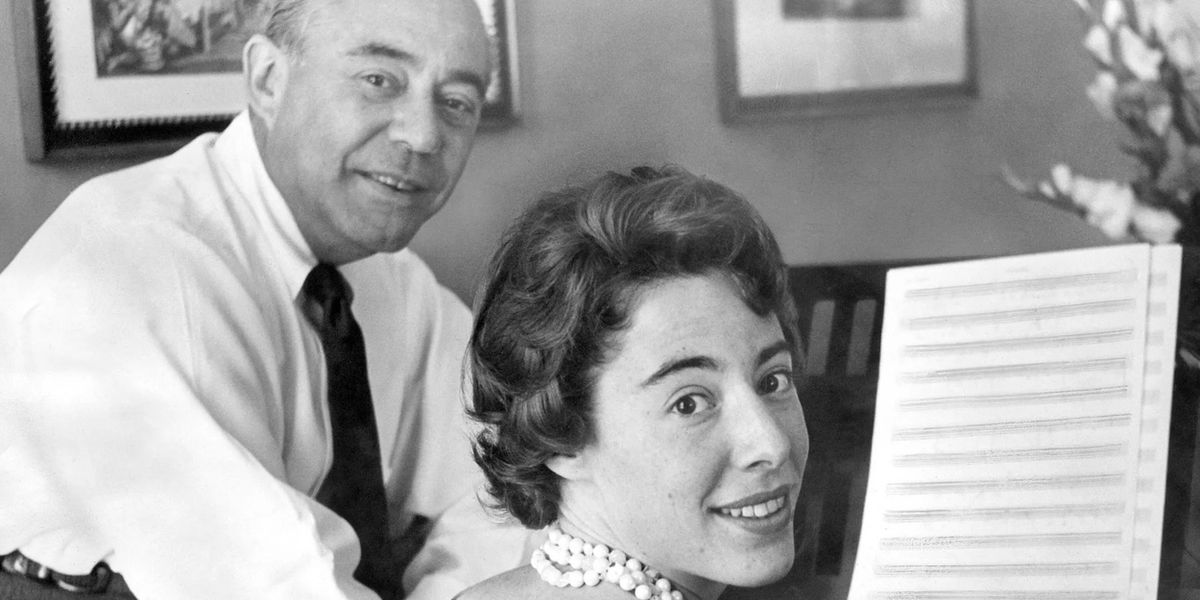
One of the most well known theatre dynasties didn’t spend time on the stage. Richard Rodgers transformed the art form of musical theatre, composing first to the lyrics of Lorenz Hart and then to the lyrics of Oscar Hammerstein II, followed by several others. In a career that spanned from the 1910s through the 1970s, Rodgers was responsible for composing some of the greatest hits of the American Songbook, collaborating on musicals that changed Broadway, and influencing the canon in a permanent way. From Oklahoma! to the Sound of Music, Rodgers’ work is still heard all over the world today. With Hammerstein, Rodgers impacted the kinds of stories that could be told in musicals, the integrated manner in which they could be told, and the level of complexity in musical storytelling. Rodgers’ daughter Mary Rodgers is largely remembered for composing the musical Once Upon a Mattress and creating the Freaky Friday universe, but she lived a long and fascinating life within the arts, following in her father’s footsteps. This experience had its times of disappointment and conflict; this includes the only time that father and daughter have competed against each other for a Tony Award. In 1960, Mary Rodgers accepted her father’s Tony for The Sound of Music while he was on vacation; she was up for the same prize for Mattress. Mary Rodgers regularly recalled in interviews how briefly she took any compositional feedback from her famed composer father. After engaging in a feedback session once, Mary Rodgers realized that any more of that and she’d be writing how he wrote rather than in her own voice. Mary Rodgers’ son, Adam Guettel, also played for Richard Rodgers, many years later. At a young age, Guettel played his compositions for his grandfather, legend of the Golden Age musical, who expressed approval. Guettel would go on to write shows including Floyd Collins, The Light in the Piazza, and Days of Wine and Roses. As with many other theatrical dynasties, several other branches of the Rodgers-Guettel family tree went into arts and entertainment as well.
Richard Rodgers’ writing partner Oscar Hammerstein II was part of a theatrical dynasty of his own, this one spanning four generations. It all began with the first Oscar Hammerstein, who emigrated from present-day Poland because he aspired to study music and his family didn’t approve. Hammerstein worked his way up from early beginnings working in a cigar factory to become a major inventor of new processes in cigar making. This success in industry financed his transition to the arts; he became a major player in the American theatre as a theatre owner and producer who composed and wrote shows as well. Hammerstein first built theaters in Harlem, which at the time was a major hub for Jewish immigrants like himself. Two of the New York venues Hammerstein erected in the early 20th century are still standing today: his Theatre Republic is now the New Victory and his Manhattan Opera House is now the Manhattan Center. He became widely known for producing both theatre and opera and his influence was greatly felt by subsequent generations, including in his own family. Hammerstein’s two sons, Willie and Arthur, both went into the family business. William, known as Willie, became a theatre manager, and counted among his offspring Oscar Hammerstein II. Arthur was a major multi-hyphenate who, among his many credits, opened and ran the Broadway house, Hammerstein’s Theatre, which is now the Ed Sullivan Theatre, home of The Late Show. Multiple Hammersteins of the third generation went into the theater, and Oscar Hammerstein II became one of the greatest legends in theatre writing history. His life philosophies as humanitarian were deeply felt in his work and from Show Boat (1927) through his landmark collaboration with Richard Rodgers (1943-1960), he transformed the American musical. Hammerstein II was a prolific lyricist and librettist who had a slew of collaborators from the 1910s when he began writing for Broadway onward. Not only was he influenced by the men in his family who came before, he also mentored his sons, James and William, who both went on to work on Broadway, as well as young Stephen Sondheim.
While the Rodgers and Hammerstein dynasties largely made their mark off of the stage, there have been several major theatre dynasties that have revolved around actors. The most well known of these is the Barrymore-Drew family, which spans many generations, inspired a fictionalized Broadway play (The Royal Family) and even has its name on a Broadway theater (the Ethel Barrymore on 47th Street). Many know about the Barrymore family legacy because of its most famous currently living member, Drew Barrymore. The family can trace its acting roots all the way back to the 1780s! At that time, William Barrymore was a major British actor, performing at Drury Lane in London among other venues. The dynasty began in earnest in 1876, when Maurice Barrymore, a descendent of William, married Georgiana Drew. Both Maurice Barrymore and Georgiana Drew were important players on Broadway in the late 19th century. There was acting on the Drew side as well, for her father was John Drew, a successful theatre actor and manager in both Philadelphia and New York. Sadly, John Drew died at the age of 34, but his widow, Louisa Lane Drew took over management roles at the Walnut Street Theatre and Arch Theatre in Philadelphia, carrying on his legacy at a time where women were not often allowed to hold these jobs. Meanwhile, Georgiana and Maurice carried on the family name largely in New York, acting and paving the way for the next generation. Their children, Lionel, Ethel, and John, all became leading actors on the American stage. Lionel is remembered for his performances in the film It’s a Wonderful Life and on broadcasts of A Christmas Carol, but his stage career was also prominent. Ethel became known as “The First Lady of the American Theatre”, and was one of the hottest stars of Broadway in the early decades of the 20th century. This led to The Shuberts naming a Broadway theater after her. John was a larger-than-life figure on—and off— stage and screen, known as the greatest Hamlet of his generation. The subsequent branches of the family tree were also filled with theatre makers, including Ethel Barrymore Colt (whose long career included starring in the original cast of Follies). Drew Barrymore, while not a theatre maker, carried on her family legacy by acting as well, and is part of the 10th generation of Barrymores in entertainment.
The Redgrave family counts five generations on stage and screen, starting with Roy Redgrave and Daisy Scudamore, who were prominent British actors in the late 19th century and early 20th century. Redgrave was also a silent film actor whose first wife, Ellen Maud Pratt, was an actor as well. The son of Redgrave and Scudamore was Michael Redgrave, who went on to a long and prominent stage career in the UK. He made a few forays across the pond to Broadway, including starring in a 1948 production of Macbeth, receiving a Tony nomination for his role in A Tiger at the Gates in 1955, and attaining several credits directing, producing, and writing as well. Michael Redgrave married Rachel Kempson, an actor in her own right who made many appearances including several alongside her husband as well as her children, Vanessa, Corin, and Lynn. All three progeny of Michael Redgrave and Rachel Kempson went into the family business. Vanessa is a long-time celebrated actor. Her career on Broadway has won her a Tony Award (for Long Day’s Journey into Night in 2003) as well as three other nominations and her career across the pond has awarded her with an Olivier. She married the acclaimed director Tony Richardson. Corin’s credits include producing and starring in Not About Nightingales on Broadway in 1999, which earned him two Tony nominations. Lynn also boasts a long stage career, including three Tony nominations and a 2003 Drama Desk Award for Talking Heads. The next generation of Redgraves included the late Natasha Richardson, a Tony and Drama Desk winner for her 1998 turn as Sally Bowles in the revival of Cabaret. Richardson was married to Liam Neeson; the two met co-starring on Broadway in a 1993 production of Anna Christie. She did extensive stage and screen work before her tragic passing at age 45. Natasha’s sister, Joely Richardson, is mostly known for her screen work but has made several prominent stage appearances, including two off-Broadway performances that earned her Drama Desk Award nominations. A number of other Redgrave descendants work in entertainment as well.
Nearly every theatrical dynasty family tree boasts branches twisting in different directions, and such is the case with the Huston family tree. Its most famous living member, Anjelica Huston, has released two detailed memoirs which describe the complex family life of the Hustons over the years. The acting in the family’s blood began with Walter Huston, who acted in legit theatre and vaudeville from the first decade of the 20th century into the 1940s. As far as his work on stage, Huston is best remembered for originating the song “September Song” in the premiere of the musical Knickerbocker Holiday. His recording of the song has continued to hold popularity since it was released in 1938. 74 years later, Huston’s granddaughter Anjelica sang the song in tribute on her television show, Smash. John Huston, son of Walter and father of Anjelica, was a significant actor and director of stage and screen. He directed dozens of hit films, many of which went on to become classics, and was 14 times nominated for the Academy Award (he won twice). John Huston’s Broadway credits include directing the original production of Jean-Paul Sartre’s No Exit in 1946. While Anjelica Huston’s work has largely been on screen, from The Addams Family franchise to The Royal Tenenbaums, she did make her Broadway debut in 1969, understudying the role of Ophelia in Hamlet. This production was directed by Tony Richardson, husband of Vanessa Redgrave and father of Natasha and Joely Richardson. Anjelica Huston has yet to return to Broadway but she did star as producer Eileen Rand in the 2012-2013 television show, Smash. Several other members of the Huston family work in film and television.
Another prominent and more musical theatrical dynasty started with John Carradine, an extremely prolific actor from the 1920s through the 1980s. Carradine worked often with Cecil B. DeMille, appearing in many of the famed director’s films. He became known for his character roles in films, but his career included many forays on Broadway as well, including in the original production of The Madwoman of Chaillot. He also originated the role of Lycus, singing “Everybody Ought to Have a Maid” by Stephen Sondheim in A Funny Thing Happened on the Way to the Forum. One of John Carradine’s five wives was Sonia Sorel, an actor whose credits included understudying Blanche DuBois during the original run of A Streetcar Named Desire in 1949 and originating a role in Tennessee Williams’ The Rose Tattoo (1951). Carradine and Sorel had three children, two of whom—Keith and Robert—went on to acting careers. Several of John Carradine’s children and grandchildren from other marriages, including David Carradine and Bruce Carradine, became performers as well. Among Keith Carradine’s credits on stage and screen are star turns in Broadway shows from Will Rogers Follies (1991) to Hands on a Hardbody (2013), both which earned Tony and Drama Desk nominations. He gained a following from his performance of his own song “I’m Easy” in the Robert Altman film Nashville in 1975. Prior to that, in the late 1960s, he had been a replacement during the original run of Hair on Broadway, where he met fellow actor Shelley Plimpton, who originated the role of Crissy, singing “Frank Mills”. The two have a daughter, Martha Plimpton, who has become a force on stage as well as off stage as an activist. Martha Plimpton’s Broadway credits include originating roles in The Coast of Utopia (2006-2007) and Top Girls (2008), and she has received three Tony nominations for acting. She also has stage musical credits, including the 2008 revival of Pal Joey.
A newly anointed theatrical dynasty is the Stiller-Meara family. Jerry Stiller and Anne Meara were a long-married pair who performed as a comedy duo on stage and screen in the 1960s and 1970s. Both had long careers acting on Broadway (Stiller was in the original productions of The Golden Apple, The Ritz, and Hurlyburly; Meara was nominated for a Tony for Anna Christie—the same production starring Natasha Richardson and Liam Neeson), as well as in film and television (Stiller was Emmy nominated for playing Frank Costanza on Seinfeld; Meara was beloved as Mary Brady on Sex and the City). Their son, Ben Stiller, joined the family business and became a movie star. His wide-ranging credits include There’s Something About Mary (1998), the Meet the Parents franchise (starting in 2000), The Royal Tenenbaums (2001), Zoolander (2001), and the Night at the Museum franchise (starting in 2006). (He shared the screen during The Royal Tenenbaums with fellow theatrical dynasty member Anjelica Huston.) Ben Stiller is also a director. While the majority of his time has been spent working on films, he starred in both the original Broadway production of House of Blue Leaves in 1986 and its 2011 revival as well as a 2005 off-Broadway play called This is How It Goes at the Public. His older sister Amy Stiller is an actress as well, who has performed on screen and off-Broadway. Ben Stiller’s wife, Christine Taylor, has had a successful career on screen, similarly beginning to act as a teenager (Hey Dude) and transitioning into adult roles (from The Brady Bunch movies to The Wedding Singer). Ben Stiller and Christine Taylor’s daughter, Ella Stiller, made a splash last season in the sold-out production of the new play Dilaria off-Broadway.
Sign up for all the news on the Fall season, discounts & more...

.png?format=auto&width=365)





Comments
To post a comment, you must register and login.