


Is Broadway In a New Musical Drought?
These seasons also saw few new musicals in the Tony Awards race...

Do you have a burning Broadway question? Dying to know more about an obscure Broadway fact? Broadway historian and self-proclaimed theatre nerd Jennifer Ashley Tepper is here to help with Broadway Deep Dive. BroadwayWorld is accepting questions from theatre fans like you. If you're lucky, your question might be selected as the topic of her next column!
Submit your Broadway question here!
This time, the reader question was: Only six new musicals will open this season. Is that common?
There has been much chatter in the Broadway industry recently about how few new musicals will be eligible for Tony Awards during the 2025-2026 season. As of today, only six new musicals will be gunning for the main prize in June. Six is a remarkably low number, given that in recent seasons, Broadway has typically seen more than double that amount of new musicals hit the boards in any given year.
For the past two seasons, 14 or 15 new musicals have opened on Broadway. Even in the challenging first two seasons coming out of the pandemic, Broadway saw 8 or 9 new musicals opening. And in the last four full seasons prior to the pandemic, Broadway saw an average of 11 new musicals per season. What gives?
There are a number of complex, intersecting factors that have led to the modest number of new musicals in this Broadway season. For one, what the industry has called the “covid pipeline” of shows has pretty much dried up; most of the productions that became backed up in their process due to the pandemic pause and then bottlenecked the following seasons have premiered at this point. Another well documented reason is that the current financial challenges of Broadway have made investors and producers increasingly hesitant to open new musicals; it is a difficult moment to get a new musical to fully recoup on Broadway based on increased costs.
A less documented reason is that all of the Broadway theaters are full! Even though we’re only getting six new Broadway musicals this year, our 41 Broadway houses are all accounted for through the awards deadlines—with one exception. There are absolutely more new musicals that have the desire and resources to open on Broadway in the 2026 season, but based on the plays and revivals that have the theaters booked, there’s no spot to be had. (The exception is the Shubert, where Hell’s Kitchen just recently announced a February closing— that theater could now get a wild card booking, changing up the whole season!) In fact, this is one reason that it’s not time to panic—yet. The 2018 season only saw seven new musicals for similar reasons of it being a heavy Broadway year for plays and revivals that took up most available venues. Sometimes only a few new musicals can open because the existing shows on Broadway are running longer and not giving up their space! Broadway is an ecosystem that ebbs and flows, so unless we see several years in a row with only six new musicals, this season may just be an outlier.
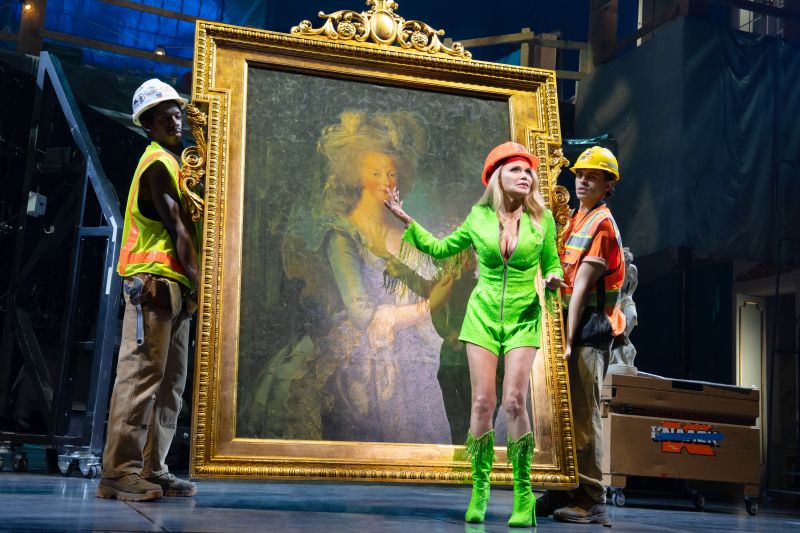
That said, it looks like the 2025-2026 season of new musicals will join the ranks of Broadway history as one of the rare modern years with very few competitors for audiences and awards. Right now, this season contains Beaches, Schmigadoon!, The Lost Boys, The Queen of Versailles, Titanique, and Two Strangers (Carry A Cake Across New York). Both Beaches and Titanique were recently announced, swooping in to grab last minute spots in the spring based on theater vacancies. The Queen of Versailles has already closed—hence Titanique being able to transfer from off-Broadway to the large St. James Theatre. Like Versailles, Two Strangers also opened in the fall; the other four shows open in the spring.
Our most recent similarly sized Broadway season happened in 2018. The seven new musicals that opened that year were Escape to Margaritaville, Frozen, Mean Girls, Prince of Broadway, SpongeBob SquarePants, Summer, and The Band’s Visit. The small number of new musicals did not make this an objectively bad season—just one with fewer entries into the musical theatre canon. Looking farther back into Broadway history, some of the most barren new musical seasons in modern times have occurred in 1968, 1985, 1989, and 1995.
The final season of the 1980s was the culmination of a decade of change in the Broadway musical sphere. Both New York City and the theatre community were struggling in various ways, with the devastation of the AIDS crisis and the decline of the Times Square area among the reasons for several desolate seasons on Broadway. This doesn’t mean that new work wasn’t being created, but often it either wasn’t produced or it opened as a rarity among a sea of empty Broadway theaters.
1989 actually saw nine new musicals open within its gates, but the season became notable for its dearth of hits. The Best Musical prize at the Tonys went to Jerome Robbins’ Broadway, with only Black and Blue and Starmites also receiving nominations in the category; the Best Book and Best Score awards were eliminated completely. (Ever since, this has been a fear during any season light in new musicals—and indeed, could potentially come into play this season.) Of course, the Tony Awards are far from the only major accolades during awards season. But they are often considered a major marker of Broadway history since they include only Broadway productions and are given a mainstream televised program. The 1989 season’s other Tony eligible musicals included an array of shows that closed quickly including Senator Joe, which closed during previews! The infamous Carrie, Legs Diamond which closed the Mark Hellinger Theatre, the “first Chinese-Jewish musical” Chu Chem, and a musical set in divorce court, Welcome to the Club, were also in the short-lived mix. Rounding out the season was a revue starring Linda Ronstadt, who brought her album of traditional Mexican music, Canciones de mi Padre, to the stage.
Six seasons later, even fewer shows would be nominated for Best Musical. In 1995, only Sunset Boulevard and Smokey Joe’s Cafe were nominated; they were also the only two new musicals to open that season. It was the lightest season in all of modern Broadway history for new musicals. Sunset Boulevard walked home with Best Book and Best Score but there were no other nominees in those categories. The following season, Rent would open and transform Broadway, the Times Square clean-up would hit its stride, and Disney would make major moves as a new power player. The 1995 season happened just before a turning point that led to major shifts on Broadway.
Farther back, the 1968 Broadway was an interesting anomaly in terms of the slate of new musicals. This time, what most set the season apart was that not a single nominee for Best Musical was a major hit and the winner in the category had closed before awards were even doled out. This was the season of Hallelujah, Baby! (which won) as well as nominees The Happy Time, Illya Darling, and How Now, Dow Jones. Other eligible shows included the Yiddish theatre-infused Hello, Solly! and The Grand Music Hall of Israel, the commercial Golden Rainbow which ran longer than any of the Best Musical nominees, Here’s Where I Belong, the East of Eden adaptation which closed on opening night, Sherry!, the Man Who Came to Dinner adaptation which closed after 2 months, the delightful and underappreciated Henry, Sweet Henry, the extremely difficult to fit on a marquee The Education of H*Y*M*A*N K*A*P*L*A*N, and Darling of the Day (which boasted the shortest-lived Tony-winning performance in a musical; Patricia Routledge earned Best Actress after 31 performances).
Although it was a robust season, common in the 1960s, the shows that turned up did not become classics so the 1968 season was an outlier, right in between the years that gave us game-changers like Cabaret, 1776, and Hair. There have been similar seasons in Broadway history where there is not a dearth in the number of new musicals but rather a notable outcome of few hits. (Another example of this was the 1974 season, where 11 new musicals opened but only 5 lasted longer than 100 performances and only the Best Musical winner Raisin became a bonafide hit.)
Much like the current season, in 1985, only six Tony eligible new musicals opened on Broadway. Big River won the Best Musical prize and other nominees were Grind, Quilters, and Leader of the Pack, with André De Shields’ Haarlem Nocturne and Harrigan ’N Hart rounding out the season. But in contrast with this season, the 1980s as a decade had an overall smaller yearly output of new musicals; 1985 wasn’t an outlier, but rather a microcosm of the decade’s production overall.
There has been much exclamation over the years about fewer overall productions in each Broadway season than there used to be. But this is largely because shows are running for longer periods of time. Back in the 1927 season, when Broadway boasted 263 productions, there were 60 Broadway theaters (in contrast with 41 today), many shows ran for only a few performances, and the transportation of a century ago allowed far fewer people the opportunity to buy a Broadway ticket. The landscape was extremely different. As Broadway evolved, the numbers changed for reasons that weren’t entirely negative—although we wouldn’t object to another Broadway theater or two getting added back into the mix! This would be very likely to increase the number of new Broadway musicals in a given season.
Prefer BroadwayWorld in Google Search?
Add us as a preferred source so our stories show up more often in Top Stories and Google’s AI answers — for you.
Sign up for all the news on the Fall season, discounts & more...

.jpg?format=auto&width=365)





Comments
To post a comment, you must register and login.