


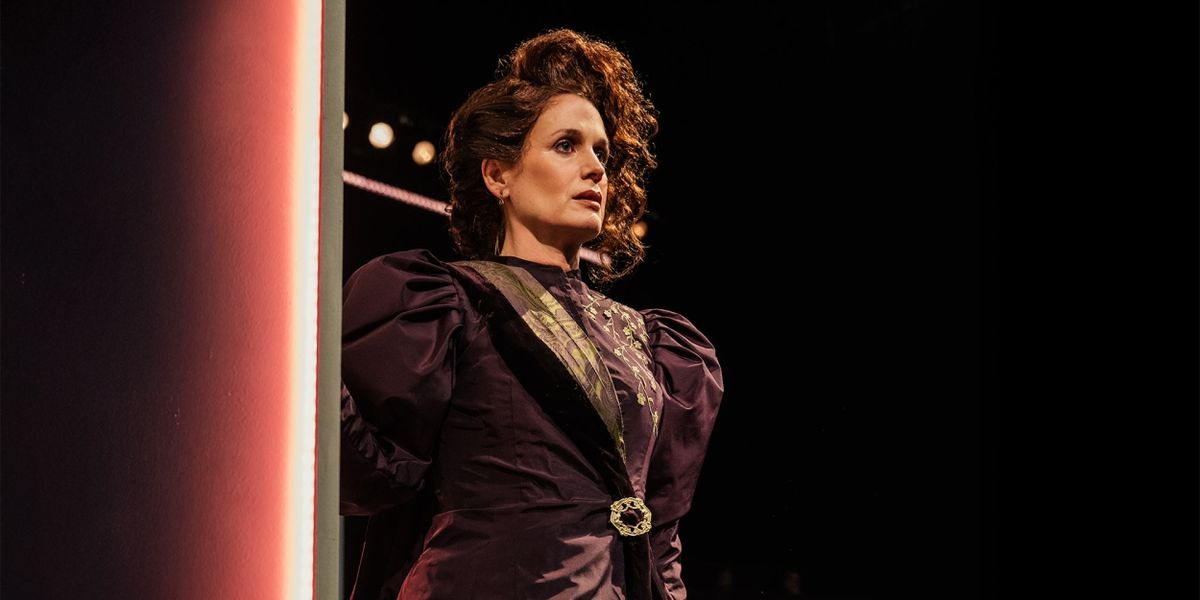
When Henrik Ibsen’s “A Doll’s House” was launched back in 1879 Copenhagen, the forthrightly feminist play was not just a sensation, but a controversy. A woman abandoning her family — husband and children — was essentially unheard of and was certainly viewed as dishonorable. Despite that (or maybe because of that), it has since become one of the most-produced plays in history.

Playwright Lucas Hnath launched a sequel, A DOLL’S HOUSE 2, in 2017 in Costa Mesa, California, before it moved to Broadway, where it was nominated for eight Tonys, winning one, for Best Performance by an Actress in a Leading Role in a Play (for Laurie Metcalf). And while things have changed in the past almost-150 years, things haven’t changed that much. So even though Hnath’s play takes place just 15 years after the original story, gender and its role in society is playing maybe an even bigger role now than it did then.
Nora (Elizabeth Reaser) has changed dramatically in a decade and a half. She has found herself and more than that, she likes herself. She’s a self-made woman, a successful author of women’s books. She has made money. She has taken lovers. So she doesn’t return in disgrace or out of regret. She returns because she has just found out her husband, befuddled and frustrated Torvald (Jason Butler Harner), never filed for divorce, and she, as a woman, is unable to. Sparks turn into fireworks and long-suffering housekeeper Anne-Marie (Kimberly Scott) and now-adult daughter Emmy (Kahyun Kim) get pulled into the maelstrom.

Hnath didn’t just write a second part to Ibsen’s classic. He turns what was a tragedy into comedy — well, dramedy — and it works. It’s fizzy and sometimes raucous and utterly delightful. His script is astonishing in its complexity. Each of the four characters is distinct, with layers and layers that he peels back so that we and the other players are forever learning more. It’s not that no one is who they seem, it’s that everyone is a living, breathing human being with histories and resentments and dreams and frustrations, and, like all of us, those qualities are not always on display all at one time. The relationships are just as complex, the topics serious and timely, not to mention thorny, but Hnath’s script is never preachy, it just illuminates the shades of gray in our social mores, both then and now. And within those shades of gray, no one is wrong. That doesn’t mean everyone is right; there are simply no villains here, only complicated people trying to figure out life and the world and their places in it.
Director Jennifer Chang moves the story along with the precision of a surgeon, the energy never flagging even during the quiet moments. Her direction is assured and creative and she makes fantastic use of the stage, which is especially impressive because half of it is taken up by bleachers where audience members sit like a jury judging not just Nora this time, but Torvald, too. It adds an almost-ominous quality to the otherwise bright proceedings.

Reaser makes a dramatic entrance (not to mention a dramatic exit), like a bookend to Nora’s departure in the original story. Nora returns flighty and self-absorbed and has a haughty demeanor, but that isn’t arrogance or entitlement; it stems from the confidence she’s acquired in the time since she left Torvald and their children. Reaser is luminous, as usual, her comedic timing stellar. (At points she even shows glimmers of Jennifer Saunders’ Edina Monsoon.) She has exhibited phenomenal range before, yet she has never been better, her hair swept up similarly to The Bride of Frankenstein (sans the gray streaks). She owns the stage, never leaving the light once the show starts. Her chemistry with Harner is palpable. His Torvald is a broken man, world-weary, yet his pride, while wounded, still flares like shimmers of gold. They are supported spectacularly by Scott, whose long-suffering Anne-Marie holds her own without being relegated to “the sassy sidekick,” and Kim, whose strong, smart Emmy is also surprisingly vulnerable.
The costumes by Anthony Tran are exquisite and the scenic design by Wilson Chin is elegant and towering, complemented by Elizabeth Harper’s effectively moving lighting. The energy throughout the entire show is electric, the dialogue and performances raucous and uproarious. It’s a full home run for everyone involved, and opening night was particularly charged because it was the 100th anniversary of The Pasadena Playhouse that very day. What a phenomenal way to cap off a century and usher in the next.
Photos by Jeff Lorch.
A DOLL’S HOUSE 2 is performed at The Pasadena Playhouse, 39 South El Molino Avenue, Pasadena, through June 8. Tickets are available at PasadenaPlayhouse.org, by phone at 626-356-7529, and at the box office.


|
Much Ado About Nothing McCadden Place Theatre (8/07-8/16) |

|
6 Out of 10 Theatre 68 (8/20-8/20) |

|
After the Blast The Broadwater Second Stage (8/05-8/13) |

|
Catch Me If You Can Colony Theatre (9/17-10/18) |

|
Emily Skinner: In Concert Feinstein's at the Nikko (8/14-8/15) |

|
Gershwin and the Golden Age Younes and Soraya Nazarian Center for the Performing Arts (The Soraya) (10/11-10/11) |
|
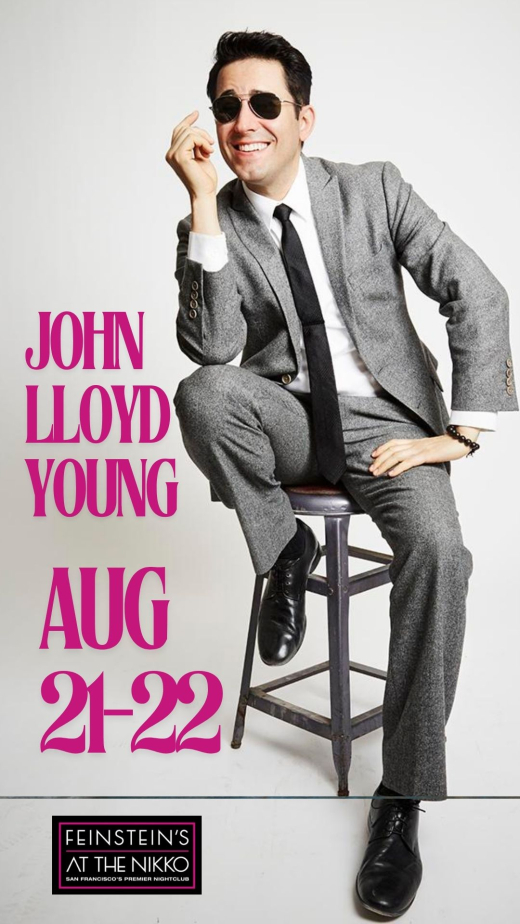
John Lloyd Young Feinstein's at the Nikko (8/21-8/22) |

|
Love, Loss and What I Wore Sawyer's Playhouse (8/08-8/30) |

|
Our Man in Santiago by Mark Wilding Odyssey Theatre Ensemble (9/10-9/20) |
|
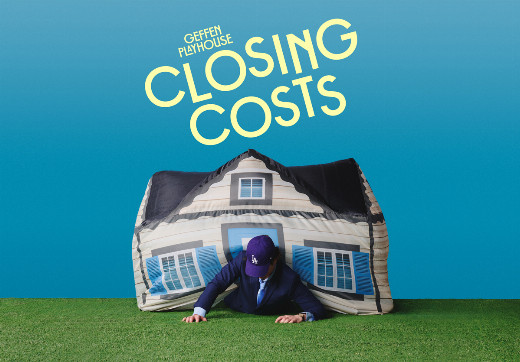
Closing Costs Gil Cates Theater (3/31-5/02) |
Reader Reviews
To post a comment, you must register and login.