


Review: KRAPP'S LAST TAPE, Cockpit Theatre
Unique production finds new poignancy in Beckett's celebrated one-man show
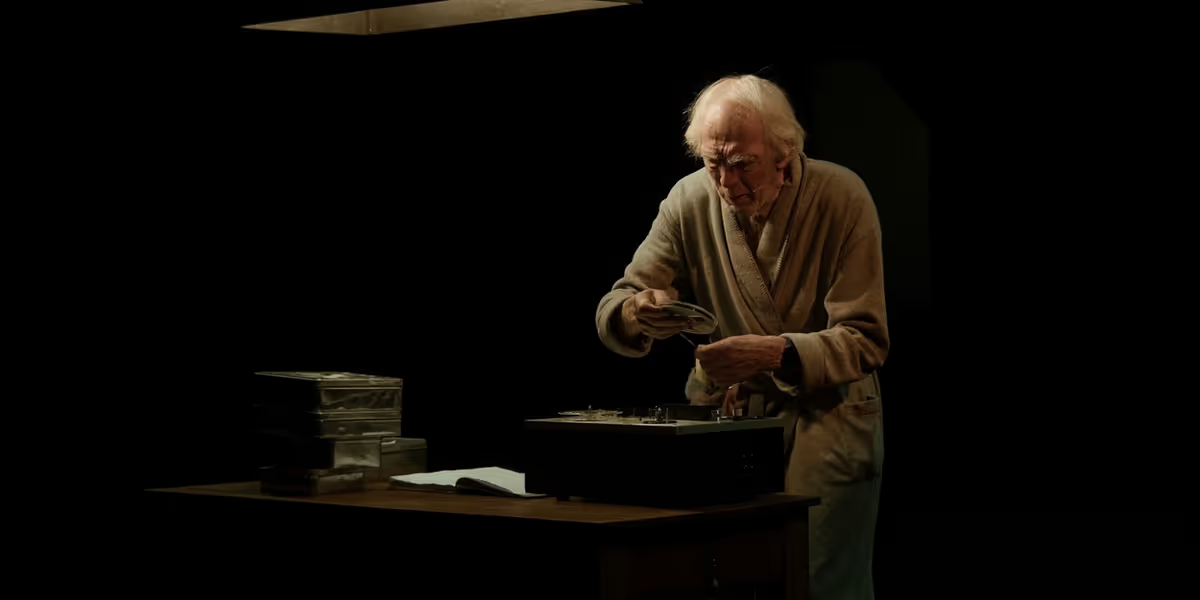
 Few productions of 70 year-old avant garde plays in a tiny fringe theatre off one of North London’s less salubrious thoroughfares will generate the kind of publicity that has attached itself to this short run of Krapp’s Last Tape. Particularly as Samuel Beckett’s one man show is firmly in the ‘Kale Smoothie’ category - a show that you’re glad you’ve consumed even if it’s not that palatable at the time.
That said, not many plays place an 84 year-old actor, with a long association with Beckett, on stage in the full knowledge of all parties that he is diagnosed with Alzheimer’s disease.
It’s about now that the word ‘brave’ arrives in reviews like this one and I’ll use it. Of course, there’s some bravery in Peter Marinker’s decision to take on the role (though it caused him not a moment’s hesitation when it was offered) but the genuine bravery comes - perhaps - from Dave Whybrow, the director of the production who dedicated the time and patience required to solve the multiple problems such casting presented. And to reap the rewards of a unique (and uniquely poignant) staging.
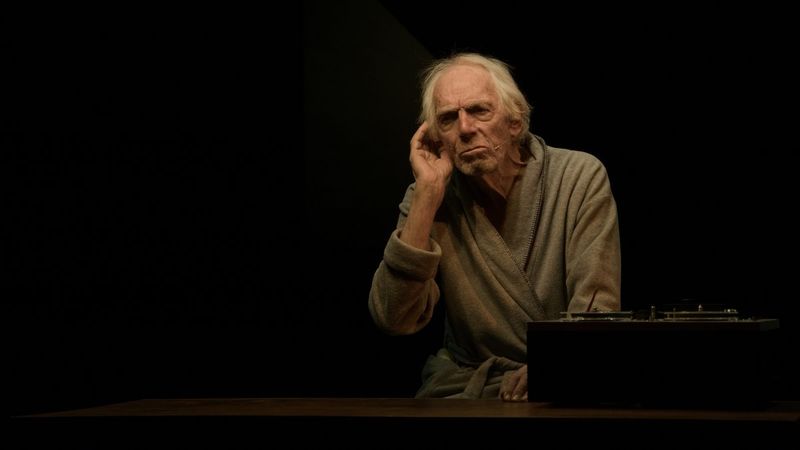
Beckett’s play is about memory, an old man playing back the tapes he made in younger days and half-recalling them, often with disdain for himself and others, but sometimes with affection. It explores how we remember incidents and people, how differently they are received with the dubious benefit of hindsight, and how the hall of mirrors inside our heads distort and distract us from the truth - even if such a thing exists at all.
I’ve long been fascinated by memory, having once enjoyed a good one (handy for learning French and German vocab on the chaotic school bus in the morning). Reading Philip K Dick, Jorge Luis Borges and Oliver Sacks opened my eyes to the artistic and scientific opportunities that memory’s plasticity offered, then serving on juries, after covering The Law Of Evidence as a student, underlined just how little the average person understands about memory’s slippery qualities. Then came Google and the too common and unsettling revelation that events about which you were certain in your recollection, didn’t actually happen like that at all.
We watch Marinker the actor playing Krapp and Krapp the character he plays and we see the interplay between their psychological states, the two melded into one, struggling with a past that will not settle, not resolve into clarity. If Krapp has his tapes to help / hinder, Marinker has Marta Fossati, listed as Stage Manager, but much more than that. She speaks into Marinker’s earpiece to instruct him on his next action or prompt him to look at the big screens that show the text. None of this is hidden, there is no attempt to encourage us to suspend disbelief because the staging is the play.
Marinker is a little bowed, shuffling as much as walking but his voice has, if anything, improved in the 43 years since he recorded the tapes we hear. The resonance in his still powerful line readings may be leavened by hesitations and pauses, but what is Beckett without those calling cards? It really is a delight to have those words given such extraordinary weight, all of use breathing the same air
Borges himself would enjoy the fact that this performance was captured on video allowing it access into another level of recall and reproduction. You’ll be able to Google this soon too. Let's not even consider Deep Fakes and the malign hand of AI, its potential to invent false histories almost limitless - Phil Dick was right.
Krapp's Last Tape at the Cockpit Theatre until 5 September, with all proceeds to The Alzheimer's Society
Photo images: Chris Lincé for Stagefright Films
Sign up for all the news on the Fall season, discounts & more...
.jpg?format=auto&width=300)






Reader Reviews
To post a comment, you must register and login.