


Review: I PURITANI, Royal Ballet And Opera
Even with Richard Jones' wicked new twist, is this classic slice of bel canto solely for "i puristi"?
 Thirty-four years is a long time to leave an opera in the attic, and I puritani has spent most of that period gathering dust for good reason. Bel Canto — that Parisian tradition of vocal style over dramatic substance producing works that, to many, are all fur coat and no knickers — has never quite recovered its mass audience since the Sutherland-Callas generation retired, and Bellini's last opera, which substitutes plot for vocal spectacle with a candour that even its admirers find trying, is not the obvious place to start rebuilding one. That Richard Jones has now properly turned his attention to it for the first time in his long career suggests either a late conversion to the cause or, more plausibly, that he has simply run out of twentieth-century miseries to reframe as grand opera.
It is perhaps no coincidence that Jones's first work for what is now the Royal Ballet and Opera — a divisive 1993 take on Wagner's Ring Cycle that made the front page of The Sun for its fat-suited Rhinemaidens — arrived just a year after I puritani was last staged here. By excavating one of the few works left untouched during his three decades at Covent Garden, he appears to feel that he has carte blanche to define Bellini's Bel Canto landmark for a new generation. And, in keeping with his track record, it comes with its own divisive take.
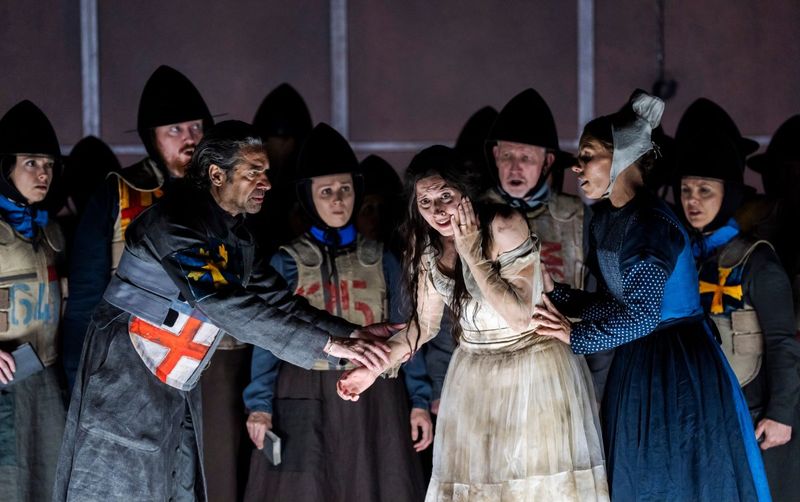
Carlo Pepoli's libretto, as limp and frankly unnecessary as it is, peers at English history through Italian eyes. Charles I’s head has recently parted company with his shoulders and his followers are holed up in a Plymouth fortress. Royalist Lord Arturo Talbo sees the opportunity to rescue the king’s widow Enrichietta from the clutches of the Puritans (led by his love rival Sir Riccardo Forth); he grabs it with both hands and the pair make an escape. The only snag? Arturo is forced to leave his betrothed Elvira on their wedding day without telling her why he is seen scarpering away with another woman. Anyone clutching their pearls over Bellini's loose grip on English history might first want to account for what Shakespeare did to Italy, and with comparable impunity.
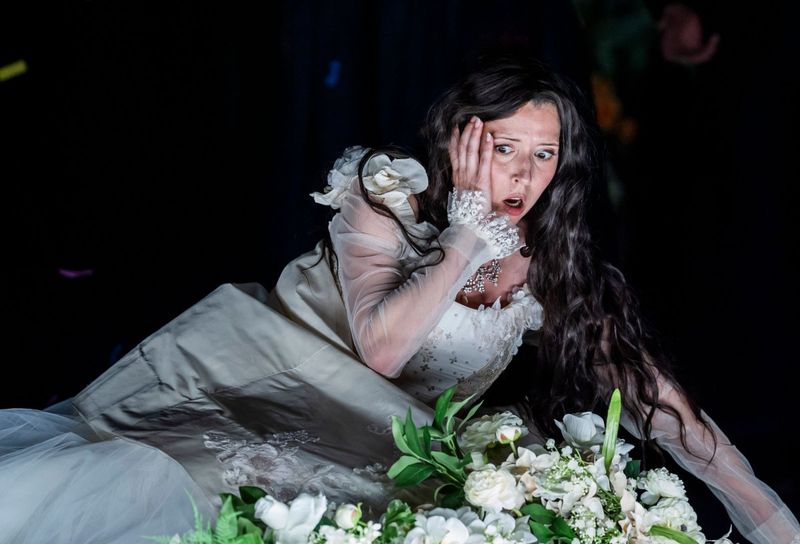
To an extent, having a storyline thin enough to walk a Paris runway is almost entirely beside the point. What we are here for is the singing, and specifically for Lisette Oropesa's Elvira. In a move that will surprise no woman reading this, the emotional heavy lifting has been left almost exclusively to the American soprano, and Oropesa carries it without apparent strain.
We watch as she goes from radiant bride to, after being ditched at the altar, a spectral Miss Havisham; wandering around in her increasingly distressed wedding dress and with a bedraggled bouquet pressed to her chest, she dispatched letters to Arturo that pile up unanswered. Jones intelligently gives her the space and time to establish Elvira as the production's lodestone before slowly dismantling her mental state. By the third act, the mists briefly clear, sanity flickers back, though, given what Jones inflicts at the curtain (and the boos that final twist attracts from some audience members), one suspects madness is still just around the corner.
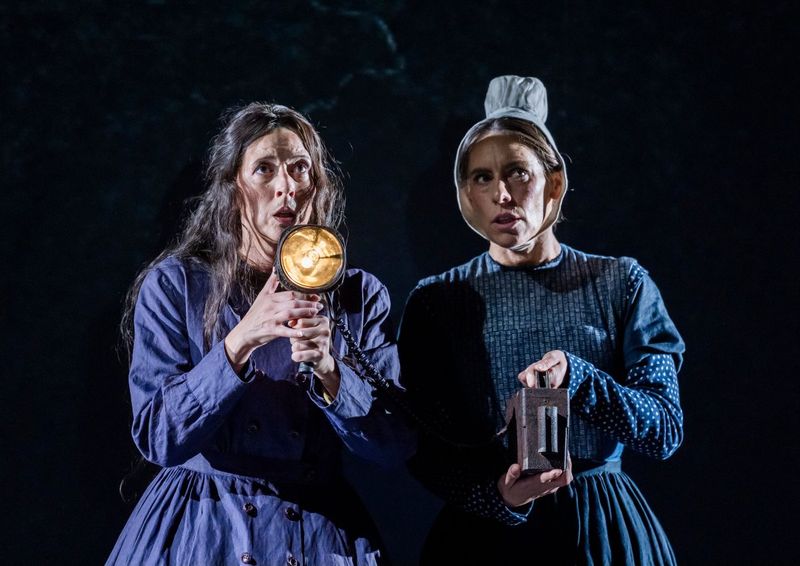
Andrzej Filończyk's Riccardo has beautiful vocal lines, but the production's more villainous reading of the character — there is a near-assault at the close of Act One, and a fondness for the bottle that sits awkwardly with his Puritan credentials — never quite translates into physical menace. He sends Arturo (Francesco Demuro, bringing earnest musicality to the role) to a firing squad and still does not seem especially dangerous. Ildebrando D'Arcangelo brings weight and authority to the uncle Giorgio, his lengthy Act Two duet with Filończyk landing with the force the score demands. Holding the edifice together in the pit is Bel Canto specialist Riccardo Frizza making his Royal Opera House debut after twenty-five years in the business.
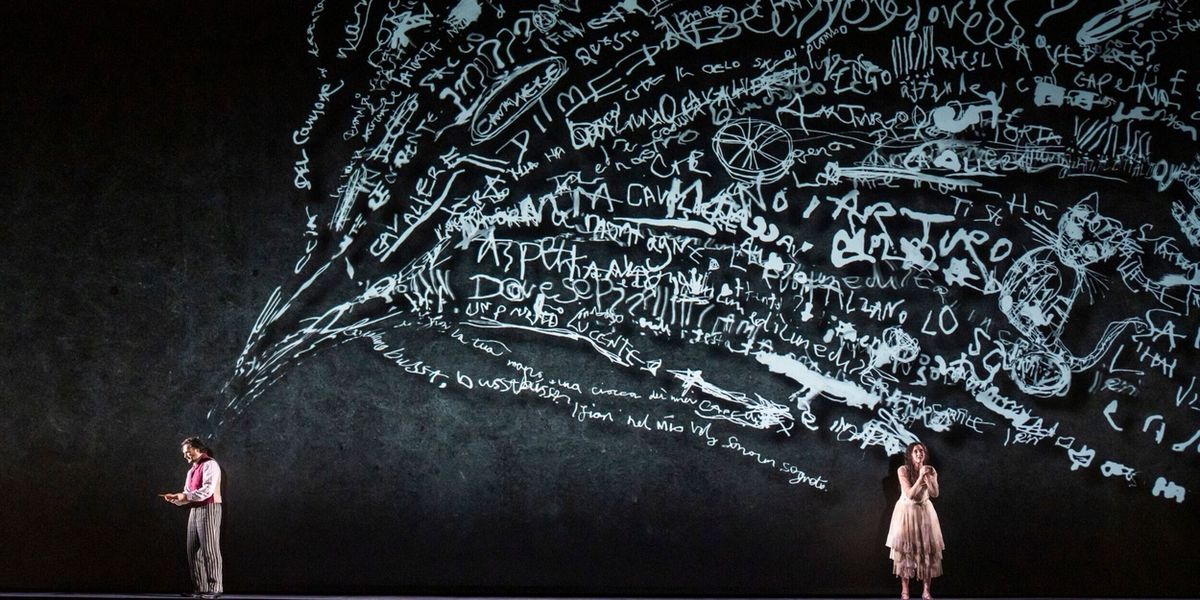
While Pepoli's hacky premise of “all’s fair in love and the English Civil War” might feel like it was bashed out on the back of a very small envelope, Jones’ design makes sure his vision is writ large, quite literally. Prefacing each act are Sasha Balmazi-Owen’s video projections which show the text of the lovers’ letters scrawling across a black backdrop; what start as endearing messages mirror Elvira’s disintegrating mind and become wild, illegible outpourings. Hyemi Shin’s deliberately understated set design with its grey walls and grey sandbag arches is an interesting, though not arresting, visual response to Bellini’s maximalist approach to the aural. Nicky Gillibrand's costumes are less coherent: bandoliers and flak jackets alongside striped trousers and bridal lace, the intended hybrid suggesting all periods at once and therefore none in particular.
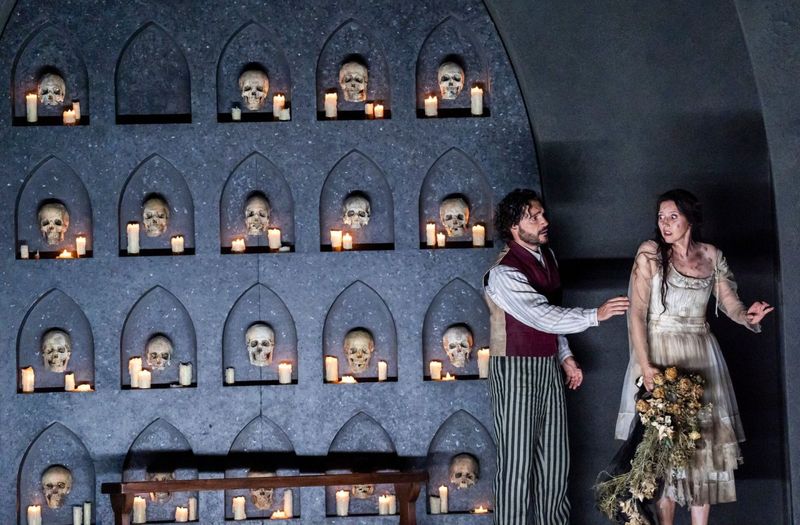
This opera won’t be for everyone — but that can be said of every opera. What we have here is a divine work that raises vocal stylings over everything else that this art form’s lovers hold dear. When something commits this hard, it is frankly the audience’s responsibility to either approach it on its own terms or not at all. Even when I puritani drags its feet (some exchanges last so long that, by their end, it feels that the Hundred Years War has come and gone), it provides a chance to simply close your eyes, open your ears and let its beauty sink in. One for the purists? Maybe so, but something this pure should have a wider appeal.
I Puritani continues at the Royal Opera House until 19 July
Photo credit: Tristram Kenton
Prefer BroadwayWorld in Google Search?
Add us as a preferred source so our stories show up more often in Top Stories and Google’s AI answers — for you.
Sign up for all the news on the Fall season, discounts & more...
.jpg?format=auto&width=300)





Reader Reviews
To post a comment, you must register and login.