Interview: 'There's No One Like David': Annie-B Parson on Choreographing DAVID BYRNE'S AMERICAN UTOPIA
'My work tends to be in my own sense of rejection and ideation - a rejection of the phrase-based pop dance world'
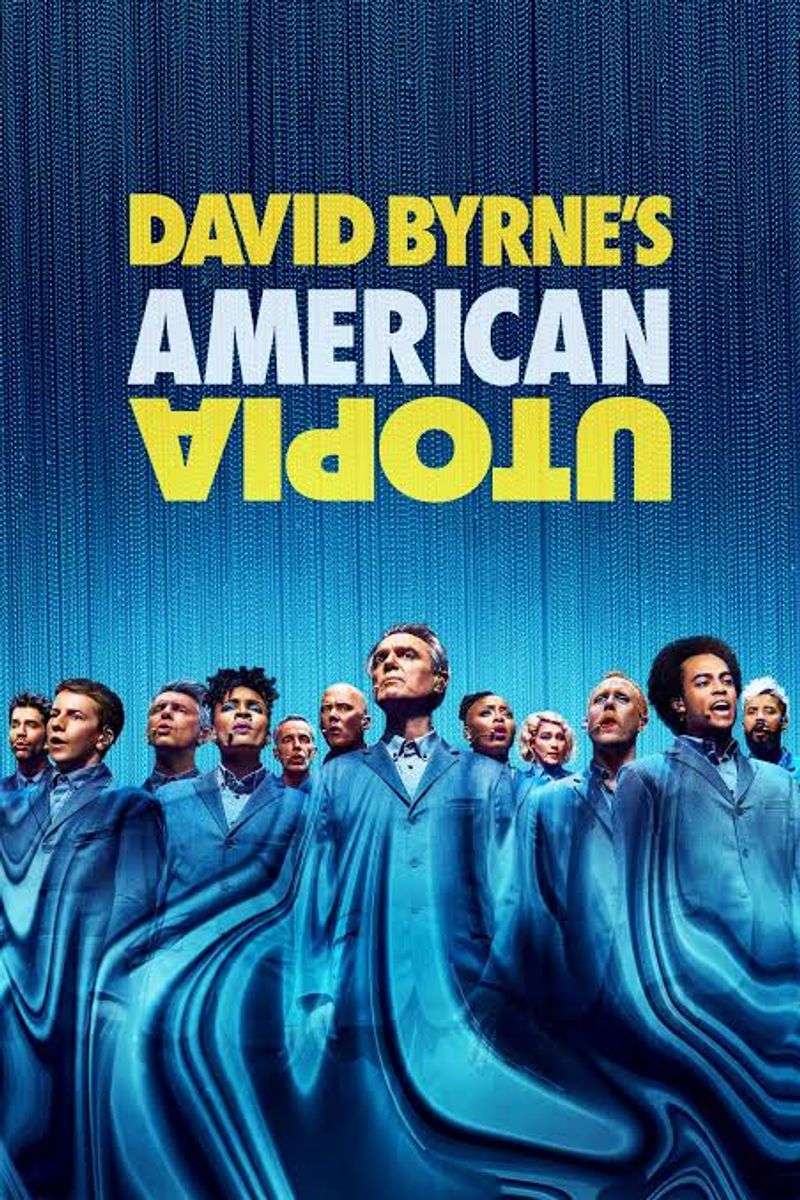
Five years after it debuted at the Toronto International Film Festival, David Byrne’s American Utopia is coming to cinemas nationwide for one night only on 5 August, this time in 4k. Directed by Spike Lee, the film is a recording of a live performance of the “rock spectacle” based on Byrne’s 2018 album of the same name.
Recently, we had the chance to speak with Annie-B Parson, the choreographer of American Utopia. We discussed what first drew her to dance and choreography, what it was like to work with David Byrne and the musicians to create a fully choreographed concert and some of her favourite moments from the show.
What drew you to choreography?
I think that's this mysterious aspect of certain people's brains that I call the “choreographic mind.” It's the thing where people love to organise visual material in some way, both rhythmically and visually. I noticed that I was always trying to rent a room and get people to come in and arrange them in different shapes, put different clothes on them and have them do different actions at different speeds. I was like, “Oh wait, I really think I might want to try to be a choreographer!”
What made you want to choreograph American Utopia?
I had worked with David Byrne for many, many years. I had done a number of his touring shows, his rock shows, and we first became in contact because he knew my work downtown in dance. He's a very avid dance and theatre goer in the more experimental realms of dance and theatre. He saw my work and invited me and two other choreographers to choreograph a couple of his songs in his tour that he made with Brian Eno. And truthfully, I was such a giant Talking Heads fan! Talking Heads was such a large part of my young aesthetic. Everyone has an artist that shapes the way they see the world, and Talking Heads was definitely mine. In a sense, I had been choreographing for David in my mind since I started choreographing. So, by the time we did American Utopia, I had already choreographed a number of shows for him.
Can you tell us a bit about your creative process, specifically for American Utopia?
Initially, David sketched out what the world would be - he had a vision of the piece. Most of what we make is a rejection of things, a reaction to things and a receiving of new ideas. In this sense, he was rejecting the messy, ubiquitous stuff on stage that bands had.
In some sense, it is in a minimalist, visual aesthetic, and he is a visual artist as well. So he said to me, “I don't want anything on stage. There'll be no chords. There'll be no mics. There'll be no platforms. Everybody will be mobile, and everyone will dance. The whole band will dance, and we’ll be in a box.” Initially, it was going to be a white box, but it turned into chain on the walls because of a very practical reason, which became a huge creative force in the piece. Also, that change, he sketched that out, and I was like, “Well, if everybody's mobile, then the whole thing is choreographed,” and he was like, “Yeah, that's what we're doing.” So that was the beginnings of it!
You mentioned that the entire show is choreographed. How is it working on a show like that, especially with musicians who might not have dance as their main background?
It's quite different than working with dancers! But I had worked with a lot of musicians over the years. I've choreographed orchestras, marching bands, operas . . . You name it! So I'm pretty accustomed and excited to work with musicians. I like their limitations, and my work tends to be in my own sense of rejection and ideation - a rejection of the phrase-based pop dance world. I started on a personal level, in my room, listening to the demos of the music. I started with just going through compositional elements like space, shape, line, distillation, isolation, things like that.
But one of the main collaborative parts was me and Rob Sinclair [Lighting Designer]. So this whole aspect of making the piece was me and Rob just sitting there playing with ideas about how light and choreography can have a marriage. I have worked with lighting designers my whole life, but I've never choreographed with a lighting designer. I've only choreographed and then added in the lighting. We had so much fun figuring out what we could do - there's so many fun things!
What was it like choreographing things like “I Should Watch TV” where it's based on that light coming from the side of the stage?
Well, that was another compositional idea! I thought, “What if David is stage left rather than centre?” Again, a rejection of the ubiquitous downstage centre position that the rock star always holds. David's not interested in that; I'm not interested in that. What if we play with it? And he's one of these rare performers that doesn't feel the need to hold that position. I've also played with that idea much more deeply with St. Vincent, in a show of hers where I had her not even enter downstage centre till half an hour into the show. So once I decided, “Okay, David's going to be stage left in this, where's the band? Are they moving?” That's issues of locomotion. Now the band is moving from stage right to stage left throughout the song, and then what happens when they get there?
Did you have a favourite song to choreograph from the show?
I love “Glass, Concrete & Stone” - it's so beautiful. It's about halfway through the show where I have the performers, with their arms through the chains. Again, compositionally, I was working with isolation. “Glass, Concrete & Stone” is one of those songs that I was dreaming that David would put in the show because I love it, but I had not choreographed it yet because he hadn't played it in any of the shows I had worked on! David's whole relationship to emotion in songwriting fascinates me, and I think it's very unusual because usually the you know performers put their heart on the stage, and he's. He gives us little bits, and that's definitely one of those songs where you hear his heart.
What do you hope audiences take away from American Utopia?
Well, there's two very different, but maybe strangely connected things. I like the idea that David’s artist brain asks us to look differently at an at the image of what music can be.
And I like that he's asking the audience to imagine the music differently, and not just go into your regular thing about the beat or whatever. I mean, he wants you to dance and all that, but I love the licence that he has given me to rethink what a concert could look like. It was only through him that I learned to experiment with the musical concert form.
There's no one like David. He is truly a citizen artist, and he brings politics into his work in the most organic, personal way. I hope the audience takes that very seriously.
David Byrne’s American Utopia is being screened in the UK on 5 August.
Photo Credit: David Gordon