


Review: A LITTLE NIGHT MUSIC at Nationaltheatret
An Overambitious but Rewarding Night Music
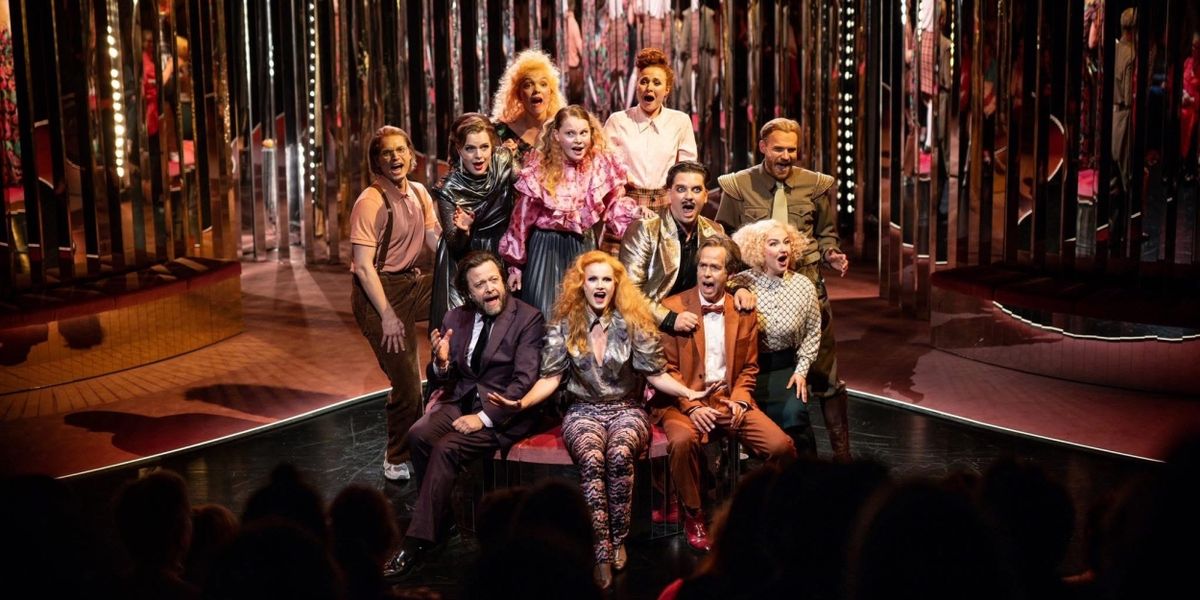
 Staging A Little Night Music is always an ambitious undertaking. Stephen Sondheim’s musical is a delicate blend of wit, melancholy, romance, and irony, requiring both vocal sophistication and razor-sharp acting. This new production embraces the challenge with admirable flair, even if its reach occasionally exceeds its grasp.
Mari Maurstad’s masterclass
As Madame Armfeldt, Mari Maurstad is simply astonishing. She commands attention as the natural focal point, blending biting humor with a deep well of melancholy. Her rendition of Liaisons is layered and deeply moving, even though the Norwegian lyrics don’t always capture the lyrical beauty and bittersweet irony that Sondheim wove into his original text. Maurstad still manages to make every line resonate.
Fractured and flawed
Kåre Conradi’s Fredrik Egerman is convincing as a man both weary and sexually frustrated, defined by a dated, sexist view of women. His chemistry with Nora Frølich’s Anne highlights the contrast between his disillusionment and her naïve charm. Unfortunately, Frølich struggles vocally, often losing pitch—a detraction in an otherwise strong ensemble.
By contrast, Ola Magnus Gjermshus makes Henrik Egerman unforgettable. His performance seethes with pent-up pain and frustration, expressed in a raw, desperate timbre during "Later". Rather than playing Henrik as comic relief (as some productions have done), Gjermshus leans into his melancholy with bursts of emotion that ring true.
Desire, charm, and caricature
The entrance of Desirée Armfeldt, played with confidence by Lena Kristin Ellingsen, clarifies the play’s emotional center. Ellingsen is deliciously entertaining, portraying a modern woman trapped in a constrained time, even though the fairy-tale staging sometimes blurs the dramatic clarity.
The portrayal of Count Magnus Malcolm leans heavily into caricature, which may divide audiences. For me, it made it harder to connect with the character’s complexity. Ideally, the role needs to balance toxic masculinity with an undercurrent of charm, and here the scale tipped a bit too far toward bluster—at times reminding me of a tipsy reveler at a Christmas party. His wife, however, provides a striking counterpoint: Henriette Marø’s Charlotte Malcolm is both hilarious and heartbreaking. Her rendition of Every Day a Little Death beautifully conveys the bitterness and quiet suffering of being dominated by an overbearing husband.
Supporting brilliance
Hanna Maria Grønneberg shines as Petra, embodying both humor and raw honesty in her scenes. Neither she nor Marø are skilled singers, but both are exceptional storytellers—an approach Sondheim himself famously preferred, always valuing actors who could sing over singers who could merely act. The youngest performer, Irma Brenna Kverndokk, brings delightful charm and budding confidence as Frederika, hinting at a promising future.
One of the production’s strongest assets is the duo of Anders Gjønnes and Sanne Kvitnes, who give voice to the unspoken emotions of the characters. Their singing, acting, and presence elevate every scene they inhabit. Complementing them is Simon Revolt’s new orchestration, which renders the score luminous and richly textured, offering both intimacy and grandeur.
Lost in the Mix
My main gripe with this production is sound. From where I sat, many of the lyrics disappeared into the mix. The theatre relies only on ceiling-mounted amplification, with no speakers at ear level and no real attention to acoustic treatment in the auditorium. This is particularly unfortunate because Sondheim’s lyrics are the lifeblood of the piece—wordplay that is simultaneously witty, intricate, and emotionally devastating. Missing even a fraction of them lessens the impact. Also the confined space makes it impossible to get a sense of the summer night itself, which in other productions has been used to powerful effect. That sense of openness—the night air, the fleeting beauty of time passing—is integral to the show’s atmosphere, and here it never quite emerges.
A Satirical Fairytale Frame
That said, the creative vision behind this production is commendable. Director Thomas Glans proves himself more than qualified to take on Sondheim. His staging reveals the intelligence in the writing while also having great fun with the material, oversaturating symbols to satirical effect.
Marianne Sævig’s translation generally works well. At times she opts for a modern phrasing, at others a more classical approach. Because this production does not aim for realism either visually or dramatically, the mixture becomes an advantage, giving the text both freshness and timelessness.
The scenery, though minimal, is sleek and sexy—mirror-barred walls and endlessly reconfigured sofas suggesting ever-new spaces. The costumes are hilarious in their own right, adding a welcome layer of absurdity to the satirical tone. Stage- and costume designer Katja Ebbel and lighting designer Oscar Udbye deserves praise for what they have accomplished in this tiny space.
A Commendable Undertaking
In the end, I commend Nationaltheatret for daring to take on such an important and complex work of musical theatre. Even if the production is a little overambitious, it is precisely this kind of risk-taking that keeps the repertoire alive, and I hope they continue along this path in the future. At its best, this Night Music pulses with wit, sensuality, and melancholy beauty—reminding us that Sondheim’s work, though challenging, rewards both daring and care.
A Little Night Music
By: Stephen Sondheim and Hugh Wheeler
Direction and choreography: Tomas Glans
Musical director: Simon Revholt
Set and costume design: Katja Ebbel
Lighting design: Oscar Udbye
Masks: Nina König and Rebekka Louise Refsnes
Cast: Lena Kristin Ellingsen, Kåre Conradi, Mari Maurstad, Nora Frølich, Sanne Kvitnes, Ole Magnus Gjermshus, Henriette Marø, Jacob Jensen and others.
Performed until 29 November
Få Broadway-nyheter på WhatsApp
Få de siste oppdateringene, nyhetene og eksklusivt innhold direkte i appen.

|
Saturday Night Fever - The Musical. AVLYST! Grieghallen, Griegsalen (8/14-8/14) |
|
Snøfall Oslo Nye Teater (11/14-11/27) |
|
Utbrent av den hellige ånd Oslo Nye Teaterkjeller’n (9/16-11/05) |
|
|
Oktoberfest 2026 | FREDAG Vikingskipet (10/09-10/09) |

|
Det glemte vinlandet Australia Bergenhus Snekkerbrakken (12/09-12/09) |
|
|
Muga Bergenhus Snekkerbrakken (9/23-9/23) |
|
Chicago Chateau Neuf,Storsalen (9/02-12/12) |
|
|
Sigvart Dagsland - Det er makt i de foldede hender - Salmekonsert Helgerud Kirke (10/11-10/11) |
|
Valentourettes På Martins Martins Pub (11/14-11/14) |
|
Arbeiderpartyet Oslo Nye Teater (9/11-9/12) |
Reader Reviews
To post a comment, you must register and login.