


THE TURN OF THE SCREW Comes to Den Norske Opera
Gothic horror when a beautiful and disturbing chamber opera takes the Main Stage.

The Turn of the Screw is a classic ghost story, but something deeper lurks beneath the surface. We tumble into a world of ambiguity, where the boundaries between supernatural phenomena and inner psychology are blurred. The story is loaded with concealed tensions – both sexual and social.
The creepy, claustrophobic atmosphere is enhanced by Britten's music. Shifting tonalities create a sense of instability, while the supernatural elements infiltrate and are drilled into us like a screw being tightened.
She is recruited by a handsome man in bustling London. He claims to be the only surviving relative of two young children living on an isolated estate, but he wants nothing to do with them. Full of questions and great ambitions about what she could accomplish, the young governess sets off.
At first, everything is idyllic. The children are pure goodness and the property is beautiful. But then strange things start to happen. Mysterious figures appear alongside a growing sense of unease. Something is seriously wrong and the governess resolves to fight for the two children's souls, which she suspects are possessed by evil spirits. But are they really – or is she simply seeing things?
The Turn of the Screw was written by Benjamin Britten (1913-1976), a central figure in 20th century British classical music. Britten created everything from large choral works to sonatas and intimate versions of folk songs, but devoted the majority of his efforts to opera, composing a total of 16 works.
Themes of lost innocence and exclusion run through many of Britten's operas, including The Turn of the Screw.
Britten's Peter Grimes and Billy Budd were both successful productions with the Norwegian National Opera & Ballet, but this is the first time we are presenting The Turn of the Screw. The production is being staged by renowned theatre director Peer Perez Øian, who is making his Oslo Opera House debut with this production.
The Turn of the Screw is a chamber opera, which means that the orchestra has only 13 performers, but the relatively few number of instruments are used effectively to create an amazing and atmospheric soundscape.
The opera is tightly structured into two acts with eight scenes, each of which begins with an orchestral interlude that sets the mood. The interludes are based on a ‘screw’ theme – a series of 12 tones that rises in the first act and falls in the second – as a musical representation of a screw being tightened and released.
As we often see in horror films, Britten creates a sense of eeriness by including British rules and children's songs, such as ‘Lavender's Blue’ and ‘Tom, Tom, the Piper's Son’. One of the opera’s most disturbing moments is when, in a trance-like state, Miles sings ‘Malo, malo’ – a word used as a mnemonic for beginning Latin learners.
The text is based on Henry James’ short novel of the same name. Britten first became acquainted with it in 1932, when at the age of 18, he heard it read on the radio. “A wonderful, impressive but terribly eerie and scary play” the young man wrote in his diary. That same year, he read James’ text, which Britten regarded as a masterpiece. All the same, more than 20 years would pass before he began working on an opera version, after librettist Myfanwy Piper suggested the same story. Myfanwy was the wife of artist and set designer John Piper, who had been a friend and partner of Britten since the mid-1930s.
A young lady is hired as a governess to look after two orphans, Miles and Flora. The children live on the remote estate of Bly Manor together with their maid, Mrs G. Groose. Their uncle lives in the city and wants to have as little to do with the children as possible. The governess has been given strict instructions to never write to him, never to ask about the history of the house and to never to leave the children. But she starts seeing the ghosts of two of the estate’s former employees, Peter Quint and Miss Jessel. She believes the ghosts are a threat to the two children and becomes increasingly concerned...
A web of extraordinary events explores the themes of lost innocence, good, evil, the subconscious and the supernatural.

Få Broadway-nyheter på WhatsApp
Få de siste oppdateringene, nyhetene og eksklusivt innhold direkte i appen.

|
|
PÅKLEDEREN av Ronald Harwood Oslo Nye Centralteatret (9/09-9/26) |
|
|
Blues Cruise - The Breeze S/S Helena (8/22-8/22) |
|
|
Michael Salangen Kulturhus (9/06-9/06) |

|
Jonas Alaska Sundbytunet (11/13-11/13) |

|
IN MEMORY OF ELVIS GOSPEL MED PAAL FLAATA OG GOSPELKORET REFLEX Frogner kirke (10/22-10/22) |
|
|
Blues Cruise - Geir Bertheussen S/S Helena (8/29-8/29) |

|
Det store vi - Harald Eia Humorhuset Stavangeren (9/25-9/25) |
|
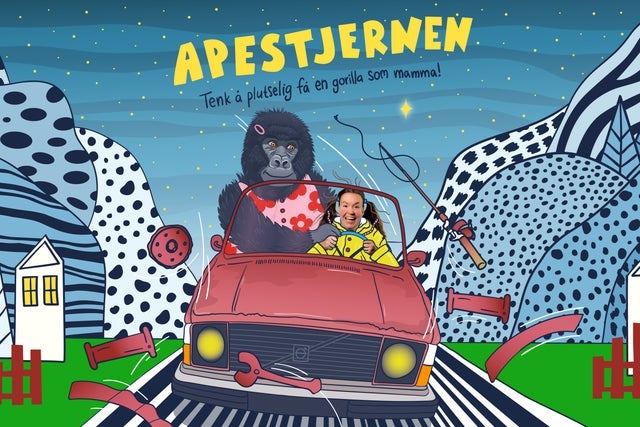
Riksteatret: Apestjernen Maihaugsalen (11/18-11/18) |
|
Beatniks Lillestrøm Kulturpub (9/26-9/26) |

|
Chicago Chateau Neuf,Storsalen (9/02-12/12) |