


Review: NEXT TO NORMAL at Nye Hjorten Teater
Unflinching, Unsentimental, Unforgettable
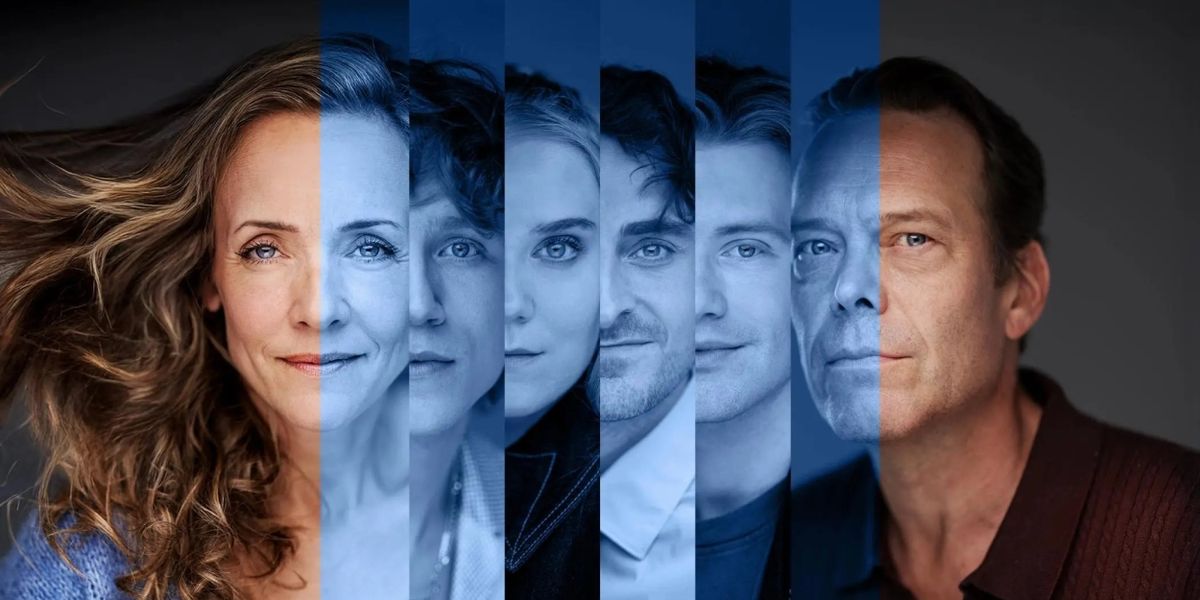
 Some musicals want to sweep you away. Next to Normal wants to hold you still and make you feel. It doesn’t rely on spectacle or offer neat resolutions—it digs into grief, love, and mental illness with raw honesty, and still leaves room for hope. That’s why this Pulitzer- and Tony-winning rock musical still matters today: it proves that the stage can be both unflinching and deeply human. I’m very pleased that the newly founded Nye Hjorten Teater dares to bring this complex piece of art to the stage as their first big musical, rather than choosing something safer like Mamma Mia!. It’s a gamble that deserves to be experienced.
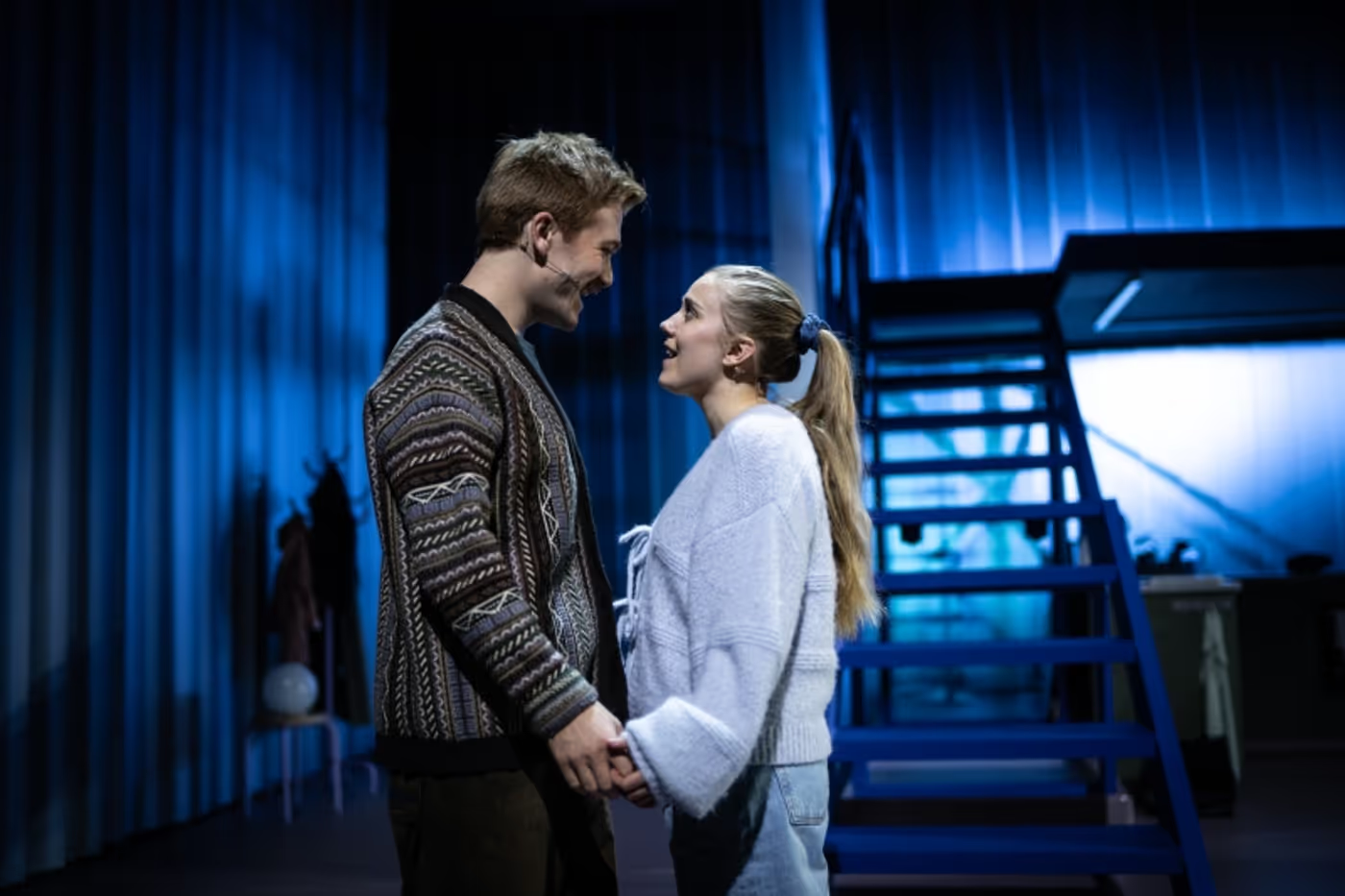
.jpg?format=auto&width=1400)
I’ll start with a short, spoiler-free synopsis, because I strongly recommend going into this show without knowing all its details. That said, some spoilers will follow further down—so be warned.
Next to Normal explores the life of a seemingly ordinary suburban family whose world is anything but simple. At its heart is Diana (Jannike Kruse), a mother striving to hold her household together while coping with the challenges of her mental health. Around her, each family member struggles in their own way—with love, with identity, with the pressure to be “normal”—as they search for connection and understanding. With a powerful contemporary score by Tom Kitt and a deeply human book and lyrics by Brian Yorkey, the show balances humor and heartbreak while tackling themes of family, resilience, and what it means to truly heal. Rather than offering easy answers, Next to Normal invites audiences into an honest, moving portrait of love and survival. While other musicals dazzle, Next to Normal unsettles. It doesn’t exist to entertain first and foremost—it exists to confront, move, and challenge. What could have been a tidy morality tale refuses all easy resolutions, yet it never feels preachy.
Raw, Energetic Score
The music is the show’s heartbeat. Tom Kitt’s score blends rock’s pulse with musical theater sophistication. Numbers like “You Don’t Know” and “I’m Alive” carry raw intensity, while ensemble pieces such as “Just Another Day” layer voices and motives with Sondheim-like intricacy. Back in 2009, when most commercial musicals were based on movies or familiar intellectual properties, Next to Normal was a breath of fresh air. It proved that original musical theater could not only succeed but succeed so powerfully that it won the Pulitzer Prize—an honor very few musicals ever receive.
Next to Perfect Casting
Jannike Kruse must navigate grief, mania, despair, humor, and love—sometimes within the same scene or even the same song. Diana is one of the most demanding roles in musical theater, requiring immense stamina and vocal range, and Kruse makes the character feel more real and multi-dimensional than I’ve seen in other productions. Her rendition of “I Miss the Mountains” is heart-wrenching and vulnerable. She focuses on honesty over vocal polish, which paradoxically makes her sound even more beautiful. She never loses her emotional intensity, and when she finally connects with her daughter, the moment brought me—and many others in the audience—to tears.
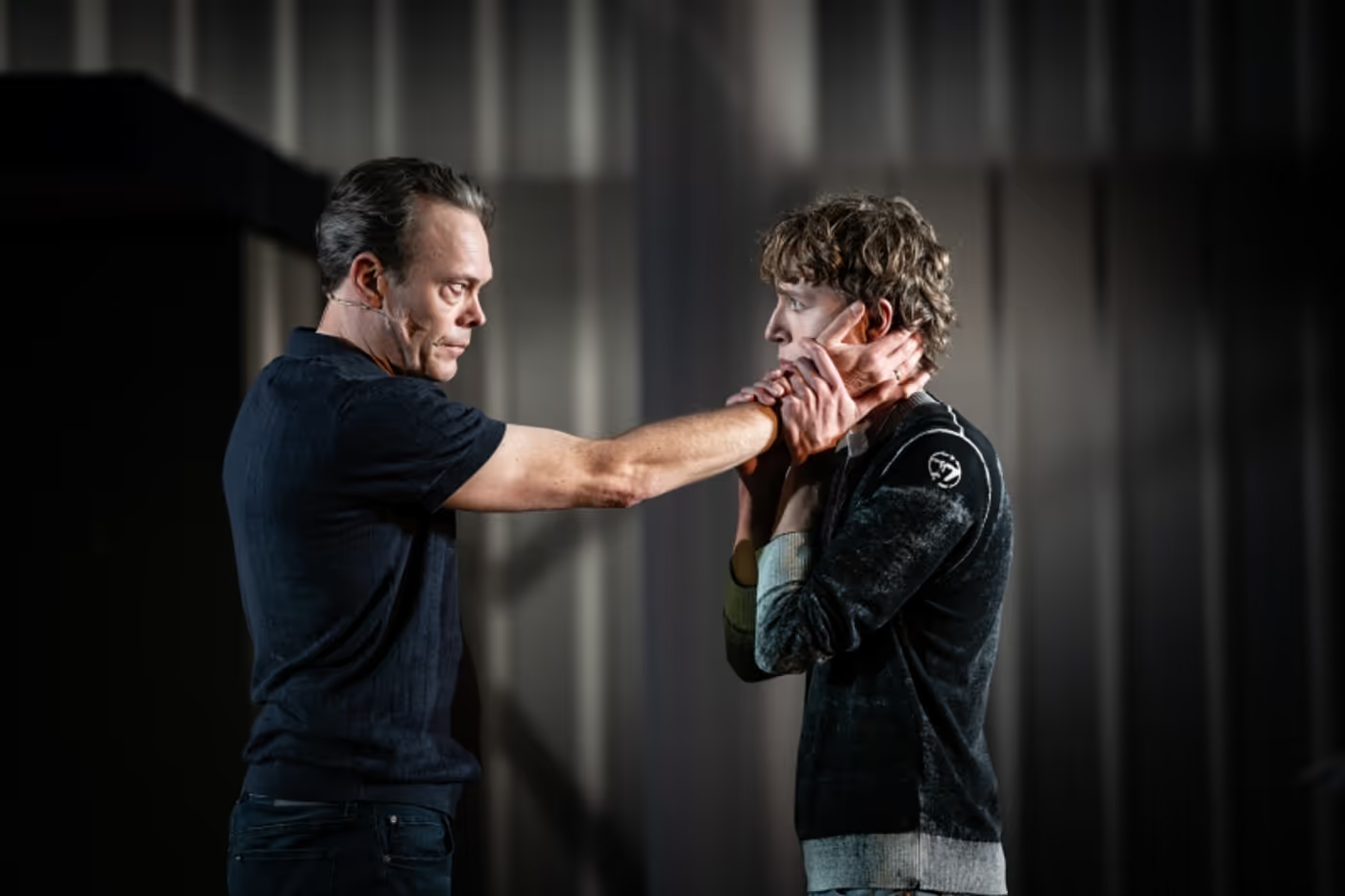
While Diana may be the crumbling wall of Next to Normal, Dan serves as the scaffolding holding it up—or at least trying to. Outwardly, he looks steady, but beneath the surface he’s cracking, weakened by years of unspoken grief. Håvard Bakke’s portrayal captures this duality with striking honesty. His rasp-tinged rock voice carries the weight of a father whose love is steadfast, yet whose choices slowly chip away at the very foundation he’s trying to protect.
Natalie, the overlooked daughter, is a concealed crack in the wall. Ingvill Mobeck Siegel plays her with impressive control: behind the sarcasm and toughness, she reveals Natalie’s fear of becoming her mother or being consumed by the same cycle of pain. Her vocals are strong, and she seamlessly infuses them into her acting.
Gabe represents what the Goodmans cannot release or face head-on. He is not simply Diana’s son, but the embodiment of grief itself: alluring, insistent, and impossible to silence. Martin Hopland Dyngeland (currently studying musical theater in Sweden and performing this as his internship) brings a tender, soaring voice and strong presence to the role. At times, however, he seemed to hold back on the edgier, more dangerous aspects of Gabe, particularly in “I’m Alive.” Whether this was due to opening night nerves or a directorial choice, it left me less connected in the first act. In the second half, however, as Gabe became more of a shadow haunting his mother’s mind, Dyngeland’s performance grew far more compelling. The climactic father–son confrontation—when Dan finally acknowledges Gabe and speaks his name for the first and only time—was devastating. That single word landed with enormous weight. I was especially moved, as in the first Norwegian production at Det Norske Teatret the name itself was cut from the scene. I still haven’t made peace with that omission, so I was grateful to hear it spoken here in full.
Henry, Natalie’s boyfriend, represents hope: the possibility that imperfect love can still be grounding. He starts off as a laid-back, stoner-ish high school kid and comic relief, but gradually deepens into a vital anchor for Natalie. Thomas Kvamme Urnes plays him with warmth and sincerity, bringing humor, gentleness, and a strong vocal presence. He becomes her lifeline back from self-destruction.
The last roles—Dr. Fine and Dr. Madden—are both played by Mathias Luppichini. These characters cleverly reflect Diana’s experience of the medical system: a blur of professionals who never quite reach the core of her pain. Played poorly, they risk slipping into caricature, but Luppichini gives them nuance and sympathy, while also exposing the limits of a system that treats symptoms but often misses the grief underneath. He also deserves credit for a superb Norwegian translation of the show: the words feel natural, retain the original meaning, and manage to be both everyday and beautifully lyrical.
Visually and Stylistically Simple
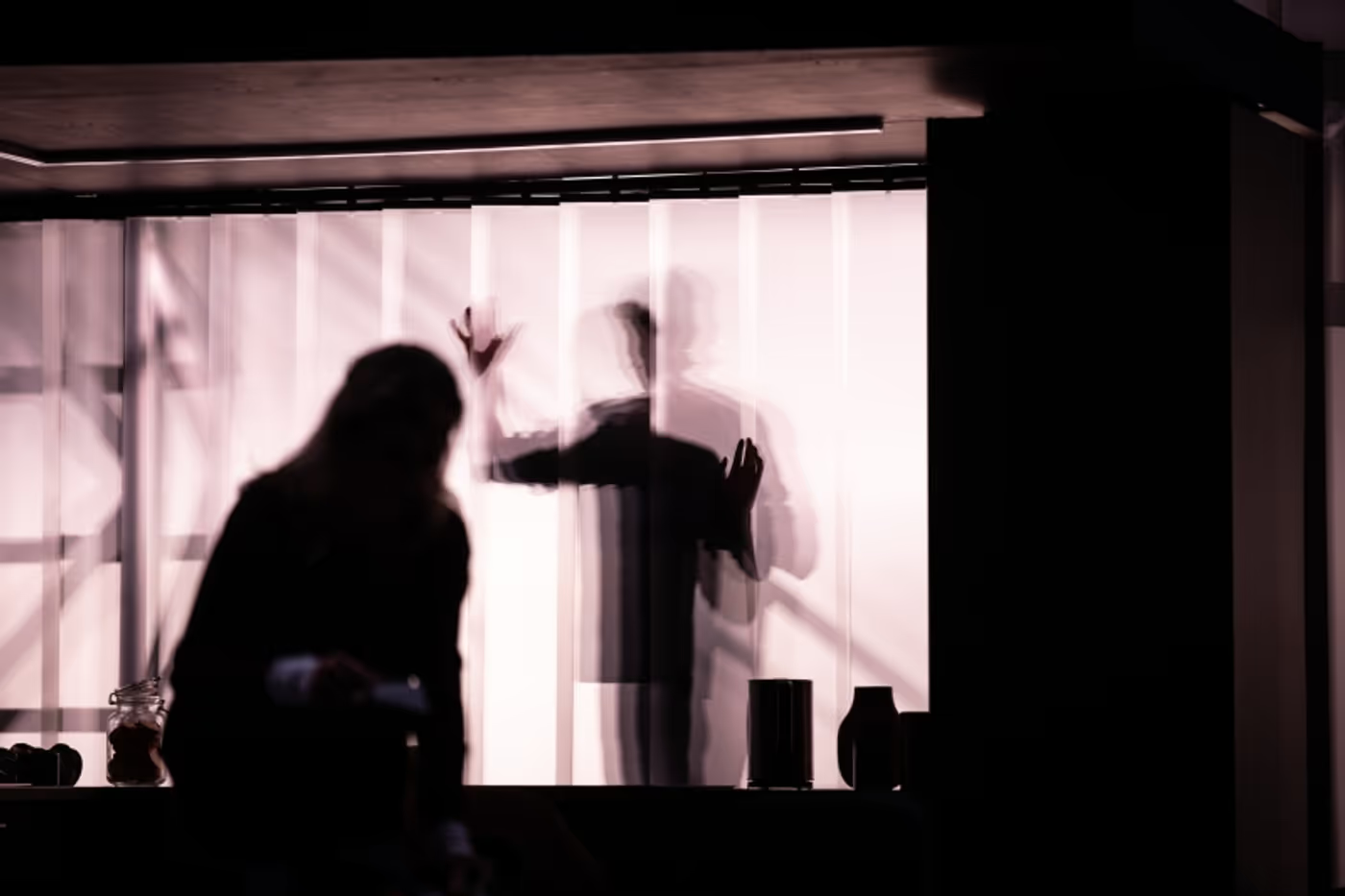
While the original Broadway production used hundreds of light bulbs to create a flashy, modern aesthetic, Gjermund Andresen’s design takes a more subdued approach. The set consists of heavy blinds that divide the space into different sections of the house or other locations, with the family kitchen at its core. The grayish-green color scheme recalls hospital corridors. Breaking this palette is a royal-blue staircase that clashes uncomfortably with its surroundings—surely intentional, making the world feel slightly “off,” just like the Goodmans. On a deeper level, both Diana and Natalie end up visually connected to the staircase—Diana in denim, Natalie in a royal-blue prom dress—signaling their path toward reconciliation and a new passage together.
Realism Over Spectacle
Director Renate Stridh avoids Broadway-style spectacle and instead leans into realism, finding meaning in the smallest details. One striking moment is the father quietly washing blood from the kitchen table—a haunting image that lays bare his desperation to hold the family together. She adds subtle touches, like ending Act One in darkness, with only the glow of a music box—a chilling reminder of Gabe’s presence, achieved without theatrics. She avoids clichés as well: when Natalie sings “We Need Some Light” at the end, the moment is portrayed metaphorically rather than literally by simply turning on lights.
Her realism contrasts with the score, which mirrors the characters’ shifting psychological states—mania surging with jagged rhythms, depression lingering in hollow tones. Though Next to Normal isn’t dance-heavy, choreographer Miguel-Angel Escobar weaves in more movement than usual, especially effective in “My Psychopharmacologist and I.” Musical Director Petter Kragstad’s six-piece band, including strings, preserves the emotional nuance, keeping music and staging seamlessly intertwined.
Unbalanced Sound, beautifully lit
On opening night, technical issues distracted from an otherwise powerful experience. Some microphones were turned on late, and the mix between the rock-influenced score and the singers was occasionally unbalanced, making it difficult to hear the performers clearly.
The lighting design on the other hand was beautifully lit by Eirik Brenne Torsethaugen. Often subtle, cold and eery, with some amazing effects up its sleeve, such as how gabe is only visible in a blurry sillhouette while closed out of his mother's mind, or the amazing final backlighting during the final note.
Next to Normal at Its Most Powerful
Next to Normal trusts its audience. It does not sanitize grief or mental illness. Songs are not showpieces; they are scenes. Music, staging, and performance converge to present characters who are deeply human: flawed, suffering, yet capable of hope. Other musicals tackling similar themes often drift into sentimentality or moralizing, but this show retains both honesty and complexity. In an era when many musicals seem designed for viral clips or pop playlists, Next to Normal reminds us of what the form can achieve: a work where text, music, and truth are inseparable. It offers no easy answers, yet leaves the audience emotionally spent, thoughtful, and surprisingly hopeful.
Despite a few technical hiccups and moments I wished for more, these are minor cracks in an otherwise towering achievement. Next to Normal proves that musical theater can be raw, unflinching, and unforgettable—essential viewing for both skeptics and fans alike.
Director: Renate Stridh
Norwegian translation: Mathias Luppichini
Set design and costumes: Gjermund Andresen
Musical Director: Petter Kragstad
Lighting design: Eirik Brenne Torsethaugen
Choreography: Miguel-Angel Escobar
Constume assistant: Vanessa Billton
Production photography: Antero Hein
Få Broadway-nyheter på WhatsApp
Få de siste oppdateringene, nyhetene og eksklusivt innhold direkte i appen.

|
Breidablikk Alfa Oslo Nye Teater (9/10-9/10) |
|
ULD // St. Petri kirke St. Petri Kirke (11/14-11/14) |
|
Night of Soul Grieghallen, Peer Gynt Salen (2/20-2/20) |
|
Kepler Teater: Character Work Cafescenen, Centralteateret (9/09-9/09) |
|
|
Sigvart Dagsland - Det er makt i de foldede hender - Salmekonsert Kristiansand Domkirke (10/16-10/16) |

|
Brunello vs Barolo Bergenhus Snekkerbrakken (10/28-10/28) |
|
Markens lille grøde – det e her æ høre tel (førr fan)! Teatersalen - Narvik Kulturhus (9/23-9/23) |

|
FESTNINGEN FORTELLER – Stedsans Akershus festning Karpedammen Scene (9/10-9/13) |
|
Sommerkonsert med Vamp på Hidra Laugøy (8/14-8/14) |
|
|
TREKKSPILL PÅ BRYGGA Brygga Kultursal (10/18-10/18) |
Reader Reviews
To post a comment, you must register and login.