


Review: DIRTY DANCING at Chateau Neuf
Dirty Dancing is a faithful lift, but light on depth.
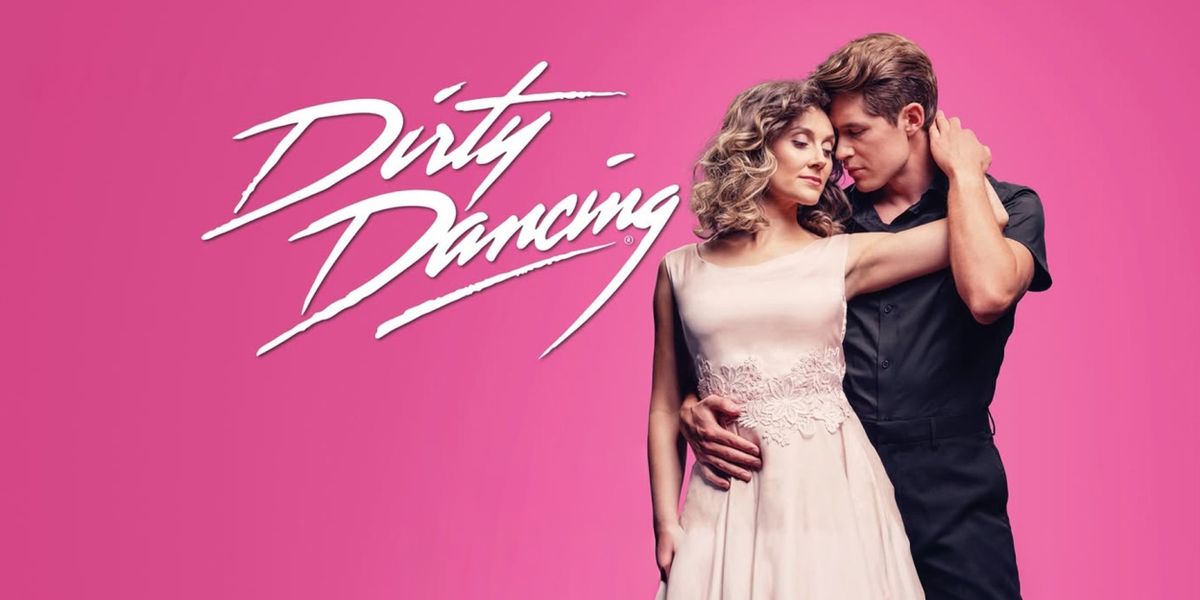
 Dirty Dancing has finally arrived at Chateau Neuf, promising fans a chance to relive one of cinema’s most iconic love stories. As someone who grew into adolescence with the music, the romance, and of course the famous lift, I was curious to see how it would translate to the stage, and while the original London production was huge disappointment, this version at least elevates it into a fun night at the theatre. The story remains true to the original: Frances “Baby” Houseman (Ingrid Kayser) spends a transformative summer at Kellerman’s resort, where she meets dancer Johnny Castle (Martin Lilleberg) and is swept into a world of passion, movement, and social boundaries. On stage, the narrative is expanded with a few new moments—glimpses of Dr. Houseman’s prejudices and extra lines for Mrs. Houseman—that add texture to the family dynamic. While the supporting characters (with one big exception) don’t always carry the same sharp definition as their cinematic counterparts, these additions do allow the story to breathe in new directions.
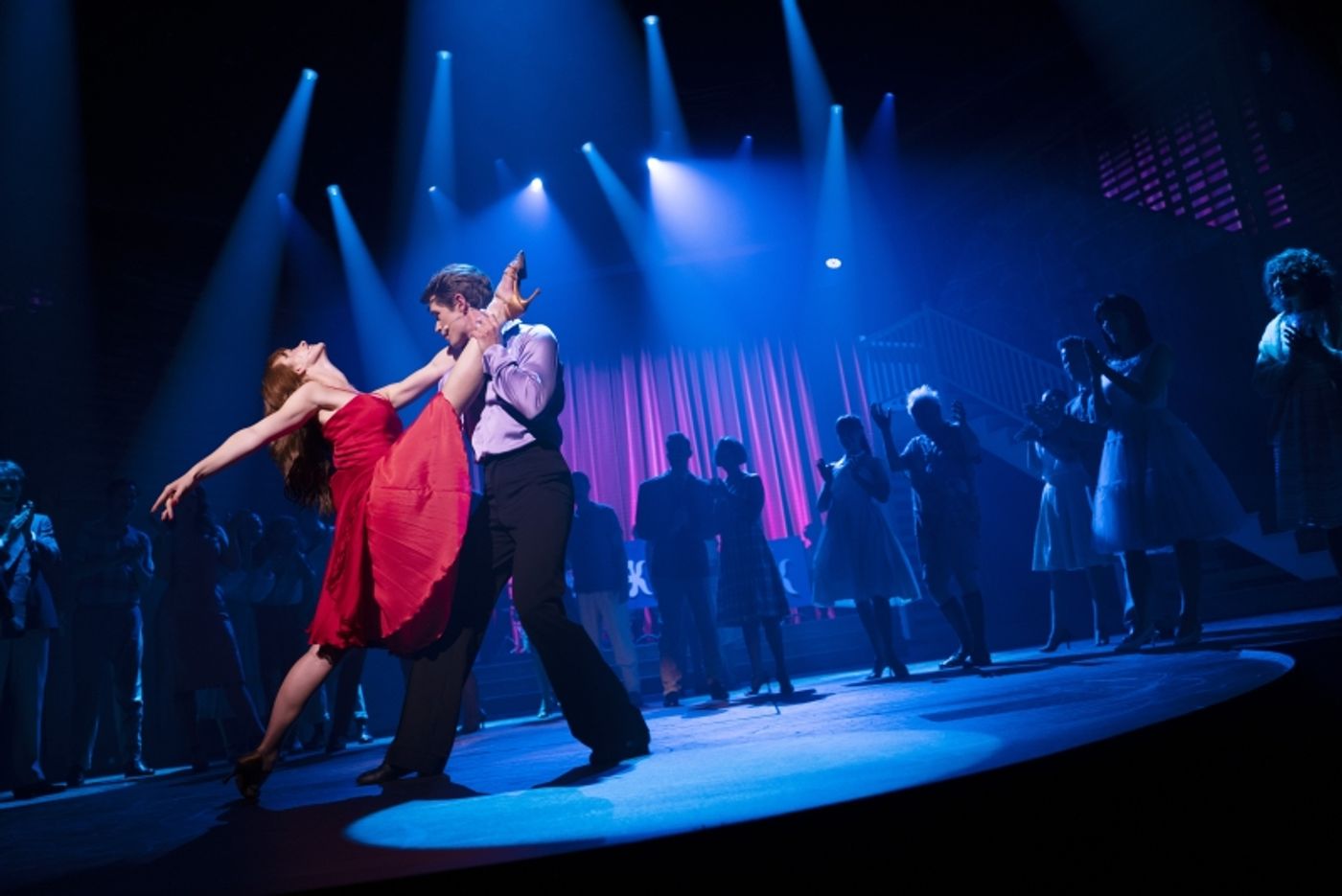
The West End production felt polished and professional, but also safe, predictable, and at times hollow—a serviceable night at the theatre without much spark. This Norwegian staging, by contrast, feels more alive and imaginative, though it also brings my earlier reservations into sharper focus. Its greatest strength—and its clearest limitation—is its unwavering fidelity to the 1987 film. Almost every line of dialogue, every dance step, even the characters’ styling is lifted straight from the screen. For die-hard fans, that loyalty is a comfort; it guarantees you’ll get exactly what you came for.
Yet for me, the extreme faithfulness becomes a missed opportunity. Theatre thrives on reinterpretation, offering fresh perspectives and experiences we can’t simply stream at home. Here, the written stage version often feels like a live re-enactment—competent and familiar, but seldom daring or inventive.
Performances and Chemistry
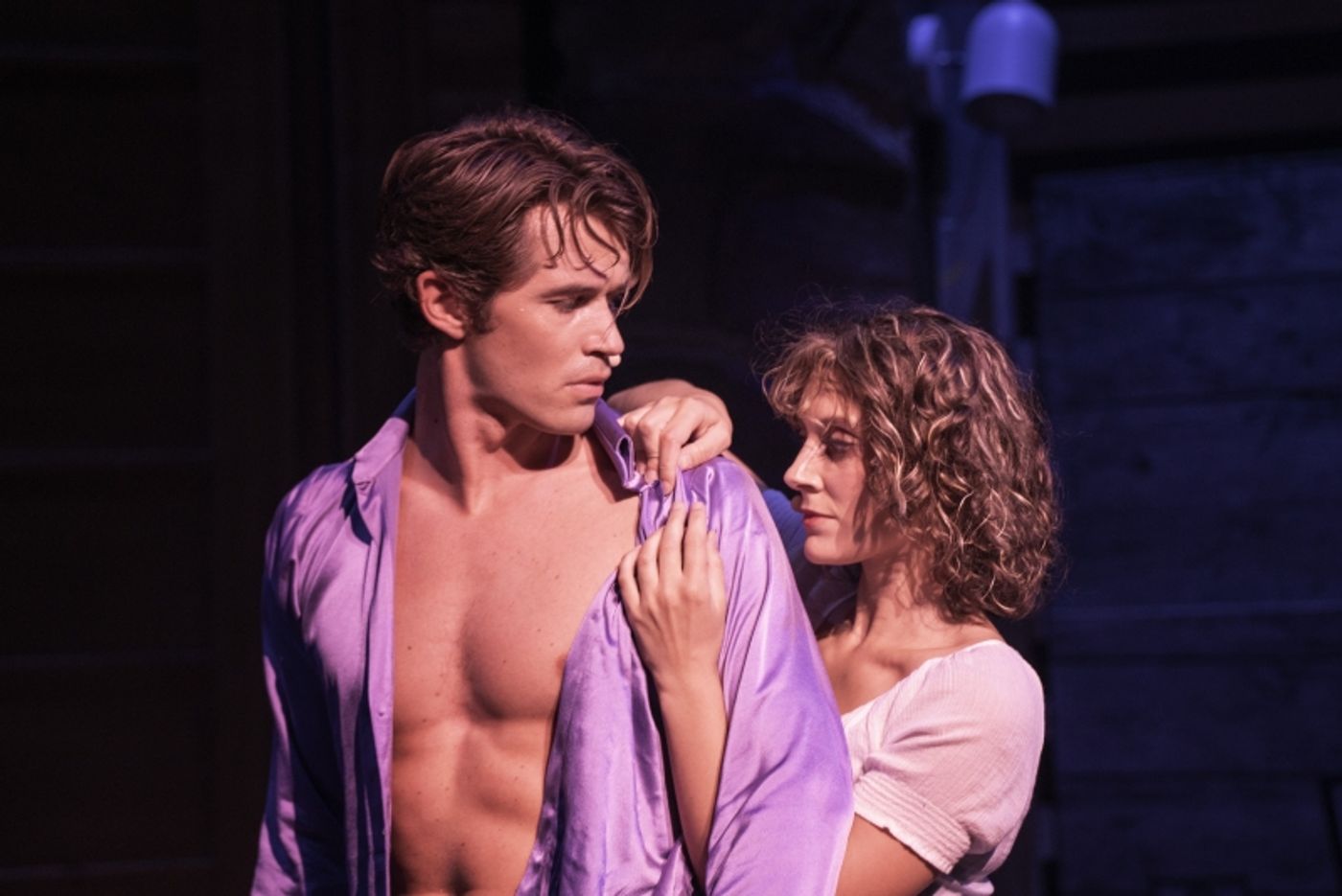
Martin Lilleberg’s Johnny is everything you want in a dancer—commanding, charismatic, and magnetic in Kirsty McDonald’s finely crafted choreography. When the focus is on movement, the stage is his. Dramatically, however, he doesn't fully convince. Some of that is due to the material: lines that work on screen, with the intimacy of a close-up, struggle to carry on stage, but it is evident he lacks skills as an actor. Still, there are moments when he relaxes into the role and feels effortlessly natural. Maybe with some more time he can relax into the role more.
Ingrid Kayser offers a more grounded Baby, with clarity of diction, strong commitment, and elegant physicality. Her dancing is assured, though her character arc feels compressed—she begins with too much confidence, leaving less space for the gradual transformation that defines Baby’s journey. As the drama heightens, both leads sometimes tip into excess, where restraint might have served them better.
The highlight of the evening is Guro Karijord as Lisa. In the film, Baby’s sister is just background noise; here, she nearly steals the show. With razor-sharp comic timing and pitch-perfect delivery, she makes every gag land, including a brilliantly off-key “Hula Hana” that’s so bad it’s good. It’s the sort of performance that adds levity while sharpening the contrast between Baby and her family, and it’s no exaggeration to say she walks away with some of the night’s biggest laughs.
Among the parents, Line Verndal brings warmth, sincerity, and understated humor as Marge Houseman, grounding her character with truth and charm. Terje Skonseng Naudeer, as Dr. Houseman, leans into a broader style—effective in lighter scenes, but less so in the more serious confrontations, where his theatricality jars against Verndal’s naturalism.
The ensemble deserves high praise: professional, driven, and full of energy, they elevate every scene. With much of the vocal work entrusted to them—since parts of the soundtrack remain from the film—they provide the production’s strongest musical moments. Standouts include Makeda Dyhre, Sondrey, and Magnus Strande, all of whom deliver powerhouse vocals. Morten Rudå delights as the awkward but lovable Mr. Schumacher, while Solveig Andsnes revels in the vulgarity of Vivian Pressman, the cougar everyone remembers.
The Beating Heart is the Dance
Kirsty McDonald’s choreography is the beating heart of this production. She captures the essence of Dirty Dancing while giving it a fresh theatrical rhythm. The ballroom numbers shimmer with elegance, evoking a bygone era, while the after-hours staff club sequences thrum with raw, irresistible energy. The contrast between the stiff resort guests and the sensual, grounded movements of the staff generates much of the evening’s electricity.
Even more impressively, the choreography advances the story. Baby’s tentative first steps are built into her movement, her gradual growth reflected in the growing confidence of her dancing. By the climactic finale, the payoff feels both earned and exhilarating. The famous lift during “(I’ve Had) The Time of My Life” remains the ultimate crowd-pleaser—met with cheers, applause, and a rush of nostalgia. Yet it also highlights a structural problem: one true moment of magic isn’t always enough to carry the rest of the evening.
Credit is due to director Mattias Carlsson, who has taken what could easily feel like a cynical, by-the-numbers cash-in and elevated it into something more engaging. He cannot change the thinness of the source material, but through sharp pacing, strong ensemble work, and a flair for theatrical detail, he ensures the production has energy, polish, and flashes of genuine charm.
Very Effective Set and Design
Where the London staging often looked sparse and bare, Lucy Osborne’s set design provides the ideal counterpoint. Two large floating structures flank the stage, transforming seamlessly from exteriors to interiors in multiple combinations. Together with a raised platform and three LED walls, the result is a versatile, dynamic environment that convincingly evokes the feel of a luxurious early-1960s summer retreat.
The design is further enriched by the production’s musical and technical elements. Unlike London, which leaned heavily on pre-recorded tracks, the Norwegian production embraces live vocals to wonderful effect. Whenever the singers take over, the performance feels more immediate and alive. The band plays with precision and flair, supported by excellent sound balance—clear, full, and never drowning the voices.
Lighting also plays a crucial role, doing more than simply illuminate the action. Warm golden tones summon sun-drenched afternoons, cool blues and shadows add intimacy to late-night scenes, and bursts of saturated color heighten the passion of the dance numbers. Together, the sound and lighting (plus engaging LED graphics) give the show a cinematic richness that feels far more immersive than its West End counterpart.
Pacing and Tone
If the show has a recurring weakness, it’s pacing. Scenes tumble into one another in an almost cinematic rush, leaving little space for emotional arcs to settle. Baby’s growth and Johnny’s vulnerability are sketched rather than developed. Tonally, too, the production wavers. Dirty Dancing has always walked a line between frothy nostalgia and the darker undercurrents of Penny’s abortion storyline—a tension that gives it staying power. On stage, however, the shifts can feel abrupt, as if unsure whether to embrace its camp or lean into its weight.
Still a fun night out
By the final curtain, I wasn’t disappointed, but I wasn’t exhilarated either. Dirty Dancing remains an undeniably fun night out: the famous lines are delivered, the iconic moves are faithfully recreated, and the climactic lift still earns thunderous applause. If you love the film, you’ll likely have a wonderful evening—and judging by the cheers around me, many already did. And even if it never fully reinvents the story, it captures enough romance, nostalgia, and sheer entertainment to remind us why Dirty Dancing has endured for decades. You leave with a smile, the songs in your head, and the sense of having spent a lively evening in very good company.
Få Broadway-nyheter på WhatsApp
Få de siste oppdateringene, nyhetene og eksklusivt innhold direkte i appen.


|
A Night In Clara''s Dreams: A Nutcracker Gala Stadsschouwburg Sint-Niklaas (1/03-1/03) |

|
Muga Bergenhus Snekkerbrakken (9/23-9/23) |
|
|
Stephen Ackles - Et møte med høvdingen - Utsatt, mer info kommer Kulturhuset (12/31-12/31) |
|
Ride on Gospel med Odd René Andersen Lillestrøm Kirke (10/25-10/25) |
|
It’s Britney, Bitch! Oslo Nye Teater (9/26-10/22) |
|
|
Vassendgutane 30 års jubileum - VASSEND-UNIVERS Vestlandshallen (10/02-10/02) |

|
Munter mat og søt musikk – med Olestad, Carstens & Holme Krøsset (10/15-10/15) |
|
I am a witness of your existence Oslo Nye Teater (9/10-9/12) |

|
Night of Soul Grieghallen, Peer Gynt Salen (2/20-2/20) |
|
30 år på sporet - Tore Strømøy Humorhuset Stavangeren (11/29-11/29) |
Reader Reviews
To post a comment, you must register and login.