


Review: THE WINTER'S TALE at Davidson Community Players
Shepherd Shakespeare Stays Up Late With "The Winter’s Tale" at Armour Street Theatre
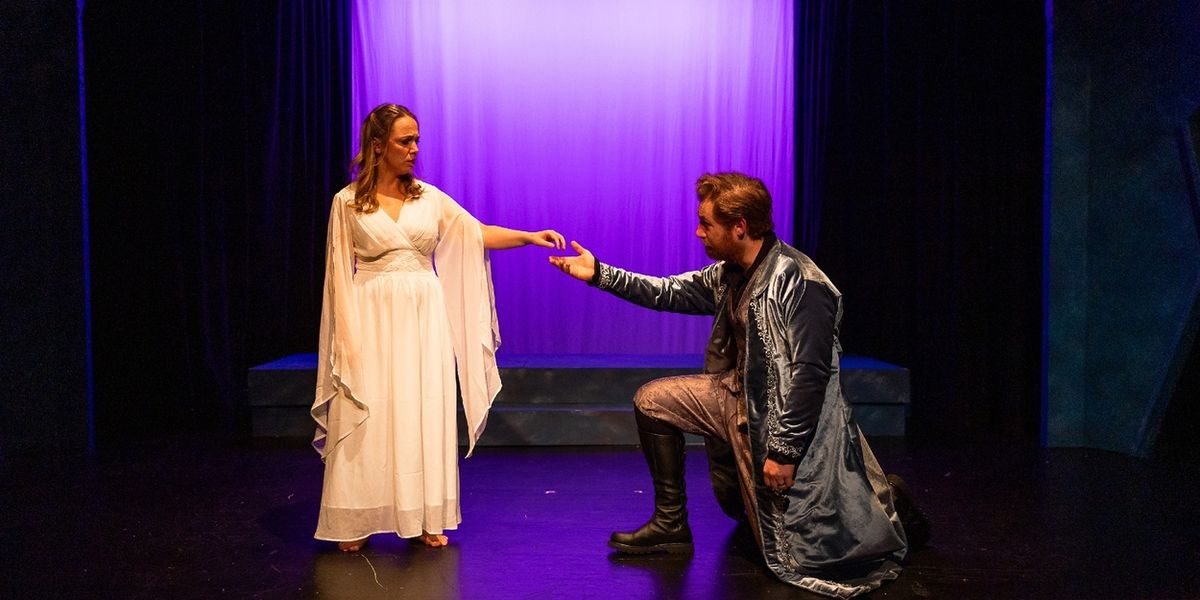
Yes, Davidson Community Players’ executive director Steve Kaliski certainly had a point this past weekend when he declared, “My kingdom for The Autumn’s Tale!” DCP had invited Shepherd Shakespeare Company, which normally performs outdoors at The Barn on Monroe Road, to perform THE WINTER’S TALE indoors at the Armour Street Theatre, out of the cold winter.
Unfortunately, winter weather pursued the troubadours, who also bring a variety of repertoire to local elementary and high schools, up the highway to Davidson, forcing the postponement of performances scheduled for the second weekend of Winter’s Tale at Armour. Ill-starred as the engagement may have proven, it enabled me to see SSCO in action for the first time, outside of their customary morning-and-afternoon cocoon in prime evening hours.
Katy and Chester Shepherd, co-founders of the touring company, are often at the forefront of their productions. But here, they are behind-the-scenes – and they have, artistically, split up. Chester is handling the stage direction and scenic design, while Katy has designed and constructed the costumes. Another blissfully theatrical couple, Brandon and Rachel Dawson, portray the jealousy-crossed leads, Leontes and Hermione, the King and Queen of Sicilia.

Brandon, as Leontes, falls prey like Othello to the green-eyed monster, but he’s also haunted by his own inner Iago, needing no outside help to compromise and convict his innocent Queen of shameful adultery. What happens in the tragic first scene is nearly as simple and grand as Lear. The visiting King Polixenes of Bohemia, after sojourning in Sicilia for nine months, announces that he will leave on the morrow.
The Sicilia monarch tries to persuade Polixenes to lengthen his visit but cannot shake his boyhood friend’s resolve. Rachel, as Hermione remains silent – until Brandon, as her King, asks her to assist. Hermione’s attempts are wittier, more lighthearted, more charming, more insistent, and more sustained. There are no stage directions in the text during Hermione’s pleadings that indicate any physical contact with the esteemed visitor, but in Shepherd’s direction, that is not a prohibition.
Chester and Rachel have reached a key accord, without Shakespeare’s expressed consent, when Hermione playfully suggests taking the Bohemian monarch as her prisoner. Yet when Polixenes is won over, fulfilling Leontes’ wishes, and Hermione has gained her husband’s admiration, Shakespeare does add a stage direction that decrees physical contact right after she declares Bohemia to be her newly-earned friend: “Gives her hand to Polixenes.”
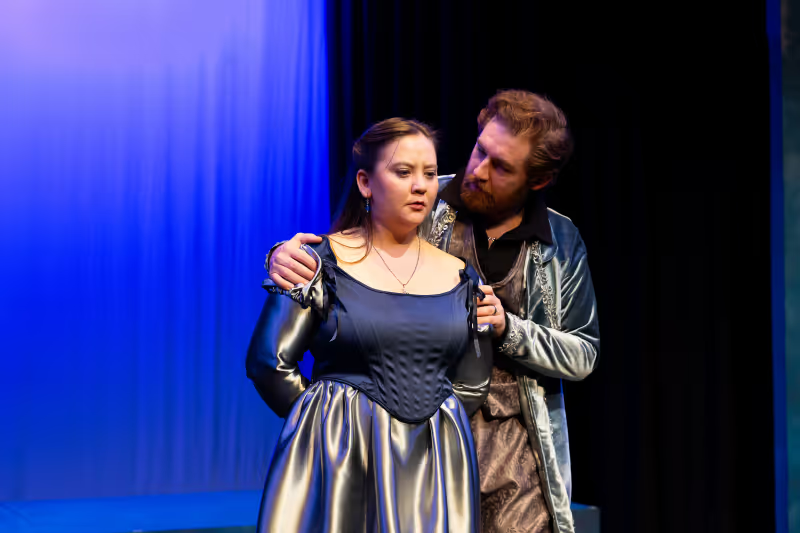
This is enough to spark Leontes’ jealousy and fan it into flames. Everything dearest to Leontes must be destroyed: wife, son, newborn daughter, and Polixenes, who learns the perils of a nine-month visit through grim experience. The damage that Leontes capriciously wreaks on his kingdom will take 20 years to repair, and the repair will not be complete.
Hermione’s imagined betrayal in the presence of the king’s son, Mamillius, his most trusted confidante, Lord Camillo, and numerous attendants at his Sicilia palace, so an eerie formality hovers over the DCP production’s opening scene (an introductory scene elsewhere in the palace is cut) until the king explodes. First to be targeted by Leontes’ wrath is Polixenes, genially portrayed by Jeremy Cartee, with a touch of mischief that he keeps on back order until he returns home.
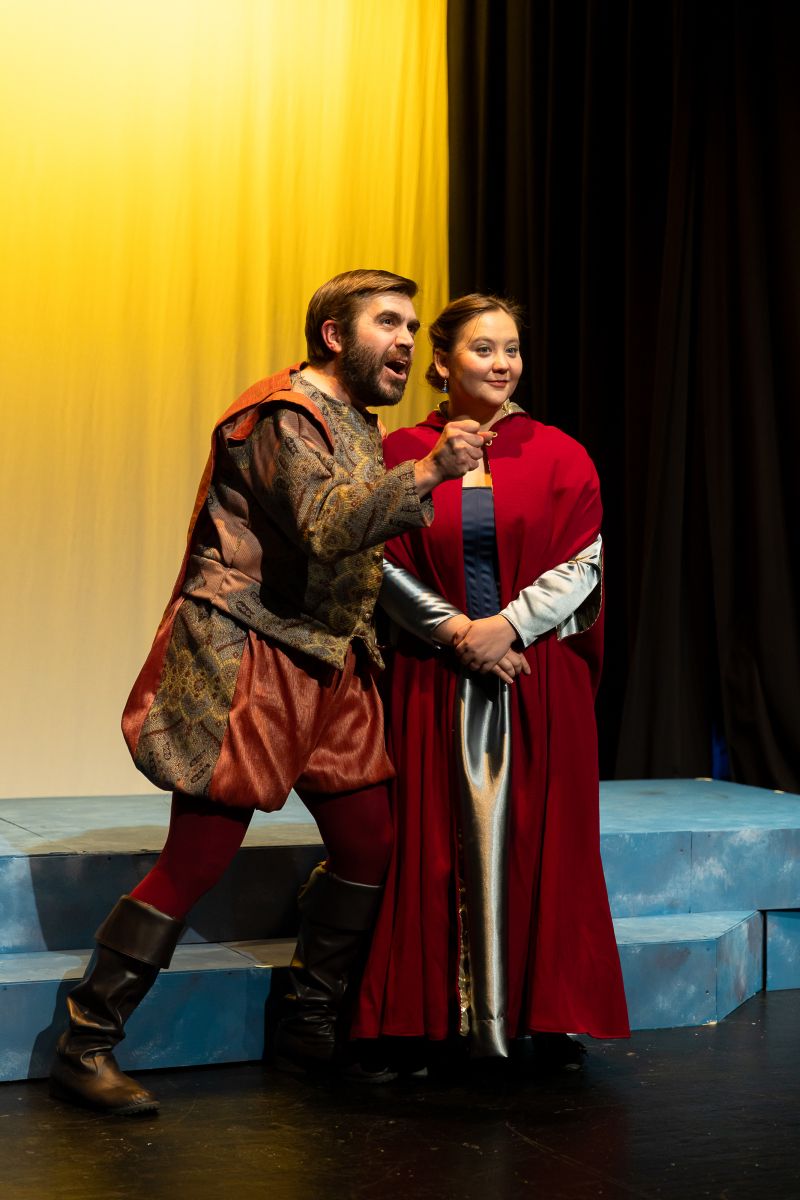
Torn between loyalty and common humanity, Savannah Deal as Camillo decides not to slay Polixenes but to advise him to flee. Understanding that disloyalty to the deranged Leontes could spell death for Camillo, Polixenes rewards his honesty by bringing Camillo into his service before they depart.
We won’t hear any more of them for 20 years. Meanwhile, Act 2 applies a fairytale patina to the action as Leontes, dissuaded from burning his newborn daughter by Lord Antigonus, dispatches milord to abandon the babe in a faraway place to the mercy of the elements. We last see Andre Braza as Antigonus at the end of Act 3, sent offstage with Shakespeare’s most famous stage direction, “Exit, pursued by a bear.”
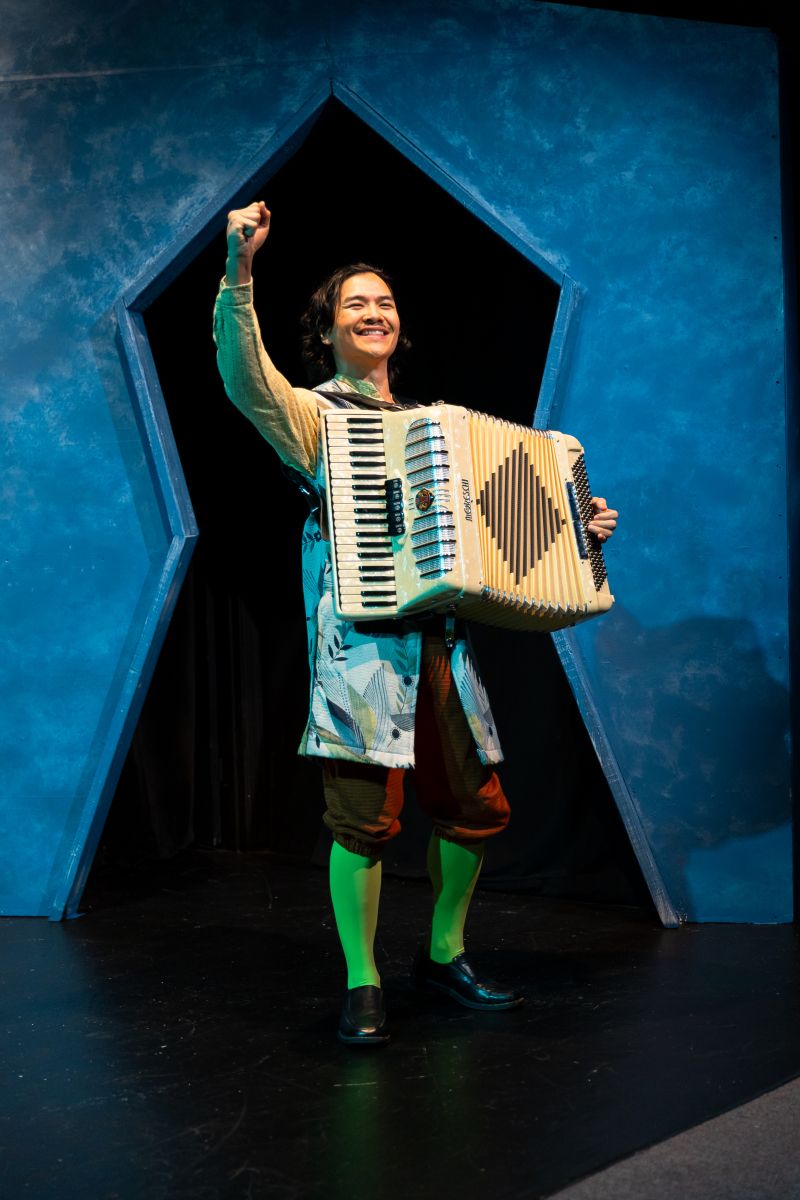
Not to worry, Braza resurfaces in Scene 3 of Act 4 as the roguish Autolycus. The remaining members of the core troupe, mostly with prior SSCO experience, also shuffle multiple roles and costumes backstage – with a couple of players besides Deal flipping genders. Most prominently, these include Iesha Nyree morphing from one of Hermione’s ladies to the Old Shepherd who parents Perdita, the sequestered newborn, and Emma Brand, becoming the grown-up foundling after a stint as Lord Cleomenes.
Really, the only faux pas in this production is the casting of Mamillius, the king’s blameless heir. No matter how cute, we need to hear the lad. Best of the rest is Joanna Gerdy, who likely knows Shakespeare’s plays nearly as well as the Bard himself, having acted in and directed so many. Here, as Paulina, Gerdy gets to fearlessly scold Leontes, engineer Hermione’s escape, and emcee the queen’s long-deserved restoration. It’s a powerful, authoritative performance that almost rivals the Dawsons’ majesties.
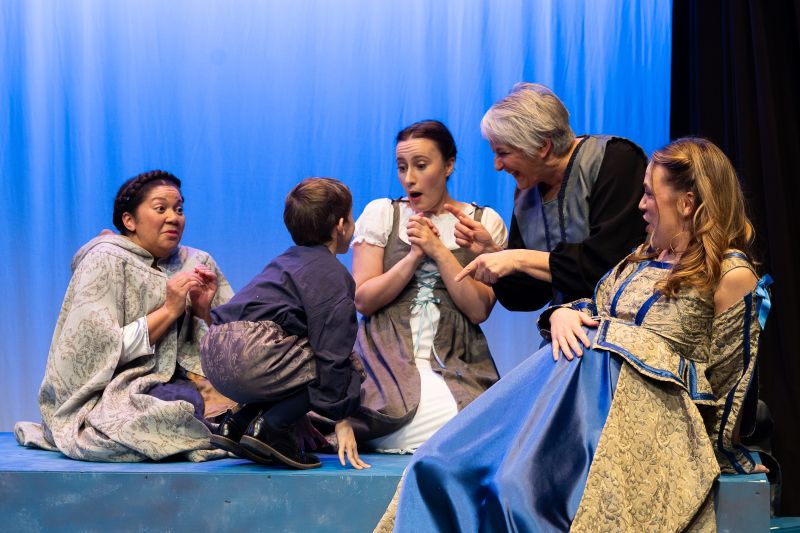
Note: Instead of the cancelled performances on 1/31 and 2/1, a make-up show has been added for Wednesday, 2/4, at 7:30pm. Stay tuned for other possible added shows.
Prefer BroadwayWorld in Google Search?
Add us as a preferred source so our stories show up more often in Top Stories and Google’s AI answers — for you.
Sign up for all the news on the Fall season, discounts & more...

|
Foothills Pops: Holiday Spectacular J.E. Broyhill Civic Center (12/04-12/04) |
|
Purpose Three Bone Theatre (8/06-8/22) |
|
Sister Act Flat Rock Playhouse (10/02-10/25) |

|
Foothills Pops: American Roots P.E. Monroe Auditorium (2/13-2/13) |

|
Frankenstein Theatre Charlotte (10/30-11/15) |

|
Terminus Theatre Charlotte (3/05-3/21) |

|
Wicked Peace Center (4/21-5/09) |
|
The Rocky Horror Picture Show Spooktacular Tour with Barry Bostwick Carolina Theatre (10/17-10/17) |
|
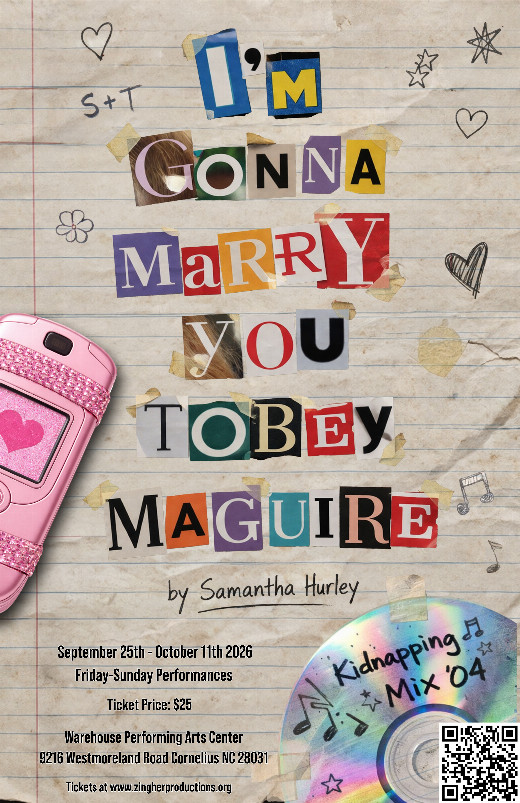
I'm Gonna Marry You Tobey Maguire Warehouse Studio Theatre (9/25-10/11) |

|
Here There Are Blueberries Three Bone Theatre (1/28-1/31) |

Reader Reviews
To post a comment, you must register and login.