



Season 2, Episode 5: Behind every summer is a community that keeps Fire Island alive. This episode explores the history of the beloved Pines Pantry through the eyes of its iconic Pantry Girls, alongside the volunteer firefighters of The Pines and Cherry Grove who protect the island from fires, hurricanes, beach erosion, and an uncertain future.
Student Blog: Tips for Getting Off-Book
I share practical memorization strategies that turn overwhelming scripts into embodied, lived performance in wake of my fast-paced rehearsal schedule for Detroit '67.
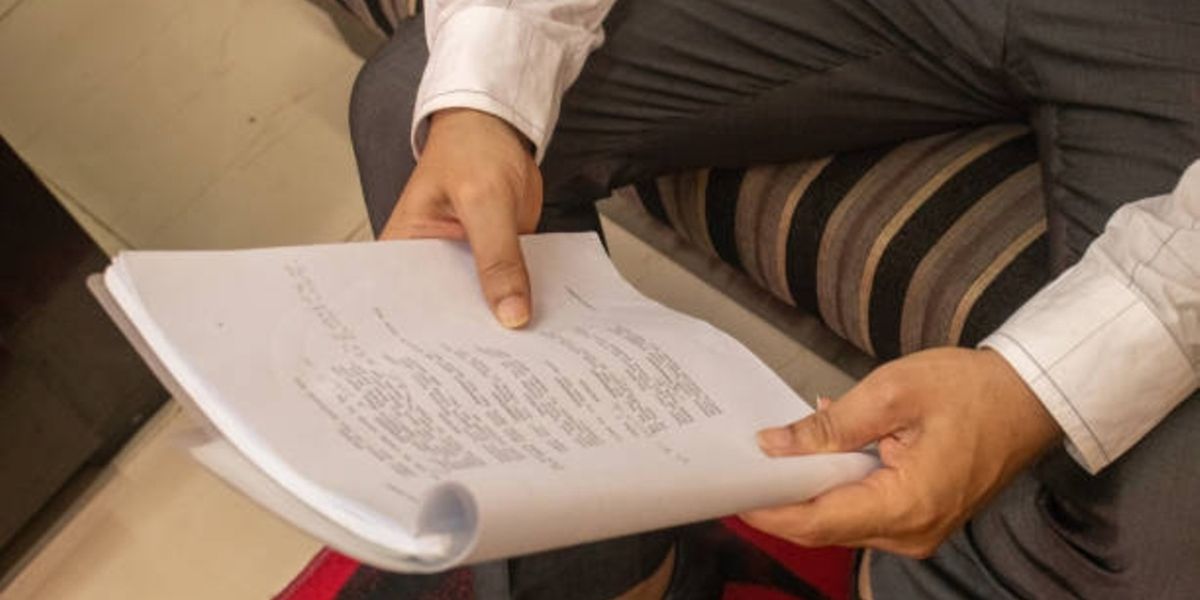
One of the most frequent questions I receive from family and non-theatre friends after they attend one of my shows is: “How on Earth did you remember all of that?” From the outside, it seems extremely overwhelming the amount of information an actor must store in their brain. Depending on the production, an actor is simultaneously remembering blocking, choreography, lyrics, music and of course the book of dialogue. Memorization is a key skill for the actor and one of the most important in my opinion. An actor cannot fully inhabit a character physically or emotionally until they are off-book. Holding a script is a crutch –not just in case the actor forgets their line– but also to not fully physically commit to the character, and emotionally acting in between the character and self.
I am in my very first full-length play this semester and we have worked on an extremely truncated schedule, so I’ve had to discover new ways of memorizing my material. Given my busy schedule (which is mentioned in nearly every blog of mine, we get it girl you’re busy), I knew I would have to get off-book or at least begin the memorization process before the semester started. It’s always significantly harder to memorize lines without the coinciding blocking or an idea of what the set will look like, so memorizing my lines during winter break before the rehearsal process even began proved to be difficult. I made sure to use spaced repetition and reviewed my material over increasing intervals. I spent time practicing my lines at least four times a week following the new year, starting off with the first section of my first scene and moving to memorizing the entirety of the scene once I felt comfortable with that first section. I memorized more and more scenes, reviewing from the very beginning after memorizing a new scene, and before I knew it I had the entire show committed to memory before even being back on campus.
Ultimately, as I near the end of this show process, I am so glad I gave myself that time to memorize. Procrastinating getting off-book only increases the likelihood of paraphrasing. Memorizing your cues is just as important as memorizing your lines because when cues are unknown, a lot of dead space is left and the momentum of the show is killed. A strategy for memorizing cues I learned from a friend in high school is to utilize Quizlet or other flashcard methods with your cue on one side and your line on the other. This way, your line is prompted by the cue and your brain retains the information of both.
My personal go-to for getting lines and cues in my long-term memory is going over lines right before you go to bed. Free from new daytime distractions, this method maximizes the brain’s ability to consolidate, strengthen and move your memorized material from short-term to long-term storage during sleep. I also find memorizing before bed helps the brain retrace the trajectory of a scene and how the character changes throughout. A lot of my character work and play analysis was done as I was falling asleep, finding new discoveries that stuck with me throughout the night into the next morning.
A huge challenge that presents an entirely different beast is memorizing monologues as the structure must come internally without another actor’s cues to rely on. One of the most helpful techniques I’ve found is breaking the monologue into clear beats, treating it as a series of mini-scenes as opposed to one long wall of text. Each beat gets its own intention and its own key visual; I’ll imagine a specific image that anchors that section and allow those visuals to transition into each other as the monologue progresses. Not only does this help with memorization, but it also strengthens the acting. When I know exactly where the thought shifts, I’m less likely to rush, flatten the piece or get lost. Structuring monologues makes them active and playable rather than something I’m struggling to get through.
Writing out monologues by hand has also been a lifesaver, particularly when memorizing Shakespeare for school auditions. The grammar and syntax are so different from modern English that my brain would instinctively paraphrase. The act of writing slowed me down enough to process the language: where the commas naturally forced a breath, where the thought inverted, where the operative word lived in the sentence. Copying it beat by beat helped me internalize the rhythm and logic of the verse. Once I understood how the language worked, the lines stopped feeling foreign and started feeling like thoughts I could own.
And finally, one you have a piece memorized, don’t stop reviewing! Being “off-book” isn’t a one-time achievement, it’s maintenance. I run lines in the shower, right before bed, walking to class, or whenever I would otherwise doomscroll. There’s a difference between knowing your lines and being deeply secure in them. The more often you revisit the text in low-pressure moments, the freer you feel in rehearsal and performance. When the words live comfortably in your long-term memory, you can stop thinking about what comes next and start fully listening, reacting and living truthfully in your character and their current moment.
Breaking Broadway alerts by text
Get the biggest stories sent straight to your phone.
Broadway news in your inbox
Weekly top stories - unsubscribe anytime.
Weekly top stories - unsubscribe anytime.
Popular episode

.gif?width=300)


Tickets From $59

Tickets From $70

Tickets From $59

Tickets From $101