

Student Blog: A Theatre Kid’s Guide to Surviving Chronic Busyness
Theatre culture has an increasing pressure to always be busy. Read some lessons I’ve learned to stay motivated amidst my time-consuming schedule.

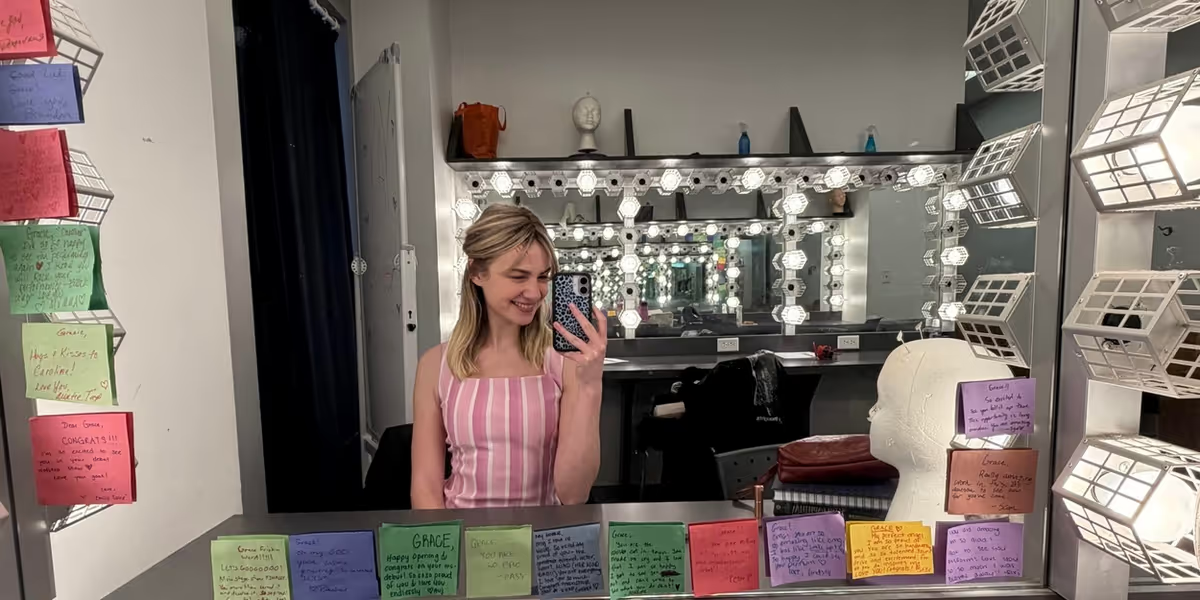
I’m unsure how it happened, but it’s official– we’re in the thick of it. The beginning-of-the-semester adjustment period has subsided faster than I thought imaginable and I’m back to the common adage of “this semester has felt both 5-seconds and 5-years long.” Routines have settled, the workload has picked up and the end is in sight. Many opportunities I’ve hyped myself up for are coming to fruition in the midst of the mid-semester busyness: Detroit ‘67 opened this past weekend, the conference I am hosting opened tickets and started announcing speakers, and I’ve begun to look at upcoming job openings for post-grad.
I’ve always considered myself a highly motivated person, but I’ve noticed this strong work ethic often causes a feeling of inevitable burnout. I overload my schedule out of fear of not doing enough, but then feel overwhelmed by my many responsibilities. My brain has felt fragmented into a million pieces that have very little to do with one another, especially during this past week. In the midst of tech week and performances, it often feels like my body is on autopilot and my brain is sprinting to keep up. So, how do us chronically busy theatre kids stay motivated when there is seemingly no reprieve from responsibilities? How do we set aside time to create art when our brains are occupied with the many different tasks required from school, rehearsal, work, extracurriculars, and just life in general?
A lot of our exhaustion as theatre students stems from a culture where being busy is worn like some badge of honor. There’s unspoken competition in "who slept the least” or “who has the most on their plate” and I’ve absolutely fed into that. I’ve overloaded my schedule out of fear that slowing down might mean falling behind. That if I’m not constantly working, creating, leading, rehearsing, interning, planning, whatever, I’m somehow wasting time. But I’m slowly learning that motivation rooted in fear is not sustainable. What’s impressive on the outside quickly drains you on the inside. So lately, I’ve been trying to reframe.
When I’ve felt overwhelmed from rehearsal or tech week, I’ve stopped to remind myself that being in a mainstage production is something I’ve aspired towards my entire Hofstra career. I remember being a first-year student, watching upperclassmen take their bows and thinking, “I hope that’s me one day.” And now it is. Yes, it’s time consuming. Yes, it’s strenuous. But performing fills my bucket in a way very few things can and the creativity that comes with acting has the power to energize me, so long as I let it. We as theatre makers must allow the art to inspire us rather than drain us. Choose gratitude over complaint, optimism over dread. Once I shifted my mindset from “I have to be here for another four-hour rehearsal” to “I get to tell this story with people I admire,” it felt like a load was lifted off my shoulders.
Another lesson I’m learning is that staying motivated sometimes means asking for a break. In addition to being chronically busy, I am a chronic people pleaser. I hate disappointing people, especially those I respect and look up to. But this semester, I’ve been practicing advocating for myself and speaking up when I feel overburdened. I recently took two weeks off of my internship during this performance run. Realistically, I probably could have pushed through those shifts, working eight hours and immediately rushing to tech or a performance (and a younger version of myself probably would have), but I knew I wouldn’t be in the right headspace to fully commit to my performance if I did. The whole point of this season of life is to do the things I care about well, not do everything halfway.
There’s a misconception within our culture that asking for a break means you’re lazy; however in my experience as a student leader, I’ve never once been upset with a teammate for needing an extension or passing off a task, as long as they communicated. Burnout is universal, but honest communication about these feelings is what builds trust. Advocating for yourself doesn’t make you selfish, it makes you sustainable.
I’m also learning motivation doesn’t solely come from grinding harder. Sometimes it comes from intentionally stepping away from your work. Even with a packed schedule, I have carved out times to read and go to the gym. Those moments are small, but extremely grounding. They remind me that I am a person before I am a performer, a worker, or a student. Taking an hour to move my body or get lost in a book doesn't derail my productivity, it restores it.
And maybe most importantly, I’ve been leaning into community. As someone with introverted tendencies, my instinct during busy seasons is to isolate. I tell myself I don’t have time to socialize, but I’ve found that completely withdrawing only makes the stress louder. The moments of laughter between rehearsals and late-night conversations with friends who understand the chaos keep me grounded. The encouragement and support from the people around me remind me that life isn’t just a checklist of accomplishments, it’s shared experiences and joy in the middle of madness.
Motivation isn’t about constantly running at full speed. It’s about learning your own rhythm: when to sprint, when to walk and when to pause. Maybe that’s the real lesson of February. The initial adrenaline of the new year has worn off. What’s left is consistency and the quiet, daily choice to keep going because we love what we do. Even in the thick of it.
Weekly top stories - unsubscribe anytime.
.jpg?format=auto&width=300)