


Feature: Ilana Lucas Picks the Top Toronto Theatre 2025
Highlights from a stellar season.
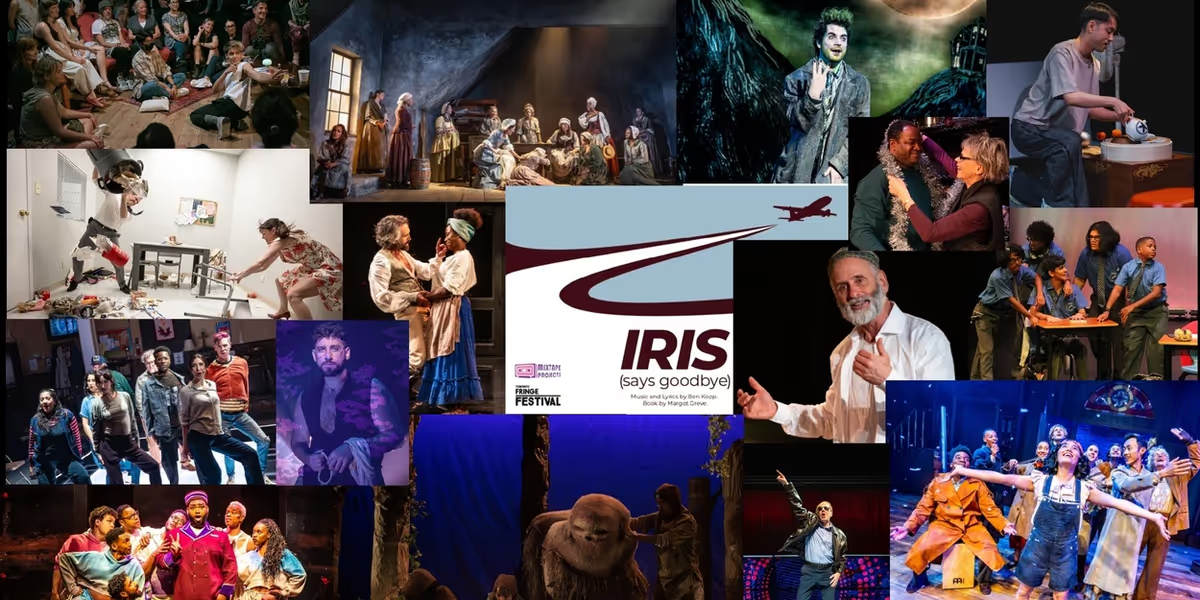
That’s a wrap on 2025!
In a world where AI increasingly tries to consume and simulate real human experiences, theatre sometimes feels like one of the last gasps of being in a room together. When we watch a show with others, respiration synchronizes, empathy increases, and information retention improves. It’s one of my favourite feelings.
Toronto theatre this year has afforded me many chances to feel that special joy. This year, in my capacity as president of the Canadian Theatre Critics Association, I saw 142 shows and wrote about 82 of them for four different publications.
As ever, I’m using my prerogative to present not a traditional Top Ten list, but a categorized highlights reel, celebrating successes without pitting very different works directly against each other.
IMPRESSIVE NEW (or new-ish) CANADIAN WORKS:
BENEVOLENCE: Kevin Matthew Wong’s solo play at Tarragon was the show that most warmed my heart this year. Wong emphasized the importance of hospitality to his Hakka culture as he went on a journey of familial self-discovery while reluctantly trying to breathe life into a senior centre’s talent show, and I have rarely felt more welcome at a performance. Wong’s use of creative props and video, particularly an interview with his 100-year-old grandmother, added layers to his humourous and touching script, showing the layers of construction behind the memoir and elevating the show beyond a typical story of finding one’s identity. I was so glad to be invited into his world.
THE CHRISTMAS MARKET: A b current Performing Arts production in association with Crow’s and Studio 180 Theatre, Kanika Ambrose’s exploration of Canada’s guest worker system and the way it exploits said workers was another sharp entry from Ambrose, whose Moonlight Schooner also opened the same week. Set behind the scenes at a Christmas market, Ambrose’s incisive script showed us the human cost behind the magic via character study rather than polemic. Under Philip Akin’s direction, Ambrose’s multilayered characters were full of life and related to each other in complex and fascinating ways. The show was a tight ensemble piece with great work from a quartet of actors, with Matthew G. Brown’s turn as the longest-serving, Christmas-loving employee particularly compelling.
ROGERS V. ROGERS: An impressive showcase for solo performer Tom Rooney in the vein of playwright Michael Healey’s The Master Plan, ROGERS V. ROGERS took on the family drama behind the Rogers-Shaw merger. Pitting Commissioner of Competition Matthew Boswell against scorned Rogers heir Edward, the show asked why we accept the gradual narrowing of our options via corporate capriciousness often based in petty squabbles and personal vendettas. A farcical Zoom meeting of the damned and frenetic pacing from director Chris Abraham kept the show humming and its wit crackling.
LAST LANDSCAPE: A creative feast at Buddies in Bad Times from Bad New Days, LAST LANDSCAPE was as leisurely as ROGERS V. ROGERS was frenetic. Steeped in “eco-dramaturgy,” the quiet meditation on reconnecting with nature featured music and “live turntablism” by SlowPitchSound and astounding set design by Ken MacKenzie, constructed by the actors in each scene from recycled elements. A ten-foot-tall sloth puppet by Graeme Black Robinson was one of the theatrical highlights of the year for me, with simpler dog and goose puppets being no less visually delightful. While the show occasionally felt a little too languid, it provided an important chance to actually slow down and experience the scale of nature and epochal change. Director Adam Paolozza gave us something truly unique.
THE GREEN LINE: Also at Buddies, Makram Ayache’s show spanned decades of conflict in Beirut, pairing a tender, complex story of a burgeoning lesbian relationship against the backdrop of the second phase of the Lebanese Civil War in 1978 with a foreigner’s quest to understand his late father 40 years later. Ayache spun and connected two delicate stories, painting a nuanced, trope-subverting picture of history. Waseem Alzer’s wisecracking drag queen kept viewers thinking about their own preconceived notions as brief visitors to a nation with a complex history and present.
NARNIA: Bad Hats’ holiday musical at Soulpepper by Fiona Sauder and Landon Doak was a delight, full of warmth to banish the cold of a winter’s night, with appealing music and a storyline that was mostly The Lion, The Witch and The Wardrobe with a helping of A Christmas Carol. The show’s inclusive energy was infectious, and scene-stealing performances by Amaka Umeh and James Daly almost made you root for Team Witch (almost).
A PUBLIC DISPLAY OF AFFECTION: I was deeply touched by Jonathan Wilson’s personal memoir about Toronto’s queer scene in the late 1970s and his conflicted, ambivalent relationship with being a “gay elder” or “artifact,” a living monument who survived the AIDS epidemic and is now brought out to tell his story to those who are so quickly forgetting their history. In Studio 180 Theatre’s production directed by Mark McGrinder at the Crow’s Theatre Studio, Wilson celebrated the beautifully seedy queer scene of his youth without rose-tinting the very real danger and prejudice faced by the community, especially its trans and BIPOC members, and celebrated the increasing banality of queerness while remaining vigilant towards assimilation’s tendency to be another form of disappearance.
RED LIKE FRUIT: 2B Theatre Company’s production at Soulpepper, directed by Christian Barry, was a Luminato Festival highlight. Hannah Moscovitch’s play about the background radiation of sexism and sexual assault that slowly but permanently warps women’s lives is predominantly delivered by David Patrick Flemming’s Luke by request from Laura (a nearly silent but still captivating Michelle Monteith). The tense, sometimes devastating script was all the more harrowing for its simple delivery and how it landed when being told in a man’s voice.
AWESOME IMPORTS (Toronto productions of plays originating abroad) and TOURS:
THE MERCHANT OF VENICE: I’ve already highlighted the refreshing tonal shift Shakespeare Bash’d achieved in their production of one of Shakespeare’s most difficult works to stage today, progressive for its time but steeped in contemporary antisemitism that feels only too relevant today as well. Director Julia Nish-Lapidus turned a comedy into a tragedy that silently but forcefully interrogated the hatred of its main characters, assisted by the powerful performances of Alon Nashman and Cameron Scott as Shylock and his daughter Jessica.
BUG: The King Black Box, already one of Toronto’s smallest venues, produced a claustrophobic wonder of a show in director Andrew Cameron’s production of Tracey Letts’ 1996 work about the dangers of conspiracy theories and paranoia that only feels more relevant now. Trapping the audience in a motel room to an opening montage of conspiracy TV and an unsettling soundtrack, the show was a powder keg of tension. Nicholas Eddie’s eerily calm and seemingly reasonable veteran infiltrates Agnes’ (L.A. Sweeney) life and gradually makes her world smaller and smaller, worming his way inside like one of the bugs he’s convinced resides under their skins. (I’m still itchy.)
OCTET: Crow’s and Soulpepper’s production of Dave Malloy’s 2019 chamber musical about a 12-step program for internet addiction was just in time (after another year of AI, it’ll be a period piece) and featured beautiful harmonies in between stretches of pointed commentary about how our desire to belong. Alicia Ault stood out as Velma, sounding the show’s only real note of hope amidst the doom. Nathan Bruce’s video design entertainingly illuminated the floor of Joshua Quinlan’s set, bridging the gap between the human world of the play and the digital world of its topic.
A STRANGE LOOP: Malachi McCaskill was delightful to watch as Usher, the lead of Michael R. Jackson’s autobiographical Pulitzer Prize-winning musical about how we create our own identities through mental feedback loops that can become our only truths if we’re not careful. A fine addition to the long tradition of musicals about artists trying to make art, the show’s complex text and meta-text required no fewer than four theatre companies to produce (Soulpepper, Crow’s, The Musical Stage Company and TO Live), but if it’s for shows of this calibre, collaboration on this scale is more than welcome.
SLAVE PLAY: Canadian Stage got the energy right in this controversial work by Jeremy O. Harris, wherein three interracial couples try to solve their interpersonal conflict through “Antebellum Sexual Performance Therapy.” Director Jordan Laffrenier played up the dislocating effect of the first act, which throws us into a wildly anachronistic Antebellum South, before giving us a pitch-perfect rendition of an overly academic group therapy session to address the uniquely American epigenetic racial trauma reflected in but not duplicated by Canadian society. After a discomfiting and wacky first act and a discomfiting and wordy second, the shocking tonal shift in the play’s final scene was even more powerful. An excellent cast was game for anything, with particular kudos to Sophia Walker and her eternal frustration over not being heard.
RED: I saw Joshua Logan’s Tony-winning RED on Broadway in 2010, where one of the most impressive moments included Alfred Molina as Mark Rothko and Eddie Redmayne as his assistant painting a truly enormous canvas in the cavernous theatre. Riot King’s production directed by Kenzia Dalie was the opposite in scale, allowing a small number of audience members to sit mere feet from the action in Rothko’s studio, and I have to say that I enjoyed it just as much if not more than the Broadway version. Dalie’s art studio set felt realistic and immediate, and you could smell the paint as Lindsay G. Merrithew as Rothko and Brendan Kinnon as his would-be protégé passionately debated the meaning of art in an age of commercialism, and sparred over the changing tides of what kind of work is considered meaningful or popular. When Kinnon’s character exposed the whole small room to the stark tones of fluorescent lights, one couldn’t help but think about how much of the success of art is setting the right atmospheric conditions—like the act of sitting in a room together. That, you didn’t get on Broadway.
JOB: Coal Mine delivered a tense in-the-round production of Max Wolf Friedlich’s two-hander set in a psychiatrist’s office. Charlotte Dennis and Diego Matamoros were evenly matched, consistently trading the upper hand in this twisty thriller about the mental toll of online content moderation and the destructive impact of being able to see all the horrors of the modern world without the ability to stop any of them.
FLEX: Mumbi Tindyebwa Otu’s production of Candrice Jones’ play about young Black women trying to make it out of rural Arkansas through basketball was often electric, and it wasn’t just Raha Javanfar’s neon lights. Ken MacKenzie’s set was an impressive facsimile of a court as Sophia Walker’s coach put the team through their paces with athletic aplomb.
The WELKIN: While I had a few issues with the final act of Lucy Kirkwood’s play about the eternal toil and drudgery of women personified via a trial to determine whether the defendant was pregnant or not (the former condition the only chance to save her life), Soulpepper, the Howland Company and Crow’s Theatre’s production featured wonderful design from Julie Fox, Michelle Tracey, Bonnie Beecher and Thomas Ryder Payne and an absolute powerhouse of a “12 Angry Women” cast, making it Event Theatre to be talked (or even sung) about.
AVA: THE SECRET CONFESSIONS: The main treat of this show by Downton Abbey’s Elizabeth McGovern were the two performances, McGovern a compelling firecracker of an aging Ava Gardner who no longer has time for anything but her version of her own story, and Aaron Costa Ganis doing impressively chameleonic work while playing the reporter assigned to ghostwrite her autobiography, as well as famous husbands Mickey Rooney, Artie Shaw, and Frank Sinatra.
The touring production of BEETLEJUICE THE MUSICAL, another Mirvish presentation, wowed me with its tight script, clever lyrics, and ability to pull in a person who had absolutely no nostalgia for the original (me, a delinquent child of the 80s). After watching the movie, I declared the musical an improvement in many respects, including increased cohesiveness, clearer character motivations, and a stronger sense of purpose—and I still think so. (Please don’t come for me, movie lovers.)
BEHIND THE SCENES
Kudos to the stage crew of Canadian Stage’s THE FAR SIDE OF THE MOON, a new production of Robert Lepage’s 2000 play about a brotherly rivalry and dreams of outer space, who kept the various delightful illusions of LePage’s set humming along so smoothly that they seemed magical.
And kudos to Rylan Wilkie, who stepped in as a very last-minute replacement in the marathon role of Nick for Canadian Stage’s production of WHO’S AFRAID OF Virginia Woolf and delivered the performance of the night, even with script in hand.
FRINGE FAVES
This year, Next Stage was folded in to the Fringe during its July festival; I was a little sad to see Next Stage as a part of the Fringe instead of having its own showcase, but understand that financial challenges are very real for Toronto Fringe. If you love the Fringe as much as I do, consider sneaking in one last donation for a 2025 tax receipt (or a first for 2026).
My top show of Fringe 2025, IRIS SAYS GOODBYE, a choose-your-own-adventure musical about life and death, was a bold and beautiful Sondheim-esque experiment by Margot Greve (book) and Ben Kopp (music and lyrics). Deceased Iris (Michelle Blight) has a chance to pick a new life, with the catch that she only gets to see the last moments of the lives on offer. Audience members pick 8 of these endings from 20 different items, so each performance is inherently different. I was wowed by the show’s clever lyrics and crunchy harmonies, and its potential to highlight different themes and messages depending on which vignettes are chosen.
I also loved the completely different vibe of ALPHA, performed by the Naparima College Drama Club of Trindad and Tobago and set at a similarly academically rigourous high school rocked by accusations of rape by one of its top students. The young men passionately brought to life the show’s exploration of toxic masculinity, a rocking steel pan band raised the already high energy, and detailed captioning made the show accessible to everyone.
On the solo show front, OH! I MISS THE WAR by David John Phillips was my top highlight, effectively weaving together two queer men’s stories, one contemporarily Canadian and one set in 1967 England.
Some other favourites: TERRIBLE FISH, a deeply personal work about the invisibility of aging woman told with precision by Caitlin Murphy and full of poetic and sociological references; BITTY-BAT AND FRIENDS, a truly deranged nature documentary that featured Emily Jeffers as a human-sized bat and perfectly captured the weird and wonderful spirit of the Fringe, ACTING LESSONS, an accomplished rom-com about finding love as an artist, THE ADDING MACHINE Elmer Rice’s 1923 absurdist parable given a stylish and professional production at a puppy yoga studio by director Alice Fox Lundy, and Kush Shah’s GAUMUKHI (COW), a lyrical work told entirely from a cow’s perspective about religious schism versus the healing power of music and education, bolstered by a magnetic performance by lead Deval Soni.
And while I am too biased about my dear friends’ shows to officially put them on this list, Ronit Rubinstein’s THINGS MY DAD KEPT and Laura Anne Harris’ HAVE FUN KIDS deservedly won raves at Fringe and Next Stage, respectively.
REMOUNTS, ETC.
HYPOTHETICAL BABY: Actor and playwright Rachel Cairns’ remount at Factory Theatre examined not only her decision to have an abortion but the sociological factors that dictated that decision for her and thousands of other women. Cairns’ complex show about parenthood featured elucidating projections by Julia Howman and a script full of contextualized research.
MONKS: The hilarious Fringe show got an equally hilarious remount at the Theatre Centre, which meant that, thankfully, even more people were treated to the best time you’ll have counting lentils in a room with two holy Brothers. Veronica Hortiguela and Annie Luján’s peak physical comedy left nothing on the stage and no laughs unlaughed.
KIM’S CONVENIENCE: I have a huge soft spot for Kim’s Convenience. I saw the very first performance of the show at the Fringe in 2011; as a nascent Toronto theatre writer, I waited in line for hours for one of the at-the-door tickets because of the buzz it was going to be big. In the intervening 14 years, I’ve taught the play (and some episodes of its sister series) many times to students who fall in love with the family at its core. In Weyni Mengesha’s version, the show returned to Soulpepper paired with a lobby exhibit full of real stories of other immigrants and their families who make our city so vibrant. Writer Ins Choi, the show’s original Jung, was now playing Jung’s Appa; the show’s abiding humour and heart, combined with the generational casting shift, made the tears start about 30 seconds in.
NATASHA, PIERRE and the GREAT COMET of 1812: I was nervous about this Mirvish remount to a far bigger stage, because one of my favourite aspects of the original production was how intimate it felt, similar to how the musical took the expansive Tolstoy work of War and Peace and focused down on a few detailed pages. However, director Chris Abraham managed to sustain the show’s intimacy while amping up the party vibe for the whole theatre; no mean feat.
MAHABHARATA (Parts 1 and 2): At Canadian Stage, this remount was truly Event Theatre, Ravi Jain and Miriam Fernandes telling an impossibly epic story in a suitably epic way. Each part had its own personality and design, yet the experience felt cohesive. Music by John Gzowski and Suba Sankaran and Fernandes’ storyteller were particular highlights.
KING GILGAMESH (AND THE MAN OF THE WILD): I missed this show the first time around at Soulpepper (co-produced with Tria Theatre) and was so grateful to catch it this year. Ahmed Moneka and Jesse LaVercombe’s semi-autobiographical show (directed by Seth Bockley) of an unusual contemporary friendship, layered with an ancient friendship epic, was so infectiously joyful you might briefly believe it could solve all of our social problems. Moneka’s Arabic-jazz band, worth the price of admission on its own, made this show a real treat bursting with life.
CONCORD FLORAL: This was also my first experience with Jordan Tannahill’s CONCORD FLORAL, a creepy teen mystery story I’d missed in 2016 when it was performed at the Bluma Appel. Not a remount but an entirely new production at the Theatre Centre, the show co-directed by 郝邦宇 Steven Hao and Alli Carry put new company Pucker’s on my radar. Tense and breakneck-paced, the production made great use of the Theatre Centre’s studio pit, starting the proceedings with a ghostly border of plastic sheets ripped down by the young cast. A truly eerie, intimate production.
BREMEN TOWN: Sometimes, I change my mind about a show. At Next Stage, I found Gregory Prest’s fairytale meditation about aging, uselessness, and deferred dreams to be well constructed but frustrating emotionally. The souped-up production at Tarragon, with another star turn from Nancy Palk, caught me a little older and perhaps a little wiser, and I’m glad I saw the acidic but touching play a second time.
SITE-SPECIFICS and EXPERIMENTS:
PERFORMANCE REVIEW: I enjoyed Rosamund Small’s solo show for Outside the March about working in service industries as a woman, where powerful men (and sometimes other women) wield that power over one’s future as a blunt instrument that gets them whatever they want. The show, with inspirations running from Fleabag to The Communist Manifesto, benefitted from its location at cozy Morning Parade Coffee Bar on Crawford Street, and was probably the first show I’ve seen where the performer also made me a latte before curtain.
THE FROGS/BLACKBIRD: Talk is Free Theatre gave us a dynamite pair of site-specifics, one of Sondheim’s Aristophanes-inspired musical set not in a swimming pool but an expansive backyard in Barrie, and the other a two-hander by David Harrower set in a dingy back room at Hope United Church on the Danforth. The shows were incredibly different, but both (directed by Griffin Hewitt and Dean Deffett respectively) were amazingly intimate, putting audiences inches from the accomplished performers.
THE DISHWASHERS: I saw Red One Theatre Collective’s production in rehearsal and so am not able to offer an official show review, but I thought director David Reale’s choice to use Mildred’s Temple Kitchen as the setting of Morris Panych’s semi-absurdist comedy, a sort of No Exit in a restaurant dishwashing facility, was a great decision. The exposed kitchen is already its own kind of stage, offering the actors plenty of opportunities to play with gleaming industrial sinks and spraying water. I’ll be watching this company in the future.
LUCY AI/ELEPHANT (GAME OF LIFE): As I started with AI, so shall I end: This installation/show by bluemouth inc. was a fascinating combination of AI and being in a room together. When Lucy Simic was diagnosed with stage 4 cancer, her friend David Usher attempted to make her memory live on by feeding her voice and answers to a wide range of questions into an AI system that now answers audience members based on what it knows about her personality. In a 90-minute installation, I and other critics sat and asked this LucyBot its opinions on any number of things, interspersed with videos of the real Lucy.
In ELEPHANT (GAME OF LIFE), the audience moved around the Theatre Centre space, in which a long table was set for a celebration. We heard stories, played games, and even had a dance party, as we learned about Lucy’s past and the way she and her friends confronted mortality. The juxtaposition of the two pieces was haunting; the former, in its refusal to let go, gave us well-spoken but essentially pat answers from the machine, which sterilely blanked on anything too controversial. The second was sad and vibrant and playful and a vow to do what we could in the time we had left. We met new people and got a little silly and took a chance or two; it wasn’t necessarily more profound, but the meaning was in the activity. I don’t think the production’s goal was necessarily to show the benefits of live performance over AI, but to me, that’s what it did. I left the second part bursting with life, more sure than ever that what I wanted was to be in a room with people, sharing an experience.
But, of course, I would say that. I am a theatre critic, after all.
Here’s to more great theatre in 2026!

|
HYPROV: The Hypnosis & Improv Comedy Experience – Live in Ottawa NATIONAL ARTS CENTRE - SOUTHAM HALL (11/12-11/12) |
|
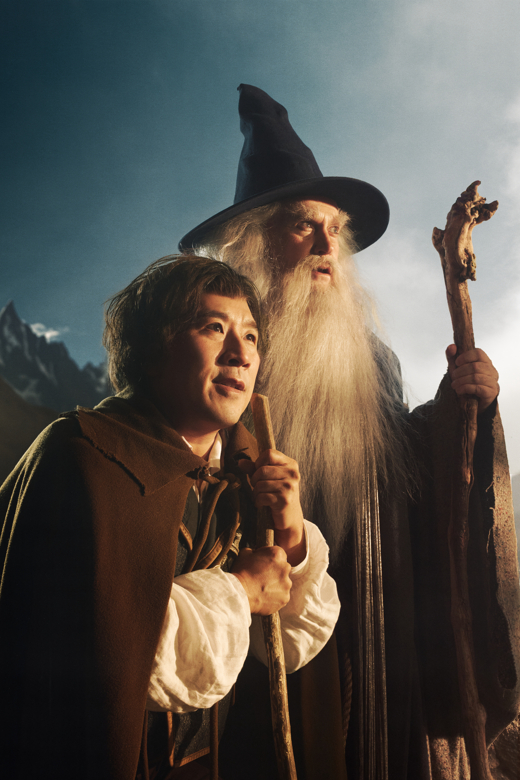
The Hobbit Stratford Festival (4/21-10/23) PHOTOS |
|
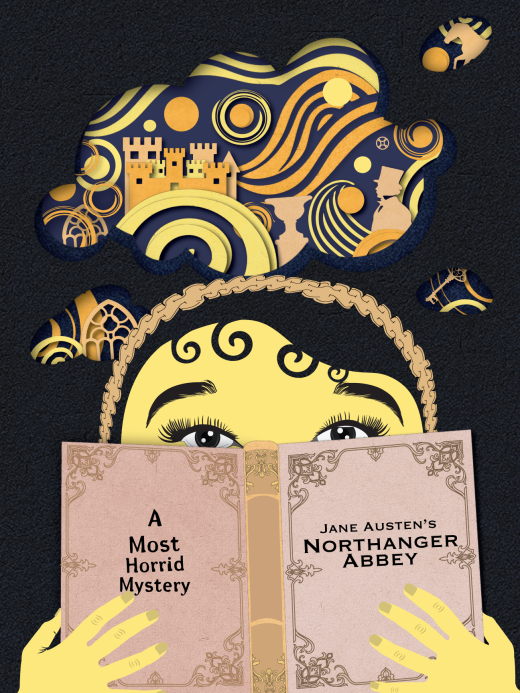
Jane Austen's Northanger Abbey Guild Festival Theatre (8/06-8/23) |
|
NORDIC GLORY Meridian Arts Centre (5/15-5/15) |

|
Not Dead Yet! - John Cleese and the Holy Grail at 50 The Elgin & Winter Garden Theatres (10/02-10/02) |
|
her. Red Sandcastle Theatre (9/01-9/06) |
|
The Roll Players Comedy Bar Danforth (6/30-12/29) |

|
Ed Sheeran, Myles Smith & Lukas Graham at Rogers Centre Rogers Centre (9/20-8/22) |
|
SYMPHONY UNDER THE STARS Collingwood Music Festival (7/11-7/11) |
|
Mean Girls Oakville Centre for the Performing Arts (9/24-9/27) |