


10 Musicals About Technology That Came Before MAYBE HAPPY ENDING
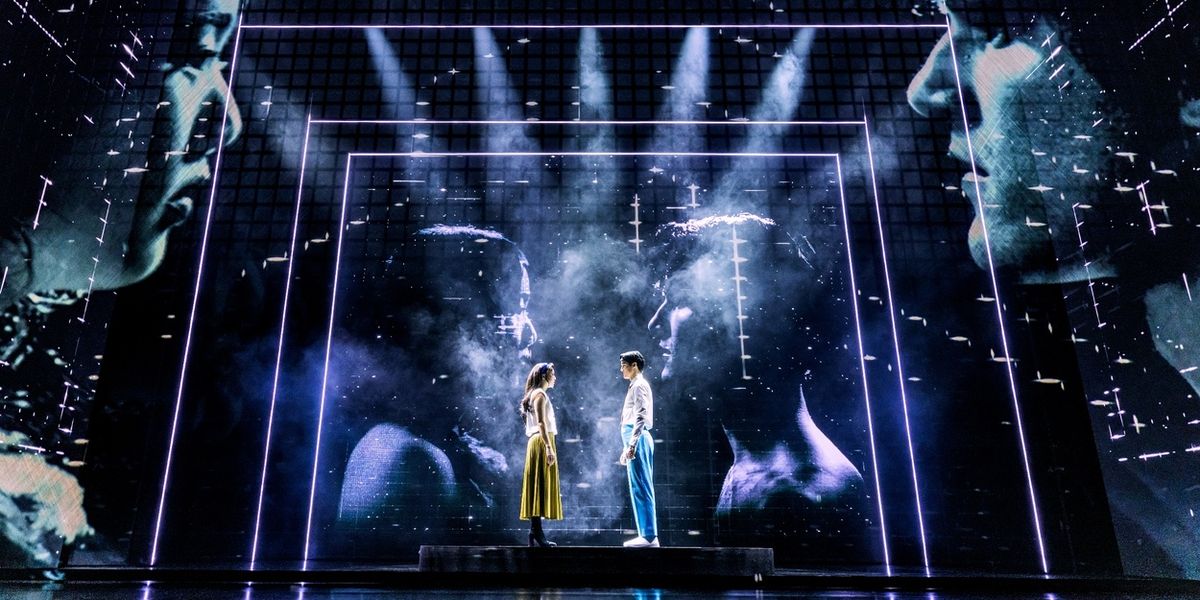
Maybe Happy Ending is running on Broadway at the Belasco Theatre.

|
|
Do you have a burning Broadway question? Dying to know more about an obscure Broadway fact? Broadway historian and self-proclaimed theatre nerd Jennifer Ashley Tepper is here to help with Broadway Deep Dive. BroadwayWorld is accepting questions from theatre fans like you. If you're lucky, your question might be selected as the topic of her next column!
Submit your Broadway question here!
Technology plays an ever-present role in the life of every human on earth. As computer technology and social media have begun to heavily impact everyday life, this has gradually been reflected in modern musicals on Broadway. Last season’s Best Musical winner Maybe Happy Ending was initially a dark horse for the prize, an unlikely sounding show about robots called helper bots and what they show us about our own humanity. (Of course, as theatre history has frequently proven, unlikely musicals can beat the odds, with the landmark Oklahoma! a prime example.)
Maybe Happy Ending, currently running at the Belasco, with book and lyrics by Will Aronson and Hue Park and music by Aronson, is set in the future and uses this lens to examine the role of technology in our lives. One of Broadway’s earliest musicals involving technology was also futuristic. This was Via Galactica, the infamous flop that opened the Gershwin Theatre (then known as the Uris) in 1972. Composed by Galt MacDermot of Hair, with book by Christopher Gore and Judith Ross and lyrics by Gore, Via Galactica was intended to be the next big rock musical hit, but it closed after only seven performances. Raul Julia played an intergalactic garbage man in the show, which posited that one thousand years in the future, the human race would have achieved world peace and have only one issue: garbage disposal. Technological advances allow humans to space travel, which they largely do to avoid the problematic conformity on Earth as well as to take care of their garbage problem.
Like Via Galactica, Jonathan Larson’s musical Superbia imagined a futuristic dystopian society. Unlike Via Galactica, Superbia sadly was never fully produced, although Larson did depict his journey with the show within tick, tick… BOOM! Dozens of drafts exist of the musical that the future Rent writer considered for many years his magnum opus. Larson incorporated modern musical sounds into his show about a world controlled by technology, where real feelings are suppressed in favor of faux reality television- inspired living and consumerism. Superbia received development from Playwrights Horizons and the Public.
On the heels of Via Galactica, another musical about technology affecting human existence opened on Broadway. This one was the only Broadway bow by musical theatre’s longest running female team, Nancy Ford (music) and Gretchen Cryer (book and lyrics). Cryer and Ford have achieved significant success over their prolific career, from their off-Broadway hit I’m Getting My Act Together and Taking It On The Road, to their work creating beloved shows for the American Girl Doll franchise. Shelter was an innovative and clever musical that was ahead of its time and perhaps too odd and intimate for Broadway. The 1973 show had as its central character a television writer who lives on a television set that is controlled by a computer. Like Superbia, Shelter seems to predict some of the ways that reality television and social media would come to play integral roles in human lives.
Even before the other musicals on this list came a show that predicted the future of computer dating. How Do You Do, I Love You (1967) was an early musical by the team of Richard Maltby Jr. and David Shire who would go on to create Starting Here, Starting Now (1976), Baby (1983), Closer Than Ever (1989), Big (1996), and more together, including About Time, which recently premiered at Goodspeed. How Do You Do, I Love You, with book by Michael Stewart, music by Shire and lyrics by Maltby, was about a woman trying out computer dating… in the 1960s! The computer was large and the technology was primitive, but the themes about finding love in the modern age were universal. While How Do You Do, I Love You never made its way to New York, after a few out-of-town tryout stops, several songs from the show were later heard in Starting Here, Starting Now. How Do You Do, I Love You also predicted the future sound of Broadway; Jonathan Tunick was the show’s orchestrator and after seeing his work on this show, Stephen Sondheim and Hal Prince decided to hire him for Company.

Decades later, a very different style of online dating was depicted in Michael R. Jackson’s Pulitzer and Tony Award-winning musical A Strange Loop (2022). A particularly impactful sequence finds the central character of Usher meeting up with someone who he connected with on the dating app, Grindr. The sexual encounter that this leads to explores the roles of race and trauma in modern hookup culture. The ways that computer technology have impacted intimacy and dating are unapologetically probed at in ways that the heroine of How Do You Do, I Love You could only have started to imagine.
Our collective struggle to connect with other human beings in person while capitalist technology continually attempts to get us to stick to our devices was also depicted in 2017’s Tony Award winner for Best Musical, Dear Evan Hansen, with book by Steven Levenson, and music and lyrics by Benj Pasek and Justin Paul. The eponymous character tells a lie about his friendship with a teen who committed suicide, and this lie spirals out of control largely due to the involvement of technology and social media. The design of Dear Evan Hansen contributed to the depiction of how internet content can go viral and impact lives seemingly for better but actually for worse.
The next musical on our list sadly didn’t make it to Broadway, although it got very close. The heartbreak theatre headline in 2016 declared that Nerds, a new show about the rise of Bill Gates and Steve Jobs, would close during rehearsals, never making it to a planned opening at the Longacre Theatre. Nerds took a comedic approach to the technology war between Microsoft and Apple (its tag-line was “A Musical Dot-Comedy”). At one point, the show even planned to incorporate technology into the theatergoing experience in innovative ways, including having audiences choose the ending on their phone.
A musical where technology did impact what happened both onstage and behind the scenes was Be More Chill. Based on the novel by Ned Vizzini, the musical with book by Joe Tracz and music and lyrics by Joe Iconis made it to Broadway because of real people—who used computer technology to discover the show and spread the word. A significant fandom for Be More Chill grew organically when people streamed the show’s cast album from its one-month run in New Jersey in 2015. Be More Chill was a cautionary tale about the evils of taking technology too far, in the form of a story about an outcast teen who engages a super computer to help him fit in. Be More Chill imagined a world where computer technology could eliminate society’s ills—but in exchange, its humanity would be sacrificed.
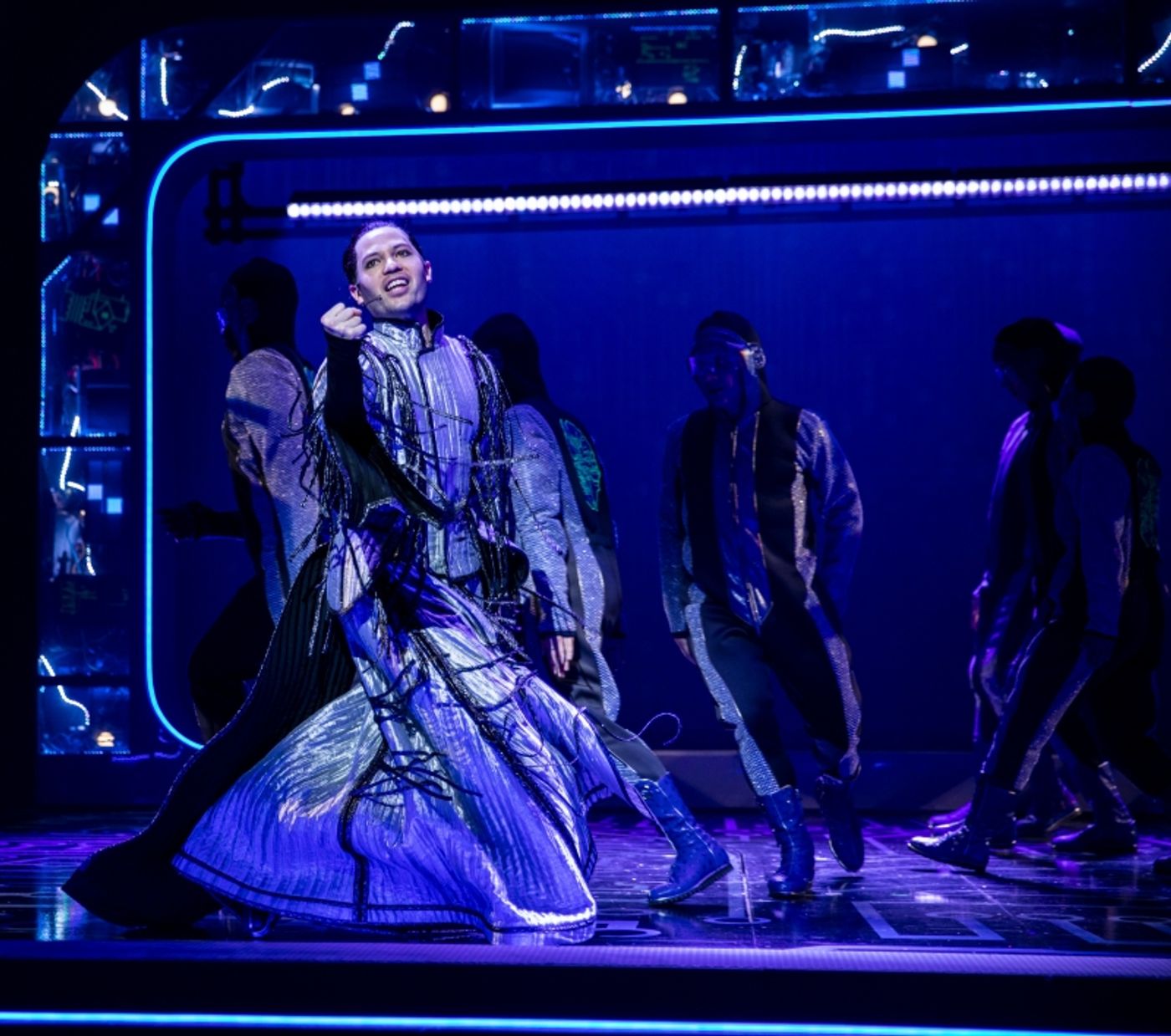
Separate but related to musicals about technology are musicals about science, often that are considered science fiction. Be More Chill is a descendent of Little Shop of Horrors (1982), which is a prime example of the latter. Jekyll and Hyde (1997), Back to the Future (2023), and Death Becomes Her (2024) are also good examples.
While A Strange Loop, Dear Evan Hansen, and Be More Chill all originated off-Broadway before transferring to Broadway, Emojiland was squarely an off-Broadway musical. The show opened in early 2020 and told the allegorical tale of a group of emojis living inside a phone. With book and lyrics by Keith Harrison Dworkin and Laura Schein, Emojiland imagined all of the shapes and items in our emoji keyboard personified, contending with a software update and other technological hurdles.
An inventive original musical that has received two pre-New York productions, Other World explores the phenomenon of multiple role player video games. With book by Hunter Bell, and music and lyrics by Jeff Bowen and Ann McNamee, the show follows a gamer and non-gamer who are sucked inside the world of a video game. The power of community born from technology and how this can be harnessed positively is celebrated in this show about connection: both online and IRL.

BroadwayWorld Merch
Shirts, mugs, phone cases & more





Comments
To post a comment, you must register and login.