可用语言
BWW catches up with Charlaina Thompson to chat about bringing DUST to the 2026 Edinburgh Festival Fringe.
Tell us a bit about DUST.
DUST is inspired by the real lives, memories and family histories of both myself and performer Craig McArdle, growing up in Yorkshire mining communities.
Built around what I call "The 10 Northern Commandments" the unwritten rules of loyalty, resilience, humour and survival the show weaves together my own family history with the verbatim experiences of Craig's grandfather, who survived the 1973 Lofthouse Colliery disaster against extraordinary odds.
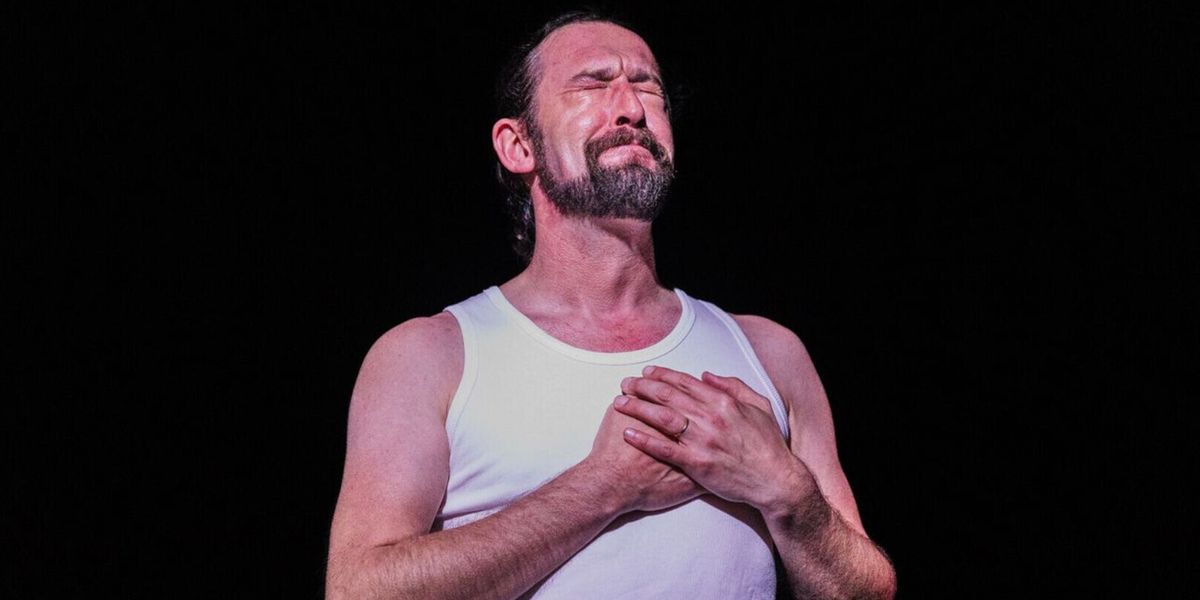
At its heart is the story of a boxer, a soldier, a miner, a husband and a father. Through a fever dream of memories, he reflects on the people, places and moments that shaped his life.
While rooted in Yorkshire's mining heritage, DUST is ultimately about family, identity, belonging and the extraordinary lives hidden within ordinary communities.
What are the strengths of the performer having a personal connection with the story?
I have watched this play more than 200 times, and I know every word by heart.
Because the story is so deeply personal to both of us, I have never grown tired of watching Craig perform. He still has the ability to make me laugh and cry with every performance, and I think that is something truly special.
Craig approaches the role with complete honesty and emotional vulnerability. He doesn't simply perform the character—he lives the story each time he steps on stage. That authenticity is something audiences instinctively recognise. Every night, they experience something raw, truthful and deeply human, leaving the theatre knowing they have witnessed something genuinely powerful.
Why is this such an important story to tell?
Coal has become as obsolete as the men who once mined it, yet their stories should never disappear with the industry that shaped generations of working-class communities.
My hope is that DUST, and the future works in this trilogy, will help preserve their memory and ensure that the lives, sacrifices and resilience of these men are not forgotten.
While I am in Yorkshire, I will be meeting with Tony Banks, who works tirelessly to honour the legacy of the Lofthouse Colliery disaster and preserve the history of the mine. His work ensures that the seven men who lost their lives are remembered. Only one miner's body was recovered; the remaining six still lie underground, in what are often described as the deepest graves in Wakefield.
For me, these are not simply historical events. They are human stories about courage, loss, community and the cost of progress. As the generation who lived through these experiences grows older, I believe there is an urgency to record and share these stories before they are lost forever.
How does it fit into your trilogy of work?
DUST is Part One. To be Truthful - There originally was no particular linear order to Part 2 and Part 3. Just fragments of stories from a working class town.
I wrote Part One so quickly, and we went straight into rehearsals after the first script read - It just felt right that Craig's performance would be Part 1.
Without too many spoilers, each play is episodic, built around the backbone of The 10 Northern Commandments - It is the moral compass of The Trilogy. Each play is a moment in time based on true events and stories from a mining town.
In truth I have a decalogue of work that could be a Television Series that spans a century, but for the theatre I am refining it to Three Episodic Moments that make up the Trilogy for the stage.
What would you like audiences to take away from it?
I hope they leave feeling they've experienced a story that stays with them long after they've left the theatre.
More than anything, I hope they're completely immersed in the world of the play for fifty-five minutes so that they laugh, reflect, remember and perhaps see something of themselves in the story.
One of the things I love most about DUST is that every audience seems to take away something different. Some people see their father, grandfather or uncle. Others are reminded of their childhood, their community, or the place they grew up. For some, it's a story about mining; for others, it's about family, identity, resilience, grief or love.
What surprises me most is how often people tell us afterwards, "That was my story," even when they've never set foot in a mining town.
I think that's because, at its heart, DUST is about ordinary people living extraordinary lives. If audiences leave feeling a little more connected to their own history, to their family, or to the people around them then we've done our job.
One piece of feedback that has always stayed with me came from someone who told me, quite honestly, that they didn't really like theatre and they were dragged to the show. My heart sank for a moment, until they followed it up with, "But if this is what theatre can be, I'd go and see more."
I'm still not entirely sure what they meant by it in its entirety, but I chose to take it as a compliment.
Perhaps it was because they connected with the story rather than feeling like they were watching a piece of theatre. Perhaps they recognised something of themselves, their family or their own experiences in the characters. Whatever the reason, it reminded me that powerful storytelling can reach people you never expect.
For me, that's one of the greatest gifts of theatre: creating a shared experience where people can laugh, reflect and see the world or themselves a little differently.
DUST runs at Edfringe from 5 - 30 August
Photo credit: Marie Pier Labelle
Sponsored content