


Review: Corbett Prep's High School Summer Theatre Presents HADESTOWN: TEEN EDITION
Runs Thru June 7th
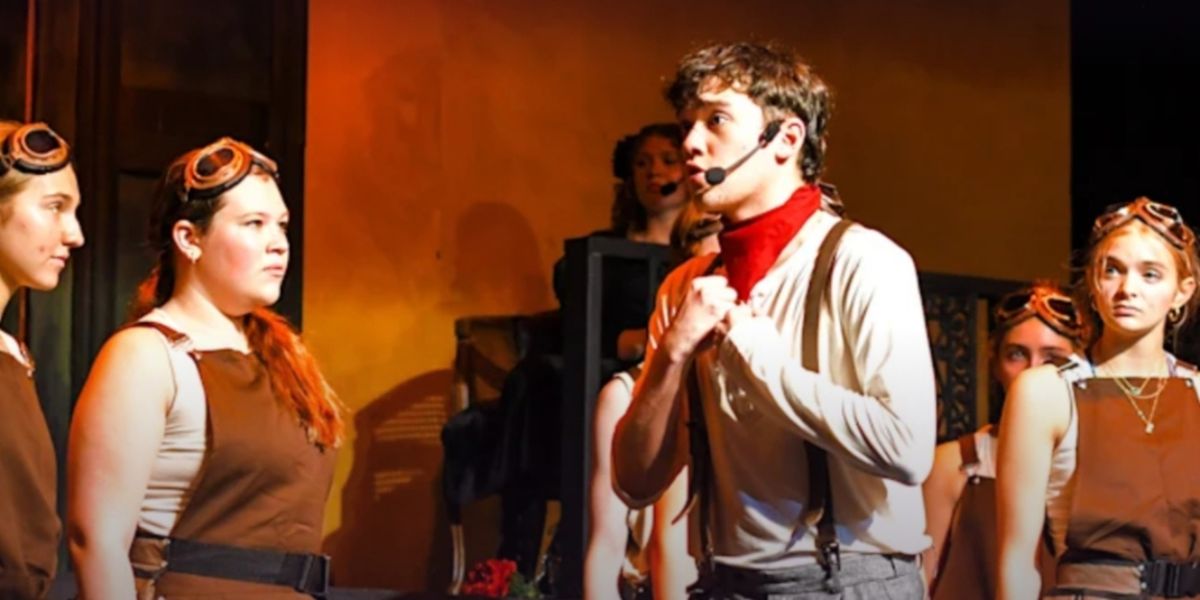
Before seeing a stunning youth production of Hadestown at Corbett Prep’s Farish Speakeasy, I ran into a friend standing in line. “Hadestown is my all-time favorite musical, “ she told me.
“It’s the last Broadway show that I saw before the pandemic,” I said. “Just weeks before.”
“I saw it then, too,” she told me. “We may have seen the exact same performance. It’s certainly one of the best shows of this century, maybe the very best.”
“It’s up there,” I said. “But what else would join it? Next to Normal? Hairspray, Wicked, In the Heights?”
“Hamilton, of course,” she added.
“Of course. Hamilton has to be in the conversation. Maybe also Fun Home or The Producers, something like that.”
“But Hadestown,” she said. “It has to be in the running.”
After witnessing the youth production of this beloved musical, I have to heartily agree with her. And this production of Hadestown is very different than the Broadway show: A totally immersive experience, in an intimate setting where we are surrounded by the cast onstage the whole time, with a stripped-down band (small but so effective) and some of the most talented youths from Hillsborough and Pasco Counties playing these iconic characters. Different and unique, yes, but just as powerful. It’s an experience I won’t soon forget.
For the uninitiated, Hadestown is a musical retelling of the ancient Greek myth of Orpheus and Eurydice, with book, music and lyrics by Anais Mitchell. Much of it set in a Speakeasy, Hadestown centers on Eurydice, a wandering soul looking for something to eat who ultimately escapes to the underworld to avoid the real world’s poverty and bad weather. Her wide-eyed poet-lover, the singer-songwriter Orpheus, travels to hell in order to rescue her from torment. Hades, king of the underworld and god of the dead, has Eurydice for eternity, so what can hero Orpheus ultimately do to win her back and return her to the land of the living?
But with a show like this, it’s not so much what it’s about that matters as much as it is how it about what it’s about, if that makes sense. The energy, the voices, the choreography, the acting, the staging, the music, the tech elements—all of these come together here. Hadestown spotlights the dichotomies of life—home and escape, strength and fragility, freedom and confinement, energy and torpor, love and loss. It says so much about our current world while dealing with a storyline originating 2500 years ago. Still it’s hard to disassociate politics from the show when you hear songs like “Why We Build the Wall,” written a decade before a certain US President first took office that can be both emboldening and terrifying.
And with Mitchell’s haunting score, we feel like we’re in the midst of an unplugged grunge concert.
The cast, almost all of high school age, had eight days to work on this, a fact that shocked me after watching their excellence on display. These teens prove to be utter professionals, leads and ensemble alike, always in the moment, hitting their marks every time and yet so full of energy and that one ingredient that youth always brings to shows: the overt love of performing. It radiates sunshine-bright from these young people.
I saw the opening night cast—the Purple Cast—but there is an entirely different group of leads on some of the other nights—the Green Cast. It takes some time to get used to youths playing some of these roles--but once we dive in, it's a glorious ride to hell.
Our narrator, Hermes, is played by the multi-talented Milannia Travaglino, obviously an expert guitarist. With her instrument in hand, she sings the hell out of the numbers—“Road to Hell,” “Any Way the Wind Blows,” “Way Down Hadestown,” “Wait for Me,” and “Road to Hell (Reprise).” Take all thoughts of the legendary Andre De Shields out of your head; this is a whole different interpretation, and it works wonders. Ms. Travaglino channels folkies of the past as well as Nineties icons Melissa Etheridge and Bonnie Raitt. Yet she makes the part her own. She’s both matter- of-fact and energetic in her narration, a whisper and a roar, soothing and troubled, with a touch of sly humor. We will follow her likability and talent anywhere.
As Eurydice, Gabriella Reto is a revelation. Imagine a strung-out Lorde, or an angsty Alanis Morissette. With her ripped stockings, she writhes in torment, crawls into a ball, hugging herself. She’s always “on,” breathtaking work. In the song “Flowers,” it’s as if her soul leaves her body during it, where all the colors—emotions---show themselves in a single song: Regret, loss, sadness, frustration, confinement. It’s an emotional tour de force that breaks your heart.
As Hades’ love, Persephone, Jade Ethier is incredible. The part reminds me of Nadine Cross, Randall Flagg’s doomed lover in Stephen King’s The Stand. Dressed in green in Act 1, she’s suddenly donning black in Act 2, and then she absolutely owns the second act opener, “Our Lady of the Underworld.” With her red pre-Raphaelite hair and a flask in hand, like a drunken torch singer in hell, she hits outlandish notes. At one point, when she nails a certain note, a person near me was so impressed that he shouted out, “Damn!”
Three Fates act as our Greek Chorus—sort of like Hairspray’s Dynamite’s of the Bizarro World, or Little Shop's Urchins set in Hell. They are all stunningly good here, and their acapella work in “Nothing Changes” became a highlight of the show. Dressed in head to toe black as if they are always at a funeral (being the Fates, they probably are), Julia Bisesi, Ashleigh Krekorian and especially Alexis McFarland prove to be some of the strongest in the entire cast.
As the guitar-wielding Orpheus, Matthew Arroyo stands straight and wide-eyed, as if he’s touched by some sort of magic spell. I miss the contrast of his singing voice to the deeper bass of Hades, but he overall does quite well in the part and we root for him the whole time.
Will Decker is a formidable Hades, and when he goes deep vocally, trying to match the vocal qualities of the original Hades on Broadway, Patrick Page, Mr. Decker hits notes so low that I hope he doesn’t strain his voice in the process. As it is, in the song “How Long?”, he sounds like Leonard Cohen after smoking three packs of cigarettes. But sometimes his body language and facial expressions don’t match the emotions that he’s singing, and it’s here where we miss the gravelly world-weariness that an older performer like Mr. Page naturally brings to the role.
The ensemble is not just a group of background performers; they are integral to the show’s overall success. I have rarely seen such a committed, 100% engaged ensemble, even in some professional companies; all of them do terrific work in telling this tale. I usually see one or two standouts in an ensemble, but here, they are all phenomenal, all in their moment, so picking a standout is tough when they all deserve that honor: Avery Bowes, Charlie Brewer, Gianna Brown, Auri Chiasson, Maddy DeBord, Jaidon Delgado, Anika Dutta, Lily Elder, Bella Giacinto, Barrett Hicks, Olivia McNees, Isla Paone, Mary Pope, Rio Ricardo, Bella Albano, Rubye Barber, Audrey Daniels, Jonah Gamson, Issa Garcia, Pat Gurney, Rylam Meredith, Nikki Monroe, Anni Norland, Izzy Pedersen, Fernando Rojas, Lennon Schaeffer, and Sam Sobel.
Korban Quillian and Abbey Yokum add so much with their various dances throughout.
The live band is small but effective, with young Amelia Smith on trombone and Jude Kasti on drums, all led by the music director, Svetozar Ivanov, on keyboards. It’s a small group—with the two guitarists in the cast—but they sound full, and it fits the intimate surroundings of the Farish Speakeasy.
Brad Brewer’s scenic design is perfect, including an actual elevator leading straight to Hades.
Seth Travaglino, legendary educator and theatre instructor at Corbett Prep, directs and choreographs with such confidence and creativity. He doesn’t think only in terms of merely stage left or stage right, but he also uses so many levels—highs and lows, and then making the highs higher and the lows lower. Characters use trap doors to escape off a long catwalk, and it’s ingenious all the moving parts, the cast slinking through the audience, crawling on the sides, like a board game come to life before our eyes. There’s not a misstep in the staging. And no one creates better stage pictures than Mr. Travaglino.
But I noticed something else that tugged my heart. In the program, director/choreographer Mr. Travaglino is not the first name mentioned. That honor goes to the stage manager, Yasmin Virani, and it’s here where Mr. Travaglino makes the biggest difference. It’s all about the kids, all about what they bring, and so many of them are mentioned in the program, a myriad of names of some of the most gifted teens in the area. It’s awesome to have this much talent, and to teach and pass that talent along to these lucky students, and yet to also stay grounded, knowing what’s important. That’s what makes this show so powerful: The heart of every student out there, as well as every adult who helped them get there, and their director, a man who knows what he’s doing and is able to lead his cast to showcase his vision in the strongest way possible.
Talent and heart from all involved come together to create something so incredibly special. Of all of the youth productions I have experienced and reviewed over the years, this production of Hadestown remains one of the best. The question to ask Mr. Travaglino and Co.: What the hell do you do next to top this?
Hadestown at the Farish Speakeasy at Corbett Prep runs thru June 7th.
|
Conscience Powerstories Theatre @Stageworks Theatre (8/14-8/16) |
|
The Last Unicorn The Tampa Fringe Theatre (8/13-8/23) |
|
Destroying David The Off-Central Players (11/12-11/22) |
|
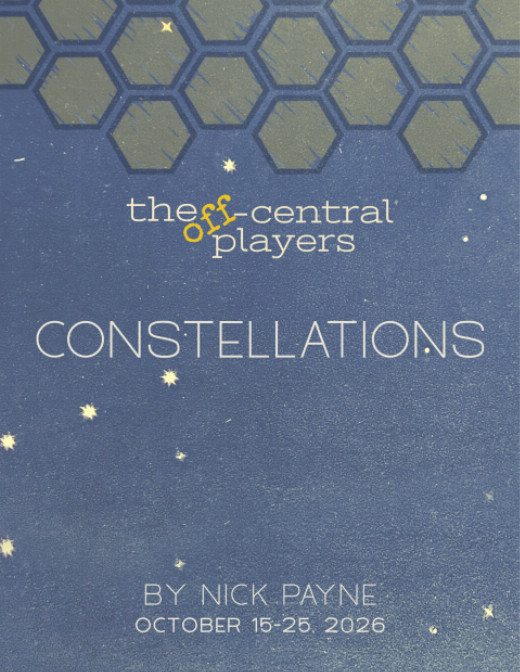
Constellations The Off-Central Players (10/15-10/25) |
|
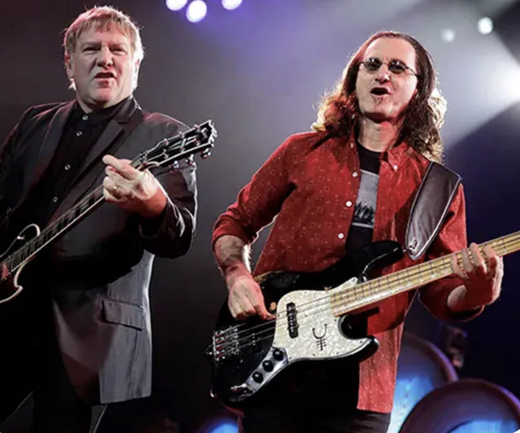
Rush at Hard Rock Live Hard Rock Live (11/05-11/06) |
|
|
Jonathan Van Ness: Hot & Healed Comedy Tour 2026 Seminole Hard Rock Tampa Event Center (11/19-11/19) |
|
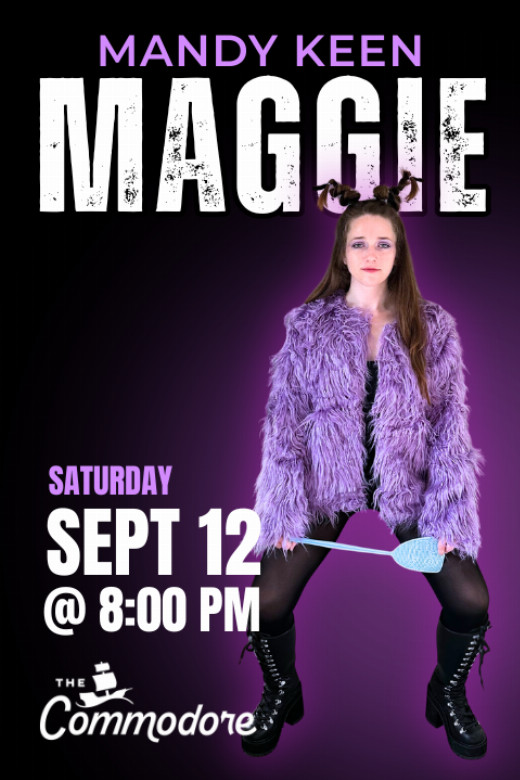
Mandy Keen: MAGGIE The Commodore (9/12-9/12) |
|
Wicked Straz Center [Carol Morsani Hall] (2/03-2/28) |
|
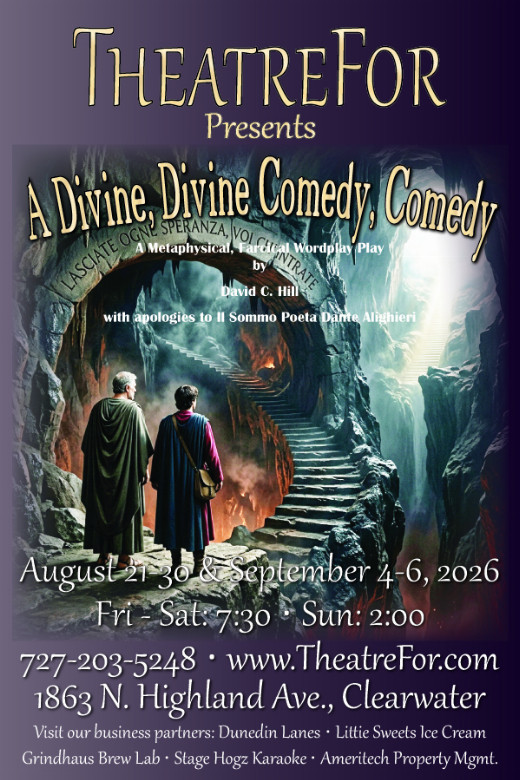
A Divine, Divine Comedy, Comedy TheatreFor (8/21-9/06) |

|
St. Pete Country Fest – Friday Vinoy Park (11/20-11/20) |
Reader Reviews
To post a comment, you must register and login.