


Review: ARIODANTE, Royal Ballet and Opera
New production of long-neglected Handel opera lacks consistency of tone
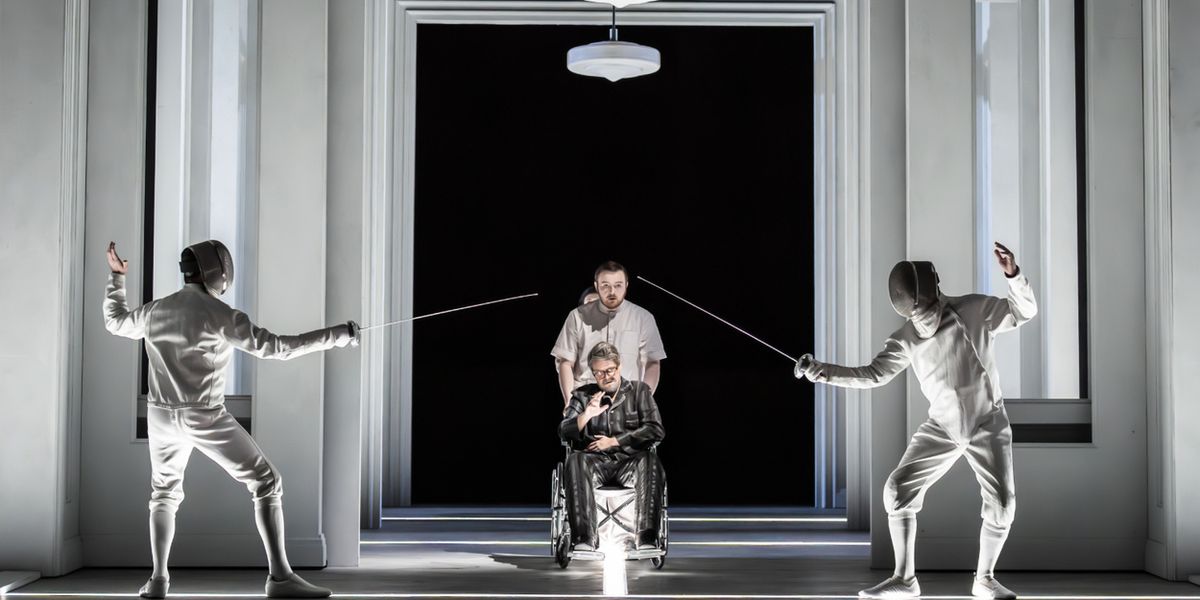
 Some 290 years on, Handel’s Ariodante is back in Covent Garden, but it had lain fallow for 228 of those before a late 20th century revival in interest. In reading of its history, you gain the impression that this might be one for Opera’s aficionados - and you would be right.
We’re in an austere grey palace (not unlike Macbeth’s castle in Joel Coen’s recent film) where the King of Scotland’s two daughters are courted by men, suitable and unsuitable. In a production of many contradictions, they are named Ginevra and Dalinda - more Middle Earth than Midlothian - with the elder crazy in love with the noble prince, Ariodante, and the younger, inexplicably, similarly afflicted by Polinesso, who is a bit of a bastard.
We’ve seen them as children in the framing device and we quickly clock, from their behaviour with their servants who radiate a disdain for their entitled masters and mistresses, that they’ve barely grown up. Extreme privilege has arrested development, something we see in the courts and would-be courts of today.
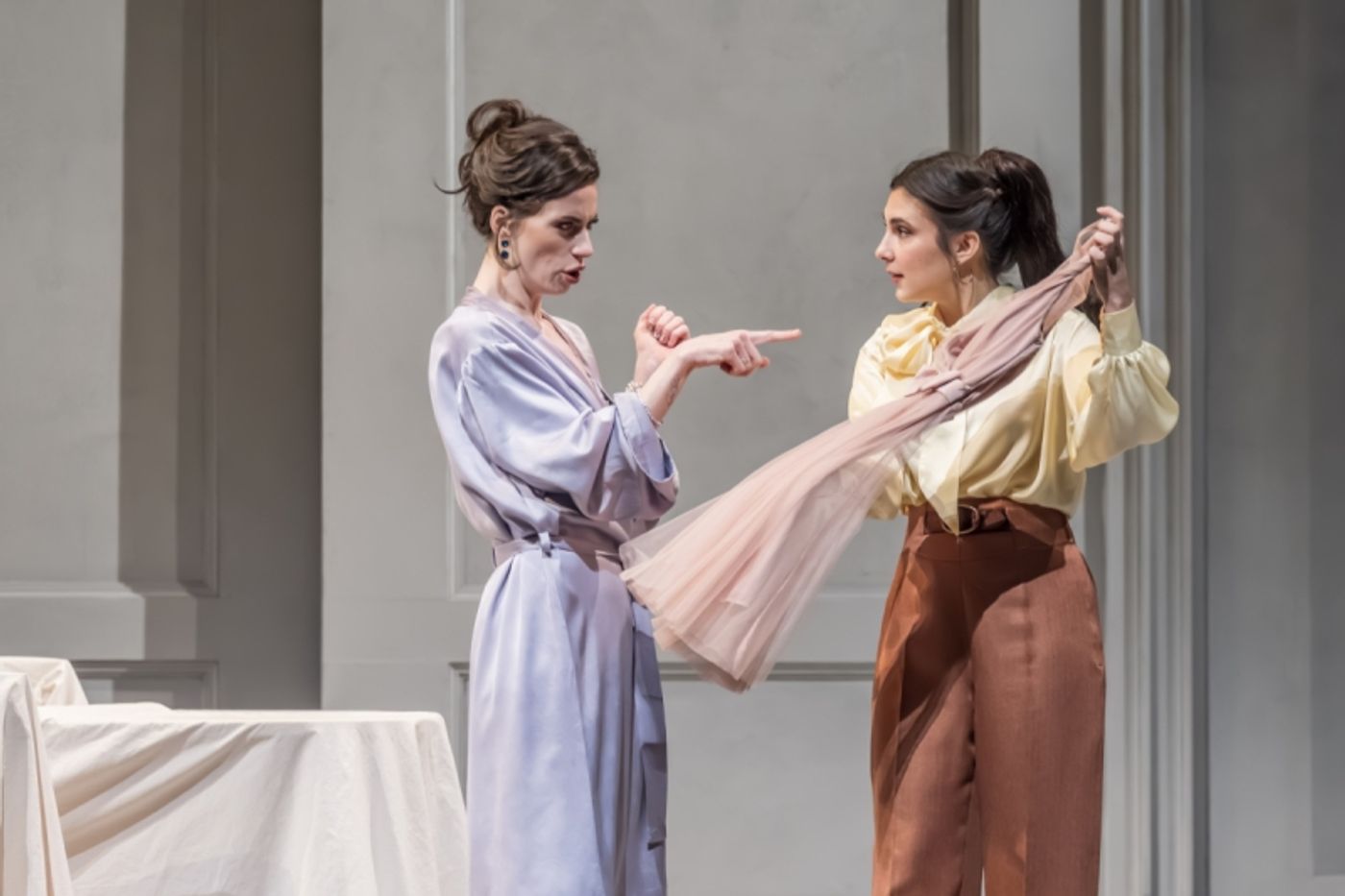
Polinesso, airily smoking throughout, sees that he can lever the infatuated Dalinda into acting out a version of the bed trick, by demanding that she dress as her sister while he seduces her. The silly girl agrees, Ariodante (as intended) sees it all, the wedding is off, the innocent Ginevra loses her honour and events spiral towards suicide and murder. George Frideric Handel may be a German-born, naturalised Englishman, but this is an Italian opera, sung in Italian, in pretty much every other way.
In form too, the da capo arias (and there are a lot of them) demand repetition - in layman’s terms, singing the first verse again to finish the song - something that becomes evident to the eyes before the ears, as the surtitle machine goes blank. That works well for one or two epic interludes - especially Ariodante’s “Scherza infida” a ten minute tour-de-force from Emily D'Angelo excelling in a trouser role. The impact overall is to sap the narrative drive from the plot, pushing the evening out to a two intervals four hours running time, which may work for those who lean towards opera’s purity of music, but stretches those of us who come first for its drama.
The first act is a lot of fun for Jacquelyn Stucker, as Ginevra teases and twists Polinesso (Christophe Dumaux’s sparkling countertenor somewhat at odds with the duke’s dark Machiavellian personality) but her misjudgement of his true motive betrays her immaturity - the throne rather than her hand is his primary objective. In a fine debut for the RBO, Elena Villalón has much more to do in the second and third acts, as Dalinda sees the consequences of her foolishness, her sister reduced to an Opheliaesque melancholy and it’s largely through the younger sibling’s eyes that we feel the weight of the drama. Ed Lyon, dressing like a young Alan Bennett in a design concept by Etienne Pluss that goes for a 1930s look, feels, like the chorus in their Lyon’s Tearooms uniforms, rather under-utilised.
The orchestra, under Stefano Montanari’s baton and, occasionally, his violin (which must have been distracting for those sitting in the front rows), delivers the score with precision and verve and the singing is strong throughout. That said, it’s the minimum one expects in a house of this repute.
Less expected, as the plot twists and turns in search of a resolution, are a handful of titters in the stalls as the events unfold (this while a king is dying and not long after a distressing - too distressing for one or two in the audience - suicide scene). I’m not sure whether that was the reaction director, Jetske Mijnssen, was seeking nor whether this co-production with Opéra National du Rhin and Opéra de Lausanne plays differently outside London, outside panto season. The response to the Chekhovian question “Should we be laughing or crying?” is always best unvoiced.
The ambivalent ending, with words and music saying one thing and the action another, certainly did not lack ambition, but whether it worked or not is open to question. So deep in the evening, maybe we deserved a bit more cueing that all would not quite go to plan, as it’s quite the effort to replay the previous 220 minutes in your head looking for clues as to why things worked out that way.
That a confessed fan of Handel’s work was as confused as I was in the lift down to the Tube station platform suggested I was not alone in having more questions than answers after a show that made its demands but did not always respond with concomitant generosity.
Ariodante at the Royal Ballet and Opera until 21 December
Photo images: Marc Brenner






Reader Reviews
To post a comment, you must register and login.