


Previews: THE PICTURE OF DORIAN GRAY at TheatreFor
The production runs through September 14.
 Opening tonight and running through September 14, Oscar Wilde’s scandalous novel gets a razor-edged revival at TheatreFor, where director Michael Cote and actor Juan Toro pull back the velvet curtain on The Picture of Dorian Gray, a morality play that feels disturbingly current. Adapted by Roberto Aguirre-Sacasa, this version trades Victorian lace for London, 1988, reframing Wilde’s philosophical fiction through the lens of excess, obsession, and the seductive lie of consequence-free living.
“I have been looking for a stage version of the story since I read it in college, back in the stone age,” says Cote. “It was actually Susan (Dearden) that found it and pointed it out to me. Others just didn’t have the power that this one did.” That power? It’s in the script’s unapologetic confrontation with morality, vanity, and the dangerous allure of beauty without accountability.
TheatreFor’s intimate space becomes a psychological pressure cooker. “With the relatively small playing area… it was a bit challenging to have so many locations,” Cote admits. “But through lighting, projections and different levels, I think that the audience will get the idea.” Dorian’s unraveling is documented through shifting visuals and Toro’s emotionally raw performance. “Dorian’s descent is documented through use of lighting and projections as well as the fine performance of Juan Toro.”
 Toro doesn’t just play Dorian—he inhabits him. “Well I am charming, cruel and cursed so it was easy,” he jokes, before peeling back the layers. “Cruel was more challenging… to view it as an intense passion for, in Dorian’s case, the arts and truth of oneself.” His most emotionally grueling moment? “The confession to Harry… I don’t want my confession to seem fake. My goal is to portray his repentance as sincerely as possible.”
The infamous portrait—Dorian’s mirror, monster, and moral reckoning—is rendered through AI transformations and framed projections. “We have several actual framed portraits that show the transformations, as well as projections (to make sure everyone can see them),” says Cote. “Each portrait is based on the same picture of the actor, transformed through the use of AI (my first time).”
Toro’s approach is rooted in empathy, not judgment. “At the beginning I judged him a lot… but I had to constantly tell myself not to judge him. That’s not my job.” Instead, he channels the weight of secrets we all carry. “The burden of a secret that can change peoples perspective of you is something most of us have.”
Cote leans into the script’s moral ambiguity, pushing boundaries “in a morality play sort of way.” And the parallels to today? Unmistakable. “Several of the situations ring current in today’s headlines (think Epstein Island)… we’re not much better than we were in the 1890’s.”
Toro’s favorite moment? Act 2, when Dorian confesses to Alan. “It’s the only time in the play where his wicked cruel nature is conveyed through his words more than his actions… It’s probably his lowest point; to hurt two people he supposedly loved.”
Cote hopes audiences leave with a mix of horror, sympathy, and uncomfortable recognition. “Dorian is a sympathetic character, to a point. I want the audience to question whether or not he deserves salvation at the end. Definitely horror… Like a train wreck, you can’t stop watching (I hope).”
And if Wilde were alive to see this version? “He would probably even say that it was too tame and didn’t show half of the corruption and decadence that is prevalent in today’s society,” Cote muses.
This isn’t just a play for TheatreFor—it’s a reckoning. A mirror held up to the audience, asking not just what we see, but what we’ve become.
The Picture of Dorian Gray is tonight through September 14 at TheatreFor. Learn more and get tickets at theatrefor.com.


|
Conscience Powerstories Theatre @Stageworks Theatre (8/14-8/16) |
|
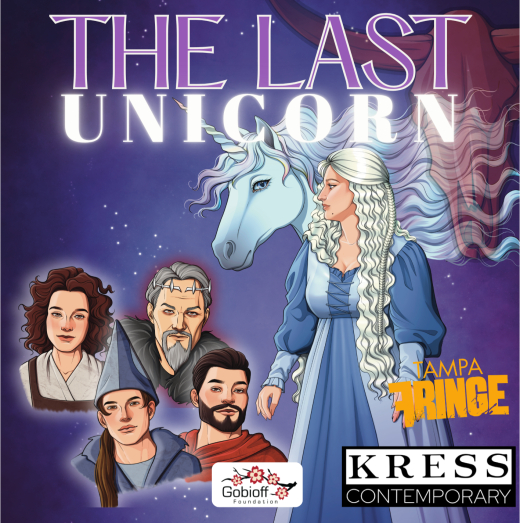
The Last Unicorn The Tampa Fringe Theatre (8/13-8/23) |

|
Goo Goo Dolls at MidFlorida Credit Union Amphitheatre MidFlorida Credit Union Amphitheatre (8/24-8/24) |
|
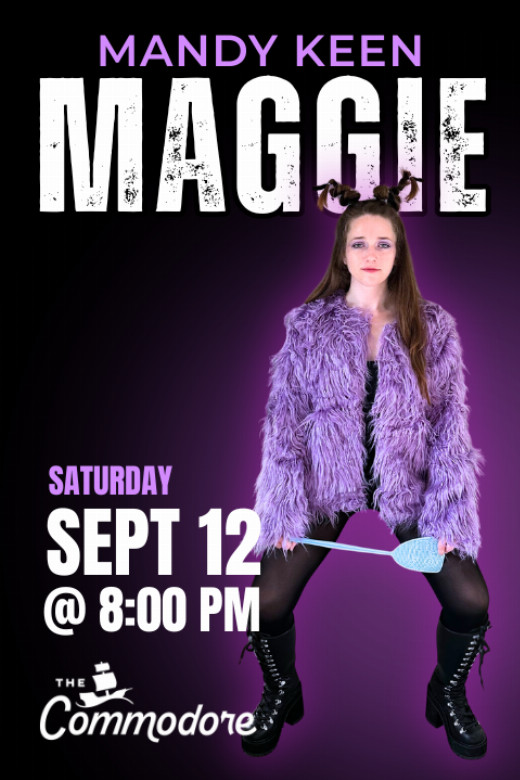
Mandy Keen: MAGGIE The Commodore (9/12-9/12) |

|
The Gods of Comedy Carrollwood Players Theatre (8/14-8/30) |

|
A Night With Janis Joplin American Stage Theatre Company (9/16-10/11) |
|
Come From Away Eight O'Clock Theatre (9/04-9/13) |

|
Load Bearing Walls The Off-Central Players (3/25-4/04) |

|
Damn Yankees Eight O'Clock Theatre (2/26-3/07) |
|
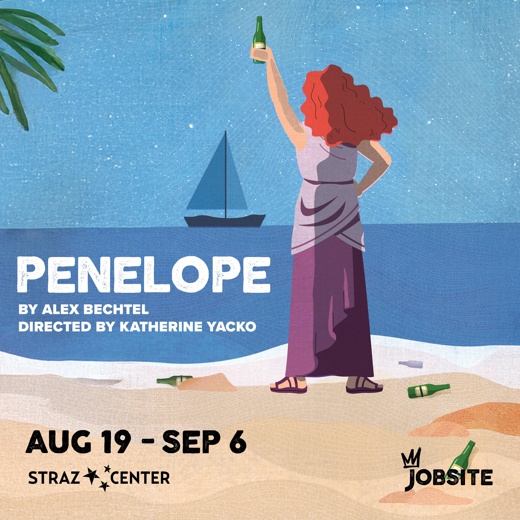
Penelope Jobsite Theater (8/19-9/06) |