


BWW Q&A: Melina Farahani Talks BLACKBIRD at Theatre Row
Directed by Tara Brown, the production brings together a cast that includes Melina Farahani and Miguel Perez.
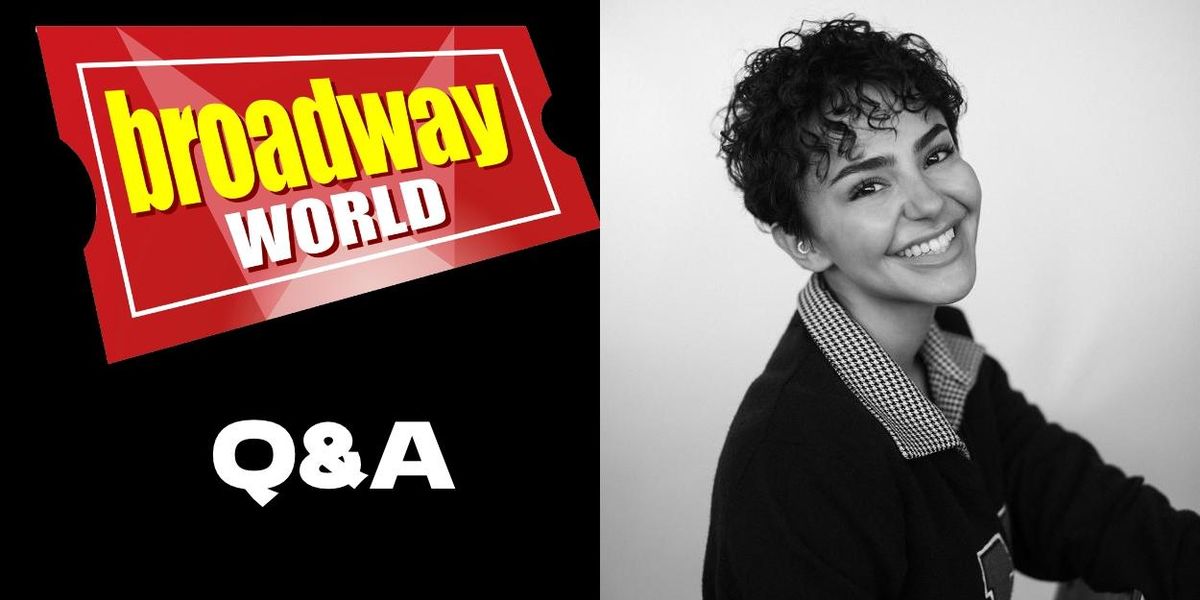
Diaspora House will present a limited engagement of Blackbird, David Harrower’s searing psychological drama, running for eight performances only, December 2 through December 7, 2025 at NYC’s Theatre Row. Directed by Tara Brown, the production brings together a powerhouse cast, including Melina Farahani and Miguel Perez.
Melina Farahani is a British/Persian award-winning actress. She has led productions in both London and LA, voices a magical princess in Netflix's “the 7 Bears” and appeared in the critically acclaimed short, James the Second. She earned three award nominations for her one-woman show at the Hollywood Fringe and is now starring in a gripping new film with Slick Films’ Oscar-winning production company.
A National Youth Theatre member and Stella Adler graduate, Recently, she earned three award nominations for her one-woman show at the Hollywood Fringe and is now starring in a gripping film with Abstraction Media
Performances of Blackbird will take place Tuesday, December 2, through Saturday, December 6, 2025, at 7 PM with matinee performances on Wednesday, December 3, and Sunday, December 7, 2025, at 2:30 PM.
Can you tell us your “Origin Story”? Can you tell us the story of how you grew up?
I feel like I grew up between three worlds — born in Tehran, moved to Dubai at four, and raised in London from the age of seven. My childhood was just me and my mother, navigating life as immigrants over and over again. That experience shapes you. It makes you adaptable, observant, and quietly resilient in ways you don’t fully understand until you’re older. I watched my mother navigate everything on her own — the jobs, the loneliness, the language barriers, the fear. I was right there beside her. And watching her fight for our future taught me how to fight for myself. She is the reason I am who I am. Her strength, her sacrifices. And to have faith in myself and know that no dream is ever too big or impossible to attain. That faith she poured into me is the engine behind everything I do now.
Can you share a story with us about what brought you to this specific career path?
I have always been the entertainer and the family wearing costumes that my auntie sewed for me putting on a show at every event and family gathering. I always know it deep inside my heart that this is what I was born to do. And only got the courage towards the end of my studies. when I booked my first independent film, Bitter Tears of Zahra Zand, That film changed everything. It gave me permission to take acting seriously. From there, the path unfolded. I just remember being on set and thinking I want to do this for the rest of my life.
Can you tell us the most interesting story that happened to you since you began your career?
As part of my research for Una, I watch a lot of interviews and documentaries from survivors or previous cases - two days ago, I came across an Interview with Clark Frederick’s. On soft white underbelly towards the end of the interview he mentioned that previously for the off-Broadway production of Blackbird, he was invited to do a talk at the end of the show. I immediately messaged him personally on Instagram and asked if that would be something he would be interested in doing again he immediately responded back saying that he would love to. I mean, out of all the interviews out there to be able to come across this video at the time that I did for him to be available for him to agree for him to respond immediately with only one week prior to the show for him to come to our LA preview It’s just a magical sign, pointing me in the right direction that this is what I meant to do.
It has been said that our mistakes can be our greatest teachers. Can you share a story about the funniest mistake you made when you were first starting? Can you tell us what lesson you learned from that?
I was invited to do Podcast. For my solo show the godmother and I was Late. I thought I had the time right in fact I thought I’d show up early. I wrote it on my calendar and set a reminder and an alarm but all those things were set for the wrong time. I realize that I Need a team. Sometimes you need people to help you out along the way to have an assistant and that one person can’t do it all and that that is OK because one person isn’t meant to do everything.
None of us are able to achieve success without some help along the way. Is there a particular person who made a profound impact on your professional life? Can you share a story?
My partner has taught me fearlessness. I used to avoid the work when something mattered too much — because if you try and fail at the thing you love most, it feels devastating. That fear can make you procrastinate, hesitate, hide. With his support allowed me not to do that. He taught me that there’s no real failure when you’re supported. That the worst-case scenario isn’t actually that bad, because he has my back. And knowing that — knowing I’m safe no matter the outcome — has made me braver, stronger, and willing to leap even when I’m terrified.
It’s been said that “no is redirection not rejection.” Can you share a time when a rejection led to an unexpected win, success, or discovery?
I was auditioned for a London Theatre Company and asked my acting coach to help me prepare. He handed me a piece from Blackbird. I remember thinking, this is way bigger than an audition monologue. The moment I started working on it, I knew the goal had shifted. That monologue wasn’t there to help me book the audition — it was something bigger. It felt like the piece had chosen me. I didn’t get the role, but that “no” became the real redirection. Those two minutes with Una opened a door I didn’t even know existed. What started as audition material has now become a full production where I get to inhabit her completely, far beyond those first lines.
What has been the most challenging role or project you’ve ever taken on, and why?
My most challenging project was my solo show inspired by Griselda Blanco — a piece I wrote based on the book her son wrote about growing up with her. Stepping into her world wasn’t just about exploring trauma or anger; it meant entering a life built on danger, power, and choices most people never have to imagine. I had to understand what it means to live in a world of crime and consequences — to feel the weight of someone who built an empire through fear, control, and survival. That required me to go to places emotionally and psychologically that were incredibly uncomfortable. The real challenge was finding her humanity inside all of that. How do you make the audience understand a person shaped by such extreme circumstances, without softening who she was? Holding both truths at once — the hardness and the hurt — became the most demanding and transformative part of the process. And on top of that, I had to embody how she moved through life: her speech, her accent, her rhythm, The Medellin dialect and really imagine the words she would use — how she said them, her rhythm, her choice of words… language carries a person’s whole history, And I Committed to what felt true and authentic in the work at that moment.
What part of your story do people rarely or never ask about, but you wish they would?
My academic background. It is shaped who I am as a person. It has allowed me to be persistent in solving the problem. People often assume I was always a full-time actor, but I spent years studying chemistry and engineering at UCL. That scientific training taught me discipline, problem-solving, structure, and the ability to approach characters with analytical precision. Acting and science feel connected to me — both require curiosity, both require you to ask “why,” and both deal with invisible forces that shape human behaviour.
What lessons do you think our society today can take from Blackbird?
Trauma doesn’t disappear just because time passes. - Grooming is subtle, insidious, and far more common than we admit. - Silence protects the perpetrator, never the victim. - Language matters – how we speak about “consent,” “choice,” and “young girls who know better.” - Accountability requires discomfort. You are not alone. There is guidance. Support others out there.
Can you share "5 things that you learned now, that you wish someone told you when you first started?"
There is never enough time. You have to prepare as early as you can, whether that's production or preparing for the role. Second, no one is going to give you anything. It's competitive. Everybody is out there fighting for the same thing, for the same opportunities, and you have to go there and create those opportunities if they're not being handed to you because you're the only one that can make it happen. So you got to be focused and keep on track. Third, you got to create your own following because marketing can only get you so far. Fourth, your budget is going to get blown away in the most unexpected ways; you got to prepare yourself. And fifth, everything that you do ends up counting for something and it's never really pointless: the discussions you have with your director, even the pre-productions, the videos you watch, the books you read at the time. They're all kind of nourishment and you might think at the time, "Oh my God, I spent five hours doing nothing," but it ends up building in your body and actually accounting for something, so you're never really wasting it.
|
BROOKLN'S BRIDGE - A New Musical - SHE Built the Bridge! The Space at Irondale (8/07-8/23) |
|
Broadway Magic Hour Broadway Magic Hour: Magic Show (7/25-1/02) |
|
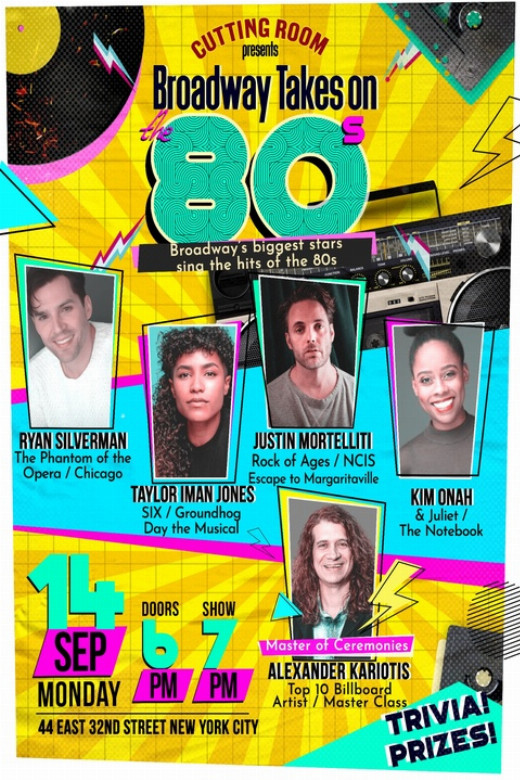
Broadway Takes On The 80s The Cutting Room (9/14-9/14) |
|
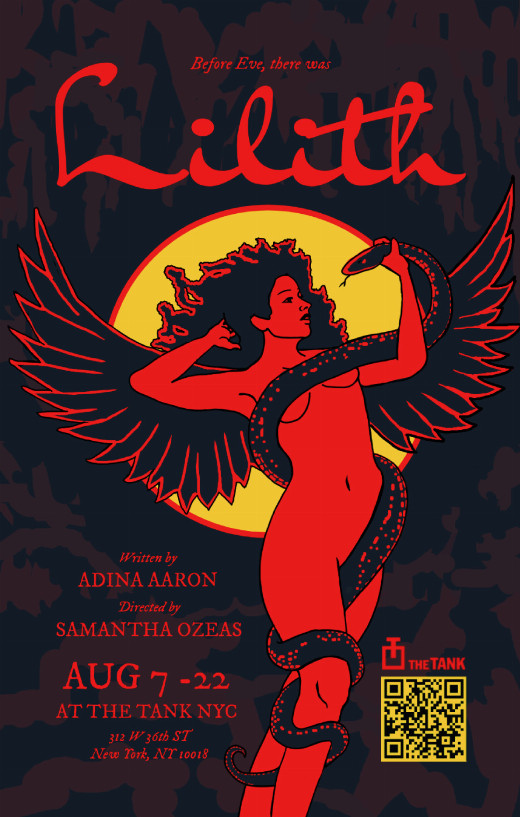
Lilith The Tank (8/07-8/22) |
|
Oh, Kentucky! Center at West Park (8/22-8/22) |

|
Oil & Whiskey The Bitter End, Laurie Beechman, Prohibition, The Rat NYC (7/15-8/12) |

|
Rock Never Dies Hard Rock Cafe (5/29-8/30) |

|
That Math Show Theater555 (6/11-8/16) |
|
|
The Merry Wives of Windsor Stag & Lion Theatre (8/06-8/16) |

|
Yoko Miwa Trio Yoko Miwa Trio (11/14-11/14) |