


Review: BRANDON MAGGART AND THE GARDENIA at The Gardenia
Brandon Maggart helped close out The Gardenia's 45 years in West Hollywood
 Click for Tickets!
They say all good things must come to an end. The legendary Gardenia supper club and cabaret room in West Hollywood closed its doors on December 21. Founded by the late Tom Rolla in 1981, this small but mighty venue launched many a cabaret career and extended many more, with names like Andrea Marcovicci in her Saturday “Marcovicci at Midnight” series, Michael Feinstein, Julie Wilson, Linda Purl, K.T. Sullivan, and so many more. (See https://gardeniasupperclub.com/about-the-gardenia for more about its remarkable history.)
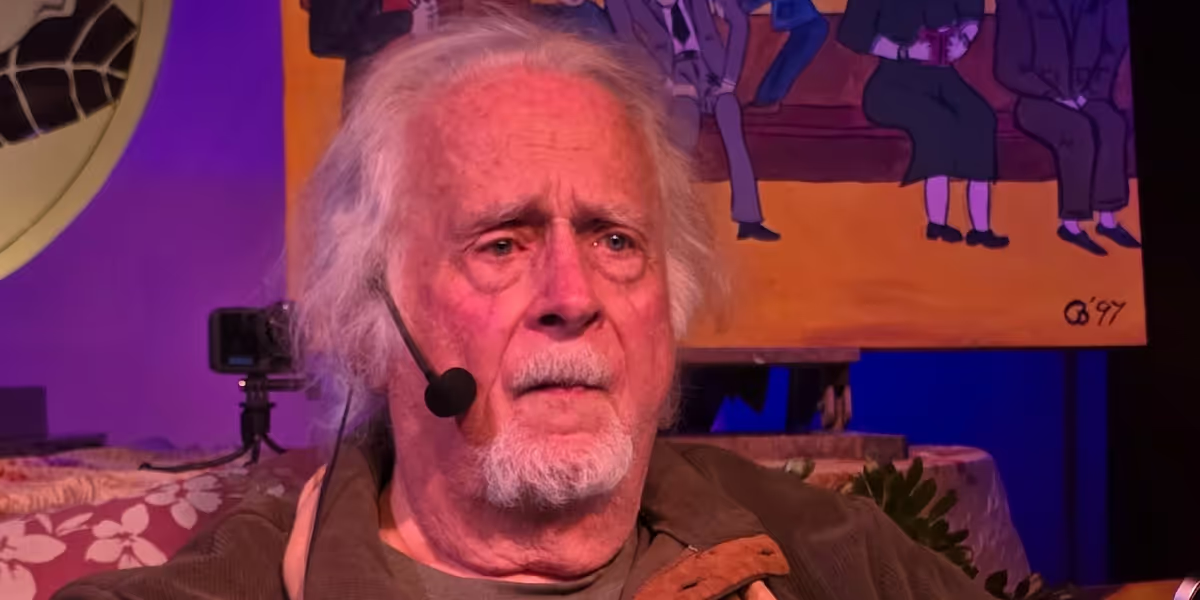
This writer flew in from New York for one of its final shows, to see Brandon Maggart perform for one last time on December 14th in celebration of his 92nd birthday two days earlier. Maggart, a retired Broadway (Applause), film and television (Brothers) actor, had celebrated his 90th and 91st birthdays there with a show. (I also attended the 2024 show.)
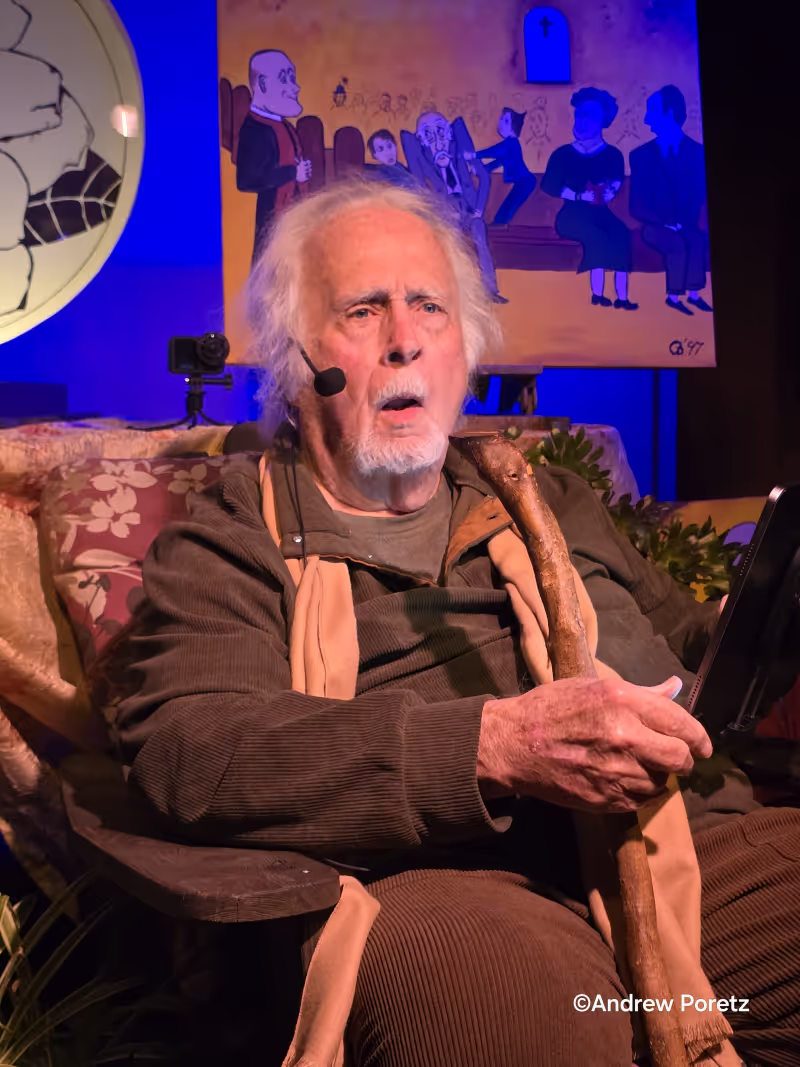
To open Mrs. Waycroft and the Mona Lisa, Maggart quoted his friend Marshall Barer: “The one good thing about growing old is that you can read all the classics again for the first time!” He discovered that re-reading some of his own stories was like reading them for the first time.
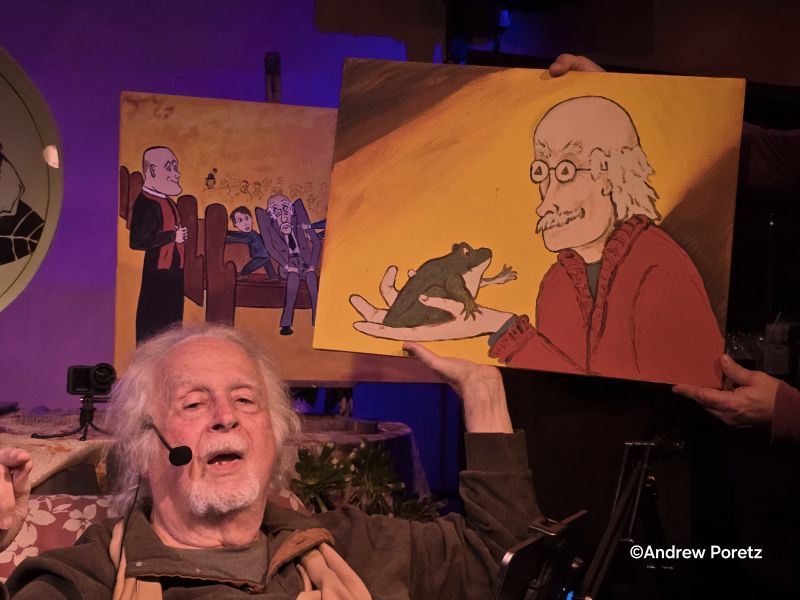
Maggart, a prolific writer, wrote his own material, several stories such as “The Girl With the Cello” and the show’s title story that he recited in his still strong, oratorical baritone. He peppered his stories with delightful autobiographical anecdotes and the occasional a capella song (there was no accompanist). There would be only a bit of singing, He held court in the rocking chair brought from his deck house in Venice, surrounded by several of his own paintings, and a room packed with friends, family and fellow performers. Maggart has a connection to The Gardenia from its inception. He knew Rolla since they did Applause together in New York. “Years later, I ran into him out here. He was at a little café nearby. He told me he was going to open a little supper club nearby. And he was going to call it The Gardenia. And here it’s been for 45 years.” He became emotional at the bittersweet moment, speaking of MaryJo Mundy and Keri Kelsey, who ran the open mic nights. He pointed to his paintings,- his house is covered with them - a creative outlet that became his spiritual salvation after the tragic death of his daughter Justine Many of these paintings were risqué visualizations of funny jokes. All had a certain poignancy to them. In another story, about a waitress from heaven named Roberta (who “used to be Bob, but she was good at her job"), he had the audience singing a “la la la” refrain.
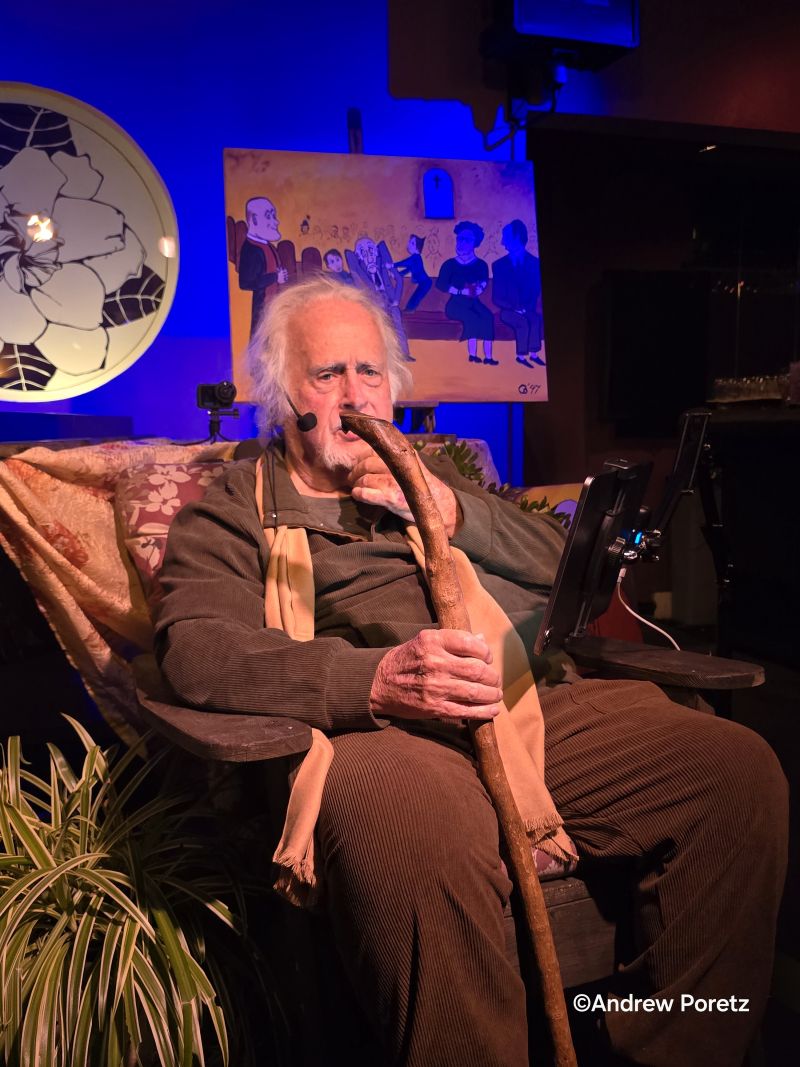
He noted at the end of his final story, “The Gardenia will be gone, but it will remain in our hearts. A miracle.”
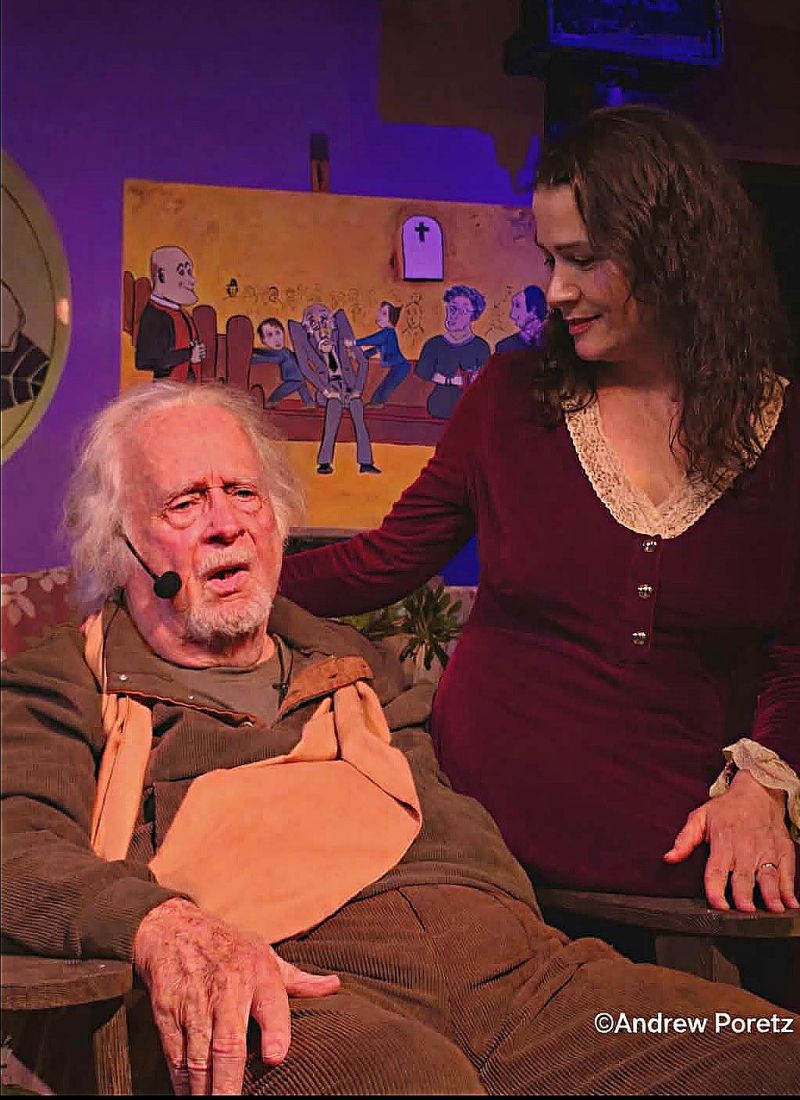
He sang an enchanting “Some Enchanted Evening” before ending the show with a sweet, apropos duet of "Noel Coward's "I'll See You Again" with his daughter Maude Maggart, whose career was also born at The Gardenia.
Brandon Maggart on Beginnings, Broadway, and the Long Way Around
The prior day, I interviewed Maggart at his home at length about his life and career. A garrulous fellow, he regaled me with marvelous stories from a life well-lived. Here’s a recap of the conversation. (To watch the entire video, click HERE.)
Maggart stated he grew up in a small town in Tennessee on the banks of the Cumberland River, far removed from Broadway or Hollywood, and without any connection to the business at all.
“I never knew anybody in show business. I never met anybody in show business. But I did like to hear music and see the movies. Back then, the only people in musical movies I knew were Gordon MacRae and Fred Astaire.
I started singing in church, then in school. The first time I sang to a little girl and she looked at me like that, I thought, bingo. Girls like to hear me sing.”
Another “bingo” came in high school, not through music, but acting.
“I did a one-act play in school called The Valiant. I played a fellow on death row. When I came offstage, my English teacher was standing there with tears running down her face through her makeup.
I thought, maybe there’s something to this. Being onstage, using other people’s words, making that kind of connection.”
From there, Maggart took the long, working actor’s road. College opera, the Knoxville Symphony, then New York, where his first professional singing job was in the glee club at Radio City Music Hall.
“You didn’t use microphones back then. The chorus singers had to fill the theater. I never used a microphone in my life until television and movies.”
His first New York musical was Sing, Muse, written by Joe Raposo with lyrics by Eric Segal, and featuring Karen Morrow.
“We were doing previews, and they came to me and said, ‘We have a song for you.’ It was the last preview. They said I could learn it and do it that night.
I learned the song and sang it. Later I heard Stephen Sondheim came to see the show and said, ‘Now that’s how you sing a song.’ It was a quiet song. Those are the hardest.”
There were off-Broadway plays, summer stock, Damn Yankees, Little Abner, and the kind of career moments only actors recognize as existential threats.
“I was doing a show called Put It in Writing. I thought I was going to be fired. I didn’t know they had a replacement waiting to go on.
Then the last preview came, and I blew it out. After that, they told me the other guy went home. And I won the Theater World Award.”
Like many actors of his generation, Maggart learned survival alongside craft. Waiting tables at Upstairs at the Downstairs, working summer stock, covering roles, learning by watching.
“I always wanted the show to be better than me. If the show ran, I got a check. And I had a family.”
In later years, places like The Gardenia offered something different. Not a proving ground, but a room where time, silence, and storytelling mattered.
“At a certain point, you’re not trying to prove anything. You’re trying to connect. You can feel an audience. You can feel the hush. That silence is part of it.”
And of course, there’s his family, especially two well-known daughters (Maude Maggart, the cabaret star who was first mentored at The Gardenia by Andrea Marcovicci and later had long residencies at the legendary Algonquin Oak Room in New York; and Fiona Apple, the Grammy-winning songwriter and recording artist).
“I was I can't tell you how lucky I've been in my life, and to not ever being a big star. I never had to wear the mantle of I've got to do that again. I can start anew everywhere I go, they knew what I can do. Whatever I fit. I fit in anywhere. And 92 years now, I've made a living for me … two ex-wives, seven children. I lost one, my daughter Justine, which was a whole long other story. That's why all the paintings I had to come out of when she passed, I was doing that show, and I lost it. I just went crazy, and I got back on my feet by painting.”
Listening to Brandon Maggart, you realize he never chased stardom. He chased the work, the connection, and the next honest moment onstage. Somehow, that turned out to be enough.
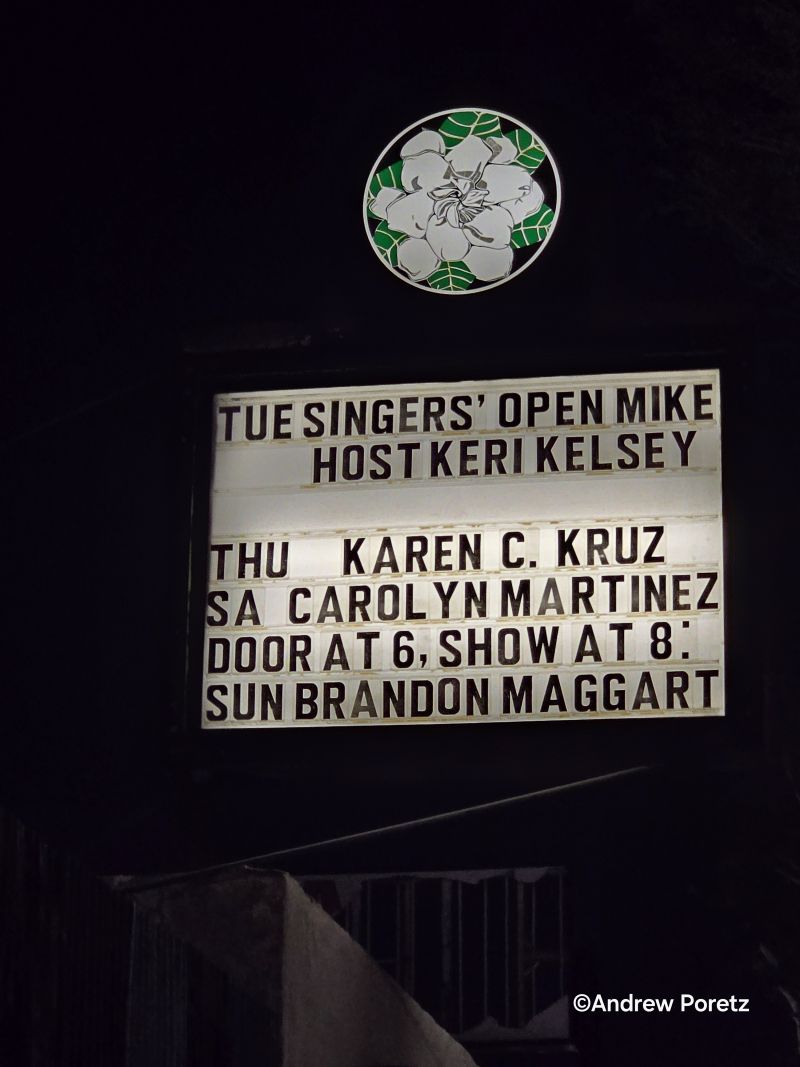
I also spoke briefly this week with entertainer Keri Kelsey, who hosted The Gardenia’s long-running Singers' Open Mic night every Tuesday for many years. She had this to say:
“I remember thinking, when I first walked into The Gardenia about 26 years ago, this is like old school Hollywood, the way I had always envisioned Hollywood but had never seen.
People like Marilu Henner, Tyne Daly, Julie Wilson, and numerous Broadway stars did one-woman shows there. Amateurs became excellent performers because The Gardenia welcomed both newcomers and celebrities.
The Open Mic was a place for many actors who weren’t even necessarily singers to hone their skills to complement their acting. Alan Rachins from LA Law fame was there every week working on new material. Molly Ringwald, who already had a jazz album out, came in as nervous as could be and not even sure she wanted to sing. At the last minute decided she would, and she was the last singer of the evening about 12:45 a.m.
It was so nice and comforting to have this wonderful iconic room, The Gardenia, as long as we did!”
The Gardenia will be missed.
Prefer BroadwayWorld in Google Search?
Add us as a preferred source so our stories show up more often in Top Stories and Google’s AI answers — for you.
Sign up for all the news on the Fall season, discounts & more...
|
CLUB27 Jaxx Theatre (10/01-10/30) |
|
Crone Creed El Portal Theatre (9/30-10/17) |
|
Good Night, Oscar North Coast Repertory (9/16-10/11) |
|
A Killer Night in Studio City Vitello's (9/06-10/31) |
|
Catch Me If You Can Colony Theatre (9/17-10/18) |
|
Dinner with Friends Santa Monica Playhouse (9/26-9/27) |
|
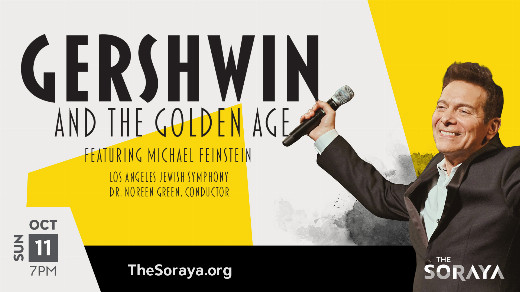
Gershwin and the Golden Age The Soraya (10/11-10/11) |
|
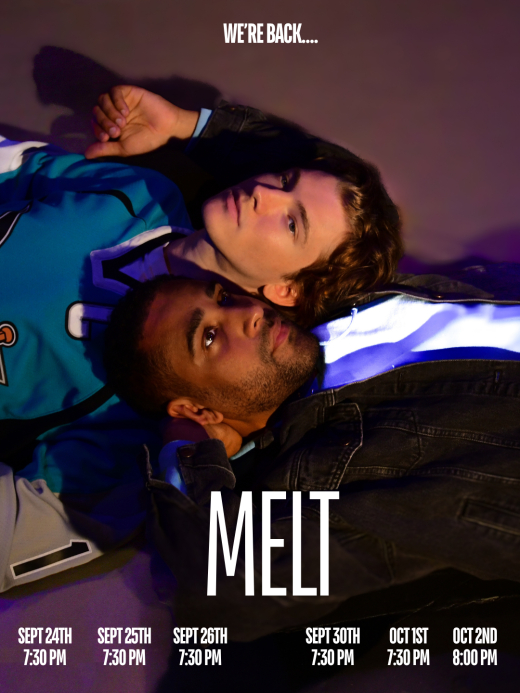
Melt : The Play The Marilyn Theatre at the Lee Strasberg Institute (9/24-10/02) |
|
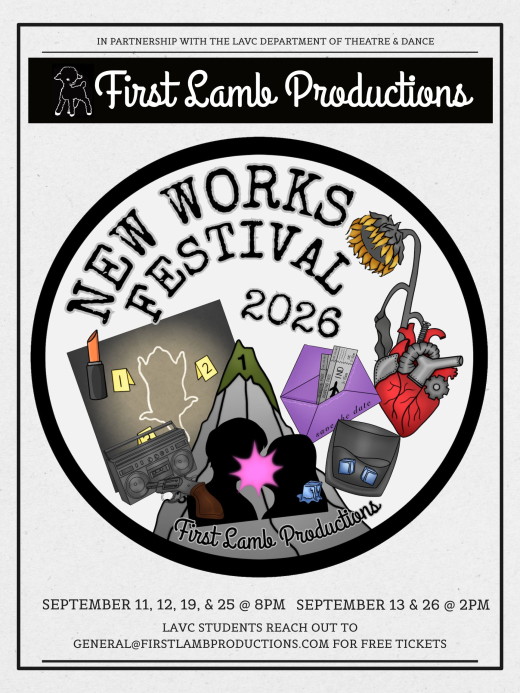
New Works Festival Shoebox Theatre (9/11-9/26) |
|
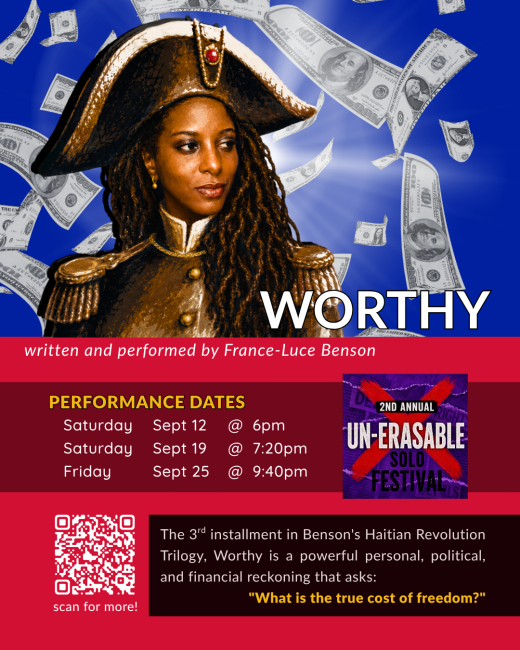
Worthy The Un-Erasable Solo Festival - Willie Agee Playhouse (9/12-9/25) |

Reader Reviews
To post a comment, you must register and login.