


Review: The Philadelphia Delivers a Titanic Mahler 2 at Carnegie Hall
But not the tightest.
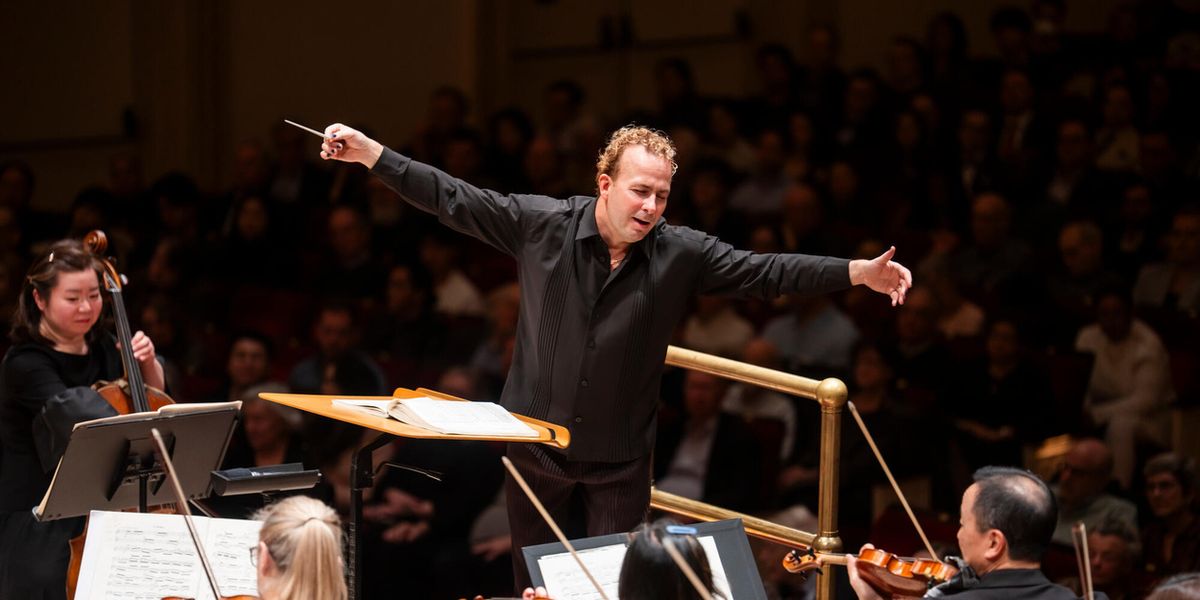
On March 10 at Carnegie Hall, the Philadelphia Orchestra brought Gustav Mahler’s towering Symphony No. 2, the “Resurrection,” to New York under the direction of its music director, Yannick Nézet-Séguin. With soloists Joyce DiDonato and Ying Fang and a large chorus assembled for the final movement, the performance promised the kind of grand, spiritually searching experience that has long made Mahler’s Second one of the most beloved works in the symphonic repertoire.
In many ways, the evening delivered exactly that. The Philadelphia Orchestra remains one of the great Mahler orchestras, and the famous “Philadelphia sound”—particularly its velvety, glowing string section—was in magnificent evidence throughout the performance. Those strings have been a defining element of the orchestra’s identity for generations, and on this evening they did not disappoint. From the opening bars through the symphony’s final apotheosis, the sheer beauty of the string tone often carried the music forward, even when other elements of the interpretation felt less settled.
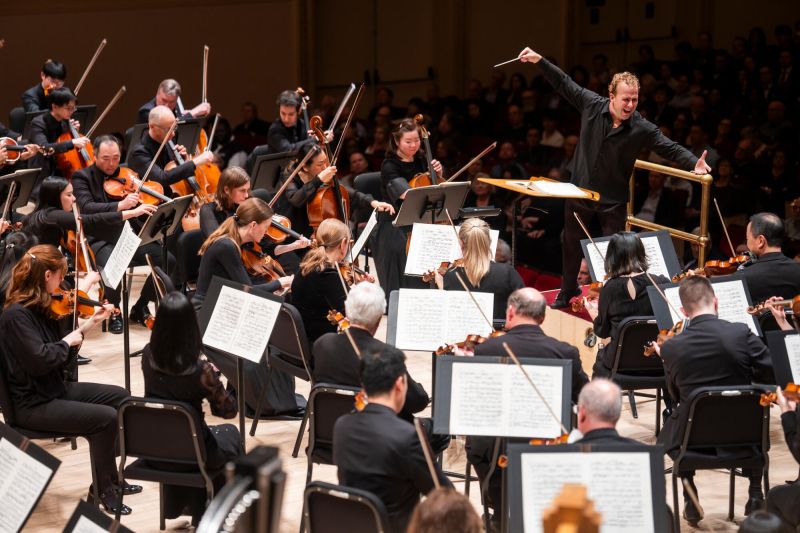
Mahler’s Second Symphony is a vast journey through struggle, doubt, death, and ultimately redemption, and this performance stretched well beyond 90 minutes. At times that expansive pacing created a feeling of grandeur and spaciousness. At other moments, however, the momentum seemed to ebb slightly, giving parts of the performance a somewhat “soggy” character before suddenly pivoting into passages that were sharply etched and extremely loud.
The first movement, marked Allegro maestoso, opened with a strong and imposing sense of drama. Nézet-Séguin shaped the opening funeral march in a stentorian, declamatory style that highlighted the orchestra’s weight and authority. The string sound was particularly impressive here—rich, dark, and unified. Yet the movement also featured some unusual pacing decisions, including several conspicuous pauses and passages that moved at extremely slow tempos. While such flexibility can heighten the music’s drama, here it occasionally disrupted the long line of Mahler’s architecture.
The brass section, so essential to the symphony’s climactic moments, was generally powerful but not always perfectly secure. Regrettably, a number of sour notes appeared in the most exposed passages—moments where Mahler’s writing leaves the brass dramatically exposed. These slips did not dominate the performance, but they were noticeable precisely because they occurred in such high-profile moments.
The second movement, Mahler’s nostalgic Ländler, offered a welcome contrast after the turbulence of the opening movement. Ideally this music should dance lightly and elegantly, evoking a distant memory of simpler times. Here the character sometimes felt less crisp than one might hope. There were passages where the texture became somewhat mushy, and the string pizzicatos—which should sparkle rhythmically—occasionally sounded slightly unsettled. Still, the orchestra’s overall warmth of tone preserved the movement’s charm.
The third movement, a whirling and sardonic scherzo derived from Mahler’s song “Des Antonius von Padua Fischpredigt,” was one of the evening’s most successful sections. Here the orchestra sounded energized and sharply focused. Woodwinds chattered with sly humor, strings articulated their swirling figures with precision, and the ensemble displayed the kind of razor-sharp coordination that the earlier movements sometimes lacked. It was a performance of clarity and bite that captured the music’s ironic character beautifully.
The symphony’s fourth movement, Urlicht, finally brings the human voice into the texture. Here Mahler draws on his Des Knaben Wunderhorn songs, and the music shifts into a realm of quiet spiritual longing. Joyce DiDonato delivered this movement with great beauty and sincerity. Her warm mezzo-soprano carried an expressive depth that perfectly suited Mahler’s humble prayer for redemption.
Unfortunately, from my seat in the rear of the parquet, balance became an issue once the orchestra reentered. DiDonato’s voice, so present and expressive at the start, was nearly inaudible at several points as the orchestral texture expanded around her (note: a fellow critic sitting in the dress circle informed me that he did not have the same problem in his seat.)
The vast final movement begins with an almost apocalyptic vision before gradually building toward Mahler’s transcendent choral conclusion. Nézet-Séguin began the movement at a very slow tempo—perhaps too slow, in this critic’s view—creating an atmosphere of solemnity but also delaying the sense of urgency that ultimately propels the finale forward.
Yet when the chorus finally entered, the effect was electrifying.
The choral sound emerged with extraordinary beauty and control, beginning almost imperceptibly before growing into the blazing affirmation of Mahler’s resurrection vision. In these closing pages, the performance found its full emotional power. Ying Fang’s luminous soprano floated gracefully above the ensemble, blending beautifully with DiDonato’s darker tone.
In the end, the performance felt like one that took some time to find its balance. There were moments of extraordinary beauty—especially from the orchestra’s legendary strings—and the final choral pages achieved the kind of grandeur that Mahler surely envisioned.
Not every detail was perfectly aligned, and certain interpretive choices occasionally slowed the symphony’s dramatic momentum. But the overall effect remained deeply impressive.
A performance marked by great sonic beauty and moments of genuine transcendence, even if the journey toward that destination was occasionally uneven.
Peter Danish
Photos: Chris Lee
Sign up for all the news on the Summer season, discounts & more...
|
NYFOS Next: A Perfect Rose: Dorothy Parker Songs The Theater at 150 W 17th Street (9/27-9/27) |
|
Carnegie Hall Presents: Santiago Cañón-Valencia and Victor Santiago Asuncion Carnegie Hall (11/10-11/10) |
|
American Composers Orchestra: New Virtuoso: Low End Theory at Carnegie Hall Carnegie Hall (3/18-3/18) |
|
New York Festival of Song: First-Name Basis New York Festival of Song: First-Name Basis (10/20-10/20) |

|
NYFOS Next: This Now Naked Life The Theater at 150 W 17th Street (11/15-11/15) |
|
American Composers Orchestra: Hello, America: We Gather Here at Carnegie Hall Carnegie Hall (10/27-10/27) |

Reader Reviews
To post a comment, you must register and login.