Dramatic Structure Explained: The 5 Stages of a Story
Explore the five stages of dramatic structure, how Freytag's Pyramid works, and examples from Shakespeare and Broadway musicals.
Every great play tells a story, but what makes that story work? From Shakespeare's tragedies to modern Broadway musicals, the most memorable theatrical productions use dramatic structure to introduce characters, build tension, develop conflict, and bring the action to a satisfying conclusion.
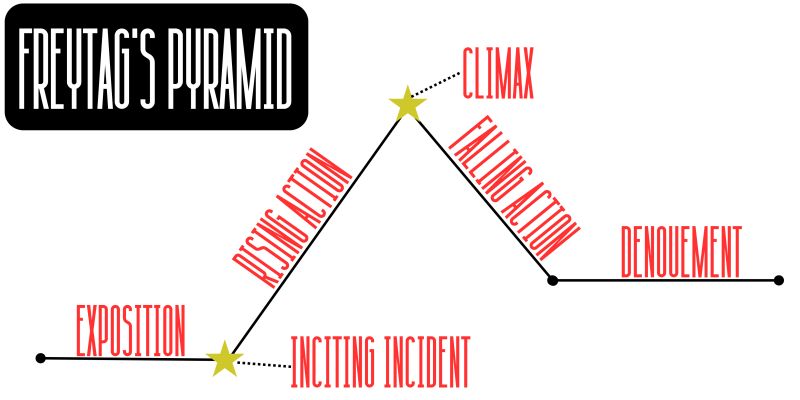
Dramatic structure is the framework that organizes the events of a story. It determines how a plot unfolds, how conflicts develop, and how characters change from beginning to end. While stories can take many different forms, one of the most widely taught models divides dramatic structure into five stages: exposition, rising action, climax, falling action, and resolution.
This five-part model is often illustrated through Freytag's Pyramid, a storytelling framework developed by German writer Gustav Freytag in the 19th century.
But what do these five elements actually mean, and how do they work in a play or musical? Whether you're studying Shakespeare, writing your first script, or simply hoping to better understand the stories you see onstage, we're breaking down the elements of dramatic structure, their history, and examples from familiar theatrical works.
What Are the 5 Elements of Dramatic Structure?
The five traditional elements of dramatic structure are exposition, rising action, climax, falling action, and resolution. Together, these stages describe how a story introduces its characters, develops conflict, reaches a turning point, and moves toward its conclusion.
1. Exposition: Introducing the Story
Exposition is the beginning of a story, when audiences are introduced to its characters, setting, and central circumstances. This stage provides the information necessary to understand the events that follow.
Broadway example: In Wicked, audiences are introduced to the Land of Oz, the contrasting personalities of Elphaba and Glinda, and the social tensions that shape their relationship. These early scenes establish the world and characters before the central conflicts fully develop.
2. Rising Action: Building the Conflict
Rising action consists of the events that increase tension and complicate the central conflict. Characters encounter obstacles, make important decisions, and face increasingly difficult circumstances.
Broadway example: In Hamilton, Alexander Hamilton's political ambitions, personal relationships, and rivalries create a series of escalating conflicts. His decisions carry increasingly significant consequences as the musical progresses.
3. Climax: The Turning Point
The climax is the decisive turning point of a story, when the central conflict reaches a critical moment. It often involves a major confrontation, revelation, or decision that changes the direction of the plot.
Broadway example: In Les Misérables, the confrontation between Jean Valjean and Javert at the barricade represents a pivotal moment in their relationship. Valjean's decision to spare Javert challenges the inspector's rigid understanding of justice and sets important consequences in motion.
4. Falling Action: Exploring the Consequences
After the climax, the falling action shows how the characters respond to the story's turning point. Conflicts begin moving toward resolution, and the consequences of earlier decisions become clear.
Broadway example: In The Lion King, the events following Simba's confrontation with Scar show the consequences of the central struggle and the beginning of a new chapter for the Pride Lands.
5. Resolution (Denouement): Bringing the Story to a Close
The resolution, also known as the denouement, is the final stage of the narrative. It reveals the outcome of the central conflict and shows where the characters stand at the end of their journey.
Broadway example: In The Lion King, Simba assumes his rightful place as king, restoring balance to the Pride Lands. The musical's final moments reinforce its themes of responsibility, renewal, and the circle of life.
Not every play follows these five stages in a strict order. Some contemporary works experiment with nonlinear storytelling, unresolved endings, or unconventional narrative structures. Nevertheless, this model remains a useful starting point for understanding how dramatic stories are constructed.
What Is the Difference Between Plot and Dramatic Structure?
Although the terms are closely related, plot and dramatic structure aren't exactly the same thing.
Plot refers to the events that happen in a story, including the characters' actions, decisions, and the consequences that follow.
Dramatic structure refers to how those events are organized to create tension, develop conflict, and guide the audience through the story.
For example, the plot of Romeo and Juliet follows two young lovers from feuding families whose relationship leads to tragedy. Its dramatic structure determines how their romance is introduced, how the conflict escalates, when the major turning points occur, and how the consequences unfold.
In other words, plot is what happens, while dramatic structure is how the story is arranged.
Modern Applications
In today's fast-paced media landscape, dramatic structure remains pivotal. Television series often employ cliffhangers and multi-episode arcs to maintain viewer interest, while digital platforms leverage storytelling techniques to engage audiences. This adaptability underscores the universal appeal and relevance of traditional narrative frameworks.
Understanding dramatic structure is crucial for anyone passionate about storytelling. Whether you're crafting a novel, screenplay, or theatrical production, these principles can elevate your narrative.
See more BroadwayWorld in Google
Our stories show up more often in Top Stories and Google’s AI answers.
Breaking Broadway alerts by text
Get the biggest stories sent straight to your phone.
Sign up for all the news on the Fall season, discounts & more...