


Review: WATER FOR ELEPHANTS at Dr. Phillips Center For The Performing Arts
Water for Elephants did not need to be a musical, but its story definitely earned the right to be told.
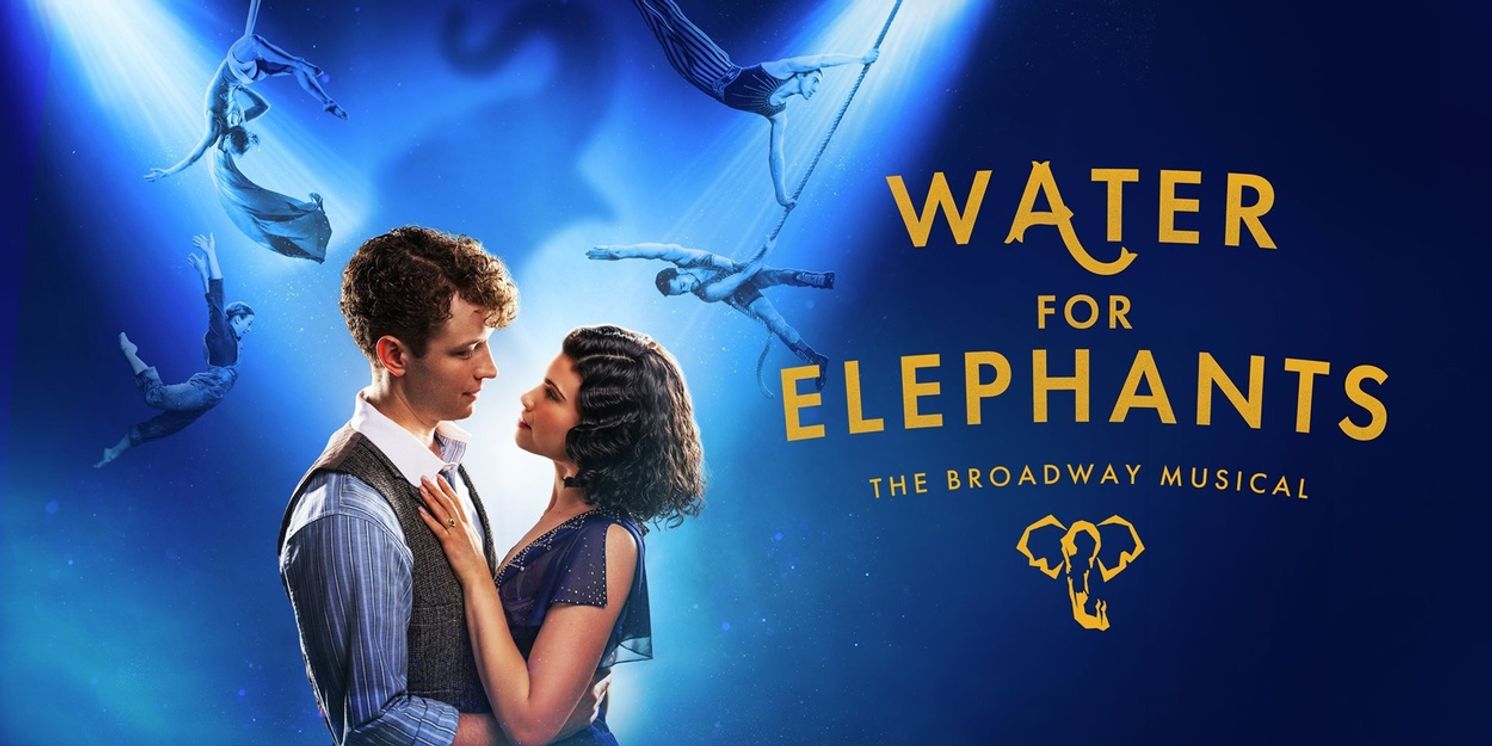
Water for Elephants did not need to be a musical, but its story definitely earned the right to be told. It may seem an odd stance to take on a stage production that absolutely shines in about eighty-five percent of its execution. Yet at the end of the night, I remained firm in my belief that this story, while well-told and extremely well-performed, faltered at the very core of what being a musical is: evoking the strongest themes and ideas of the story through memorable music and lyrics. It is, essentially, an anti-Greatest Showman. That 2017 movie musical suffered from a highly-fictionalized, overtly-cliched plot with barely-two-dimensional characters, but featured truly iconic songs that elevated the subpar dramatic material into something watchable. This 2024 musical, based on a 2006 novel of the same name, excels in offering a layered, dual-timeline story with rich and fleshed-out characters, but has some of the most forgettable songs to populate a musical since Xanadu.
That’s not to say this is a bad stage production. On the contrary, nearly every other aspect of this show wowed myself and the audience on opening night at Dr. Phillips Center. All the performers brought their A-game. The orchestra absolutely dominated their instruments. And the lighting design throughout this two-act circus drama truly made the story come alive. Water for Elephants just falters in the simple fact that it’s not a very good musical. As controversial as this already sounds, I would remount the entire production as a play with music elements, but not call it a Musical. It would find kinship with puppeteered plays like War Horse or Life of Pi rather than other circus-themed musicals like Pippin or Barnum. That is because Water for Elephants focuses less on celebrating the circus, and more on examining the interpersonal relationships of the people who make it run: namely the protagonist Jacob Jankowski.
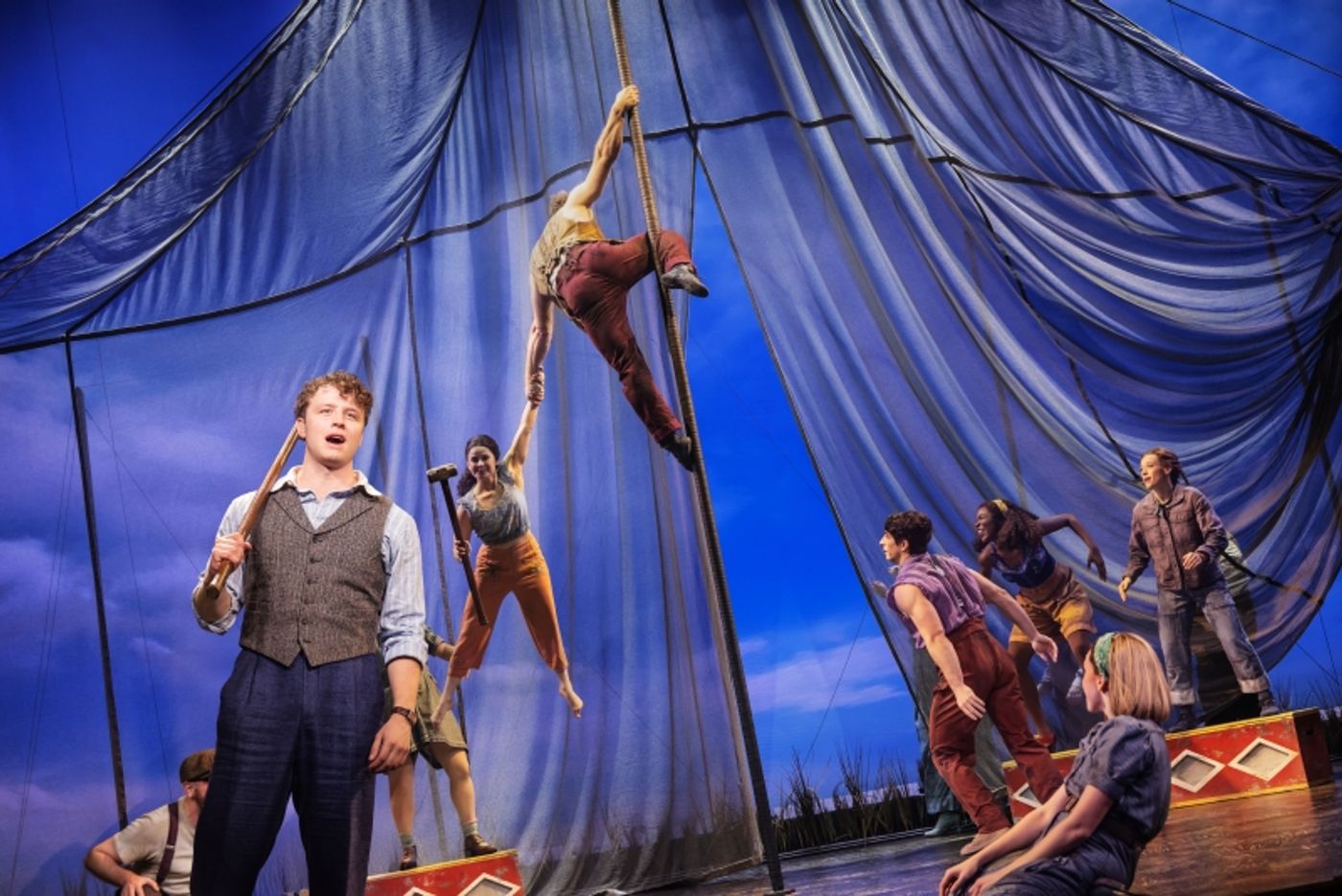
This is all the more striking when considering the musical’s source. Sara Gruen’s 2006 novel is remembered for its deeply relatable character work: it looks at not just the relationship between our human characters of Jacob, Marlena, and August, but also how these characters form a relationship (either good or bad) with Rosie the elephant. Gruen chooses to write about the circus not in a romanticized or sanitized approach, but maintains imagery within the circus setting that is lived-in, truthful, and unfiltered. The book’s graphic and explicit depictions of the routine animal cruelty in the circus environment, as well mature and sexual themes, has led to its banning in several public schools. Yet to its credit, the stage adaptation translates the novel’s characterizations remarkably well without ever whitewashing the maturity of its material. Dialogue scenes are sharp, character dynamics compelling, and the physical performance and subtextual symbolism of circus acrobatics often communicates more about longing, tension, and connection than the songs ever do. Which, again, is exactly where this musical stumbles: the songs themselves rarely heighten the strengths of this story. They fill space rather than propel it forward. The show is at its strongest when it simply allows itself to be theatre – great dialogue, kinetic movement, and wondrous spectacle - rather than being a musical in the traditional sense.
Despite my reservations, Water for Elephants has undeniably succeeded as a musical in the eyes of the broader theatre world. The 2024 production earned seven Tony Award nominations, including Best Musical, which I feel is an earned acknowledgment that speaks more to the craftsmanship, the ambition, and the emotional journey present in the show. The stage production’s direction, choreography, puppetry design, and ensemble synergy create moments of theatrical awe that are impossible to deny. What the songs lack in dramatic momentum, the production more than makes up for in its combination of narrative intimacy with large-scale visual storytelling. It is a triumph of good theatre, even if not – in my humble opinion - a triumph of good musical theatre. Nowhere is that clearer than in its first act, which establishes the dual narrative threads and the emotional stakes with remarkable grace.
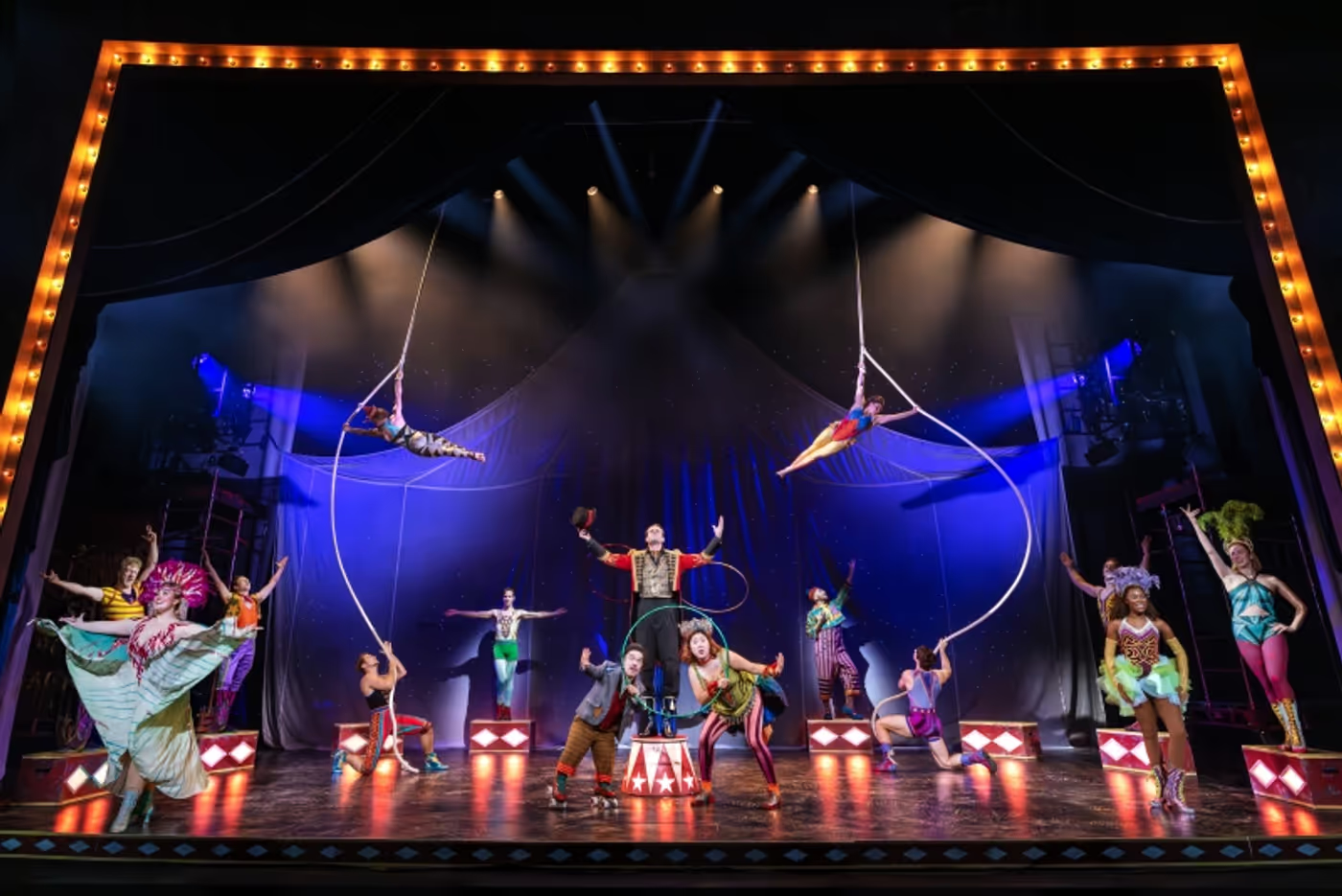
The show opens in the early 1980s, where an older Jacob Jankowski (Robert Tully) visits a circus making a temporary stop in town. He regales the circus workers Charlie and June (Connor Sullivan, Helen Krushinski) with tales of when he worked in the industry back in 1931. As he begins to tell the workers about his youth, we flashback to young Jacob (Zachary Keller) thrust into the circus world shortly after he lost everything: his parents, home, and future all taken away by an unexpected car accident. Rather than face his new prospects alone, Jacob impulsively jumps aboard a passing circus train. There he encounters the ragtag community of the Benzini Bros. Most Spectacular Show on Earth: each train car carrying a microcosm of circus life, of outcasts that found a family in this new community, of rejects and off-beats who found acceptance and rhythm among like-minded cast-offs and dreamers.
As Jacob takes his first uneasy steps into their world, he also finds himself falling, unexpectedly, in love with Marlena (Helen Krushinski, again): star performer and wife to circus ringmaster August (Connor Sullivan, again). Jacob’s past as a veterinary student earns him a provisionary role as Circus Doctor, taking care of all the animals in the troupe. It does come with the difficult decision to put down Silver Star, Marlena’s show horse suffering from a bad leg.
This ultimately leads to August purchasing an old show elephant, Rosie, from another circus. The elderly female elephant is well past her prime, but August tasks Marlena and Jacob to devise an act around her. Three weeks later, this act is barely successful, until a chance usage of some Polish commands from Jacob makes the circus troupe realize – and I can’t believe I’m writing this – that Rosie understands the Polish language. It makes training her in tricks much easier, allowing the Benzini Bros. Most Spectacular Show on Earth to finally have a grand spectacle with Rosie as its newest star.
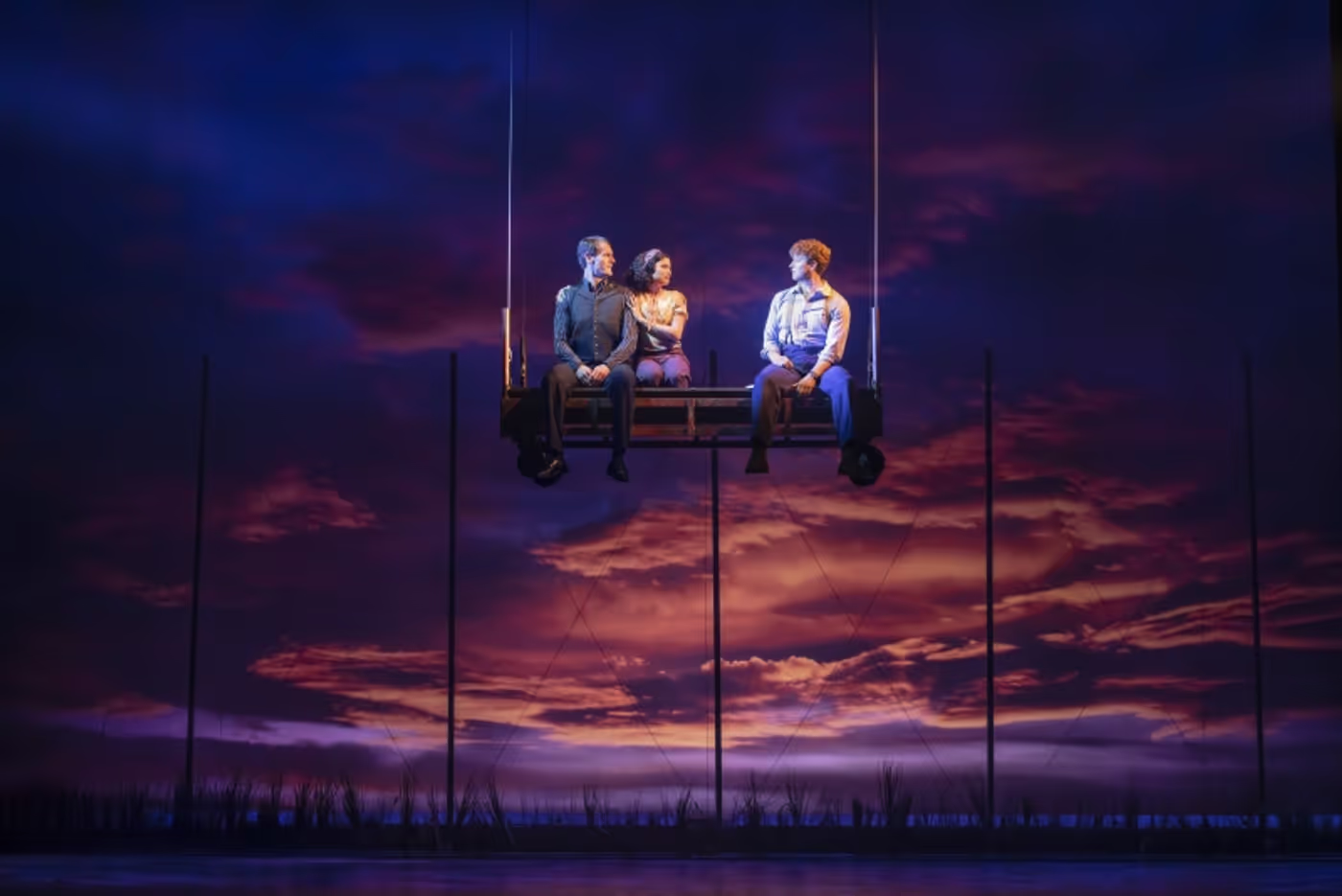
What makes this touring production of Water for Elephants particularly impressive is how it adapts the original Broadway staging to the realities of a show that must quite literally travel. Jessica Stone directed the Broadway run, but on tour, Ryan Emmons takes the helm. His direction demonstrates an acute awareness of how space shapes storytelling. Touring venues vary wildly in size and technical capacity, yet this production never feels compromised or scaled-down. Instead, the stage fluidly shifts between the dusty Nowheresvilles of Depression-era America and the vibrant, improvisational world of a circus on the move. The acrobatics and choreography remain dynamic yet controlled, unfolding with a confidence that suggests the space was built for them, not merely adjusted to them. The arena-like staging creates intimacy without claustrophobia, spectacle without emptiness; every act, climb, and tumble feels purposeful. The result is a production that understands the circus not as a fixed location, but as a world constantly being assembled and disassembled, yet always feeling, if only briefly, like home.
Likewise, the lighting design remains one of the production’s greatest narrative assets. This isn’t merely a matter of bright for day and dim for night, or color filters pasted over emotional cues. The lighting here actively shapes the story, sculpting the stage into a living, breathing space. Shadows are used not as incidental byproducts but as extensions of the circus’s atmosphere. They function both as enchanting playfulness and unsettling or foreboding danger. Our first introduction to Rosie is not as a puppet or performer, but as a shadow cast across a scrim: a presence we feel before we see, her mythos arriving before her body. Throughout the production, half-lit scenes and fractured silhouettes communicate the duality of circus life: the shimmer of spectacle layered over a world of scarcity, violence, and compromise. The shadow-play becomes a visual metaphor for illusion itself: what we want to believe versus what is actually happening just offstage, just out of sight. The Broadway production earned its Tony nomination for Best Lighting Design (it lost to The Outsiders), and it is clear from this touring staging that that artistry has not only been preserved, but allowed to deepen. Here, light and darkness perform their own choreography, just as vital as the human bodies in motion beneath them.
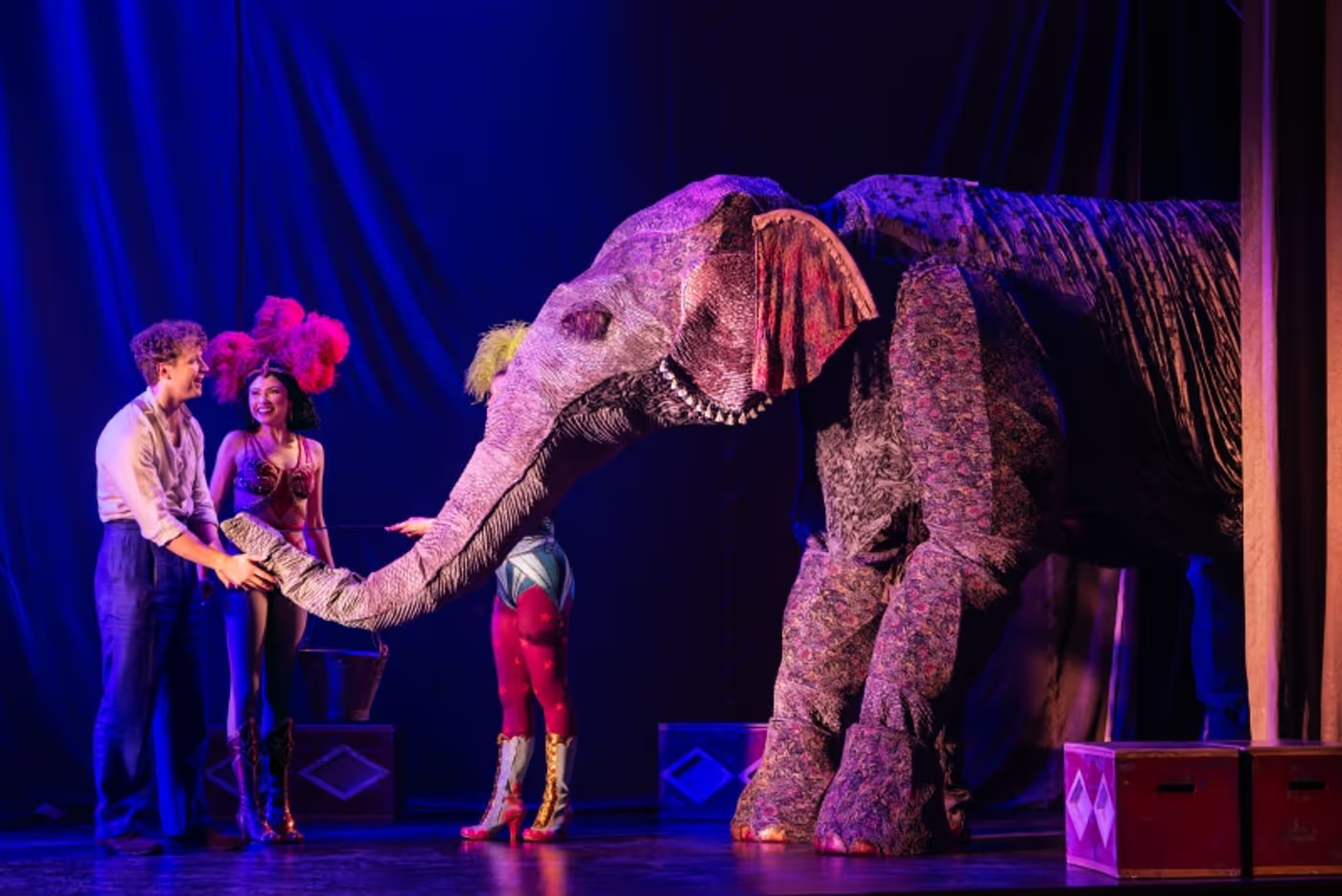
This thoughtful visual world is sustained and enriched by the ensemble and puppetry performers, who form the show’s beating heart. The company is a blend of theatre-trained actors (Chris Carsten, Ella Heustis, ZaKeyia Lacey, Andrew Meier, John Neurohr, Bradley Parrish, Carol Robinett, Summer Severin, and Yemie Woo), and circus artists (Fran Álvarez Jara, Yves Artiéres, Adam Fullick, Sam Kellar-Long, Nancy Luna, Maria Mendoza, and Serafina Walker), each contributing a distinct physical vocabulary that allows the stage to feel truly inhabited. You can immediately tell who among them are the acrobats, the dancers, the handlers, the barkers, the roustabouts: each role embodied through posture, gait, and rhythm rather than exposition. Nowhere is this collaborative physicality more striking than in the portrayal of Rosie. Five performers bring her to life (Ella Heustis, Bradley Parrish, John Neurohr, Carl Robinett, and Grant Huneycutt), often in fragments throughout the first act: a gentle trunk curling into view, the suggestion of a leg stepping forward, a pair of ears shifting like sails in the breeze. Rosie begins as implication rather than form; she is a presence the audience believes in before ever seeing whole. It is only when Jacob realizes she understands Polish, when communication finally becomes connection, that Rosie is revealed fully. It’s a theatrical gesture that says more about empathy and shared understanding than any lyric in the score. And the ensemble sells every moment of it; their work grounds the circus as both spectacle and community, both dream and labor.
Zachary Keller anchors the production as the younger Jacob, with Robert Tully portraying Jacob in his older years, and together they form one of the most effective dual-portrayals I’ve seen in recent musical theatre. Keller’s voice is easily the strongest in the cast: clear, resonant, and emotionally grounded. He carries songs like “Silver Stars” to heights the writing itself doesn’t reach. But what makes their shared characterization so compelling is how seamlessly Keller and Tully hand the narrative back and forth mid-scene. A line may begin in Keller’s voice and finish in Tully’s, letting memory fold over reality in a way that feels fluid and intentional. Tully, especially, understands how to play to the audience: he often inserts wry commentary on his younger self’s impulses and decisions, offering just the right amount of humor without undercutting the sincerity of the moment. It’s a dynamic that feels theatrical in the best sense as it allows the mere act of storytelling to function as a dialogue itself between past and present.
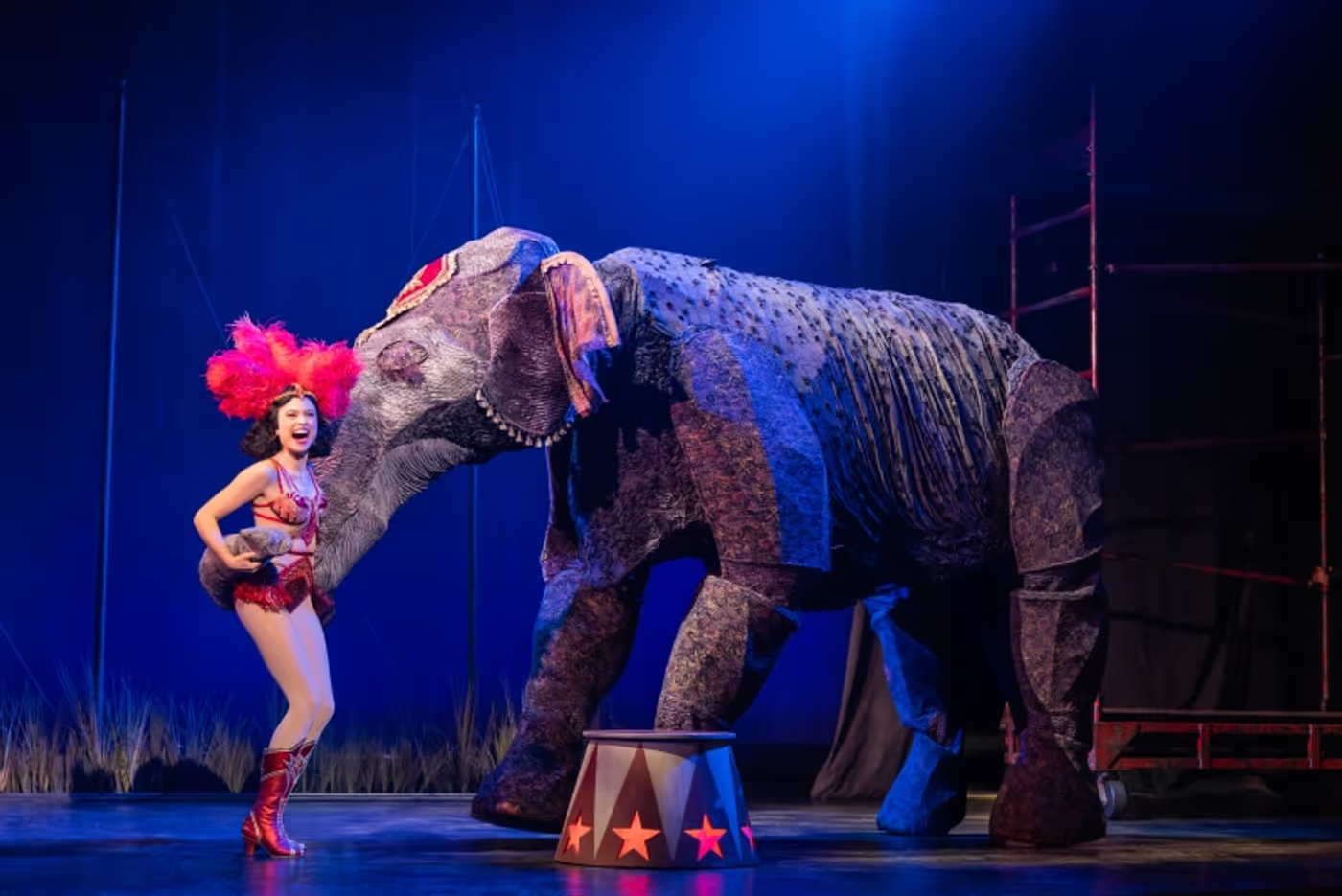
Helen Krushinski’s performance as both Marlena and the modern-day June deserves equal recognition for her range and nuance. Marlena is played with palpable intuition, her gentleness toward the animals and her quiet yearning for something better shaping the character’s entire presence onstage. Her voice matches that emotional palette: sweet, controlled, and sincere. “Easy,” for all its lyrical simplicity (or perhaps because of it – the word is repeated and elongated so often it’s the only line I know), becomes something softly luminous in her hands. Meanwhile, her portrayal of June in the present-day framing scenes is deliberately lighter, gentler, and notably less burdened. June feels like someone who is simply listening, taking in Jacob’s history with curiosity rather than nostalgia. By contrast, Marlena lives in Jacob’s memory as vivid and immediate, full of feeling and consequence. Older Jacob romanticizes his memory of her, so Krushinski ensures the audience never confuses the two characters she plays: June is real and present, but Marlena is remembered. And in the world of theatre, it’s the memory that will always burn brighter than mere presence.
And then, of course, there is August. From the moment he steps onstage, he is less the tortured ringmaster of the novel and more a tyrant presiding over his fragile kingdom: August roots his authority over the circus troupe through fear rather than respect. The musical adaptation folds the novel’s “Uncle Al” character into August, which means Al’s ruthlessness has overtaken August’s bipolar personality, making him the show’s clear antagonist rather than a tragic figure unraveling from the inside. Connor Sullivan leans into that choice with conviction. He plays August with a kind of brittle, theatrical charm: when the coat and top hat come on, he becomes the embodiment of the glittering spectacle the circus sells to the public. August as ringmaster is grand, magnetic, and impossible to look away from. But the moment the performance ends, the mask drops, as his cruelty sits cold and sharp beneath the surface. Sullivan understands that the audience must hate August, but they also must understand how others once could have admired him. It’s a delicate balance, as Sullivan must make his villain compelling without making him sympathetic, and he walks that line with masterful precision.
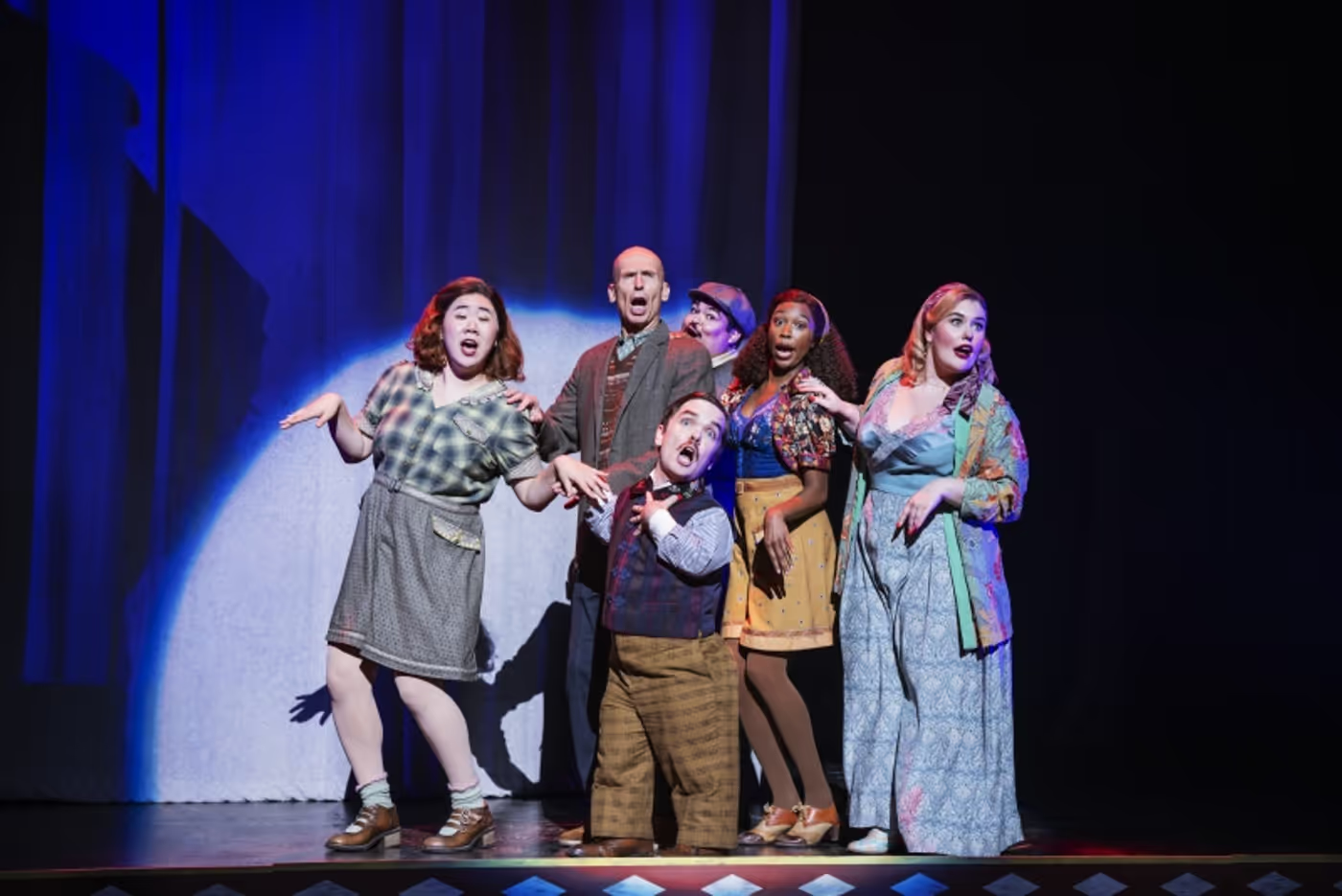
The rest of the circus troupe rounds out the world with equal attention to humanity and texture. Camel, Wade, Walter, and Barbara may not dominate the narrative the way Jacob, Marlena, and August do, but their presence is vital in making the circus feel like a lived-in community rather than just a backdrop. Camel, played with steady warmth by Javier Garcia, gradually introduces Jacob to the rhythms and realities of circus life, providing guidance and a subtle sense of belonging. Wade, portrayed by Grant Huneycutt, is immediately less lovable: he is an enforcer tasked with delivering August’s cruel commands. Even in that antagonistic role, Huneycutt gives depth to the pressures and hierarchies that govern this traveling world. Tyler West as Walter and Ruby Gibbs as Barbara contribute nuance and charm, West’s Walter opens Act 2 with a humorous bit opposite Sullivan’s August, that helps undercut August’s own authority. While Gibbs’ role as Barbara is fairly tame compared to the novel (she’s openly known to be a prostitute in the novel, it’s barely suggested here), she also takes on a matronly role among the circus performers, helping to round out a troupe that often seems like a surrogate family: imperfect, occasionally fractious, but ultimately loyal to one another in ways Jacob so desperately needs. Through them, the production underscores one of the story’s central truths: family is not just what you’re born into, but who chooses to walk with you under the big top.
Imperfect and occasionally fractious can also be used to describe the songs in this “musical.” Structurally, many of them work from strictly technical aspects. They have strong beats, good orchestrations, and an immediately identifiable folksiness that’s pleasing to listen to. Several songs feature genuinely exciting musical interludes, particularly “The Road Don’t Make You Young” and “Go Home.” But the lyrics rarely rise to the level of the performances or staging. Lines in “I Choose the Ride,” for instance, feel like first-draft exposition set to melody, existing solely to convey plot rather than emotion. All the songs are by Pigpen Theatre Co., a group better known as an indie folk band with five previous musicals under their belt. While their style is enjoyable – I’d liken it as something between Mumford and Sons and Woody Guthrie, with a pit-stop in the musical Hadestown – the words themselves don’t carry the cleverness, memorability, or singability of their influences. As I’ve reiterated time and again: Water for Elephants is, without question, a wonderful stage production, but it is not a great musical. I am not without hope, though. If this score were given more time to be workshopped and refined, it might eventually reach that level. For now, the show’s triumphs lie in everything but its lyrics.
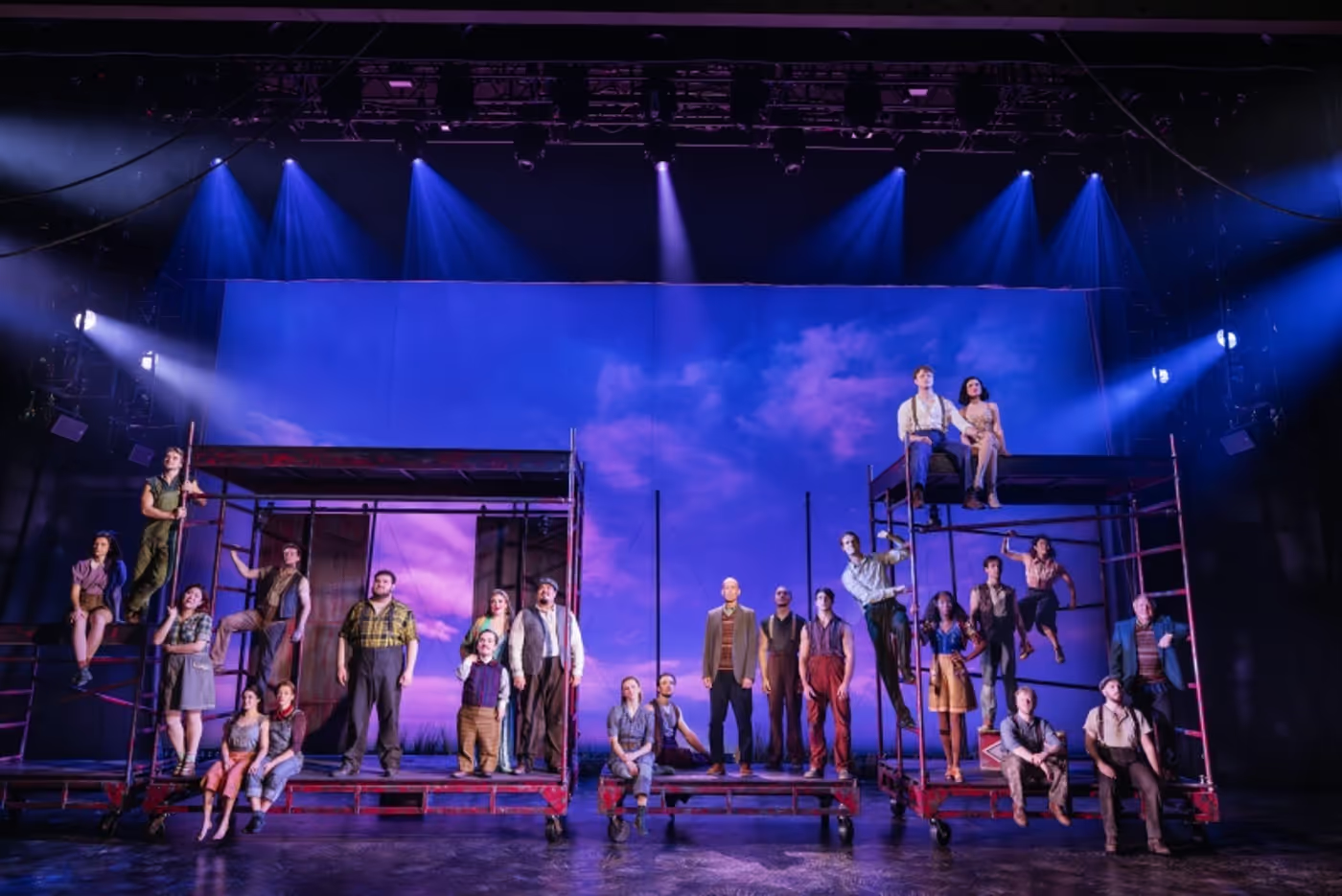
In the end, Water for Elephants succeeds as an example of theatrical stagecraft, even if it falls short of being a truly great musical. The direction, lighting, choreography, ensemble, and lead performances all demonstrate an artistry that is impossible to overlook, turning the stage into a world that feels both vibrant and lived-in. The songs, unfortunately, do not achieve the same level: they are forgettable, their lyrics rarely memorable, and the melodies only occasionally linger. I can recall the recurring drumbeat from “Go Home” far more easily than I can recall any line of lyric. But that does not diminish the joy, wonder, and emotional resonance the production achieves. For anyone who appreciates finely tuned ensemble work, inventive staging, and performances that elevate material beyond its written limitations, this is a show worth seeing. Just don’t come expecting to leave humming a tune. Rather, like any great circus, come to marvel at the spectacle and the performers who bring it all to life.
WATER FOR ELEPHANTS plays November 4 through 9, at Dr. Phillips Center for the Performing Arts. Tickets can be acquired online or at the box office, pending availability. Photography provided by Matthew Murphy. Used with permission.


Reader Reviews
Videos