

Review: RENT at White Theatre At The J
Jonathon Larsen's Defiant Anthem for Youth and Survival
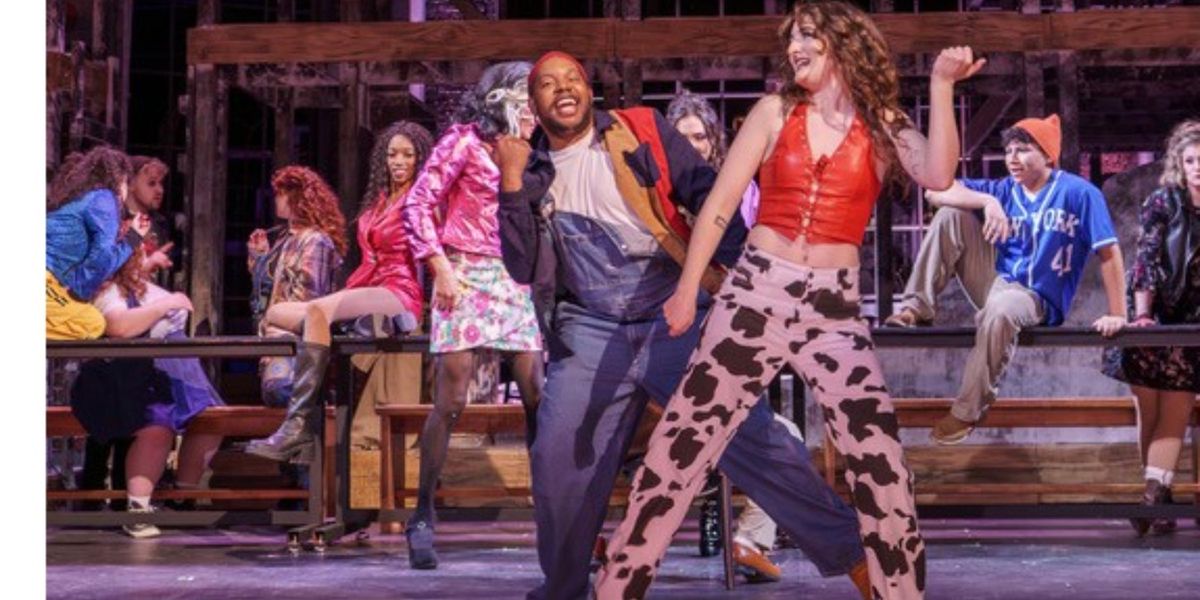
A new production of Jonathan Larson’s 1996 Pulitzer Prize Winner "RENT," itself a re-interpretation of Puccini’s “La Boheme,” arrives like a time capsule that refuses to stay shut as a first ever co-production of the White Theatre (inside the Jewish Community Center) and Kansas City’s venerable Melting Pot Theatre.
Picture a time, not so long ago, when a diagnosis of HIV was a sentence of death. We find ourselves on eastside tip of Manhattan island – in a cold-water walkup building – inhabited by a Bohemian mix of artists, musicians, dancers, and filmmakers. In short, it is a slum.
Set amid Bohemian grit at the height of the AIDS crisis, "RENT," The rock musical, still asks its central question with undimmed urgency: “How do we measure a life? RENT is a true rock-opera; mainly sung through in the tradition of Grand Opera.
The symphony has been replaced by a rock band. Many of the lyrical sections are substituted with “recitatives” in “rock n roll” style. The excellent ensemble resembles nothing more than a concert “mosh pit” carefully choreographed by someone from a dance school inspired by “Bob Fosse.” There are, nor can be, any weak voices in the ensemble.
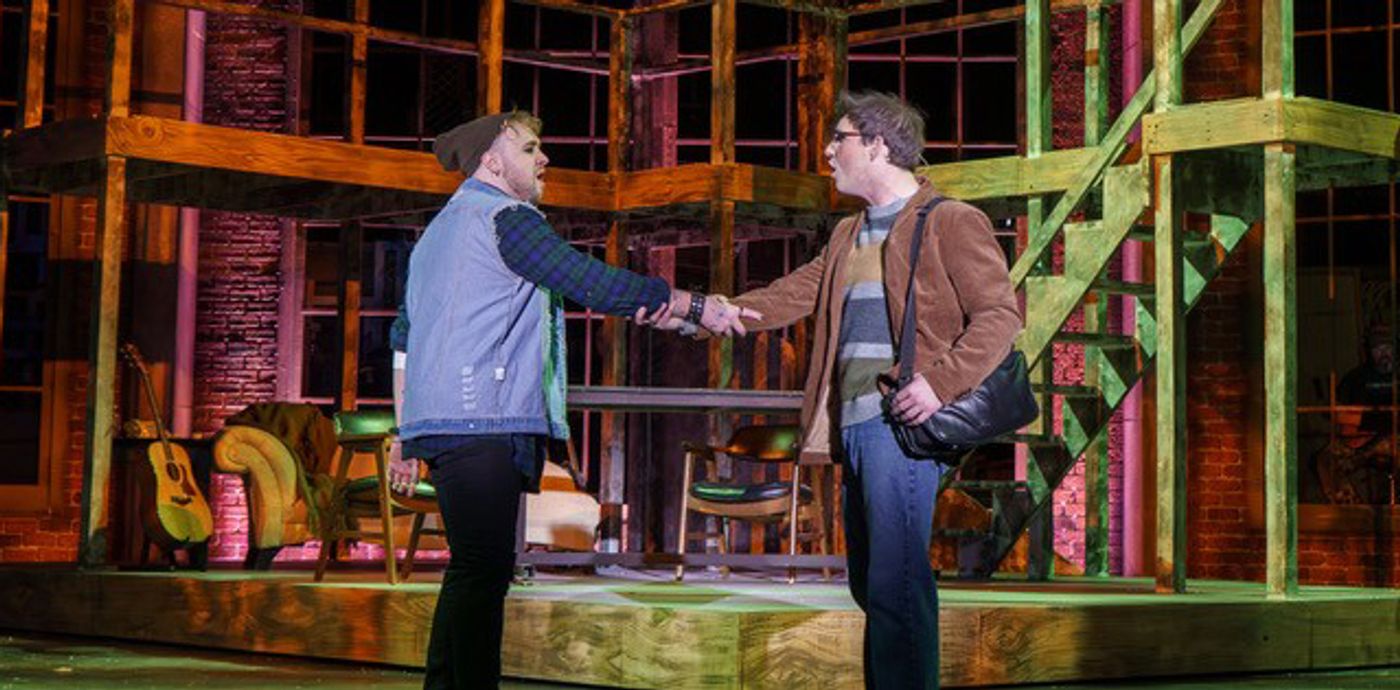
The story follows a group of young artists and outsiders navigating love, addiction, poverty, and illness, all while staring down the relentless pressure of time.
The characters are broad but emotionally accessible: the idealist filmmaker, the conflicted musician, the performance artist battling addiction, the lawyer-turned-rebel finding her voice. "RENT’S" generosity lies in its refusal to judge them harshly; instead, it invites the audience to sit inside their flaws and aspirations alike.
Jonathan Larson’s "RENT" remains a bracing shot of theatrical electricity—raw, melodic, and stubbornly idealistic. The setting is richly detailed giving us no doubt where we are. Hugh, multi-storied carousels turn to divide scenes. This shares the impression that significant resources have been expended in service to this production and these audiences.
Roll back the calendar a century and this very building might have been home to eastern European Jews lucky enough to have passed inspection on Ellis Island. Roll forward a couple of decades and this very land becomes occupied by some of the financial titans who still dominate it.
The time is the late 1990s. These particular strugglers and yearners have created a “self-chosen family” to take the place of “blood families” who are not certain this life is the future they raised their children to live. This family lives for the purpose of making “art.”

Premiering on Broadway in 1996 at the dawn of a new millennium, "RENT“ the rock musical” captures the anxieties and aspirations of a generation living under the shadow of AIDS, gentrification, and economic precarity. Nearly three decades later, "RENT" remains an emotionally potent work—messy, passionate, and sincere—still capable of shaking audiences with its insistence that art and love are acts of resistance.
Set over the course of a year in New York City’s East Village, "RENT" follows a loose collective of artists and outsiders struggling to survive on the margins.
Mark (Bryson Kendal) is an aspiring filmmaker documenting his friends’ lives. Roger (Austin Skibbie) is an HIV-positive musician paralyzed by grief and creative fear. Mimi (Hannah Guzman) plays the vivacious dancer battling addiction and illness. Maureen (M.K. Griffin) becomes a flamboyant performance artist. Collins (Robert Vardiman) is the building’s resident, philosopher-activist. Joanne (Brietta Goodman) is a pragmatic attorney just starting out in life. Finally, Angel (Micah Beauvair) plays the show’s radiant moral center. Together, they form their chosen family bound less by stability than by shared vulnerability.
"RENT" is directed by Zane Champie with musical direction by Barbara Jurgenmeiier.
Larson’s score remains the show’s driving force. Fusing rock, pop, gospel, and musical theatre traditions, the music propels the narrative with urgency and emotional immediacy. Songs erupt rather than politely arrive. “RENT” and “Tune Up” launch the evening with a breathless sense of barely controlled chaos, while “One Song Glory” distills Roger’s fear of dying without having mattered.
The act-one closer, “La Vie Bohème,” still lands as a joyful, anarchic explosion—equal parts celebration and protest, naming artists, philosophers, and outsiders with giddy abandon. Yet it is “Seasons of Love,” now almost hymn-like in its familiarity, that crystallizes Larson’s thesis. When stripped of spectacle, the song remains devastatingly simple: life is measured not in productivity or profit, but in love.
Heard today, it resonates less as a pop-cultural artifact and more as a collective act of remembrance—especially poignant given Larson’s own sudden death on the eve of the show’s Off-Broadway premiere.
Dramatically, "RENT" is less tidy than it is heartfelt. The book can feel episodic, its conflicts occasionally resolving too quickly, its character arcs unevenly developed. Some relationships—particularly Roger and Mimi’s—veer into melodrama, while the show’s romanticization of poverty and bohemian struggle has been rightly questioned in an era where housing insecurity feels even more unforgiving.
And yet, the emotional truth beneath those choices remains compelling. Rent is not realism; it is a rock opera fueled by urgency, anger, humor, and hope.
Perhaps the musical’s greatest strength lies in its compassion. Larson writes his characters with generosity, allowing them to be selfish, frightened, reckless, and brave—often all at once.
Angel’s presence, marked by warmth, wit, and radical empathy, continues to serve as the show’s emotional anchor. Their loss midway through the story still lands with quiet devastation, shifting the musical from exuberant rebellion to sober reflection without losing its heartbeat.
Visually and structurally, "RENT" mirrors the lives it portrays; unfinished, scrappy, bursting at the seams. It does not always polish its edges, but that rawness feels intentional. The show insists that imperfection is not failure—that survival itself can be a triumph.
"RENT" endures because it speaks directly, and without irony, about community in the face of indifference. It asks audiences not merely to observe its characters, but to bear witness to them. In a cultural moment still grappling with healthcare inequities, displacement, and the value of creative labor, Larson’s musical remains painfully relevant.
"RENT" may belong to the 1990s, but its heartbeat is timeless. It continues to sing—loudly, imperfectly, and with conviction—about the urgency of living fully, loving fiercely, and choosing connection over despair. And that, measured in love, is no small legacy.
"RENT" will continue at The White Theatre through February 22. Talk-backs will be held after performances on February 15 and 19. Tickets are available online and by telephone at 913-327-8054.
Sadly, Jonathon Larson did not survive to enjoy the fruits of his success. Prior to the Broadway opening, he suffered an aortic dissection caused by a malformation that he had been living with his entire life.
Reader Reviews
Videos

|
OKLAHOMA Theatre in the Park (6/05-6/13) |

|
The Addams Family Theatre Lawrence (6/05-6/21) |

|
Rainbow Kitten Surprise at Starlight Theatre Starlight Theatre (7/27-7/27) |

|
Like Six O'Clock Just Off Broadway Theatre (6/11-6/26) |
|
Once Upon a One More Time Music Theatre Kansas City (6/12-6/14) |

|
SIX (Boleyn Tour) Kansas City Music Hall (1/26-1/31) |

|
Louis Tomlinson Cable Dahmer Arena (7/02-7/02) |

|
Wicked Kansas City Music Hall (8/12-8/30) |

|
Twelfth Night Olathe Civic Theatre Assn (OCTA) (5/29-6/14) |

|
2026 Show-Me Jazz Festival Clara Eitmann Hermann Amphitheater (6/13-6/13) |
| VIEW ALL SHOWS ADD A SHOW | |