What Is Absurdist Theatre? Inside the Movement that Changed Modern Drama
How Waiting for Godot redefined the modern stage.
 Click for Tickets
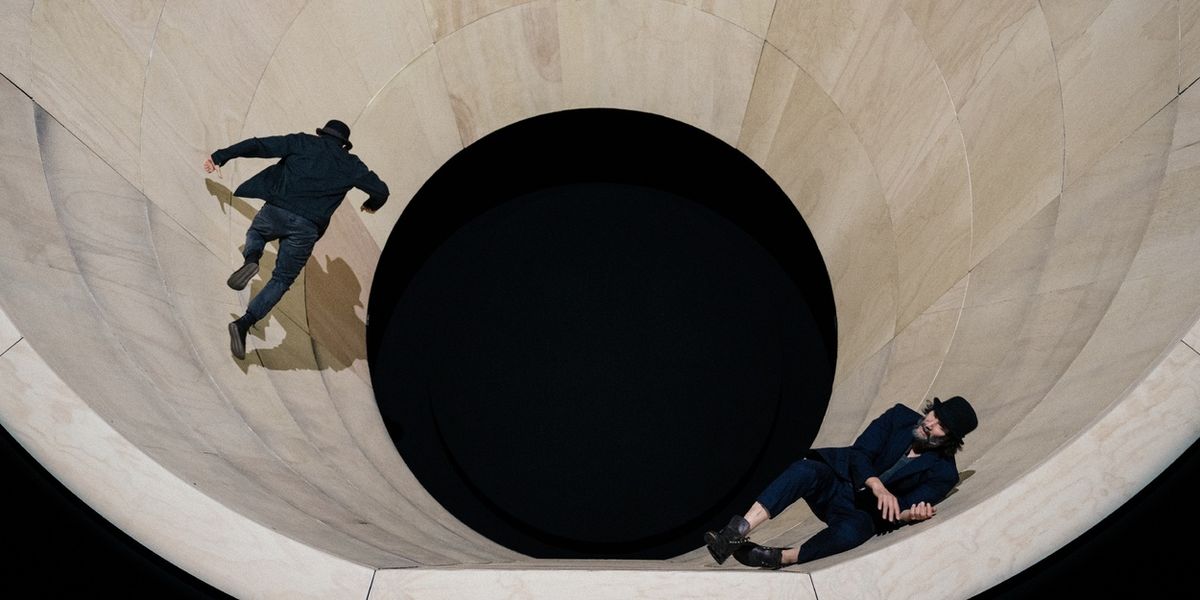
This fall, Samuel Beckett’s Waiting for Godot is once again drawing audiences to Broadway, with its enigmatic blend of humor, hopelessness, and haunting stillness. It’s a timely reminder of how profoundly absurdist theatre reshaped the Modern Stage—inviting audiences to laugh at the meaningless, search for significance in repetition, and confront the unsettling question at the heart of human existence: Why are we here at all?
Read the reviews for Waiting for Godot and learn more about the play.
What Is Absurdist Theatre?
Absurdist theatre refers to a movement in mid-20th-century drama that explores the meaninglessness of human existence in a chaotic, indifferent universe. It rejects traditional plot, logical dialogue, and conventional character development, replacing them with disjointed conversations, circular structures, and surreal situations.
Instead of offering resolution or moral clarity, absurdist plays reflect the confusion, isolation, and absurdity of modern life—often through dark humor, repetition, and silence. Audiences are left to find meaning (or accept its absence) in what unfolds before them.
Origins: Postwar Europe and the Search for Meaning
The roots of absurdist theatre lie in the ashes of World War II. The devastation of the war, the rise of existential philosophy (especially the writings of Albert Camus and Jean-Paul Sartre), and the collapse of traditional belief systems left artists questioning whether reason and order still had any place in human life.
French critic Martin Esslin coined the term “Theatre of the Absurd” in his 1961 essay collection of the same name. He grouped together playwrights who, though stylistically distinct, shared a rejection of rational storytelling and a fascination with the absurd condition of humanity.
Major Playwrights and Influential Works
While Beckett’s Waiting for Godot (1953) is the most iconic example of absurdist theatre, it stands among a remarkable company of works and writers who helped define the genre:
-
Eugène Ionesco – Known for The Bald Soprano (1950) and Rhinocéros (1959), Ionesco satirized the banality and conformity of modern life.
-
Jean Genet – His plays like The Maids (1947) explored identity, role-playing, and rebellion in stylized, ritualistic form.
-
Harold Pinter – Though more naturalistic, works like The Birthday Party (1957) and The Dumb Waiter (1959) employed ambiguity, menace, and silence to evoke absurd tension.
-
Tom Stoppard – Later playwrights, including Stoppard with Rosencrantz and Guildenstern Are Dead (1966), carried absurdism into new contexts, blending wit, parody, and existential reflection.
Defining Characteristics and Techniques
Absurdist plays typically abandon traditional theatrical rules in favor of experimentation. Common features include:
-
Circular or static plots – Events repeat or go nowhere, emphasizing futility.
-
Disjointed or illogical dialogue – Speech patterns mimic the failure of communication.
-
Minimal or symbolic settings – Bare stages evoke universality and emptiness.
-
Existential themes – Alienation, death, and the search for meaning dominate.
-
Comedy and tragedy intertwined – Laughter often arises from despair or confusion.
The goal isn’t to confuse audiences but to mirror the confusion of existence itself—an emotional and intellectual experience rather than a straightforward story.
The Enduring Legacy of the Absurd
Though its heyday was in the 1950s and 60s, absurdist theatre continues to influence playwrights and directors today. Works by Sarah Kane, Caryl Churchill, and Will Eno carry its DNA, exploring isolation, absurdity, and the limits of language in the 21st century.
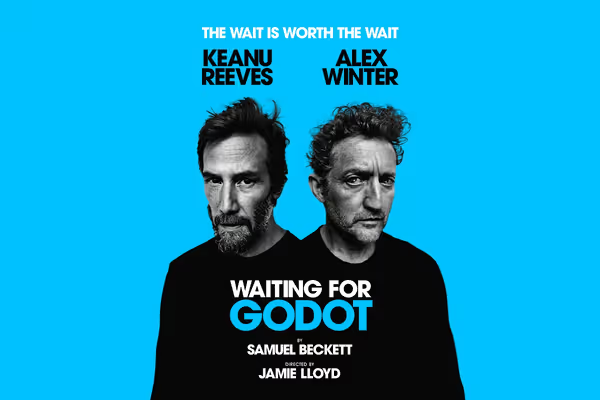
And with the latest Broadway revival of Waiting for Godot—starring Keanu Reeves and Alex Winter—audiences are reminded that the absurd never really goes out of style. In a world still searching for meaning amid chaos, Beckett’s tramps waiting by the side of the road feel as current as ever.
|
Powered by

|