Bobby Darin 101: A Broadway Fan’s Guide to the Man Behind JUST IN TIME
JUST IN TIME is running now at Broadway's Circle in the Square.


|
|

With his sharp style, swoony singing voice, and relentless ambition, the great Bobby Darin blurred the line between pop sensation and theatrical showman. This season, his life is taking center stage in Just in Time, a new Broadway musical starring Tony Award-winner Jonathan Groff.
Groff, a Broadway darling best known for roles in Spring Awakening, Hamilton, and Merrily We Roll Along, has spent the past seven years developing the show, drawn to Darin’s relentless need to reinvent himself and be seen. The result is not a standard jukebox biography, but a portrait of performance as identity, and what happens when the curtain never really comes down.
As Just in Time brings Bobby Darin's story to Broadway, theatre fans might find themselves curious about the man behind the music. Get to know more about this showbiz icon and his ties to Broadway here:

Who is Bobby Darin?
Bobby Darin was a singer, songwriter, and actor who became a major star in the late 1950s and ’60s. Known for his incredible versatility, Darin moved seamlessly between genres and mediums, earning acclaim for his singing, performing, and acting chops. His most famous songs include his breakout single “Splish Splash,” “Dream Lover”, “Mack the Knife” and “Beyond the Sea”.
Bobby Darin Dreamed BIG
He once said: "My goal is to be a legend by the time I'm 25." Thought best known as a singer, Bobby always had serious aspirations beyond music. He saw himself as an all-around entertainer and his ultimate goal was to acheive the status of showbiz icon. The multi-hyphenate Darin idolized greats like Frank Sinatra and Sammy Davis Jr., singers who could move fluidly between live concerts and dramatic settings.
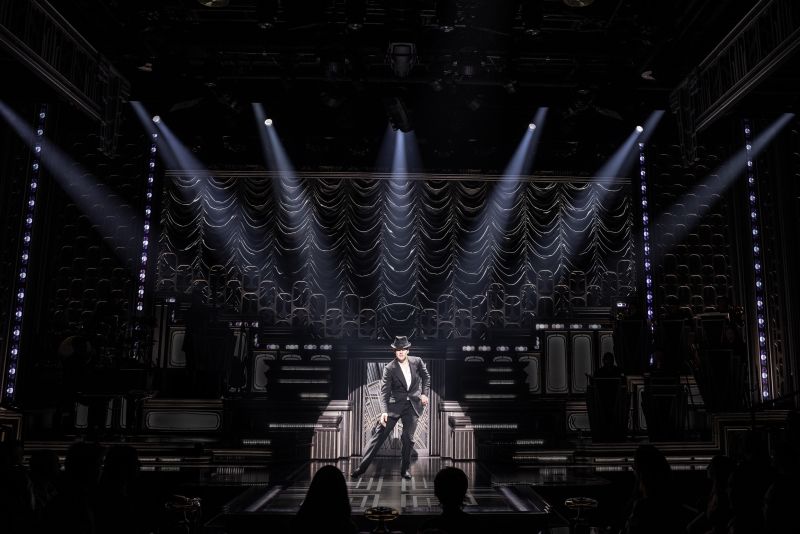
Just in Time reflects Bobby Darin’s deep admiration for classic showmen by fully embracing the performance styles he idolized. Staged in the round at Circle in the Square, the production transforms the theatre into a nightclub, echoing the Sands or Copacabana, and features a live onstage big band and a glitzy production charting Bobby's many reinventions.
He Was Incredibly Theatrical by Nature
Even though he wasn’t primarily a Broadway star, Darin had a natural theatrical flair. His live performances were infused with dramatic storytelling, comic timing, and stagecraft. He could move effortlessly between genres—swing, folk, rock, even protest songs—with a character actor’s sensibility. Later in his career, Darin developed a kind of persona-based act, where he leaned into different versions of himself—crooner, folk singer, actor, political activist. It almost felt like he was playing different roles in the same show, constantly shape-shifting.
He Almost Did Broadway
There were talks in the early ’60s of Darin starring in a Broadway musical, and he was actively seeking out film and stage roles to pivot away from pop. But his heart problems and health scares derailed a lot of these longer-term commitments. Darin had rheumatic fever as a child, and he lived with the knowledge that he likely wouldn’t live a long life. Like his Broadway neighbor, Alexander Hamilton, this instilled in Bobby an urgent ambition that fueled his short but illustrious career.
He was nominated for an Academy Award
In 1963, Darin starred in and earned an Academy Award nomination for Best Supporting actor for his role in the film, Captain Newman, M.D.. Darin starred alongside Gregory Peck in the film and saw the opprtunity as a stepping stone toward serious stage work, including Broadway.
He Rejected a Role in West Side Story
Bobby Darin was offered the role of Tony in the 1961 film adaptation of West Side Story, but shockingly turned it down. There are differing reports on why—some say he was worried about being typecast, others that he was focusing on his own projects. Richard Beymer eventually went on to fill Tony's shoes to iconic effect, but the musical classic might have looked very different than the one we know today had Bobby Darin taken the part.
His Vegas Shows Were Mini Broadway Shows
When he performed in Vegas—especially at the Sands—he treated it like a stage production. He meticulously planned out lighting, pacing, jokes, emotional arcs—every show had a rise and fall like a theatrical experience. One reviewer said of his performances, "He doesn’t just sing the songs—he inhabits them."
His Personal Life Could Have A Show of its Own
The musical explores Bobby Darin’s romantic life, including his whirlwind marriage to actress Sandra Dee, a love ultimately strained by fame and codependence. The show also touches on Darin’s earlier love for Connie Francis, whom he considered the “one that got away.” Just in Time also delves into Bobby Darin's complex family history, particularly his relationship with his mother. The musical portrays the emotional impact of Darin discovering, at age 32, that the woman he believed to be his sister, Nina Cassotto, was actually his biological mother.

BroadwayWorld Merch
Shirts, mugs, phone cases & more