

Review: BLACK COMEDY, Orange Tree Theatre
Shot in the dark: Caroline Steinbeis makes light work of Peter Shaffer's classic farce
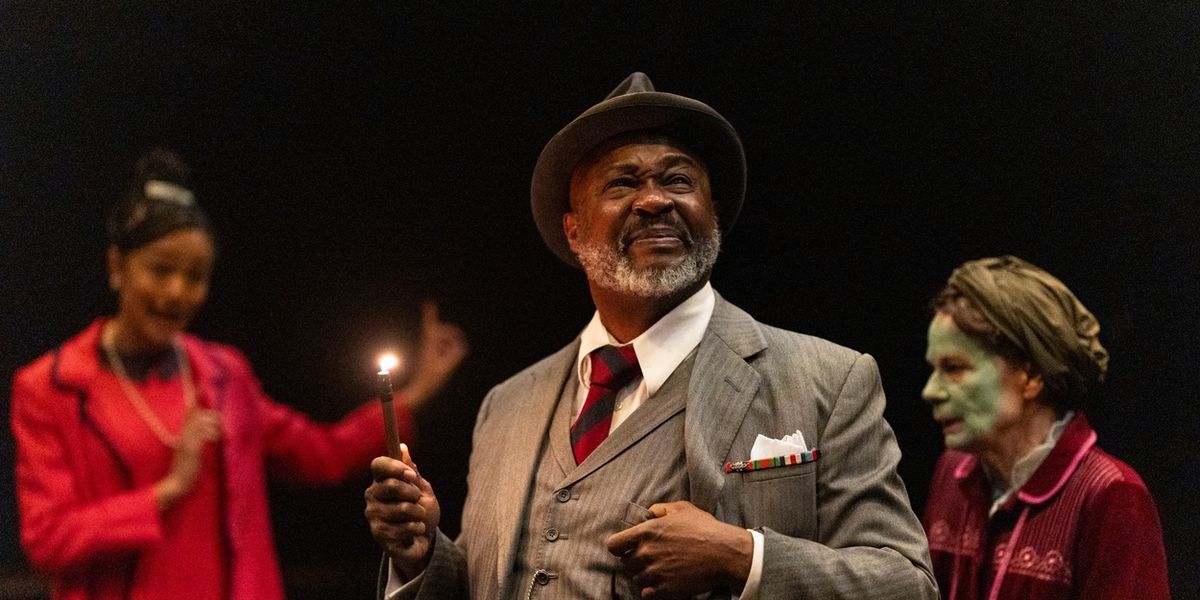
 There is exactly one joke in Peter Shaffer's 1965 farce: when the lights come on, the characters are in the dark. Everything else — the borrowed furniture, the hapless sculptor, the stern colonel, the ex-girlfriend arriving at the worst possible moment — is just escalation. It is either the cleverest piece of theatrical engineering of the twentieth century or an extended thought experiment masquerading as a play. At the Orange Tree, Caroline Steinbeis makes a fairly convincing case for the former.
To watch this clockwork chaos so soon after the recently opened Equus is to marvel at Shaffer’s terrifying versatility; there’s an admirably sharp pivot from a troubled teenager blinding horses in the psychological dark to a room full of upper-middle-class Londoners blinding themselves in a literal one. The tone could not be more different, but the preoccupation with what we choose to see remains.
.jpg?format=auto&width=800)
High farce is not Steinbeis's comfort zone — her credits run more to Chekhov and Sowerby than door-slamming catastrophe — and her Black Comedy takes a little time to spread its wings. The first ten minutes are tentative; you can sense the production feeling its way in the dark (as it were). But once the mechanism clicks in, there is real zeal to the pacing with awkward moments stretched just long enough for the audience to properly wince before the next injection of lunacy arrives.
She leans into the genre's affectations with evident affection, and her approach to the physical comedy is as precise and committed as anything seen in the recent West End revival of Accidental Death of an Anarchist — on which physical comedy consultant John Nicholson, present here in the same capacity, also worked. Despite the whole enterprise being resolutely, cheerfully implausible, Steinbeis keeps us on board for the duration. The occasional slip keeps things human: Colonel Melkett's salute migrates between the British Army (palm out) and the Royal Navy (palm down) at different points in the evening, which perhaps suggests the officer has had a colourful career.
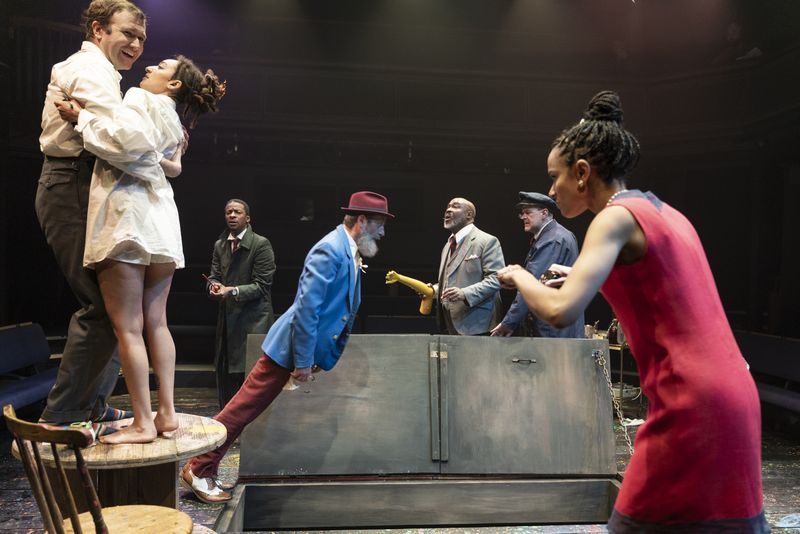
The original 1965 cast featured Derek Jacobi as Brindsley, Maggie Smith as Clea, Albert Finney as Harold Gorringe (a role later taken by Ian McKellen), something that no doubt puts some historical weight onto the current company's shoulders. None of them appear to feel it. Joe Bannister is simply electric as the sculptor simultaneously juggling two lovers, a prospective father-in-law, two eccentric neighbours and a power cut. The role demands high physical dexterity alongside the peculiar challenge of pretending to be completely blind while staring into the faces of audience members a few feet away. Bannister handles both without apparent strain.
Jason Barnett and Julia Hills are the production's secret weapons. Barnett's Colonel Melkett storms around the small stage with the precision of a guided missile and the effect of a bull in a furniture shop. Which, given the furniture shenanigans, is quite appropriate. Hills, as the spinster Miss Furnival, embarks on a supremely enjoyable trajectory: what begins as mild eccentricity ends, via the medium of freely available spirits, in something close to transcendence. They turn supporting roles into something quite special.
%20-%20credit%20Sam%20Taylor.jpg?format=auto&width=800)
The evening's most striking presence, though, is Patricia Allison as Clea. Like fellow Sex Education alumni Ncuti Gatwa (Born With Teeth, The Importance Of Being Earnest) and Tanya Reynolds (A Mirror, 1536), Allison has gyrated towards the stage with considerable aplomb. Having already demonstrated last Christmas an intense physicality in Jess Edwards's queer drama Private View, she brings that same charged, sensual register here as the ex who, even in the blackout, sees Brindsley’s delusions clearly and still wants him back in her bed anyway. It is a quietly different frequency from the clowning around her, and it makes the farce feel more three-dimensional.
Simon Daw's set is full of exquisite period detail, but its structural ingenuity counts for more: the sound-proofed bedroom sits up in the flies, and a trapdoor is exploited to maximum effect in the third act. Elliot Griggs's lighting is doing the heaviest lifting of all with its precise transitions from pitch dark to full house, then dimming again when a match flares; it carries it without a flicker. Rarely has a lighting designer been so central to the drama itself.
%20-%20credit%20Sam%20Taylor).jpg?format=auto&width=800)
Steinbeis wisely declines to pair the evening with Shaffer's White Liars, the customary companion piece: main course rather than a less satisfying appetiser. The play's gender dynamics (especially Brindsley seeking Colonel Melkett's permission before proposing) feel their age, and Shaffer, who was never shy about revising his own work, might well have found some clever way to update them had he not sadly died in 2016. But Black Comedy makes its case as more than a workshop exercise in theatrical mechanics: there's class comedy here, there are layered situations, and, when the final chaos lands, there's the rare pleasure of a machine running exactly as designed.
Black Comedy continues at the Orange Tree Theatre until 11 July
Photo credit: Sam Taylor
Sign up for all the news on the Fall season, discounts & more...







Reader Reviews
To post a comment, you must register and login.