


Review: JOSH MALOY at First Financial Music Hall
Country artist brings his brand of music to El Dorado

Article written by Owen Dodd of Ouachita Baptist University
Josh Meloy took the stage at First Financial Music Hall in El Dorado on June 27, and the night turned out to be exactly what I needed. I’ll admit that I was running a little behind, but I made it just in time for Meloy’s set, which sparked in me a deeper appreciation for the country tradition than I’d ever felt before. Thankfully, I had already spent some time exploring Meloy’s discography in the days leading up to the show. As I listened, I began to uncover layers within the genre that I hadn’t fully considered before: nuanced themes of drug use, romanticism, and a deep sense of longing that runs like a current beneath many of his songs. Before diving into these themes, let’s begin with an introduction to the artist himself: Josh Meloy.
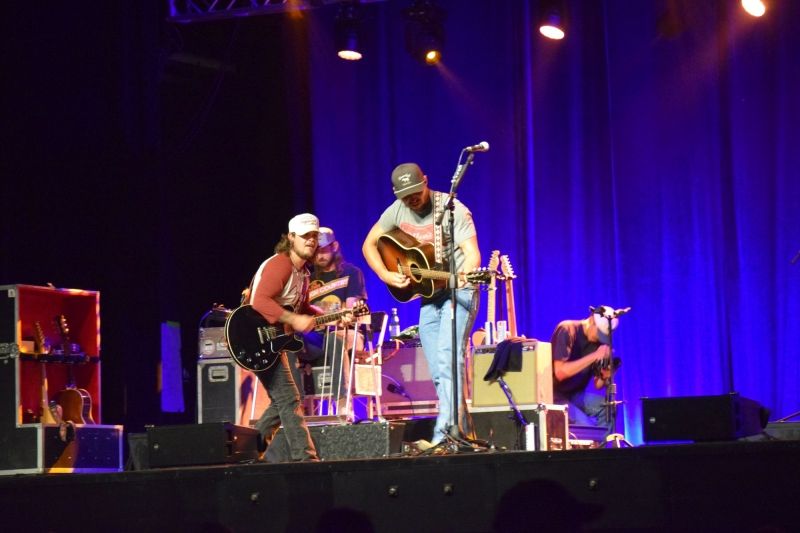
Hailing from Oklahoma, Josh Meloy seems to broadcast to the world a principal trait of authenticity. As of July 3rd, one of Meloy’s most recent Facebook posts was to sell some extra gear that he had laying around, poking fun at a certain “Joe Stamm.” It was to my amusement that, upon looking in the comments of the bidding post, I saw people making offers like “3 doll hairs [dollars] and a slim jim,” or “a pack of smokes and half a sixer of banquets final offer.” Clearly the community he had built was one in which both he and his supporters were comfortable to be silly. His transparency surprised me when I read about his long-term career goals. In an article by Josh Crutchmer, Meloy expresses a realistic understanding of his relationship with music, and his caution of getting wrapped up in being a full-time musician. “‘I’m not one of those guys who lives and breathes music,’’ he says, “‘I like doing other things. I couldn’t be somebody who’s just on the road all the time. And after thinking some, I can see his point. It seems as if he’s less concerned with being a worker, and more with being a father. Later, he tells Rolling Stone that “‘We just bought a new house in Hennessey I’m putting in a driveway, and I’m getting a hoop, and I’m gonna teach [my] girls how to play”’ (Crutchmer). Interacting with the media and public in this way seems to put Meloy in a sort of twilight. So often it seems that musicians access a massive, genuine part of themselves upon prioritizing things other than production. Lauryn Hill said it best: “The only reason that The Miseducation [of Lauryn Hill] was the album it was was because of a myriad of experiences that took place before the production, before the creation” (Real Wilson). Unquestionably, Meloy recognizes the dilemma he shares with Hill, and debatably, responds appropriately. Consider this demonstration of Meloy’s character as a precursor supporting more commentary on his main disposition toward life, discussed below. Before that though, I’d like to talk about the performance.
Josh’s performance was one that took me by surprise. It felt more like a community bonfire rather than a concert, and the distinction was one I was glad to make. So as to support the themes of authenticity discussed above, he was far less concerned with recreating some seamless concert production that you’d find at a massive venue with a more manufactured experience—namely those concerts where thousands of people are present—and more concerned with making sure that he, his band, and his audience were all having a good time. He’d intermittently talk to the crowd about the songs that he was going to play for them, even taking a little time for his bandmate on electric guitar to play one of his originals. I remember distinctly seeing Meloy’s notable biceps as he took a generous swig of his drink, to which the crowd roared in affirmation. I think that the homey atmosphere Josh produced was exactly what the audience expected. It seemed to me as if they had recognized his genuine qualities through and through and rightfully trusted him to deliver. Almost as if, from the time that he started working in the studio, he never settled for something that he deemed uncharacteristic of himself.

I think it would be a good endeavor to consider Meloy’s debut. If we are to look for the authentic quality aforementioned, it is more often found in the spring of a writer’s career, and I believe Meloy’s Washington Street lives up to this expectation. Head on, the short eight track experience instantly establishes its intentions: hearty, romantic lyrics accompanied by the occasional snide remark. Often I remember noting some potential inside jokes for Meloy’s special somebodies who have come and gone. He doesn’t take himself too seriously, but he does make an effort to express some emotions which may be difficult for him to explain in a different medium—more on this later.
Digging a little deeper, the implicit analogy between love and drugs surface quite frequently, and what really solidifies this thematic recurrence in the record is the opening track. He greets us with an almost lackadaisical break up song, bargaining with love and its due process. It seems with lyrics like “sometimes you get burned when you’re in love,” “You moved on, I guess I will too,” and “if I get out I’ll have a story to tell,” Meloy seems to be reminiscing and considering his disposition towards his young love, which often burns bright, hot, and consequentially, all too fast. Far from upset about the situation, Meloy’s vocals listlessly wander through the track vacant of anger, contempt, or even depression, but that’s not a bad thing. His tone is far from lazy, and more distinctly tired. I think this tone lends itself to some of the themes we will find later in the record. When considering the rest of the record, we must remember the way we started, because such a consideration will more easily revel connections implicit in the work. After all, he didn’t make the title track the opener for no reason. It is as if Meloy is telling us, “This is a story about love and the lack thereof.” This is his thesis. We would do well to remember it.

The rest of the record seems to go by in a blur; after the title track, it seems that the record starts to take us through a menagerie of feelings, most of which show us a different experience with love. “Life Without Me” and “Drink You Away” seem to place Meloy in a position of questioning past romantic partners and their actions, frustrated but ultimately disinterested. “Overdose” tells us of how Meloy became a love “addict.” With the lines, “She had to leave this empty town / And sometimes I still think about,” Meloy pays homage to a time when he had someone who made him think that too much of a good thing wasn’t—well, a thing. “Gone Away” and “Waking Up” express a heavier sense of the implications of love. On these tracks, as in some parts of the title track, Meloy struggles with the realization that he lot a unique connection with someone. If “Waking Up” tells of frustration with the inefficiency of escapism, then “Gone Away” precedes it. Not only is he struggling with the absence itself, but also with his own ignorance as to what he had at the time. He says, “She’s the one I should’ve been afraid to lose.” Such a late realization seems to devastate him. The tone is heart-heavy and: there is no sarcasm in his voice as in other tracks on this debut, only regret. “2 Lines,” a track about drugs, seems utterly out of place in comparison to the other cuts on the record, but there well may be a reason for this. On “The Man I Am,” Meloy gives us a sentimental goodbye. He wraps the LP fairly well with references to the most important ideas from the album. He references healing from past relationships. He admits that he’s broken some hearts just the same as his was. In addition, he also recognizes that the only thing that heals such hurt is time. He expresses that, after all the hurt and frustration, after all the things he has questions about that seem to have no answers, he trusts God. This, he says, is what makes him the man he is.
The variety, although fun and interesting, is difficult to organize. Some may call this an accident, a dud, a pothole, but a more abstract understanding of Meloy’s goals with the record may better suit the assessment. When considering album as scattered in mood as Washington Street it deserves to be treated less as a linear story, and more of a study of love as a timeless entity. Meloy did not chronologically order the tracks perhaps because they are all faces of love which come back to him irrespective of time. Indeed, it would be insightful of him to recognize that the essence of love bounds far beyond his own experience. In other words, why would he try to clearly, methodically delineate his emotions in such a way that would hardly resonate as a narrative? Furthermore, it seems that the events which take place in Washington Street place Meloy in situations which would seem too confusing in the context of a plotline. The most striking instances is that of “Life Without Me” and “Gone Away.” On these songs, Meloy relates conveys two starkly differing perspectives of the same situation. “Life Without Me” finds Meloy anticipating the regret of his lover, while “Gone Away” shows him struggling with realizations of loss. The former expresses frustrated victory, all to bittersweet, while the latter shows himself in regret. This begs the question of those who would have rather had a linear experience: where do we place these conflicting experiences? Is Meloy discussing two different perspectives of the same relationship? Is he describing two different occasions in which he experienced both? As ambiguous as Meloy leaves the subject content, means to display less of a situation and more of an experience. You need not know the particulars of the experience to relate.
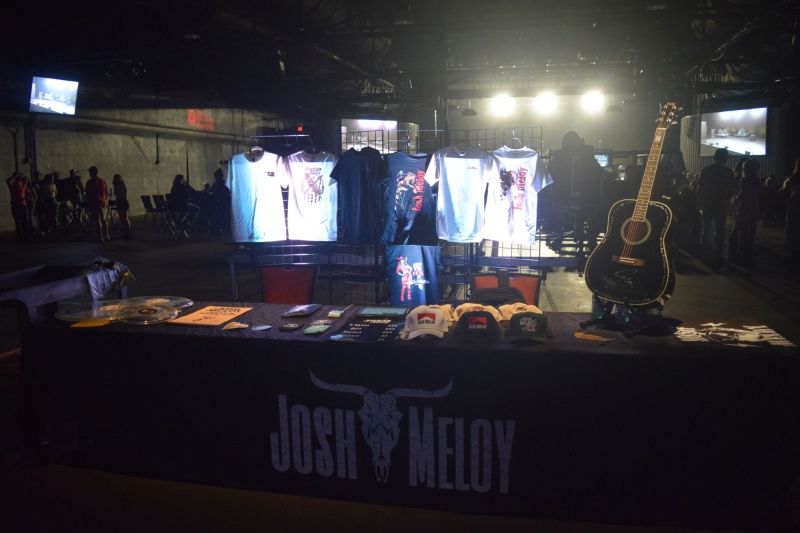
After establishing Washington Street as more of a experiential plane than a linear presentation, the romantic exploration of Meloy’s debut becomes apparent. As discussed earlier, Meloy’s intentions to expressly signify the romance of the album from the very start seems to be telling of his relationship with love. Throughout the record, we constantly see references to drugs that seem to tie into Meloy’s experience with love. The most obvious instances are those of “Overdose,” where Meloy expresses his experience with love in the most romantic way possible—that is, romanticism in the artistic sense, especially in light of self-sacrificial lines like “Riding shotgun, she's my drug and hell I might overdose, might overdose.” Another example is “Waking Up.” While Meloy doesn’t use the direct drug-love metaphor in this track, he does implicitly connect those direct themes. When he says, “I tried lighting up /
But the thought of you leaving has left me so cold,” he is expressing similar feelings. It seems to be that, when he compares the experiences of getting high and being in love, actual drugs don’t stand a chance; love is the ultimate drug, and he is in withdrawal.
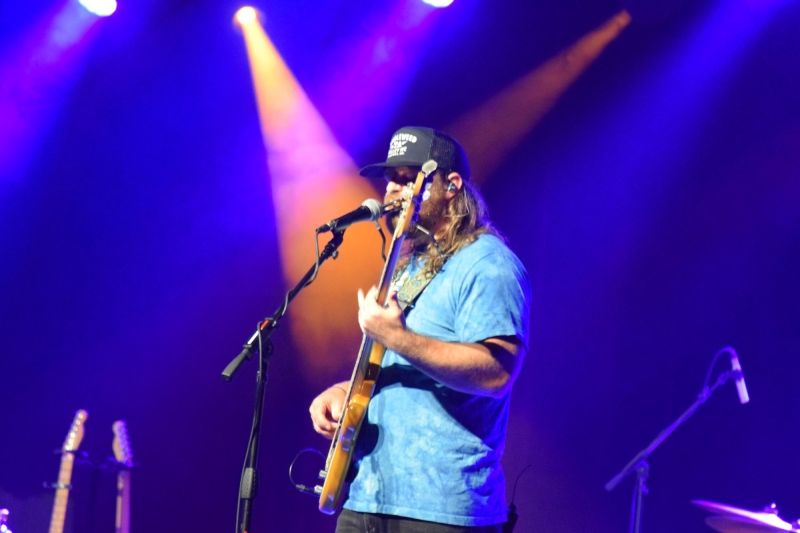
Perhaps on a lighter note, “2 Lines” shows a more lively, playful dictation of drugs, and therefore love. The lyrics focus on the experience of being high, which gives the audience some keen insight. It seems when he says “And you can't walk no straight line when you're on the cocaine,” he wants to tell of that “first-hit-feeling,” the one that leads to another, and another—you get the idea. And interestingly enough, he does give nuance to this connotation of substance abuse in the song in the third verse “You can run far away but it'll always be close behind /
Like a ball and a chain, oh, it stuck with you for life.” That being said, this the tone of the song is dominated by instant gratification. To further our understanding of the record with this black sheep of a track, we can continue the thematic development of “Gone Away” and “Waking Up.” Or rather, we can retrospectively add “2 Lines” to the context. If we interpret this track in the way that we have systematically appraised the others—namely as an analog to love—we instantly see that it can only be viewed as the honeymoon feeling. Despite the third verse, which seems to show the long-term effects of drug abuse, he is infatuated with the immediacy of the situation. Interestingly enough, this is exactly what we would expect from the young lover: blissful stupidity and irreverence of the situation. Meloy seems supremely unbothered by the nature of the things—but metaphorically and ultimately love—he is playing with. Putting this in context with some of the others, we see that “2 Lines” expresses the rush that Meloy seems to prize in “Overdose,” ultimately leading to the frustration seen in “Waking Up.”
It is important to distinguish the line between an intentional narrative and an abstract sequential analysis. In other words, sequencing these tracks while maintaining that the record is not a story is not a contradiction. Although the album is experienced more fully in the order that Meloy put it in, we can still glean insights we wouldn’t have found in assessing some of the songs in a linear fashion, at least for a little bit. Take for example, the work of Faulkner: his prose is more often than not obscure and frustration, and his sense of order is largely unintelligible upon a first reading. But he also stands as one of the most significant and influential voices of the 20th century. Faulkner’s discombobulated chronology forces the reader to consider the smaller units of his work first and focus on the plot second. This style gives way to books such as As I Lay Dying and The Sound and The Fury, which are meant to be thoroughly explored in several readings. Meloy, like Faulkner, is not creating a situation to be coldly assessed and given a verdict, but an experience to be loved and cherished. Furthermore, it seems more likely that Meloy would have intended his debut to be considered in this way because of the nature of his medium. Albums are short experiences, and they take far less dedication to understand and analyze than something like a novel. In other words, it would not be unreasonable for Meloy to expect his audience to make connections between the tracks in this way, all to put them back in their initial sequence.
In many ways, the coda seems to call into question many of the listener’s assumptions and instantiate his authenticity in a massive way. As a farewell, he addresses many of the experiences he drew on for the album, most prominently heartbreak and substance abuse. But through all of it, he seems to maintain a reverence unlike the rest of the album. With an understated voice and uncharacteristically sage tone, he seems to have a moment of clairvoyance, citing lessons he’s learned along the way and appreciating beloved friends. The entire song is an emphatic send off for the listener, but with an profound twist we hardly saw in the body of the record. He begins to implore the reader to think of time, and thereby its scarcity. Among the references, the first line, “Getting over her, I can see myself everyday / Years go by and I see the change,” hits the listener like a freight train. The sentimental, pensive, and nearly existential delivery from Meloy seems to make its mark. And, as if we weren’t already tearing up by the end of the first verse, Meloy’s last chorus of the album seems to encapsulate the entire experience, the good and the bad, considering every word and every feeling, and reconciles it. When he says “I trust God and know he's part of the plan / Yeah that makes me the man I am,” he largely assesses all his pain and frustration, all in the face of love and life, and deems it worthwhile. He recognizes that he doesn’t know what the future holds. He recognizes that he doesn’t know what mistakes he’ll make and which ones will hurt the most. And all in all, he accepts it because that is who he is: authenticity at its finest.

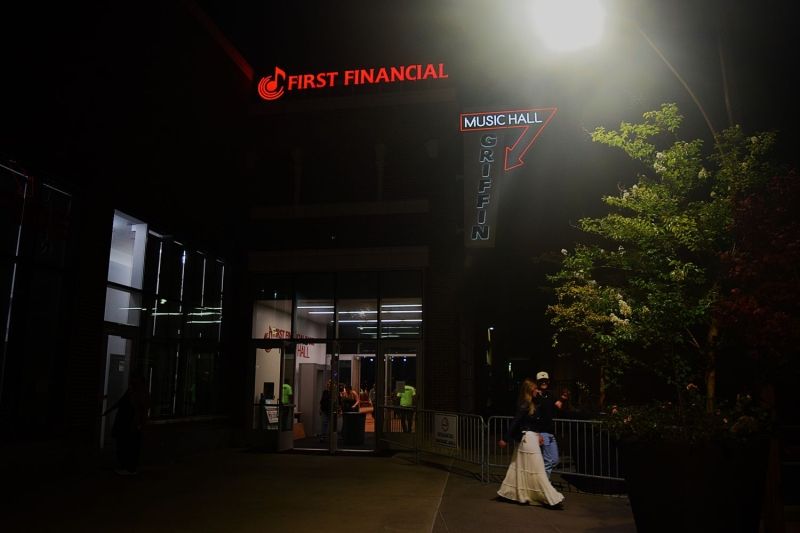
From all of this, I saw Josh Meloy and his supporters as one giant, laughing, loving, even weird family. It seems that they felt disposed to be themselves around him. Both in verse and in conversation, Meloy staunchly defends his essence, and consequently implores his audience to define what they deem worth defending. He springs some interesting, open-ended commentary, and, like other visionaries, asks many questions and while avoiding shallow answers. As always, The First Financial Music Hall of El Dorado was welcoming and exciting. For upcoming events, be sure to visit the Murphy Arts District Calendar for more upcoming events, such as Larry Fleet, The Avett Brothers, and Train on August 2nd, August 23rd, and August 27th respectively. Be sure to check out Josh Meloy’s socials and upcoming performances at JoshMeloy.com!

References
https://genius.com/albums/Josh-meloy/Washington-street
https://www.youtube.com/watch?v=rkr9THUL7ZU
|
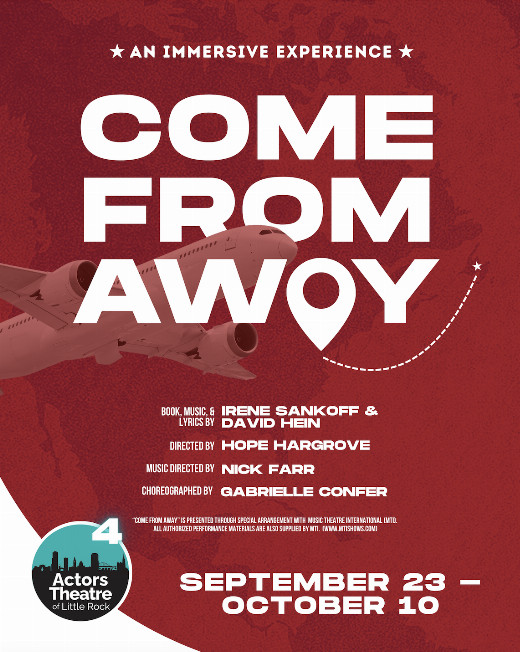
Come From Away: An Immersive Experience Actors Theatre of Little Rock (9/23-10/10) |

|
Wait Until Dark Pocket Community Theatre (10/02-10/11) |

|
The Rocky Horror Picture Show Spooktacular Tour with Nell Campbell Robinson Center (10/20-10/20) |
|
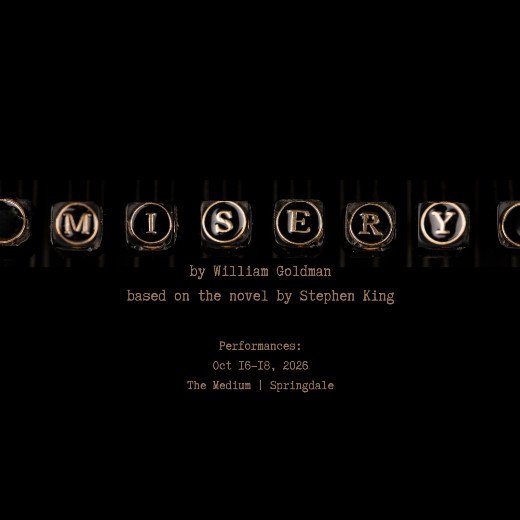
Misery Theatre Collective of NWA (10/16-10/18) |
|
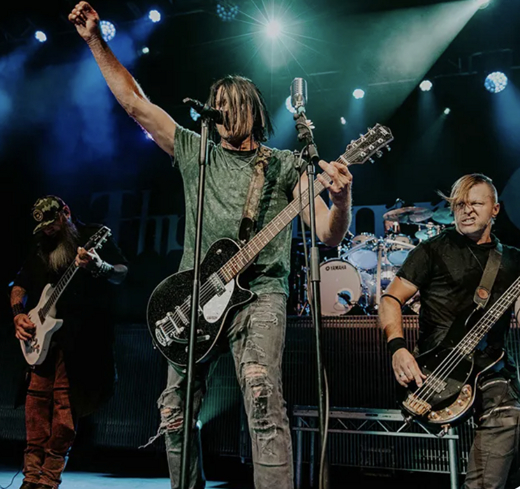
Three Days Grace, I Prevail & The Funeral Portrait at Walmart AMP Walmart AMP (10/28-10/28) |

|
“Little Shop of Horrors” Book and Lyrics by Howard Ashman, Music by Alan Menken Arkansas State University Theatre Department (11/13-11/22) |

|
“Men on Boats” By Jaclyn Backhaus Arkansas State University Theatre Department (4/16-4/25) |

|
Scrooge! The Musical Pocket Community Theatre (12/04-12/13) |

|
The Woman In Black Pocket Community Theatre (10/30-10/31) |
|
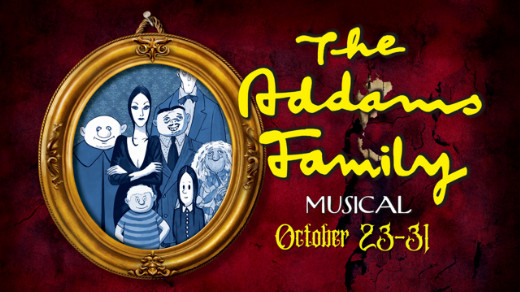
The Addams Family Musical Wildwood Park For The Arts (10/23-10/31) |
Reader Reviews
To post a comment, you must register and login.