


Review: HENRY V with the Hot Springs Village Players at The Coronado Center
HSV Players bring a multimedia experience to the Coronado Center
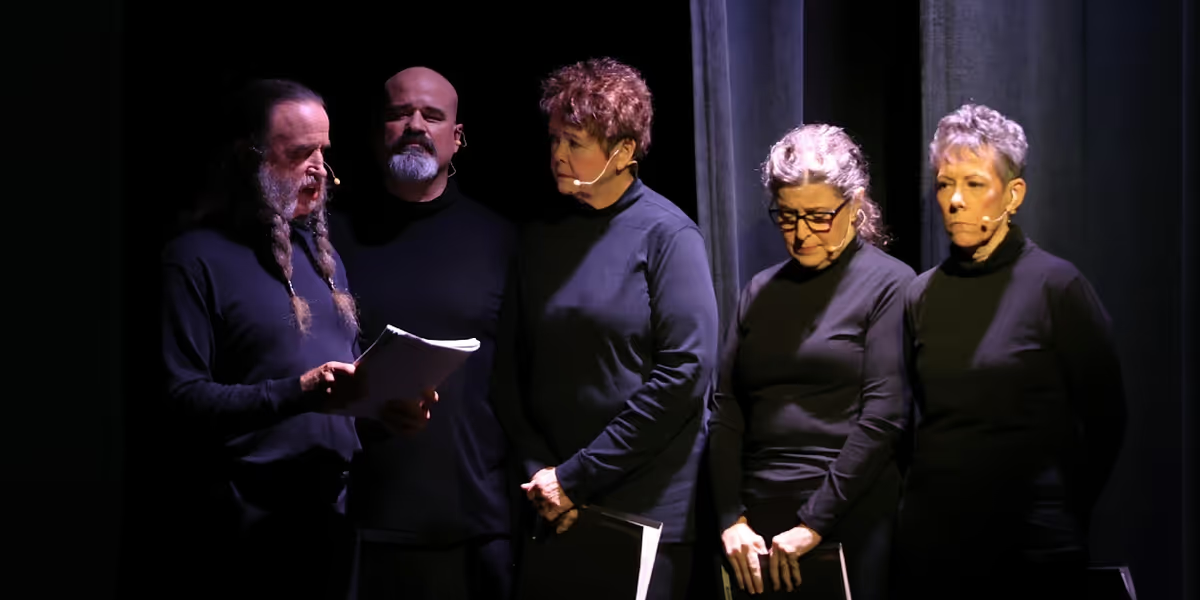
The Hot Springs Village Players took a bold and invigorating step into the world of classical theatre June 27-29, with their recent production of Henry V, and what unfolded at the Coronado Center was far more than your average Shakespeare play, it was a multimedia experience that breathed modern soul into an epic war drama. Directed and adapted by James Moses and produced by Debra Krajicek, this production reimagined the Bard's patriotic call to arms with an audiovisual flair that left its mark.
Henry V follows the young and newly crowned King of England as he seeks to unite his nation and claim his right to the French throne. Faced with political resistance, foreign threats, and the burden of leadership, Henry leads his outnumbered troops into the Battle of Agincourt. Along the way, Henry must grow into his crown, balance diplomacy with force, and inspire loyalty from a divided court and weary soldiers. It's a powerful exploration of kingship and what it means to lead in both war and peace.
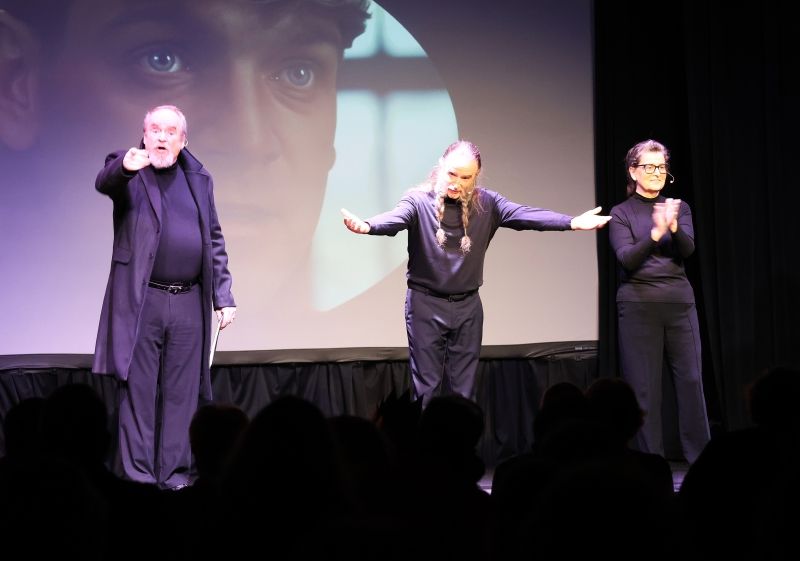
Photo Credit: Janet Rowe
At the heart of the production was Patrick Milligan as King Henry V, delivering a commanding performance that anchored the sweeping spectacle with emotional depth and clarity. Milligan’s Henry was a man of conscience as much as a man of conquest. Whether rallying his troops with the iconic St. Crispin’s Day speech or wrestling with the weight of leadership in quieter moments, Milligan’s portrayal captured the nuance of a king coming into his own. His voice rang out with power, and in moments of vulnerability, he grounded the story with humanity.
Director James Moses not only shaped the production behind the scenes but also stepped into the spotlight as the narrator, guiding the audience through the political intrigue and battlefield bravery with great knowledge and dramatic flair. His presence added gravitas to the storytelling, acting as a bridge between the audience and Shakespeare’s world, making the complex narrative feel fluid and grounded.
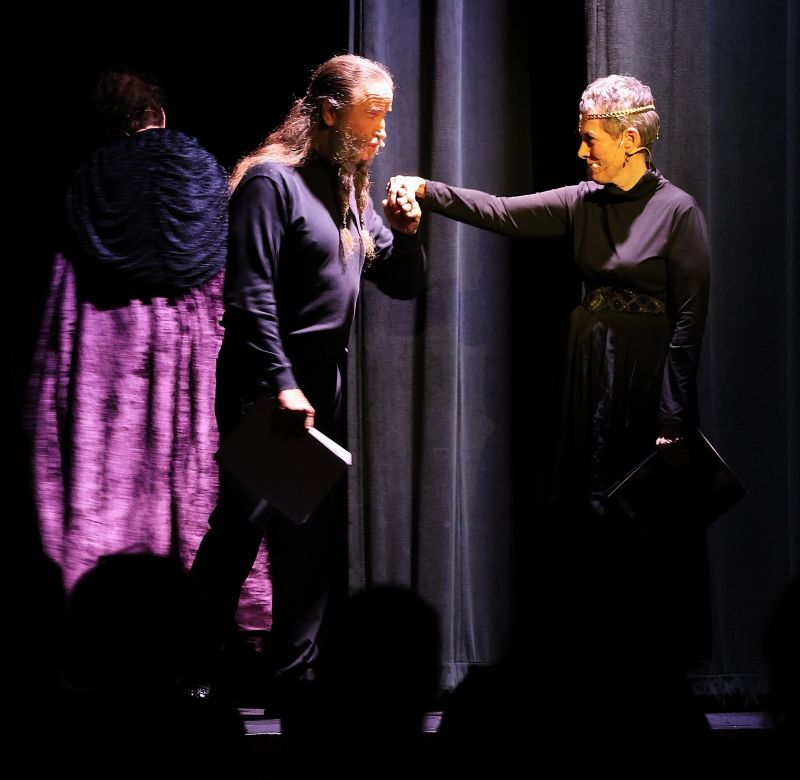
Photo Credit: Janet Rowe
A particularly charming surprise came in the French court scenes, where Kerene Larson portrayed Princess Katherine with grace and playful poise. Her fluent delivery of French added a delightful authenticity to her role, especially during the scene where she learns English, earning smiles and chuckles from the audience. As she noted in a pre-show conversation, hearing the crowd laugh in response to her French lines was a joy and a clear sign that her meaning came through beyond the language barrier.
Equally noteworthy were the performances of Ben Heckler (Exeter, Governor of Harfleur, and Orleans) and Phillip Jones (Constable of France and Duke of Burgundy). Incredibly, this production marked their very first time on stage, but you would never have guessed it. Both actors demonstrated a strong dedication to the storytelling, embracing their multiple roles with conviction and focus. Heckler, who initially didn’t even intend to audition, credited the team’s creative vision with helping him understand the story. Jones, a former collegiate English major, said he was drawn to the audition on a whim and found his roles to be the perfect learning opportunity. Their novice status was entirely undetectable.
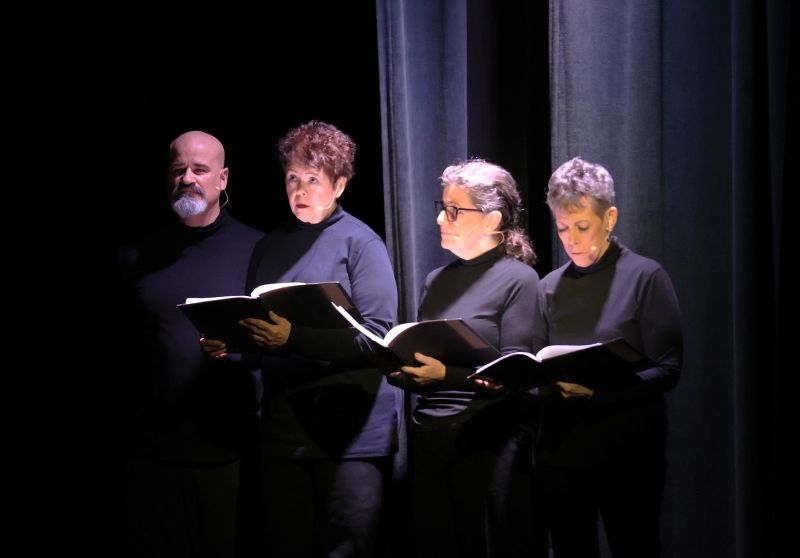
Photo Credit: Janet Rowe
Rounding out the ensemble with dynamic versatility were Herm Dobscha, Melissa Parker, and Karen Feckler, each portraying multiple roles across both genders with skill and commitment. Whether slipping into the boots (imaginatively) of a soldier or donning the posture of a noble, their performances greatly enriched the texture of the production. Their adaptability and range contributed significantly to the momentum of the story, highlighting the collaborative spirit and creative energy that pulsed through the show.
From the first notes of Gustav Holst’s The Planets, it was clear this was not going to be a dusty period piece. Instead, Moses’ vision elevated the narrative into something celestial and sweeping. The musical and sound design, which was crafted by Anna Moses (the director’s wife), was an essential thread in the fabric of this production. Her careful layering of Holst’s movements with cinematic sound effects helped shape the emotional landscape of the play, intensifying the battle scenes and adding texture to the quieter moments.
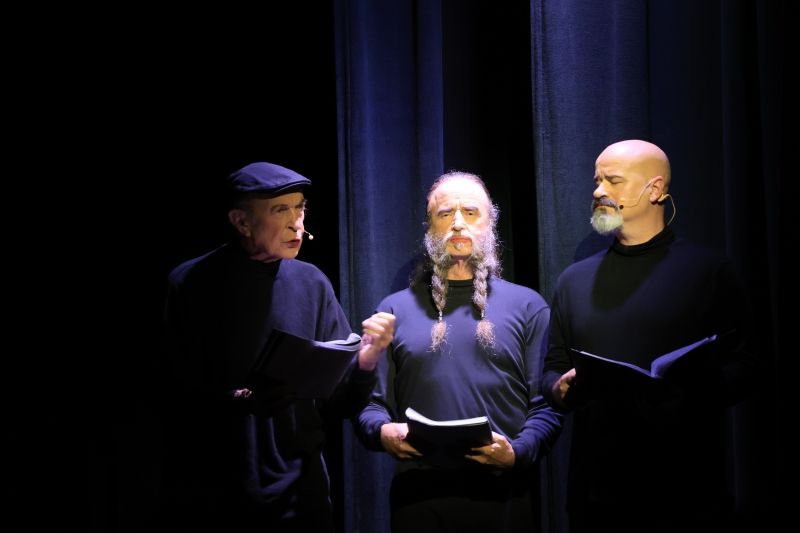
Photo Credit: Janet Rowe
The production itself was as much a theatrical hybrid as it was a Shakespearean staging. “It’s a mix of traditional theater, reader’s theater, film, symphony, and radio,” Moses explained. With scripts in hand and visuals projected on screen, the actors became vessels for both sound and emotion. Explosions and lighting effects added cinematic punctuation to Shakespeare’s words, while the audience was invited to imagine the rest, bridging the gap between Elizabethan storytelling and modern presentation. As one cast member put it, “You could close your eyes and still be swept away.”
This blend of mediums made the play more accessible to audiences unfamiliar with Shakespeare, allowing the emotional arc and stakes of the story to resonate clearly. Even long-time Village residents, known, as the cast joked, for leaving at intermission if they’re unimpressed, stayed through the final act, a clear testament to the production’s success.
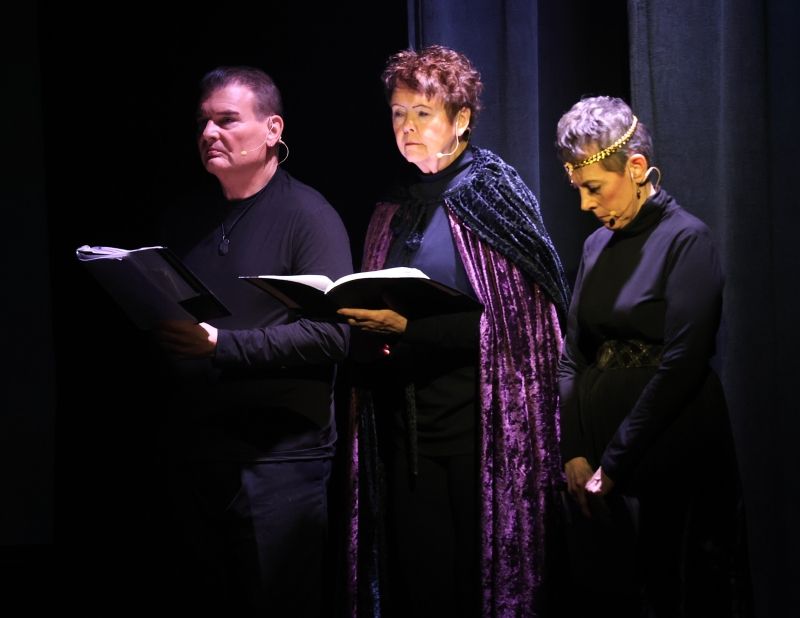
Photo Credit: Janet Rowe
And that success extends beyond the stage. The cast and crew echoed a common sentiment: community theatre adds vitality to life in Hot Springs Village. Whether you're onstage, behind the scenes, or sitting in the audience, there's something transformative about coming together to create and witness art. As Milligan shared, he moved to the Village partly because of the vibrant theater scene, and he’s since gone from dancer to leading man.
In a community theater setting, Henry V is no small undertaking, but with this visionary production, the Hot Springs Village Players proved that communities can reimagine storytelling for a broader audience. This was Shakespeare for the visually saturated, music-attuned 21st-century audience: stirring, smart, and deeply resonant. It honored the past while daring to explore the future.
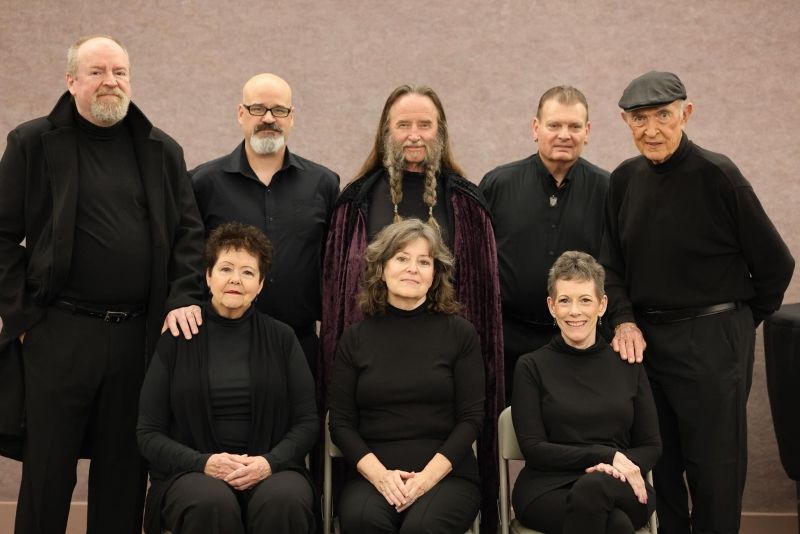
(Row 1 L-R) Karen Feckler, Melissa Parker, Kerené Larson;
(Row 2 L-R) James Moses (also the director), Ben Hecker, Patrick Milligan, Philip Jones and Herman Dobscha.

|
Angels in America Part One: Millennium Approaches Actors Theatre of Little Rock (8/05-8/22) |

|
Sweeney Todd- the Demon Barber of Fleet Street Pocket Community Theatre (8/07-8/16) |

|
Three Days Grace, I Prevail & The Funeral Portrait Walmart AMP (10/28-10/28) |

|
Scrooge! The Musical Pocket Community Theatre (12/04-12/13) |

|
Wait Until Dark Pocket Community Theatre (10/02-10/11) |
|
Three Days Grace, I Prevail & The Funeral Portrait at Walmart AMP Walmart AMP (10/28-10/28) |
|
Hamilton (Angelica Company) Robinson Center Music Hall (8/25-9/01) |
|
Hadestown (Non-Equity) Walton Arts Center [Baum Walker Hall] (2/05-2/07) |

|
The Woman In Black Pocket Community Theatre (10/30-10/31) |
|
The Rocky Horror Picture Show Spooktacular Tour with Nell Campbell Robinson Center (10/20-10/20) |
Reader Reviews
To post a comment, you must register and login.