


Review: CASEY AND DIANA at Unicorn Theatre
Experience a powerful exploration of the human spirit in "Casey and Diana" a story of radical compassion and ultimate grace, January 28th through February 15th
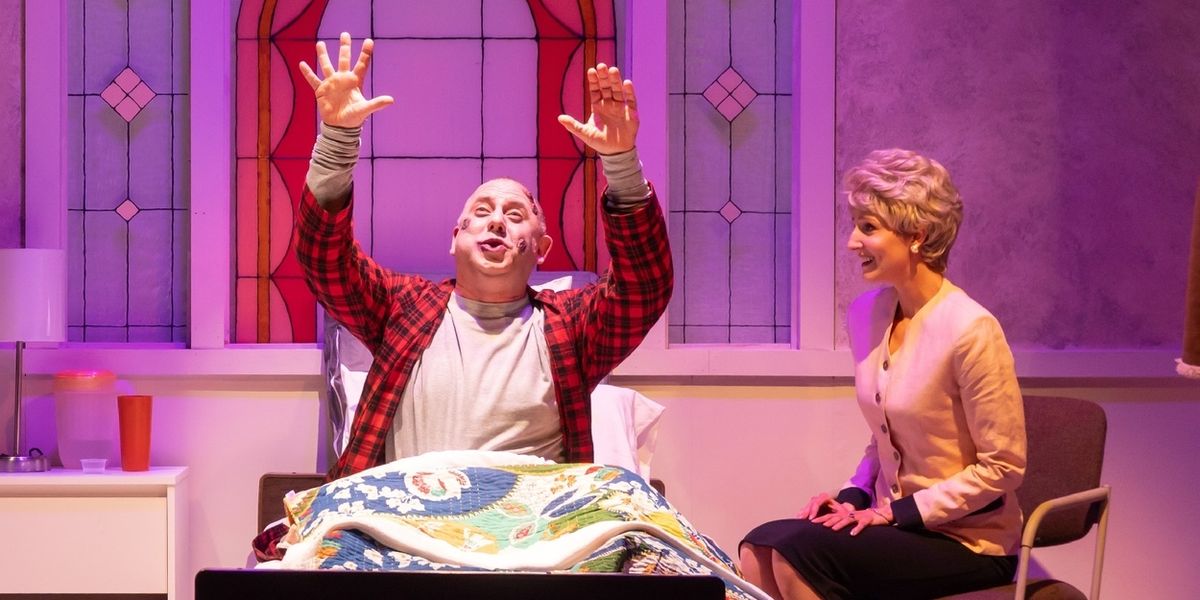
A Profound Meditation on Love, Memory, and the Sacred Cost of Survival
Casey and Diana, now running January 28 through February 15, 2026, is a luminous, heartbreaking, and deeply necessary work of theatre. Written by Nick Green and originally commissioned by the Stratford Festival of Canada, the play was developed to honor the real-life visit of Diana, Princess of Wales, to Toronto’s Casey House AIDS hospice in 1991—a moment that quietly but irrevocably reshaped public understanding of HIV/AIDS, compassion, and human dignity.
Set within the walls of Casey House during one of the darkest chapters of the AIDS epidemic, Casey and Diana reminds us—especially in 2026—of the extraordinary sacrifices made by the gay community and its allies. At a time when freedom of existence can feel assumed, this play gently but firmly reminds us that lives, careers, families, and the right to love openly were once placed in constant peril. This story is not history—it is living memory.
At the heart of the play is Thomas, portrayed with devastating grace by Ernie Nolan. Thomas is a patient at Casey House, nearing the end of his life as AIDS rapidly overtakes his body. He has watched lovers, friends, and roommates disappear one by one, until he believes he is finally alone. Nolan imbues Thomas with sharp wit, defiant humor, and aching vulnerability, crafting a character who dances between life and death with remarkable humanity. His imagination—particularly his fixation on what he might say to Princess Diana—becomes a lifeline, a spiritual rehearsal for dignity in the face of extinction.
That solitude is disrupted by the arrival of Andre, played with exquisite nuance by Darrington Clark. Andre enters Thomas’s room carrying both fear and fascination, startled by Thomas’s charisma yet drawn into his orbit. Though Andre initially appears to have accepted death as inevitable, the community of caregivers and volunteers at Casey House slowly reignites his will to live. Clark’s performance captures the quiet transformation of a soul relearning joy—not through denial, but through being seen.
Anchoring the house is Vera, the nurse portrayed with strength and compassion by Chioma Anyanwu. Vera is structure, discipline, and unwavering care—yet she never allows rigidity to eclipse humanity. Anyanwu beautifully balances authority with tenderness, offering Thomas and Andre not just medical care, but a reason to keep going when hope feels inaccessible.
Hovering over the entire narrative like a beacon is Princess Diana, embodied with ethereal elegance by Leah Dalrymple. She exists both as historical figure and spiritual presence, appearing in Thomas’s most fragile moments. Dalrymple captures Diana not as myth, but as embodied compassion—fashion as living poetry, beauty as moral courage. The anticipation of her visit becomes so powerful that Thomas begins counting the days without death, noting that no one passes because hope itself has taken residence in the house.
As Thomas rehearses what he might say to Diana—often with biting humor and motivational sass—the audience is continually reminded of the cruel paradox at play: someone so alive could be gone at any moment. That emotional tension pushes empathy to its limits, never allowing comfort without consequence.
That fragile equilibrium is deepened by Marjorie, portrayed by Jan Rogge, a volunteer whose sass, resilience, and fierce love for the queer community make her unforgettable. Initially clashing with Andre, Marjorie stands her ground, meeting his despair with sharp honesty. Over time, it becomes clear that her volunteering is also an act of mourning—a way to grieve the many friends she lost during the epidemic. Rogge’s performance is vibrant and layered, revealing how service can become survival.
Cinnamon Schultz delivers a quietly devastating performance as Pauline, Thomas’s sister. Though Thomas initially resists her presence, the truth unfolds gradually: Pauline is carrying communal grief—mourning not only her brother’s friends, but an entire generation lost. Schultz captures the weight of collective sorrow with restraint and grace, making Pauline’s journey one of the play’s most resonant arcs.
The entire cast demonstrates exceptional attention to pacing, emotional beats, and the sacred act of allowing grief to breathe. The audience is never rushed past sorrow—a testament not only to the performers, but to the masterful direction of Sidonie Garrett, who brings Nick Green’s text to life with reverence and clarity. Garrett ensures that this story speaks not only to the Kansas and Midwestern communities, but to anyone whose memory of the AIDS crisis may be fading.
The design team elevates the production to extraordinary heights. Selena Gonzalez-Lopez’s scenic design is stark and effective, emphasizing the sterility and emotional isolation of an AIDS hospice while allowing humanity to emerge within it. Art Kent’s lighting design is especially powerful, using transitions of light to underscore moments of emotional rupture and transcendence.
Mary Traylor’s costume design is meticulous and deeply evocative—none more so than her work on Princess Diana. One of the most breathtaking moments of the production occurs at the end, when Thomas walks into the light, his flowing gown trailing behind him as he follows Diana forward. It is a moment of release, beauty, and spiritual completion.
Sound designer Paul Vedros ensures that every moment lands with precision, while Stage Manager Tinna Rivera delivers a seamless production that feels Broadway-caliber in its execution. Scene changes are invisible, transitions fluid—her steady hand evident throughout.
Casey and Diana is not simply a play about illness. It is about love under siege, dignity reclaimed, and the holiness of care. It is a reminder that progress is paved with sacrifice—and that remembering is, in itself, an act of justice.
This production is essential viewing.
“Casey and Diana” opens on January 28th through February 15th at the The Unicorn Theatre.
Prefer BroadwayWorld in Google Search?
Add us as a preferred source so our stories show up more often in Top Stories and Google’s AI answers — for you.

Sign up for all the news on the Fall season, discounts & more...


|
'The Who's Tommy' Midwest Trust Center at Johnson County Community College (10/14-10/14) |

|
SIX (Boleyn Tour) Kansas City Music Hall (1/26-1/31) |
|
Owen/Cox Dance Group 'The Nutcracker and the Mouse King' Midwest Trust Center at Johnson County Community College (12/10-12/13) |

|
Primary Trust Unicorn Theartre (3/03-3/14) |
|
Take3 'Where Bach Meets Rock' Midwest Trust Center at Johnson County Community College (11/21-11/21) |

|
The Phantom of the Opera Music Hall Kansas City (12/06-12/06) |

|
Beyond Pink: A Morning of Exercise, Education & Wellness – October 25, 10am-1pm The J, Creve Coeur, Staenberg Family Complex (10/25-10/25) |

|
'Burn the Floor presents Maks & Peta Live!' Midwest Trust Center at Johnson County Community College (4/03-4/03) |

|
'Style Thief Fashion Show: Tools Not Rules Tour' Midwest Trust Center at Johnson County Community College (2/20-2/20) |
|
Anti-Hero: Revenge of the Swifties Unicorn Theartre (12/09-12/27) |

Reader Reviews
To post a comment, you must register and login.