


The Philadelphia Orchestra and Yannick Nézet-Séguin Unveil 2026–27 Season
Composer-in-Residence Joe Hisaishi will return to conduct the Orchestra in the world premiere of his Piano Concerto, plus more.
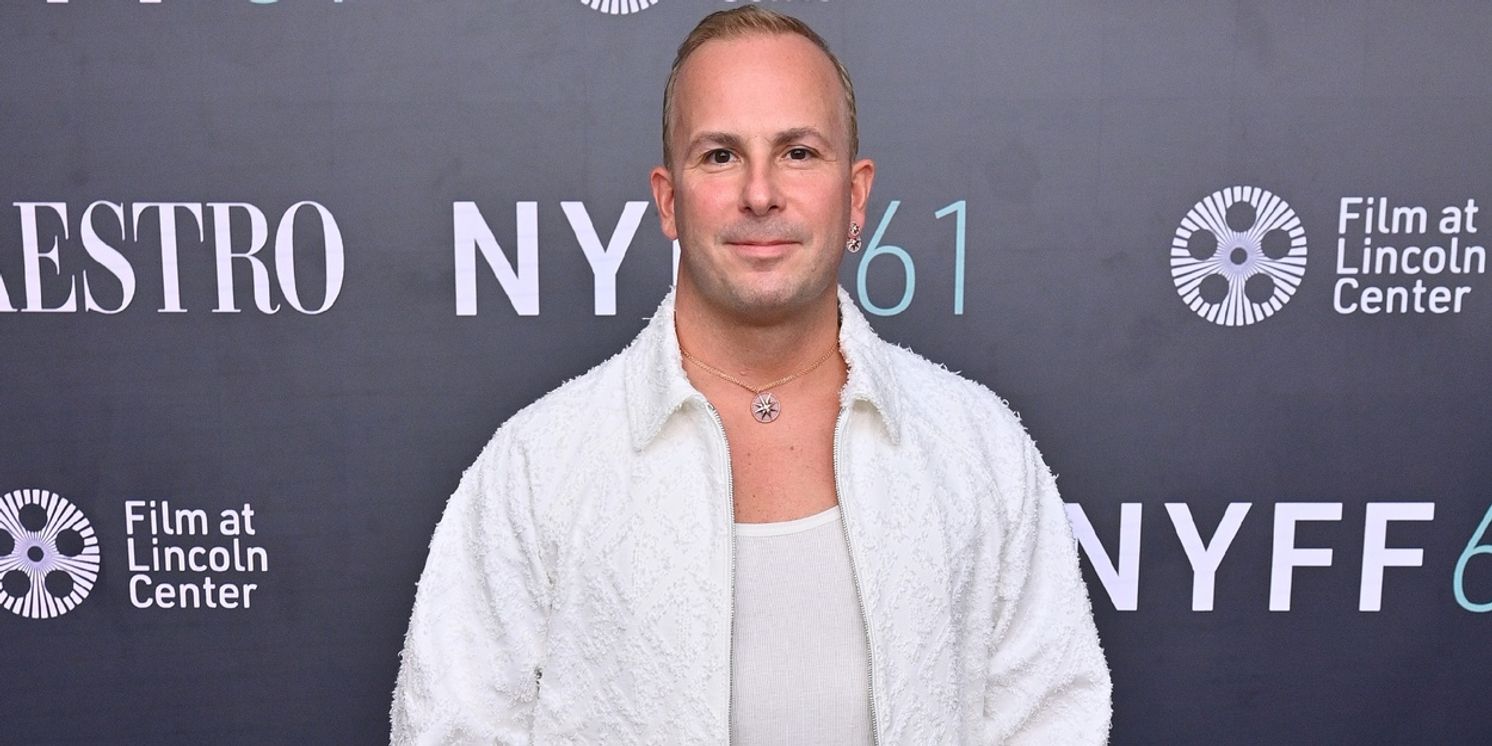
The Philadelphia Orchestra and Music and Artistic Director Yannick Nézet-Séguin have unveiled the 2026–27 season—Nézet-Séguin’s 15th as music and artistic director—full of epic musical events, bold artistic experiences, and new musical journeys.
Coming off a landmark season celebrating its 125th anniversary, The Philadelphia Orchestra enters its next chapter as one of Philadelphia’s great legacy institutions: homegrown, world-renowned, and continually refined by generations of extraordinary musicians from across the globe. The 2026–27 season leans into that legacy, honoring the sound that has been perfected over time in the city and in performances worldwide, inviting new listeners into an experience that feels both timeless and unmistakably Philadelphia.
OPENING NIGHT CELEBRATION
Nézet-Séguin will open the Orchestra’s 127th season on Thursday, September 24, with an exuberant Opening Night Celebration that sets the tone for a season of renewal and rediscovery. He will lead the Orchestra, the Philadelphia Symphonic Choir, and some of the world’s finest classical singers in a program that pairs Beethoven’s groundbreaking Ninth Symphony—his final symphony, with its inspiring choral finale—with the United States premiere of Composer-in-Residence Joe Hisaishi’s Orbis, which places Beethoven and the famous “Ode to Joy” in a fresh context. Lending their soaring voices to the concert are Philadelphia native soprano Leah Hawkins, mezzo-soprano J’Nai Bridges, tenor Issachah Savage, and bass-baritone Ryan Speedo Green.
WORLD PREMIERES
Throughout the season, The Philadelphia Orchestra continues its rich history of presenting world premiere compositions and new orchestrations of great works. After celebrating 125 years of innovation, these commissions mark the next chapter in the Orchestra’s legacy of shaping the future of orchestral music.
Arguably Leonard Bernstein’s most important work, MASS has been embraced as a masterpiece but is rarely performed given the forces required to stage it. A large work of musical theater, it was originally scored for a full symphony orchestra, rock band, blues band, large adult chorus, children’s choir, and numerous soloists. To launch the season, Nézet-Séguin will lead the Orchestra in the world premiere of a new orchestral arrangement by Garth Sunderland, titled Symphonic Rituals from MASS, in which the Orchestra will play music previously performed by vocalists and choral groups (September 25–27). An expert on Bernstein who advised actor Bradley Cooper on how to embody the legendary artist in the Academy Award–nominated film Maestro, Nézet-Séguin led the Orchestra’s only complete performances of MASS in 2015. A composer and interdisciplinary artist who works for the Leonard Bernstein Office, Sunderland has restored and adapted the film scores of West Side Story and On the Waterfront and has overseen productions of Bernstein’s work on Broadway and with performing arts organizations around the world.
Following his acclaimed sold-out performances in 2025, Composer-in-Residence Joe Hisaishi will return to conduct the Orchestra in the world premiere of his Piano Concerto, performed by German Japanese pianist Alice Sara Ott in her Orchestra debut (March 5–7). Direct, expressive, and driven by bold rhythmic ideas, the Concerto marks a significant new contribution from Hisaishi. The program will also include his Concerto for Orchestra and Arvo Pärt’s Cantus in Memory of Benjamin Britten.
Nézet-Séguin will lead the world premiere of Reena Esmail’s Concerto for Orchestra (May 27–29). The Indian American composer works between the worlds of Indian and Western classical music and divides her attention evenly among orchestral, chamber, and choral works. She was looking to write a large-scale piece, and Nézet-Séguin and the Orchestra commissioned her to compose this Concerto for Orchestra.
To conclude the season in Marian Anderson Hall, Nézet-Séguin will conduct the world premiere of a new orchestration of “Rainbow Waltz,” a solo piano piece composed in 1939 by Florence Price, known for its elegant melodies that blend European Romantic style with features of her Black heritage. The Orchestra will perform a new orchestration by American composer and frequent collaborator Valerie Coleman in a program that includes Caroline Shaw’s The Observatory, inspired by a visit to the Griffith Observatory, and Mahler’s First Symphony (June 3, 5–6).
AN INNOVATIVE ORCHESTRA PARTY
The Orchestra will present the world premiere of a groundbreaking multidisciplinary operatic event that fuses live orchestral performance with stop-motion animation. Commissioned by Nézet-Séguin and the Orchestra and created in collaboration with visionary artist Alex Da Corte and genre-defying composer Austin Fisher in his first work for symphony orchestra, The Party (February 25–27) reimagines Marisol Escobar’s iconic 1965–66 sculptural installation The Party through a cinematic lens. Led by Principal Guest Conductor Marin Alsop, the Orchestra will perform the original score live, joined by a cast of vocalists, seamlessly integrated with Da Corte’s surreal, stop-motion film that brings Marisol’s haunting figures to life. Through contemporary opera and modern visual storytelling, the production explores themes of femininity, image, time, and artifice. The program will also include Honegger’s Pacific 231, a tribute to the steam locomotive, and Haydn’s Symphony No. 101 (“The Clock”). The Orchestra’s performances of The Party have been supported by The Pew Center for Arts & Heritage.
GRAND OPERA AND LARGE-SCALE MASTERPIECES
Throughout his tenure, Nézet-Séguin has made opera and oratorio a major initiative of the Orchestra, with symphonic stagings of works such as Strauss’s Salome, Bach’s The Passion According to St. Matthew, Puccini’s Tosca, Bernstein’s Candide, and Puccini’s La bohème that have brought the power of the music front and center by having the orchestra placed on stage rather than in the pit. Building on the acclaimed 2025 performances of Wagner’s Tristan and Isolde, lauded as “triumphant … one of the greatest things I’ve ever heard” (The Washington Post) and “a landmark experience” (The Philadelphia Inquirer), Wagner’s soaring Lohengrin marks the next chapter in Yannick’s exploration of the composer’s masterpieces (April 11 and 18) and the Orchestra’s first complete performances of the piece. The opera’s themes of faith, mystery, and the search for redemption promise a compelling continuation of this artistic journey. Alongside the Orchestra and Philadelphia Symphonic Choir, tenor Stanislas de Barbeyrac appears as Lohengrin with soprano Elza van den Heever as Elsa, soprano Rebecca Nash as Ortrud, baritone Brian Mulligan as Telramund, and bass Soloman Howard as King Heinrich. De Barbeyrac, Nash, and Howard will be making their Orchestra debuts.
Carl Orff’s 1936 opus Carmina burana is best known for its opening “O Fortuna” chorus that has become ubiquitous in commercials, movies, and countless social media videos. Nézet-Séguin will lead his first Philadelphia Orchestra performances of the sweeping cantata (October 22–25) with soprano Janai Brugger, tenor Jonah Hoskins, baritone Will Liverman (Hoskins and Liverman in their Orchestra debuts), the Philadelphia Symphonic Choir, Commonwealth Youth Choir, Philadelphia Boys Choir, and Philadelphia Girls Choir. Opening the program is Coleridge-Taylor’s Ballade in A minor and the first Orchestra performances of Gabriela Ortiz’s Clara, based on the relationship between Clara Wieck-Schumann and Robert Schumann.
Nézet-Séguin and the Orchestra will also continue the symphonic cycle of William Grant Still with their first performances of the Symphony No. 3 (“The Sunday Symphony”), which was the last of his five symphonies composed, and the only one never performed in his lifetime (February 5–7).
Throughout the season, Nézet-Séguin and the Orchestra will continue their exploration of Gustav Mahler’s iconic symphonies, music that sits at the heart of the Orchestra’s identity and the Signature Sound shaped by generations of Philadelphia musicians.
First, the Orchestra will perform Mahler’s Fifth Symphony (October 1–3). Composed during the summers of 1901 and 1902, its trajectory from mourning to triumph reflects a key development in the composer’s personal life: meeting and falling in love with Alma Schindler, who would become his wife. The program will also feature Julia Wolfe’s Liberty Bell, an Orchestra co-commission, and Webern’s Im Sommerwind, a work that was given its world premiere by the Orchestra in 1962. Mahler’s Symphony No. 7, often called “Song of the Night,” takes listeners on a journey through darkness and light, chaos and order (April 1, 3, 9). Mezzo-soprano Karen Cargill will join Nézet-Séguin, sopranos and altos of the Philadelphia Symphonic Choir, Commonwealth Youth Choir, Philadelphia Boys Choir, Philadelphia Girls Choir, and the Orchestra for the composer’s Third Symphony, one of his sunniest, most extroverted scores (May 15). To conclude the cycle, Nézet-Séguin will lead the Orchestra in Mahler’s captivating First Symphony alongside the ensemble’s first performances of Caroline Shaw’s The Observatory and the world premiere of Valerie Coleman’s orchestration of Florence Price’s “Rainbow Waltz” (June 3, 5–6).
ARTIST OF DISTINCTION EMANUEL AX
Principal Guest Conductor Marin Alsop helps celebrate pianist Emanuel Ax’s extraordinary career, and his special connection to this Orchestra, with the Philadelphia premiere of John Williams’s Piano Concerto, written especially for Ax (April 29–May 1). Ax, recently named Musical America’s 2026 Artist of the Year, appears multiple times this season as The Philadelphia Orchestra’s 2026–27 Artist of Distinction. The 2025 Williams composition invokes jazz piano legends Art Tatum, Bill Evans, and Oscar Peterson.
Ax also appears in recital on two programs in the Brodsky Star Spotlight Series. He partners with longtime friend and collaborator cellist Yo-Yo Ma (December 6) and with violinist Itzhak Perlman, pianist Jean-Yves Thibaudet, and the Juilliard String Quartet (May 2).
SUPERSTAR PIANISTS JOIN THE ORCHESTRA
Some of the world’s most talented pianists will appear with the Orchestra throughout the season. Performances by these virtuosic soloists continue the Orchestra’s proud tradition of welcoming the greatest stars who bring a unique blend of global acclaim and cherished local connections to our stage.
The youngest-ever winner of the Van Cliburn International Piano Competition, Yunchan Lim will reunite with Principal Guest Conductor Marin Alsop—they collaborated on Bartók’s Piano Concerto No. 3 with the Orchestra in Marian Anderson Hall in October 2025—for Rachmaninoff’s Piano Concerto No. 3, the piece that sealed his Competition win (October 29–31).
Alexandre Kantorow, making his Philadelphia Orchestra debut, will perform Brahms’s Piano Concerto No. 1 led by Nézet-Séguin on the season’s first subscription program (September 25–27).
Yuja Wang joins Nézet-Séguin for Beethoven’s First Piano Concerto (May 27–29), uniting the two superstars on the Philadelphia Orchestra stage for the first time since their lauded Opening Night program in September 2025.
SIMON RATTLE RETURNS
Gramophone’s 2025 Artist of the Year, Simon Rattle will lead the Orchestra for the first time since 2016 to lead a dynamic evening featuring the Suite No. 2 from Ravel’s ballet Daphnis and Chloe, Debussy’s impressionistic La Mer, and John Adams’s Minimalist masterpiece Harmonielehre (January 28–30). The Philadelphia Orchestra is one of the only United States orchestras that the in-demand Rattle guest conducts, as much of his time is spent as conductor emeritus of the London Symphony Orchestra and chief conductor of the Bavarian Radio Symphony Orchestra in Munich.
BRODSKY STAR SPOTLIGHT SERIES
Classical music’s biggest stars take center stage in the Brodsky Star Spotlight Series. Longtime friends and collaborators, cellist Yo-Yo Ma and pianist Emanuel Ax, will join forces for a special duet concert (December 6). Pianist Yuja Wang returns for a one-night-only solo recital (April 2) focusing on her charismatic artistry, emotional honesty, and captivating stage presence. Violinist Itzhak Perlman performs alongside pianists Emanuel Ax and Jean-Yves Thibaudet, and the Juilliard String Quartet (May 2).
SHOWCASING PHILADELPHIA ORCHESTRA MUSICIANS
For more than 125 years, a source of Philadelphia pride has been the sound of this Orchestra: created here, and heard around the world. The 2026–27 season showcases the virtuosity of the musicians who have devoted their lives and careers to the Orchestra.
Orchestra musicians take center stage for solo appearances with the Orchestra: Principal Viola Choong-Jin Chang in Hindemith’s viola concerto, Der Schwanendreher (February 5–7); First Associate Concertmaster Juliette Kang in Mendelssohn’s Violin Concerto (March 13); and Principal Oboe Philippe Tondre in Strauss’s Oboe Concerto (April 15–17).
CINEMATIC MUSIC FROM A GALAXY FAR, FAR AWAY AND A MAGICAL WORLD OF WIZARDS
The film that launched the iconic Skywalker sci-fi franchise will celebrate its 50th anniversary in 2027. Weeks before Star Wars: A New Hope returns to theaters for anniversary screenings, audiences can watch the film in a unique way in Marian Anderson Hall as the Orchestra performs John Williams’s legendary Oscar-winning score live (January 21–23).
Williams’s final score for the Harry Potter film franchise was 2004’s Harry Potter and the Prisoner of Azkaban, earning the composer Best Score nominations at both the Academy Awards® and GRAMMY® Awards. Audiences can experience the film’s magic projected in Marian Anderson Hall as the Orchestra performs the score live (October 16–18).
These programs extend a long tradition of making symphonic music part of the shared moments of life across the region.
CELEBRATE THE HOLIDAYS WITH THE PHILADELPHIA ORCHESTRA
Beloved holiday traditions will continue, including annual performances of Handel’s Messiah led by Bernard Labadie and featuring soprano Joélle Harvey, countertenor Iestyn Davies (Orchestra debut), tenor Andrew Haji (Orchestra debut), bass-baritone Neal Davies, and the Philadelphia Symphonic Choir (December 4–5); The Glorious Sound of Christmas led by Anthony Parnther (December 18–20); and a festive New Year’s Eve concert with Principal Guest Conductor Marin Alsop (December 31).
Johann Sebastian Bach’s 18th-century masterpiece, the Christmas Oratorio (December 12–13), is a holiday experience like no other. Nézet-Séguin will lead the Orchestra’s first-ever performances of the complete work. Soprano Carolyn Sampson, countertenor Christophe Dumaux, tenor Jonghyun Park, bass Andrzej Filończyk in his Orchestra debut, and the Philadelphia Symphonic Choir join the Orchestra in this timeless piece of music that resonates with the wonder of the holiday season.
ORCHESTRA AFTER 5
Orchestra After 5, the Orchestra’s popular happy hour series that debuted in 2024 and earned a Best of Philly award from Philadelphia magazine for “Best Classical Outing,” with The Philadelphia Inquirer calling it “the freshest happy hour in town,” will continue. In its fourth year, the series will feature programs with conductor Dalia Stasevska alongside violinist Gil Shaham (October 8), conductor and violinist Nikolaj Szeps-Znaider (January 14), and conductor Daniele Rustioni with guitarist Pablo Sáinz-Villegas (May 13).
ADDITIONAL SEASON HIGHLIGHTS
Esa-Pekka Salonen will return to Philadelphia to lead Beethoven’s Symphony No. 3 (“Eroica”). Pianist Yefim Bronfman joins the program for Schnittke’s Concerto for Piano and String Orchestra and Liszt’s Piano Concerto No. 2 (February 18–20).
In the week leading up to the Easter holiday, Fabio Luisi will lead the Orchestra in performances of the Prelude and the ethereal “Good Friday Spell” from Wagner’s opera Parsifal, alongside Bruckner’s memorial to Wagner, Symphony No. 7 (March 19–21).
Dalia Stasevska will take the podium as Gil Shaham performs Saint-Saëns’s Violin Concerto No. 3, paired with Respighi’s Pines of Rome, the Orchestra’s first performances of Anna Meredith’s Nautilus, and Sibelius’s Pohjola’s Daughter (October 9–10).
Conductor and violinist Nikolaj Szeps-Znaider will return for Mozart’s Violin Concerto No. 2 as well as Mendelssohn’s Overture to Ruy Blas, Schumann’s Symphony No. 3 (“Rhenish”), and the ensemble’s first performances of Unsuk Chin’s subito con forza (January 15–16).
Daniele Rustioni will lead two weeks of programs in May. First, he teams with Spanish cellist Pablo Ferrández for Dvořák’s Cello Concerto and Brahms’s Piano Quartet No. 1 in Arnold Schoenberg’s orchestration (May 7–9). Then, Pablo Sáinz-Villegas, hailed as “the global ambassador of Spanish guitar” (Billboard), will join Rustioni in Rodrigo’s Fantasía para un gentilhombre paired with Stravinsky’s Suite from Pulcinella, Ravel’s Alborada del gracioso, and Rossini’s Overture to Semiramide (May 16).
Conductor Jane Glover will lead a program of Beethoven’s Violin Concerto with Arabella Steinbacher and Dvořák’s Eighth Symphony (February 11–13).
Nézet-Séguin will lead his first performances with the Philadelphians of Holst’s The Planets, based on the composer’s impressions of the astrological “personalities” of the celestial bodies, featuring the sopranos and altos of the Philadelphia Symphonic Choir in a special one-night-only concert (March 13). He will conduct Beethoven’s Symphony No. 6 (“Pastoral”) (February 5–7) and will lead Schubert’s Symphony No. 8 (“Unfinished”), Dvořák’s Serenade for Strings, and the Orchestra’s first performances of 19th-century composer Josephine Weinlich’s “Sirens Songs” Polka-Mazurka (April 15–17).
Alsop leads beloved works across multiple programs, including West Chester native Samuel Barber’s Symphony No. 1 and Stravinsky’s Suite from The Firebird (October 29–31), and Rouse’s Rapture and Brahms’s Symphony No. 2 (April 29–May 1).
Seong-Jin Cho teams with conductor Dima Slobodeniouk, who is making his Philadelphia Orchestra debut, for Rachmaninoff’s Piano Concerto No. 2 (January 9–10).
GRAMMY Award–winning pianist Daniil Trifonov will perform Prokofiev’s formidable Piano Concerto No. 2 in a program led by conductor Paavo Järvi that also includes Tchaikovsky’s Symphony No. 5 and the Orchestra’s first performances of Erkki-Sven Tüür’s Aditus (April 23–25).
MARIAN ANDERSON ARTISTIC INITIATIVE
The Marian Anderson Artistic Initiative was launched in 2024 to celebrate the legendary contralto, civil rights icon, Philadelphian, and namesake of the home of The Philadelphia Orchestra, through artistic presentations that honor her legacy. The Marian Anderson Artistic Initiative showcases composers and artists who embody Anderson’s passion for increasing inclusivity, diversity, equity, and access to the performing arts, thereby advancing a more representative art form. Works that will be performed in the 2026–27 season as part of the Initiative include Samuel Coleridge-Taylor’s Ballade in A minor (October 22–25); Gabriela Ortiz’s Clara (October 22–25); William Grant Still’s Symphony No. 3 (“The Sunday Symphony”) (February 5–7); Austin Fisher and Alex Da Corte’s The Party (Feb. 25–27); Josephine Weinlich’s “Sirens Songs” Mazurka-Waltz (April 15–17); Reena Esmail’s Concerto for Orchestra (May 27–29); and Florence Price’s “Rainbow Waltz” (June 3, 5–6).
FAMILY PROGRAMMING
The Philadelphia Orchestra is committed to fostering a love of music among the youngest listeners, offering family-friendly programming throughout the season. Sound All Around, curated for two to six-year-olds, introduces young listeners to the individual instruments of the Orchestra through engaging storytelling performances. Family Concerts are the perfect way to introduce elementary-age children to the full Orchestra experience in Marian Anderson Hall. Children can experience a wide range of programming throughout the season, from holiday celebrations to captivating storytelling concerts that take them on an engaging musical journey. Sound All Around and Family Concerts are part of the Family Discovery Series. Dates and programming will be announced later.
BEYOND THE MARIAN ANDERSON HALL STAGE
The Philadelphia Orchestra will proudly return to its three summer homes in 2027, performing concerts at the Mann Center for the Performing Arts in Philadelphia’s Fairmount Park, atop the Rocky Mountains at the Bravo! Vail Music Festival in Colorado, and at the Saratoga Performing Arts Center (SPAC) in Saratoga Springs, New York.
In the 2026–27 season, the Orchestra will give performances at Carnegie Hall in New York and will continue its legacy of touring to bring the best of orchestral music to audiences worldwide.
SPECIAL TICKET PROGRAMS
The Young Friends of The Philadelphia Orchestra is a free membership program for anyone ages 21–40. The program brings together passionate arts lovers from across the region, offering a unique opportunity to engage and revel in the magic of classical music. Members receive savings with select tickets starting at $30; opportunities to mingle with other Young Friends, Orchestra musicians, and special guest artists at events and After Parties; and access to pre-sales and exclusive offers throughout the season.
The Orchestra’s Student Circle program for high school, undergraduate, and graduate students will also continue. For $30 a year, members get access to $8 tickets for select Marian Anderson Hall concerts and additional opportunities throughout the season. The Student Circle program is funded in part by the Lillian Goldman Trust and an anonymous donor.
The Philadelphia Orchestra offers a limited number of $25 community rush tickets for select performances throughout the season. Digital Community Rush begins online on the Wednesday of each performance week.
Discounted rates of up to 20% off single ticket prices are available for groups of 10 or more. Patrons interested in booking group tickets will have access to personalized experiences led by the group sales team, including priority access for seats, access to marketing tools, and world-class experiences to elevate their time at the Kimmel Center.
2026–27 SEASON SUBSCRIPTIONS
Multi-concert subscription packages go on sale on Thursday, January 29, 2026, at 12:00. Subscribers can enjoy increased flexibility with fee-free exchanges. Single tickets will go on sale in late July.
Videos