Stage Direction: Unpacking the Many Works of David Cromer
This season Cromer directs Meet the Cartozians and Bug.
 Click for Tickets
Charles Kirsch is the 17-year-old host of the theater podcast Backstage Babble, where he has conducted over 250 in-depth interviews with some of Broadway’s best. In “Stage Direction,” he is using material from the podcast and additional interviews to chronicle the career and impact of some of the most influential theater directors.
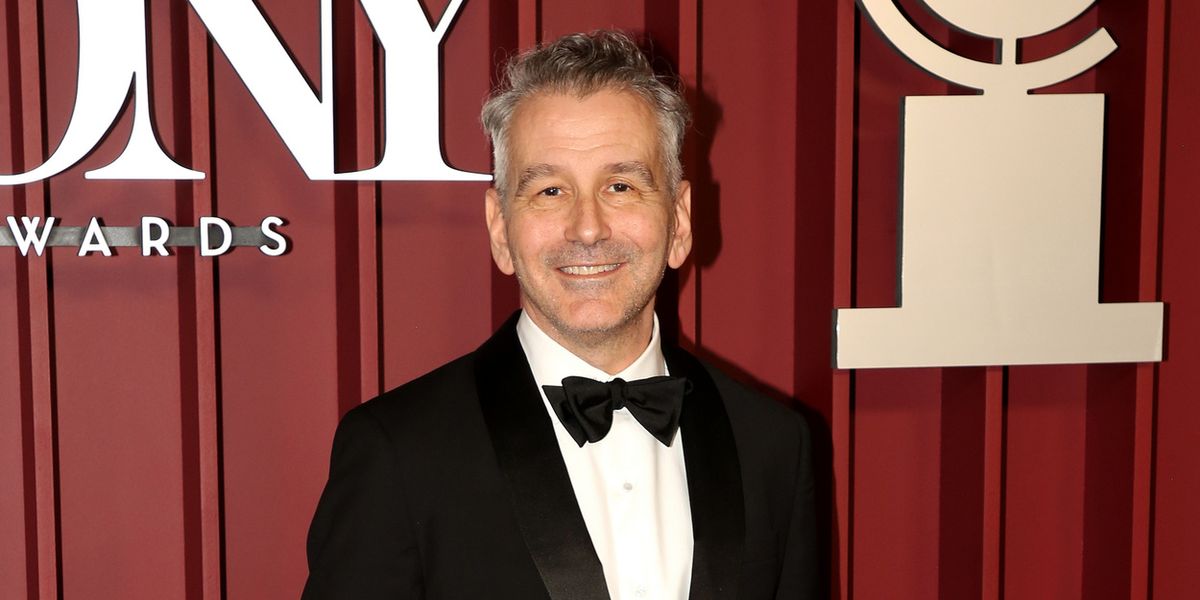
Not many directors could helm a blockbuster stage adaptation of a hit film starring George Clooney, the Broadway transfer of a dark and quirky musical about a Dead Outlaw, and an off-Broadway meditation on the root and consequences of AI all in the span of four months. If anyone could, however, it would certainly be David Cromer, who achieved that impressive feat last spring. Rocketed to fame by his revelatory 2009 production of Our Town, he has become one of New York’s most in-demand directors, noted for his versatility, sensitivity, and ability to create theatrical magic.
When asked to talk about working with Cromer, many actors start by pointing to his emotionally minimalist style. Julia Knitel, who was Tony-nominated for her role in his production of Dead Outlaw, commented that: “on the afternoon of our first Broadway preview, he said to us, ‘You are eight singular actors. You are all here because of what you do. Remember: you are not your ornaments. You are not your bits. Just strip it all away. Don’t do too much. Keep it truthful.’”
Cromer is also beloved among his collaborators for his unique sense of humor. Thom Sesma, one of the stars of Dead Outlaw, mentioned that “Cromer’s a rabid Looney Tunes fan. He can quote Bugs Bunny, Daffy Duck and Yosemite Sam, and the rest, scripture and verse.” Joseph Zellnik, who worked with Cromer on the Broadway bound musical Yank, mentioned that “during rehearsals, he had one particular habit I loved. Whenever we cut a line, or a section of a song, he’d inform the actor by saying, ‘You’re getting a raise. Fewer words, same salary.’ I thought this was the most charming way of softening the blow, and I’ve now sort of stolen it for my own use.”
Claybourne Elder, who played the role of Joe Pitt in Cromer’s Chicago revival of Angels in America, remembered a funny moment rehearsing for that production: “on a lunch break once, he and I decided to get in the hospital bed and row it around the room using crutches as oars. And then an hour later we were rehearsing one of the more emotional and difficult scenes in the play and I was crying. David is hilarious and bizarre and one of my favorite people in and out of work.”
Certainly, bringing revivals to life is well within Cromer’s forte. Jessica Hecht, who starred as Blanche DuBois in his Williamstown production of A Streetcar Named Desire, commented that “he’s incredible at understanding how to approach revivals. He pushes you to look at it like no one has before. He would say things about Blanche like ‘she strikes me as a very unlucky person because she never got a break, right?’ So you look at all these things that are chronicled in the play, and you say, ‘yeah, she hasn’t gotten a break.’ And does she get a break in the play? No, everything goes south. And then look at Stanley, who for all intents and purposes should’ve been killed, and is now living with this beautiful woman who adores him. So he said, ‘you have these two people who have both actually been responsible for saving lives, one of whom succeeds and has quite good luck, and one who fails miserably despite her best efforts.”
Hecht continued: “Cromer helps people see the logic so you don’t just play the emotion. You don’t look at your characters as being mentally ill or not mentally ill. You just see them on this journey.” Betsy Aidem, the star of Prayer for the French Republic, added that “David is unsparing when he cares about you. He's the least sentimental director in his taste and repeatedly asks us to get into trouble, make things messy like they are in life and resist any temptation to create a stage picture.”
Halley Feiffer, who collaborated with Cromer on Ethan Coen’s play Women or Nothing, commented on his unique confidence as a director. “He is the only director I have ever worked with who has the courage to say: ‘I don’t know.’ Paradoxically, this admission made me feel safer in his hands as an actor than with any other director. He showed me that the burden for solving anything is actually a communal one. That the timeline for when we ‘figure it out’ isn’t up to us. The not knowing is what makes Cromer a true artist: someone with his ear to the ground for inspiration instead of imposing his external will on a piece. That admitting one doesn’t know an answer and listening for it with humility and courage is how one ultimately discovers what the piece wants to be.” Aidem echoed those sentiments: “In rehearsal he lets you get through the whole scene without stopping you, so you get a sense of the momentum without breaking it up. It's an incredible confidence that he has in you, that you'll find it.”
Actor and music director Todd Almond worked closely with Cromer on his solo show I’m Almost There at the Minetta Lane Theatre. Almond remembered that “if he ever suggested cutting a line or a word, which he did, I would just immediately say yes and cut it. Whatever it was. My favorite joke. Cut it. It can be hard to see/hear your own work objectively, so with someone like David, whose every production I have loved, there’s complete trust. He’s got great taste, I’d be a fool to fight it. I love David. He’s kind of famously grumpy, which is charming. Maybe it’s just because we’re both mid-westerners in the big city, but we have a real understanding of each other.”
Cromer is a man of many talents: not only does he direct, but he has simultaneously maintained an acting career, appearing in Broadway productions of A Raisin in the Sun and The Waverly Gallery, as well as several off-Broadway plays. Jack Serio, who has directed Cromer in a few productions, noted that “I think he secretly loves acting. Actors get a lot more love and attention than directors do and that can feel so nice. I'm so glad that his performances in Uncle Vanya and The Animal Kingdom were so celebrated because I think it expanded people's understanding of his gifts and how multifaceted he is. I think acting very likely challenges David more than directing does and he's an artist who's always hungry and searching for his next challenge.”
This season alone, Cromer has already brought audiences the story of a transgender child in Caroline, and his productions of Bug and Meet the Cartozians are coming to New York later in the year. In 2025, Cromer’s name on a project is about the most definite assurance that it will bring stunning humanity to the stage. Playwright Bess Wohl, who collaborated with Cromer on Camp Siegfried, put it best: “Despite his enormous success, he remains resolutely down-to-earth. If you compliment him on his Tony award, he will shrug casually and tell you, ‘They give them
out every year.’ And yet, artistically, he is as ambitious and rigorous as any director working today. He will stop at nothing to find the most authentic and compelling version of any scene--and I feel very grateful any time his mind comes into contact with my words.”
Listen to full episodes of Backstage Babble here!
Sign up for all the news on the Fall season, discounts & more...