Stage Direction: The Legendary Hal Prince
Prince is the recipient of the most Tony Awards (an estimable twenty-one) in Broadway history.
 Click for Tickets!
Charles Kirsch is the 17-year-old host of the theater podcast Backstage Babble, where he has conducted over 250 in-depth interviews with some of Broadway’s best. In “Stage Direction,” he will be using material from the podcast and additional interviews to chronicle the career and impact of some of the most influential theater directors.
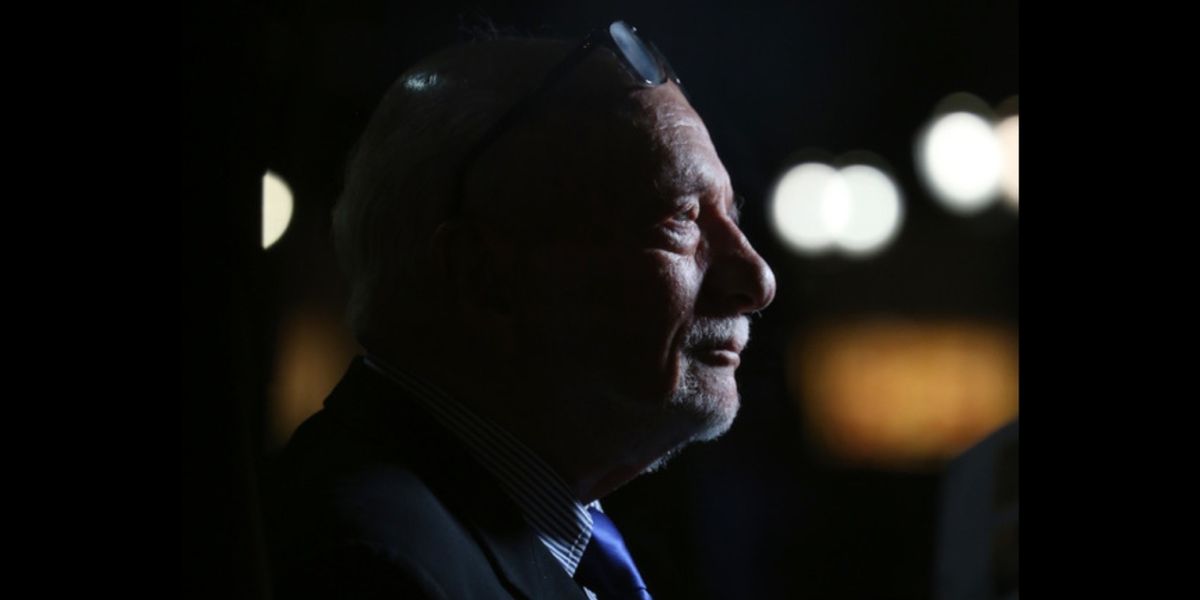
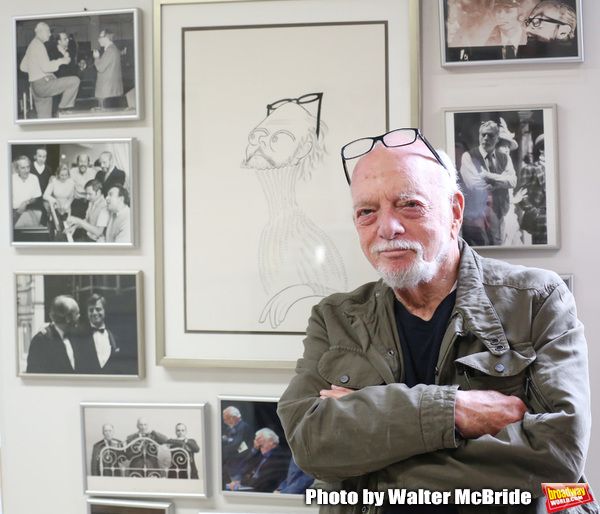
For the first edition of “Stage Direction,” it seems appropriate to honor a man who has directed works by Stephen Sondheim, Andrew Lloyd Webber, Kander and Ebb, and Comden and Green, and is the recipient of the most Tony Awards (an estimable twenty-one) in Broadway history: Hal Prince. In the annals of theater history, Prince is probably most associated with his extensive collaboration with Stephen Sondheim, a legendary partnership that began with West Side Story in 1957.
Ann Morrison created the role of Mary Flynn in Sondheim and Prince’s masterwork Merrily We Roll Along and went on to cover the role of Lotte Lenya in LoveMusik. Morrison commented that Prince (who she lovingly refers to as “Uncle Hal”), Sondheim, and their friend Mary Rodgers served as the basis for the show’s central trio, Frank, Charley, and Mary. She recalled a moment during rehearsals for LoveMusik where Prince was onstage directing a scene and came to the edge of the stage to ask if anyone was in the house. “Hal, I’m right here,” she responded. He added: “Of course, Annie, you’re always there.”
Another of Prince’s favorite leading ladies was D’Jamin Bartlett, who starred as Petra in A Little Night Music. Bartlett recalled the origins of “The Miller’s Son” and his expert knowledge of tone and structure: “The original song, ‘Silly People,’ was a dirge. It would’ve slowed the show down, so he commissioned Sondheim to write a song for the maid instead.” The addition of that song was what led Bartlett to take over the role from the non-singer who was originally cast. She soon found that other members of the cast behaved testily when she came in, a phenomenon Prince later explained by saying “let me tell you this. They would’ve crawled over the poor girl’s corpse to play Petra and sing ‘The Miller’s Son.’” Prince ended up guiding Bartlett’s interpretation of the song, telling her to focus less on sexuality or manipulation, and concentrate instead on the character’s youthful exuberance. Years later, Bartlett reconnected with Prince at a gala celebrating him at the Eugene O’Neill Theater, and they remained close until the end of his life.
Prince formed close friendships with many of the actors he directed. Alyson Reed, who starred as Sally Bowles in Prince’s revival of Cabaret, recalled that he reached out to her after the critical failure of the film of A Chorus Line, in which she starred, with a letter saying “don’t believe anything you read. You were wonderful, and I hope to meet and work with you.” Reed responded with an honest message frankly explaining her sadness about the reception to the film. Two years later, when she went to audition for Prince, he asked “remember me? I wrote you the fan letter!” Broadway veteran Loni Ackerman, who took over the title role in Evita, recalled that “My final callback for the LA company of Evita was at 9 AM. I sang and he called me to the foot of the stage of the Shubert theater. He gave me a few corrections and said: ‘OK, let's do it.’ I thought he meant to sing it again. I turned to walk back to center stage, and he very quietly called after me and said: ‘OK, I guess I'll see you in rehearsal.’ He smiled, I ran to the edge of the stage and jumped off into his arms! I thought I had killed him!”
While Prince is mostly renowned for his abilities as a musical mastermind, he also lent his talents to several straight plays. One of these was Hollywood Arms, a theatrical memoir by his friend and collaborator Carol Burnett. Nicolas King, who was a child actor in the show, recalled that “[Prince and I] met during the final week of my performances in A Thousand Clowns on Broadway. He came to the show with Carol Burnett, and right then and there they cast me in Hollywood Arms. They even changed the part for me: it was originally written to be the little neighborhood girl who lived down the hall, but they changed it to be a boy so that I could do it.” Burnett later spearheaded a campaign entitled “The Majestic is Fit For a Prince” to rename the theater that housed The Phantom of the Opera after Prince, a noble effort which was ultimately unsuccessful.
Prince garnered respect from his collaborators through his commitment to the art of directing. Veteran playwright and performer Craig Lucas stated that “Hal was one of the few directors I’ve known who was always coming back from or about to depart for another city about the globe in order to take in what some other director was doing in some completely different style. I don’t think anyone could beat him at the use of space itself — the power of diagonals, vertical levels, silence, focus.”
Prince was always a champion of new writers and kept his finger on the pulse of the theater world at all times. One project he created, 3hree, consisted of three one-act musicals by young and talented composers. The piece Prince chose to actually direct was called The Flight of the Lawnchair Man. The show was composed by Robert Lindsey-Nassif, who Prince was previously working with on a musical adaptation of
George Abbott’s play Broadway. The musical told the story of a New Jersey man who dreamed of flying so much that he attached 400 helium balloons to a lawn chair and took to the sky.
Lindsey-Nassif recalled Prince’s humor and candor in equal measure. “I remember the very first industry reading of Lawnchair Man. The invited audience was buzzing with anticipation. Hal stood in the back of the theatre as the reading was about to commence and observed, ‘No one here wants us to succeed.’ He didn’t say this cynically, but with something of a sigh because, unfortunately, he was right. That’s the nature of the business.’” As Lindsey-Nassif saw it, “Hal was a study in opposites – an artist/businessman. He was pragmatic yet passionate. Totally organized yet utterly unpredictable. He was perhaps the most successful director in the world, and yet it was especially delightful to see him set eyes upon the miniature model of a set design for the first time as he investigated it with childlike wonder, considering its possibilities.”
Prince never stopped looking to break new ground. Broadway dancer Candy Brown, who worked with him on Grind, a 1985 musical about burlesque with a largely black cast, commented that “Hal liked serious themes. Grind dealt with segregation and prejudice, which resonated with Hal’s Jewish background. He empathized with the American prejudices regarding African-Americans and felt it would resonate with audiences.” Towards the end of his life, Prince mentored writers Jacob Yandura and Rebekah Greer Melocik on their musical How to Dance in Ohio, which made new strides in telling neurodivergent stories on Broadway.
It would’ve been a shame for such a theatrical mastermind not to keep the passion alive in his family. Prince’s daughter Daisy has gone on to become an expert director in her own right, breathing life into projects like The Last Five Years and The Connector. Prince stated that “my father was the most optimistic person you could meet. To a fault sometimes, but I think that’s why he kept working in this crazy business.” Hal Prince ended up casting his daughter in two of his musicals, Merrily We Roll Along and The Petrified Prince. For the latter project, he initially put up some resistance. As Daisy Prince tells it, “The reason I went to audition for The Petrified Prince was because I had done all the demos with [composer Michael John LaChiusa].” [Hal Prince] thought I was too old for the person that they wanted to play my counterpart. We’ve now been married for almost three decades.”
In addition to his versatility and creativity, Prince never lost his sense of humor. Lucas recalled that “during the run of On the 20th Century, Hal pulled me aside after a show to say in the kindest way possible, ‘You have to wear underwear when you’re in costume. It's a musical, not a dating service.’ I loved him.”
Listen to full episodes of Backstage Babble here!
Photo Credit: Walter McBride / WM Photos
Prefer BroadwayWorld in Google Search?
Add us as a preferred source so our stories show up more often in Top Stories and Google’s AI answers — for you.
Sign up for all the news on the Summer season, discounts & more...

.jpg?format=auto&width=365)