George C. Wolfe: Behind the Curtain of Broadway’s Visionary Director
George C. Wolfe most recently directed the 2024 revival of Gypsy, starring Audra McDonald.
 Click for Tickets
Charles Kirsch is the 17-year-old host of the theater podcast Backstage Babble, where he has conducted over 250 in-depth interviews with some of Broadway’s best. In “Stage Direction,” he will be using material from the podcast and additional interviews to chronicle the career and impact of some of the most influential theater directors.
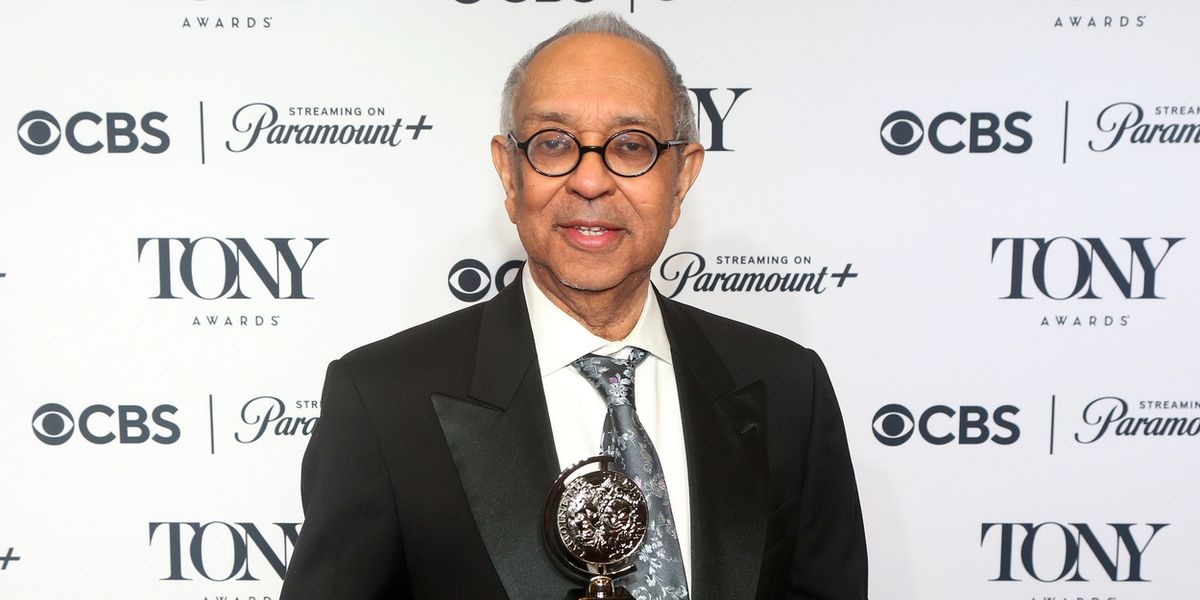
In 2024, the pioneering director George C. Wolfe, who brought iconic pieces like Angels in America and The Normal Heart to Broadway stages for the first time, was honored with a Lifetime Achievement Tony Award. If that award is meant to signal the twilight of a career, however, fear not: Wolfe came back to New York the very next year with his critically acclaimed revival of Gypsy starring Audra McDonald.
Lesli Margherita, who played the role of Tessie Tura in Wolfe’s production, remembered that she and Brittney Johnson, the actress who played Agnes, initially came up with the idea of having Tessie give Agnes her g-string, which Agnes naively mistakes for a necklace when she first enters the burlesque house, as a parting gift. At first, Wolfe was concerned that this bit would slow down the show’s momentum–Margherita recalled that he would often tell the cast “there are two pauses in this show, and they aren’t yours”--but he ultimately came up with the solution of having Tessie put the g-string around Agnes’ neck, as if anointing her. Margherita is “still mad,” she jokes, that she didn’t come up with that joke herself, but, as she put it, “[Wolfe] has the unreal ability to see something you bring to the table and make it ten times better.”
There’s no question that Wolfe is an actor’s director: Kathleen Chalfant, who originated the role of Hannah Pitt in Angels in America, recounted, “On the night The New York Times came to see the show, George spoke to each of us separately while we waited for the curtain to go up. He said to me, ‘Be CLEAR.’ Hearing that made me draw a bright line around everything I did that night–genius on his part.” Stephanie Pope, who was one of three Hunnies in Wolfe’s masterpiece Jelly’s Last Jam, said: “I remember Mr. Wolfe telling me that I needed to wear sunglasses when I came to rehearsal because he could see everything I was thinking. For me, that was his way of saying ‘I see you...and I appreciate what you bring to the table.’ For someone who has often felt the need to shrink so that others can feel comfortable, having someone as brilliant as George C. Wolfe recognize and encourage my artistry says so much about him as a human being, a director, and an artist.”
Wolfe has had this inspiring effect on many artists: Capathia Jenkins, who had a featured role in Caroline, or Change, remembered, “During a tech rehearsal, [Wolfe] took me aside and said to me ‘In act one, scene one, I feel like you go just so far and then you stop, and it’s annoying. Do you understand the note?’ I immediately understood exactly what he was saying and knew that I had more to give. To this day, I never hold back and always go full out. He taught me so much about myself, and I am forever indebted to him for that invaluable lesson.”
Among his many talents, Wolfe has an uncanny ability to find the right actor for a part. Lea DeLaria, who gave a memorable performance as Hildy in Wolfe’s revival of On the Town, which started at the Delacorte Theatre and moved to Broadway, noted that her casting was the product of a long and adventurous search. As she put it, “He saw everyone from Faith Prince to
Audra McDonald to Charles Busch–he was trying to think outside the box. Ultimately, George said, ‘What makes Hildy funny? Well, she’s a woman who acts like a man.’ And then he said, ‘We need a lesbian.’ And Jordan and Heidi, the casting directors, said, ‘Boy, have we got a lesbian for you,’ and they pulled me in.”
 One of Wolfe’s most fruitful collaborations has been with producer Daryl Roth, another artist who is committed to bringing revolutionary stories to the stage. Roth, who first became aware of Wolfe during his tenure as artistic director of The Public Theatre, started working with Wolfe on Anna Deavere Smith’s epic play Twilight: Los Angeles, 1992. But, as Roth put it, “The collaboration with George that will always mean the most to me is the Broadway premiere of Larry Kramer’s The Normal Heart. George and our scenic designer, David Rockwell, used very little scenery to portray the multiple locations called for in the script. The centerpiece was the names they projected on those walls of all the people in our community who passed away from the AIDS epidemic. It was so haunting, and the image those names created is permanently fixed in my memory and those fortunate enough to experience this production. The other indelible moment for me, George, and everyone in the company was during a performance on the evening of June 24, 2011, the New York State Marriage Equality Act was passed in Albany. At the curtain call, we announced the momentous news to our audience, which led to cheering and crying. It was the most perfect marriage of art and life colliding in a magnificent way.”
The Normal Heart wasn’t the only period piece that Wolfe brought to life: he also lent his talents to Michael John LaChiusa’s adaptation of The Wild Party, set in the fast and furious world of the 1920s. Tony nominee Jane Summerhays, who played the role of Miss Madeline True in that production, said, “George’s knowledge and enthusiasm for this period were both palpable and infectious. The cast arrived at the first rehearsals to find a bookcase full of literature, video and film about New York City in the ‘20s. We became immersed in the Harlem Renaissance, the art, music, musicians, singers, writers, and the cross-cultural night life. This immersive process informed our performances, giving them nuance and depth.”
Wolfe did not shy away from depth or risk-taking in any of his work. Stephen DeRosa, who covered the lead role in Taylor Mac’s experimental play Gary, which Wolfe brought to Broadway in 2019, said, “There are very few directors who expertly combine queerness and Broadway showmanship with heightened poetic language and that’s what Gary needed. I loved how he was able to keep things loose and funny throughout the chaos of the process while still maintaining his laser-like focus and attention to detail. The show goes from depicting a mound of corpses in the aftermath of war to a dancing chorus of hot guys with giant phalluses! And did I mention there’s a tea party in the middle? In the end, Gary was probably too avant-garde to achieve commercial success but artistically I thought it was tremendous.”
Whether it’s Gary, Caroline, or Jelly, Wolfe has shown a remarkable commitment to telling complex and nuanced stories that might otherwise go unseen. Veteran actress Darlesia Cearcy, who worked with Wolfe on Shuffle Along, voiced an opinion that all of Wolfe’s collaborators seem to share: “George C. Wolfe is all kinds of brilliant and I’m so glad I got a chance to live inside of the work with him to know it.”
Listen to full episodes of Backstage Babble here!