


Review: The Long Unending Tale of IMC’s DRACULA: REQUIEM
The show took place at Gedung Kesenian Jakarta and ran a total of four times: on December 6, 2025, as well as on January 3, 2026.
Written by Nabila “Hana” Hananti, Rakaputra Paputungan, and Zahira. Editing by Rakaputra Paputungan.
As 2025 rolls into the new year of 2026, the theatre community Indonesian Musical Company has created their fourth major musical production titled Dracula: Requiem. This show took place at Gedung Kesenian Jakarta and ran a total of four times: on December 6th, 2025, as well as on January 3rd, 2026. We from Broadway World Indonesia had the opportunity to watch the 1st and 2nd show on December 6th, 2025, and here is our review.
Dracula: Requiem was directed by Venantius Vladimir Ivan with the assistance of Bryan Edward, Nikolas Stevie, as well as Aristotle Rama. The script is written by Bryan Edward with songs by Charis Joshua Untung, with the latter also acting as the music director. The show is choreographed by Belinda Gabriela Sihombing.
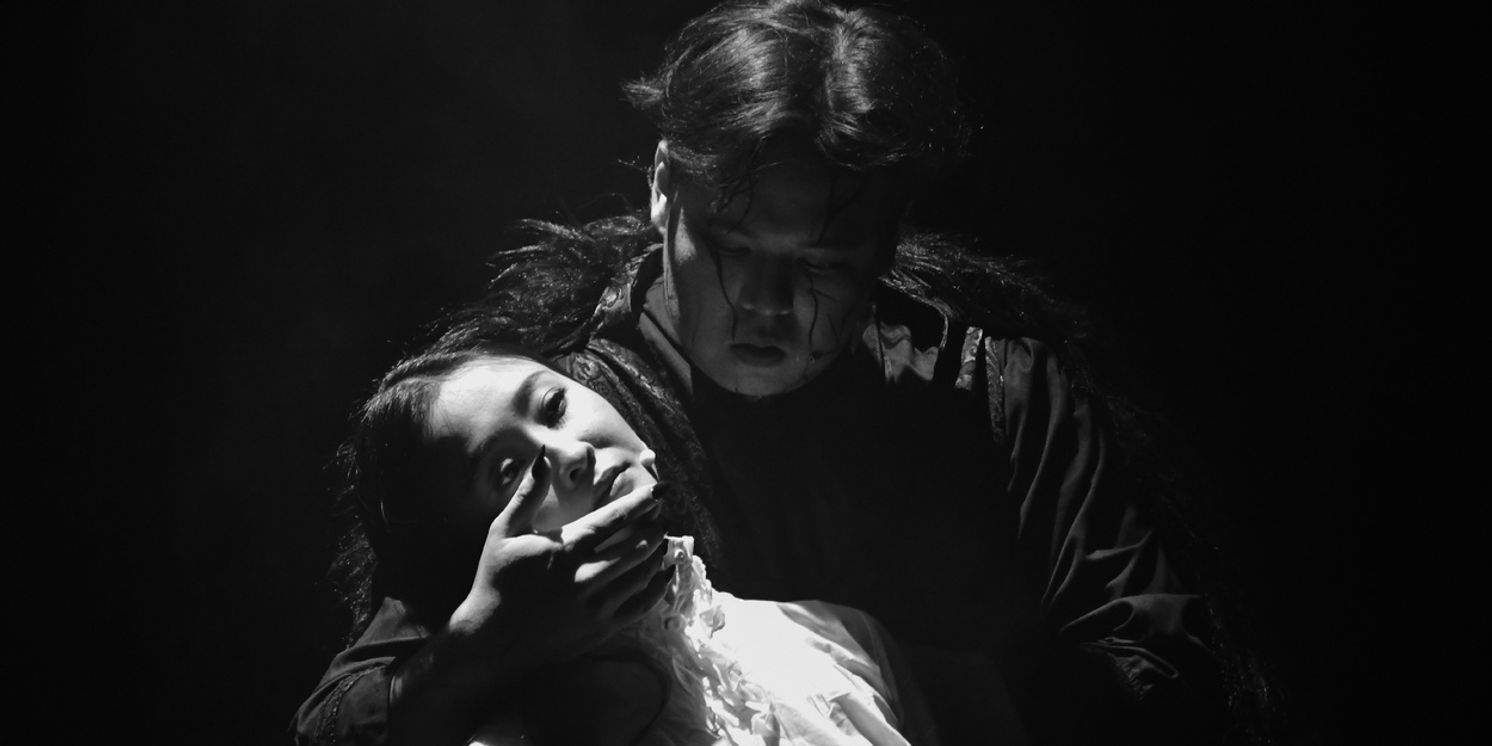
The story of Dracula: Requiem is built upon the now well-known myths of Dracula. Albert van Helsing (Aristotle Rama) is a doctor living blissfully with his wife Lilian (Kelvina Gemilang) and daughter Emily (Clarice Rhea Harijanto & Arzella Brienne). But their peaceful life soon comes to an end when Dracula (Bryan Edwards) sets his sight on Lilian, who reminds him of his past love.
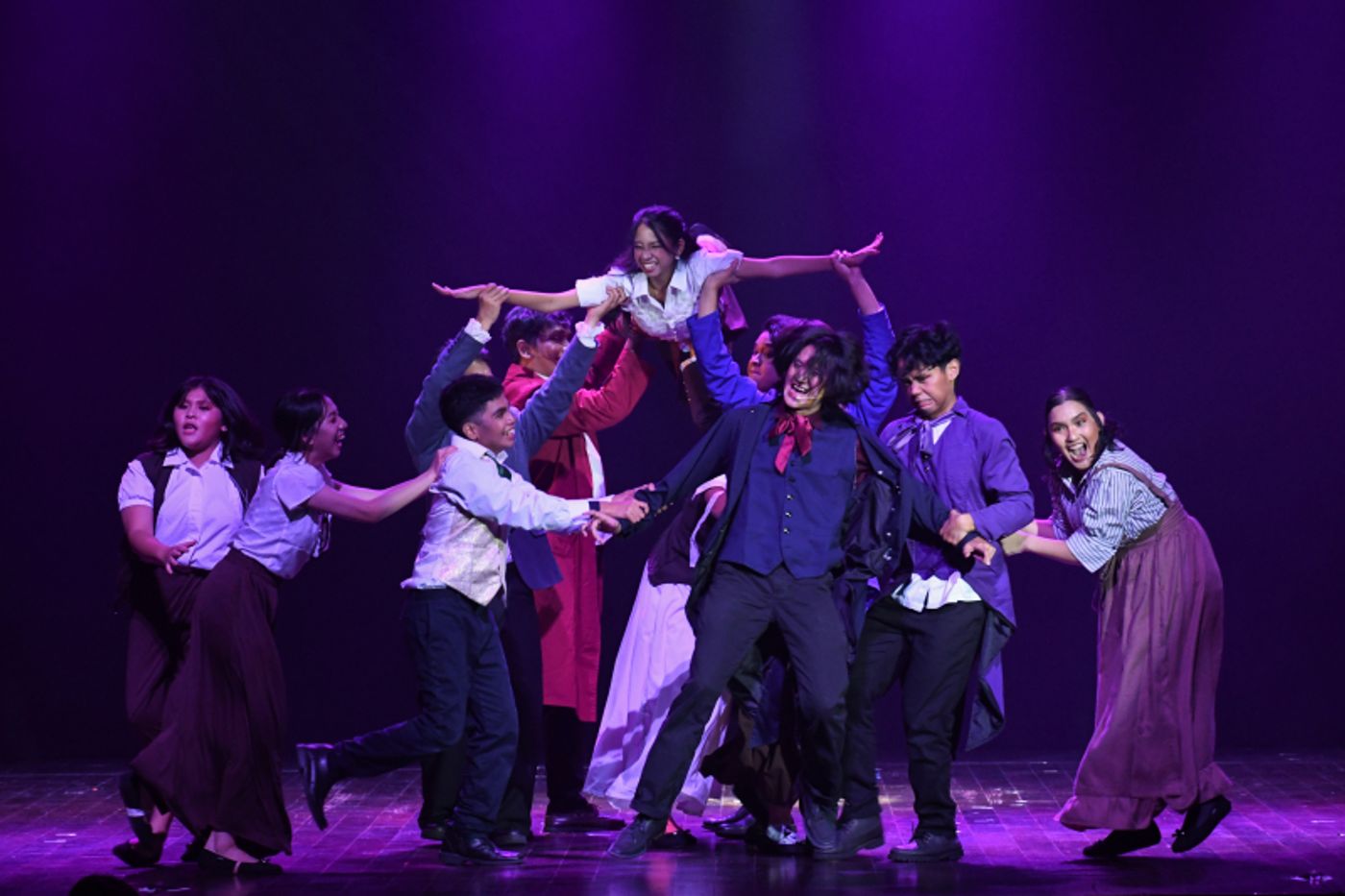
However, the play as a whole is not just a story about Dracula’s entrance to Van Helsing’s life. Instead it tells the story from multiple perspectives—a large ensemble of cast. Moreover, most of these characters had their own role in the narrative. Even just naming the major characters, there were also Father Gabriel (Okta Bramantio and Reynaldi Bilahmar), Sister Beatrice (Angeline Lidwina and Nadifa Tasya Aqila), and Professor Hendrik (Joel Yulianto and Dzu Al Fiqar). It is no easy feat to write such a crowded story well, and it proved to be quite a challenge for IMC.
Sometimes, Dracula: Requiem felt like multiple different shows combined into one: 1) The story of Helsing and his family; 2) The story of the priest and the nuns; and 3) The story of Oliver, Amelia, and the professor’s students. In the larger narrative, the three storylines were interconnected with each other. However, for most of the show, each storyline existed as isolated scenes, creating a very “cinematic” flow. For a theatrical show, this approach created logistical and storytelling challenges. Often, such rapid change in context made following the story more difficult – leaving the audience to expend more mental energy simply trying to piece the scenes together, rather than fully immersing themselves in the emotional journey.
On its own, the story could use some more work and polish. Often, the story introduces a narrative element early yet without a satisfying payoff. The most obvious example of this is Emily and her (lack of) journey. Early in the story, Lilian and Emily disappeared, setting off Albert on his quest.
While we got to see Lilian’s point-of-view, Emily was barely mentioned during her entire disappearance, leading the audience to question her absence. It almost seemed like she was put as an afterthought, when she was one of the earliest elements introduced within Dracula: Requiem, complete with a trio song about the idyllic family life of the Van Helsings. We were led to expect that Emily would be at the center of the story—but that didn’t happen.
Even Van Helsing’s pursuit eventually lost its luster. Although he had a clear goal of searching for his wife (and, by extension, his daughter), he had little personality otherwise. This made his character one dimensional and repetitive. Furthermore, the chaotic mishaps, tribulations, and side stories easily distracted the audience from our main character’s motivation.
And this doesn’t only apply to Van Helsing. Dorothea (Alishia and Alexandra Cheryl) is another example. Her progression within the story was difficult to comprehend. The only thing we know about her is that she likes Van Helsing. So, when the plot eventually dictates that she takes a drastic action, the emotional transition didn’t have enough build up to make it believable.
One of our writers opined that while Van Helsing was the obvious protagonist of the show, the directorial choices made it seem that the show wanted us to root for Dracula instead – as he was afforded more background story and emotional nuance.
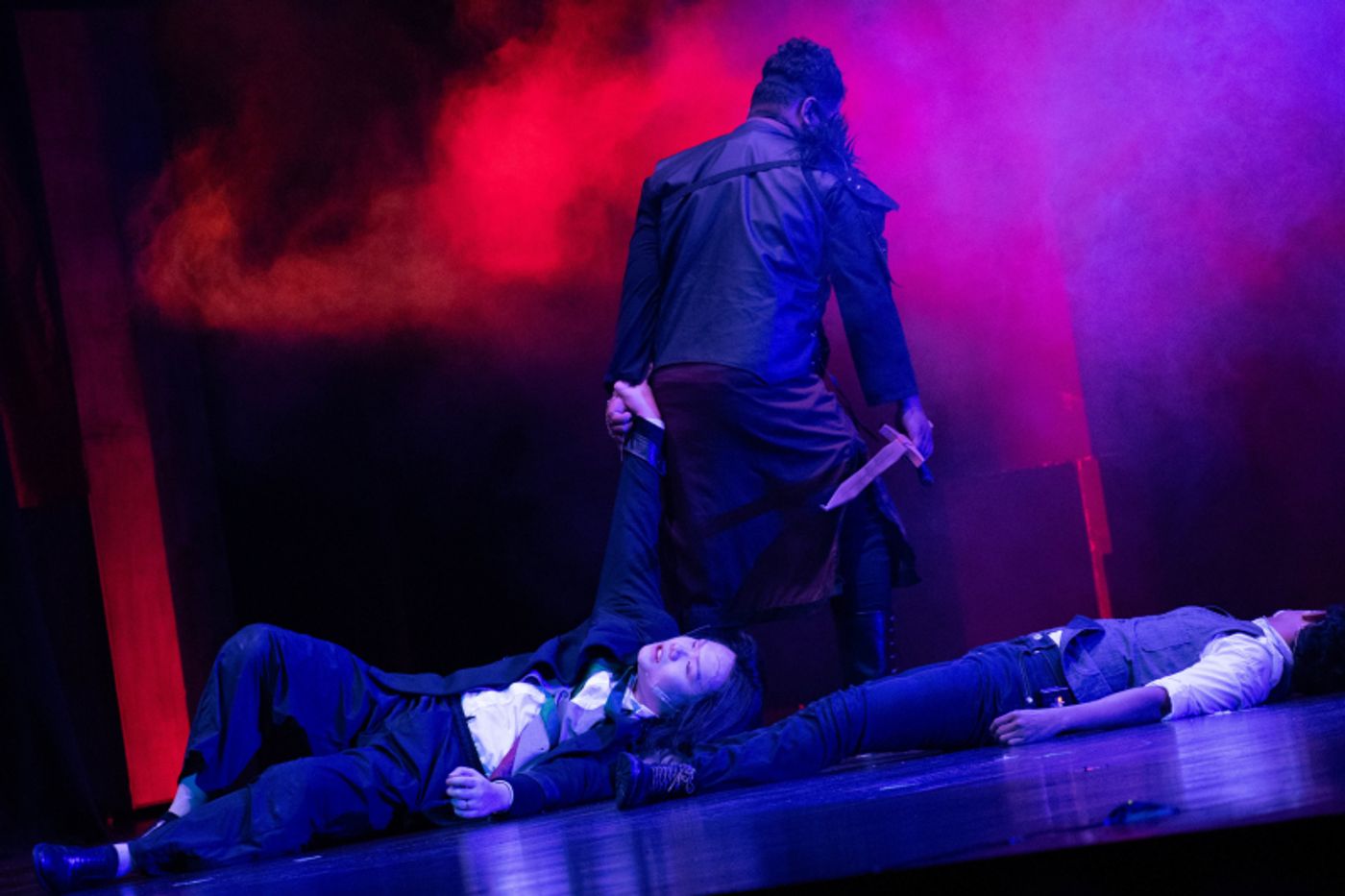
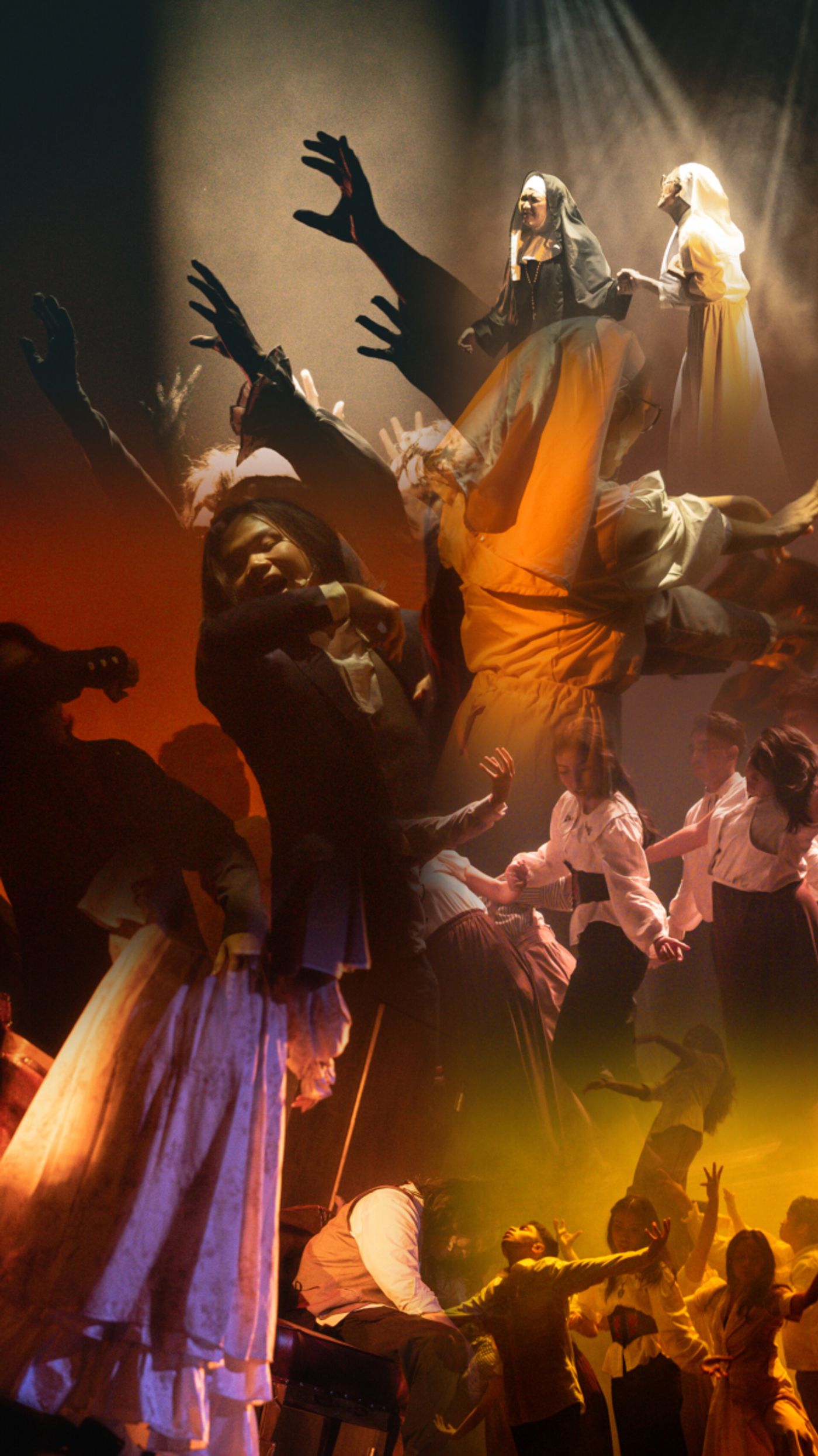
As a horror musical, Dracula had some effective moments. Namely, when the show leaned towards the psychological and mysterious. Sometimes we weren’t quite sure what was happening to the characters – time loop, or just delusion? Another example was when Dracula first made his entrance, his movements slight and restrained with a horrifying mask whose shape was hard to comprehend. These moments were both cool as well as successfully unnerving.
Of course, there were also action scenes, and Dracula: Requiem in particular had multiple chase scenes. As with their previous shows, IMC utilized the venue very creatively, with scenes taking place between the audience’s seats – including said chase scenes. And although at first they were indeed suspenseful and entertaining, there were too many of them that the audience eventually got desensitized, even fatigued. Not to mention the physical strain coming from turning one’s neck to see the action happening in the aisles.
By the end, we found it hard to feel scared for the fate of the characters on stage. Typically, although we (the audience) are in a seated (safe) position, we could feel for the characters if we grew to sympathize with them or their cause. Unfortunately, with the multiple storylines, characters that lack depth, and lengthy runtime, we could only appreciate their story as entertainment at best.
This highlights a major flaw in Dracula: Requiem’s narrative: the lack of a satisfying cadence. From the beginning, there was a sense of whiplash coming from the high-tension opening scene that was then followed by a cheerful domesticity of a whole new set of characters. Then, as we were ushered in and out of situations, moods, and cast of characters, it was difficult to build any emotional momentum or attachment to the character.
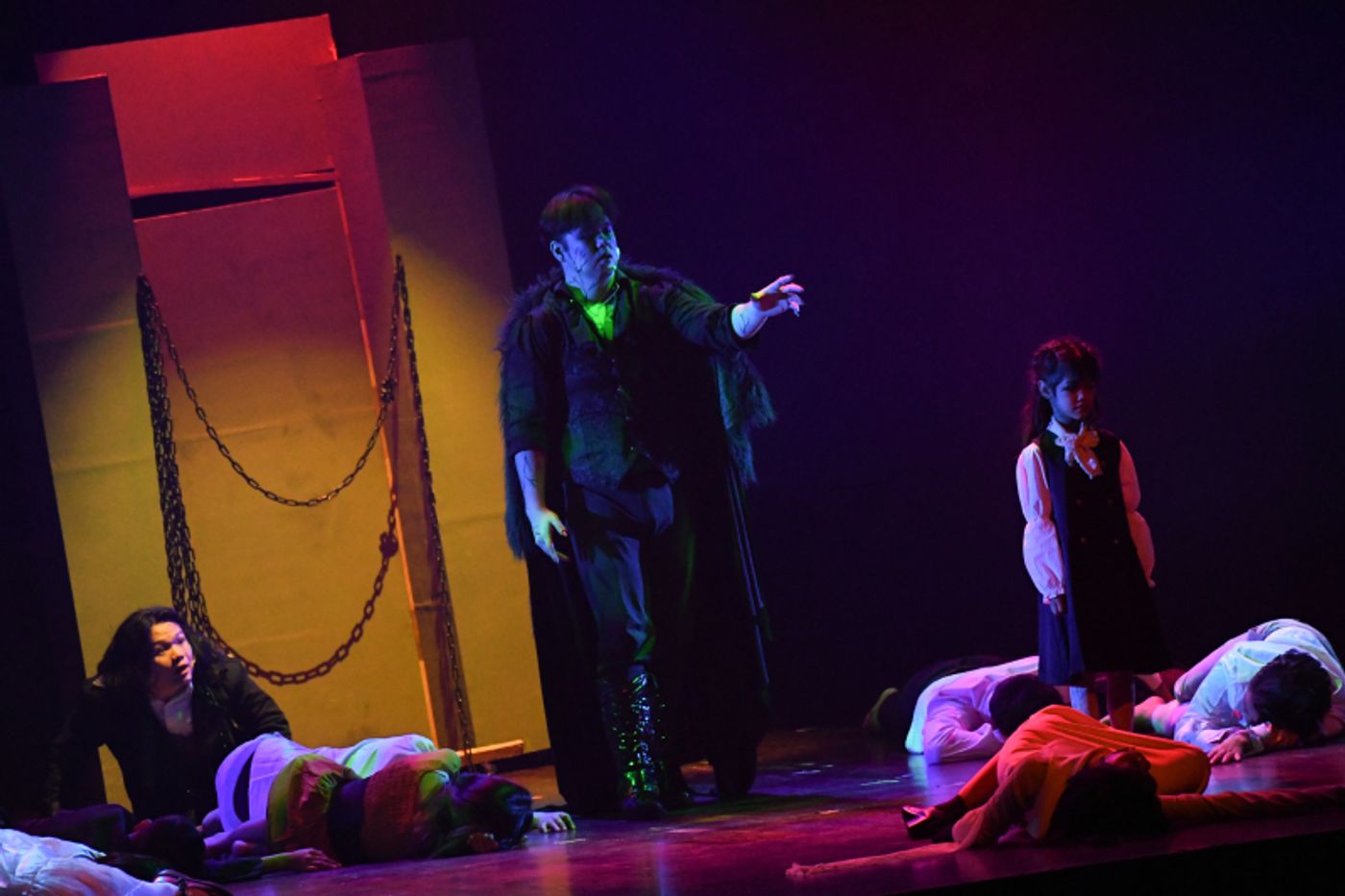
Overall, Dracula had great moments and the horror scenes hit quite hard. However, as a whole, it comes off as overextended and unfocused. This is also evident in its four and a half hour runtime. If IMC wants people to engage with their art, they should take into account that the overly-long runtime will induce fatigue, making the audience no longer able to focus and enjoy the show. This long runtime is not only a disservice to the audience, but also to the performers and even the creative material itself.
Still, there was a potential in Dracula: Requiem. The music was on point. The songs were incredibly fitting for the scenes, accompanied by equally matching direction. Everyone gave a solid and dedicated performance (particularly, Bryan Edwards who played the titular character with equal parts poise, yearning, and menace). The gothic vibes that IMC wanted to deliver were successfully conveyed – though it is unfortunate that there were multiple sound issues that occurred within the show(s) we’ve watched.
Dracula: Requiem also had gorgeous artistic design, especially for a community production. The set and lighting felt suitably dramatic. Although further talk with the creative team revealed that there were technical issues that caused a bit of a misunderstanding, such as a lack of lighting to indicate that a scene was meant to be a dream segment.
Overall, we believe that there’s a good show in Dracula: Requiem. However, it was limited by its technical interference as well as the script’s larger than life ambition. Perhaps IMC could challenge themselves and try to tell a simpler and shorter story, as the length of a show does not always correspond to the value that the story has. Shorter duration would lead to tighter script and more effective storytelling, and we think IMC could put that into consideration. Theatre is a process, so it is always an option.
Reader Reviews
Videos