


Review: JEMARI Touches Hearts, With and Without Words
The deaf performing arts community Fantasi Tuli, in collaboration with Cerita Beda Hak Sama, put on their first full-length show on 3 to 7 December 2025 at Teater Salihara.
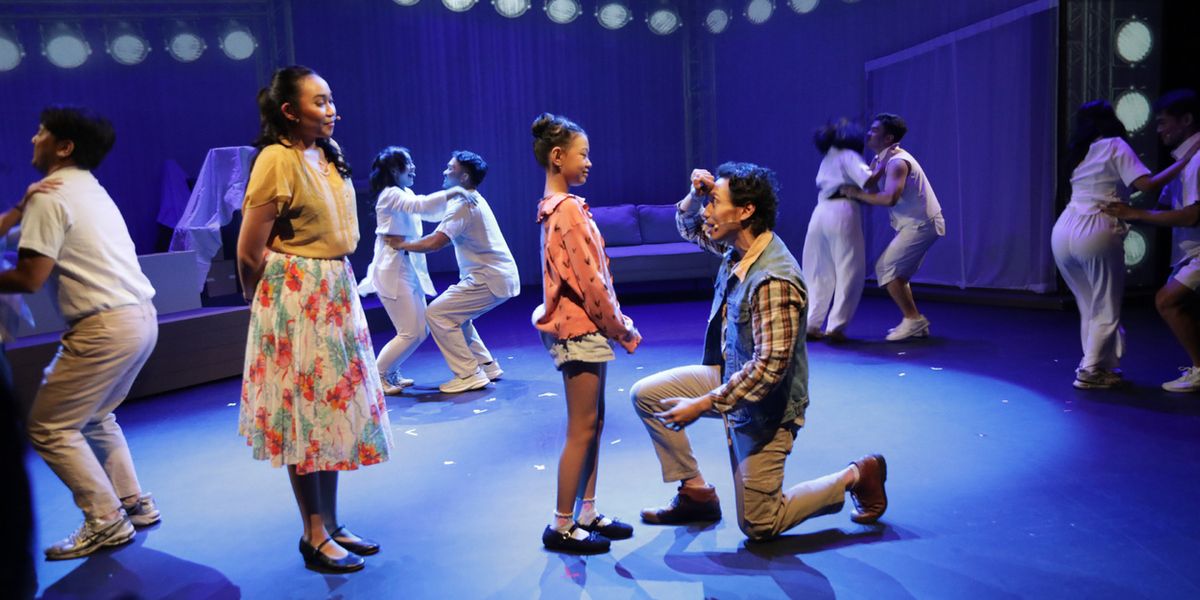
The deaf performing arts community Fantasi Tuli, in collaboration with Cerita Beda Hak Sama, put on their first full-length show on 3 to 7 December 2025 at Teater Salihara. Titled “Jemari” (“Fingers”), the original musical featured both deaf and hearing actors.
The show was directed by Palka Kojansow (hearing director) and Hasna Mufidah (deaf director). The script was written by Pascal Meliala and Palka Kojansow (who also wrote the lyrics). Pascal also served as one of the musical’s producers alongside Affav Siregar, with Dhea Seto as co-producer and Arvan Fadhlurrahman as assistant producer.
The creative team also included Geddi Jaddi Membummi and Dilasara (music directors), Hasna Mufidah and Satya Pramana (lyric interpreters into sign language), Dhea Seto (choreographer), Satya Pramana (co-choreographer), and Windy Liem (vocal director).
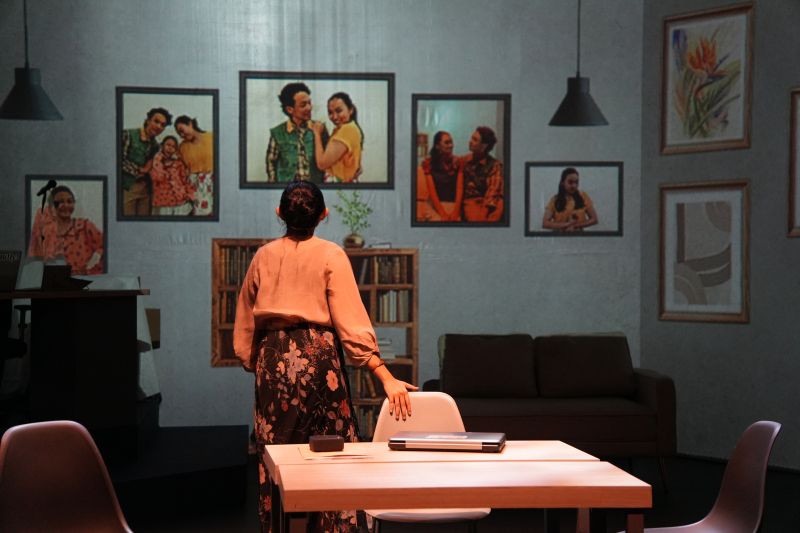
Jemari opens with a video of a happy family: the cheerful Mentari (El-Shani Nayira Shaim), her mother Lestari (Adela Hermawan), and her father, the songwriter Gusti (Nino Prabowo). Although she’s deaf, Mentari has a dream to be a dancer – a dream that her parents heartily encourage.
Several years later, Mentari is now a young adult (Hanna Aretha O.) living with her mother following Gusti’s untimely passing. Gusti’s unattended studio and body of work catches the attention of money-grubbing producer Agus Kartasuwira (Darren Radyan).
Agus concocts a plan to hold a promotional concert featuring Gusti’s songs. After he learns that Mentari is deaf, he even sends a staff member, Awan (Jonah Gabriel M.) to convince her to dance at the concert.
Awan tries to get to know Mentari; thankfully, he has learned how to sign to communicate with his mother (Hasna Mufidah), who’s deaf. Eventually, he manages to befriend Mentari and even her deaf friends: Langit (Rimba Damenna M.), Gema (M. Arsa Alamsyah), Bara (Dan Hyuk), Bulan (Farida Artha H.) and Alan (Nathan).
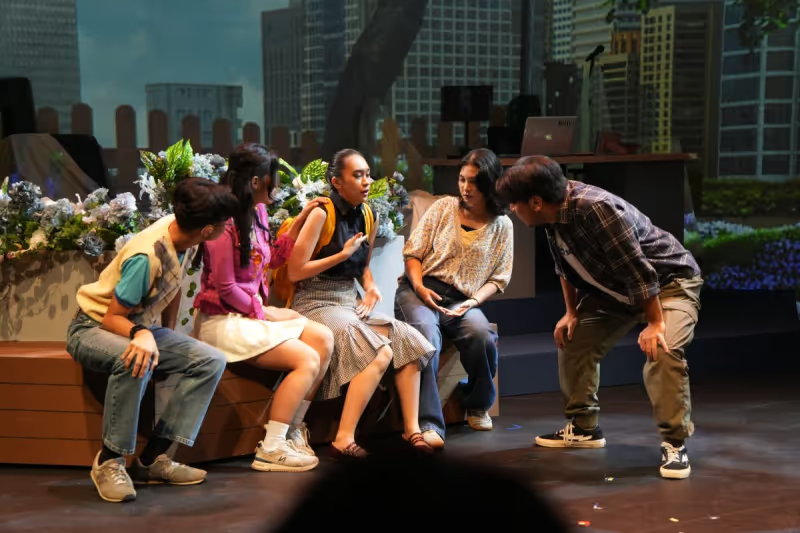
Although she hasn’t danced since her father’s passing, Mentari finally agrees to perform at the concert, with one stipulation: her friends get to perform with her. Agus concedes.
Yet when Mentari invites her friends to perform with her, some of them refuse – believing that the concert is meant to exploit their disability for sympathy. After Mentari reassures them that Awan means well, everyone finally agrees to do it.
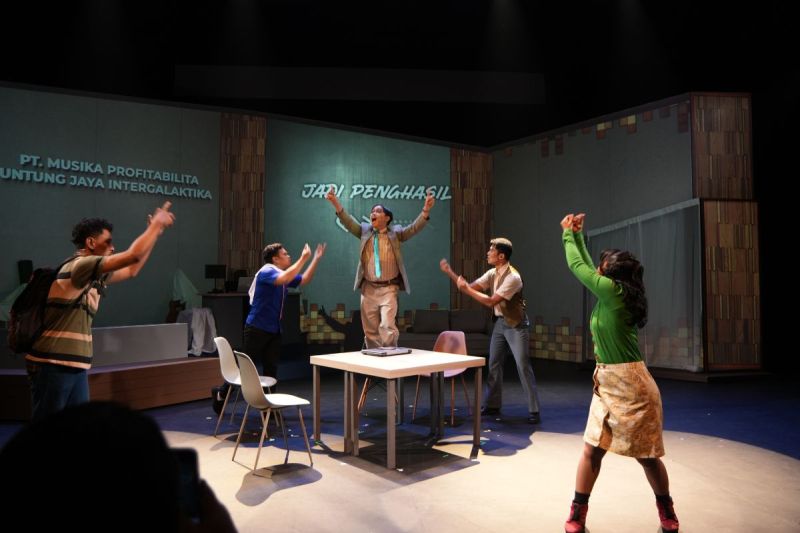
As the gang prepares for the concert, Agus likewise convenes with his team to work on the marketing. Instead of the original plan to focus on the late Gusti’s works, Agus pushes the promotional material to highlight the deaf performers in a debasing way – selling their “disability” as a sad story, even implying that it needs to be “cured”.
Mentari’s friends come across the update poster on social media. They confront Mentari and Awan; Awan claims he knows nothing – but the trust is already broken.
Everyone is then left to contend with this fallout; Bara is vindicated yet enraged that his suspicions were proven true; Alan, whose family needs the money from the contract, talks things out with his father (Ricendy Januardo); and after asking Agus to reconsider the marketing approach (to no avail), Awan then has a heart-to-heart with to his mother;
Mentari is the one who’s hit the hardest; trying to find the right way forward, she watches an old video that Awan has found in his father’s old laptop; a recording of Mentari and her parents when she was a child. She’s reminded of her dream and reminisces about her father.
And, by the end of the show, Mentari makes her decision.
.jpg?format=auto&width=800)
Jemari is the first full-length show by Fantasi Tuli, a follow up of their short musical Senandung Senyap at 2024’s Festival Musikal Indonesia. Yet the show had an astounding level of artistry and polish, one that would be befitting of a long-established theatre troupe.
The foundation of the show’s quality is the script by Pascal Meliala and Palka Kojansow. What stood out the most from Jemari’s script is just how well-realized the characters are. Every major character has a multifaceted personality, aspirations and history. The relationships, too, feel authentic. From the way the characters communicate, gesture, and choose their words with each other, we get a sense of genuine longstanding relationships.
Focusing on the characters is a masterful way to deliver the story. This way, Jemari’s plot doesn’t come across as a mere tool meant to “spread awareness” of the cause. Rather, it is a solid theatrical piece that immerses the audience in the story and invites them to empathize with the characters. And it is easy to do so when these characters are real, flawed human beings.
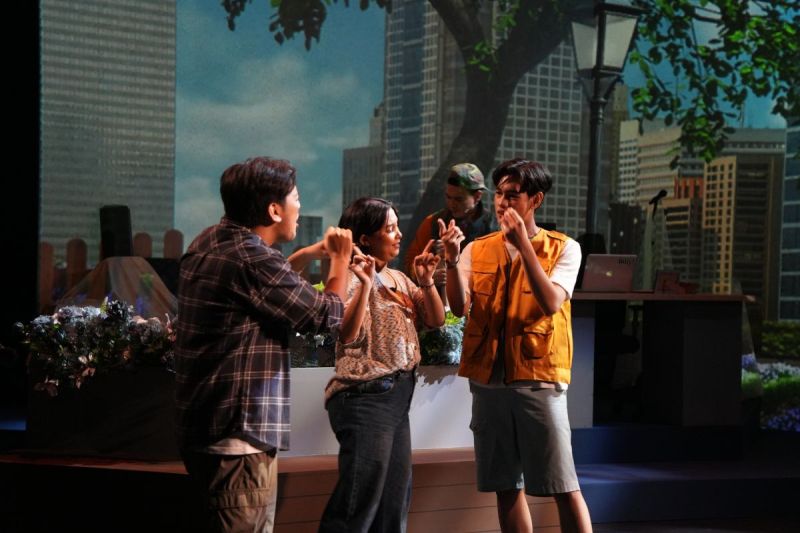
It is also interesting that there are smaller details that don’t majorly impact the main plot, such as Bulan’s injury and Alan’s family’s economic struggle (his father works as a ride-hailing app driver). Although this can come as gratuitous, it works in the context of Jemari. These inconsequential character moments paint a more thorough picture of the lives of the characters. Particularly, it shows that the deaf community consists of people from different walks of lives, with different outlooks.
Then there is Jemari’s measured usage of quiet moments. This is a show that isn’t afraid to let the plot slow down. There are many intimate moments where the characters simply talk and sign about their feelings. These allow us to understand them better, making their later decisions more meaningful.
.jpg?format=auto&width=800)
Even when the show reaches its ending, some things are purposefully left unresolved. It speaks to a bittersweet, yet mature truthfulness.
However, there is a narrative aspect that sticks out like a sore thumb: the villain, Agus Kartasuwira. With a flamboyantly evil demeanor and a fat suit, the role feels like it comes from another, less nuanced musical. He also serves double-duty as a comic relief – admittedly, with a decent result. Still, one could not help but wonder if a more subtle approach would have fit better with the rest of the show.
The music itself is beautiful, with a blend of pop and musical theatre sounds. The lyrics are another highlight – poetic and touching, but never pretentious.
As a musical with both deaf and hearing cast, Jemari also faced another challenge – how to integrate the sign language into the show. But the team of creatives turned this challenge into an opportunity. The sign language is integrated into the musical numbers as another aspect of the performance; not only practical, but also artistic. Even as someone who hasn’t learned Bisindo (Indonesian sign language), I find its integration elegant and meaningful.
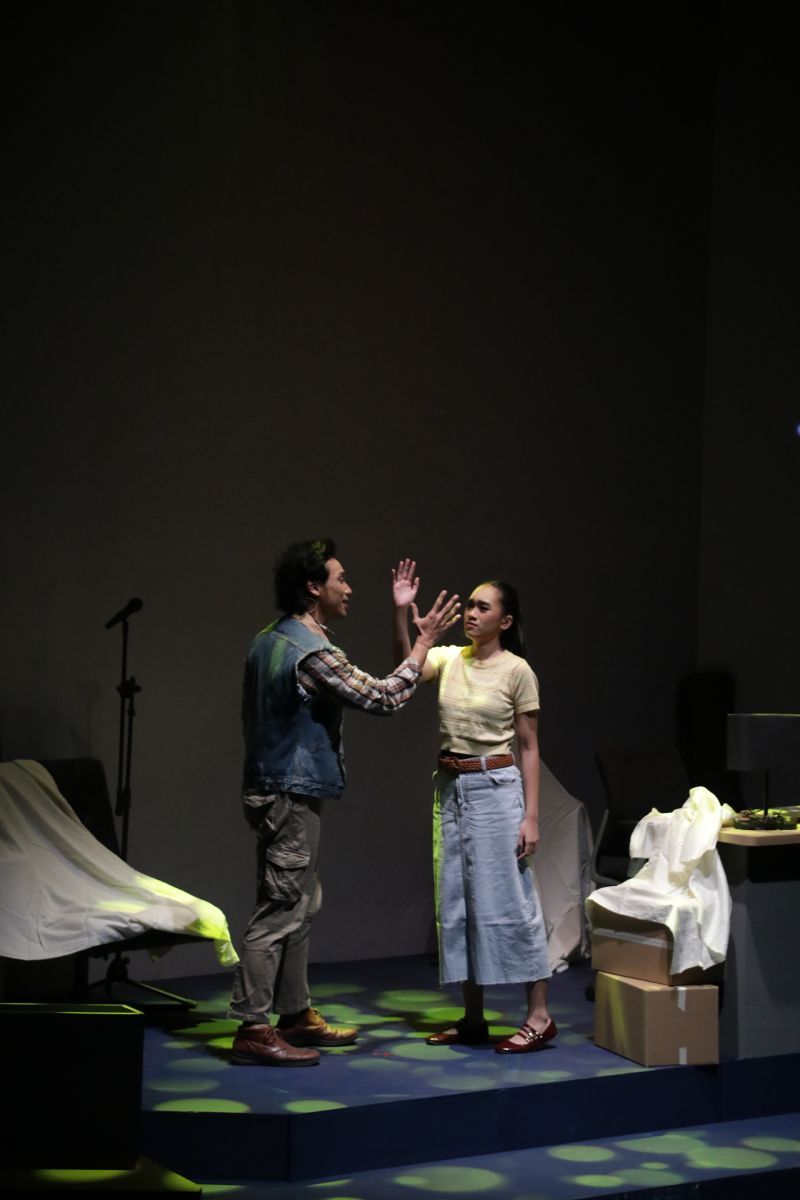
Another testament to the show’s craftsmanship is its production design. A long wall lined with LED screens served as the backdrop, with additional physical set pieces when needed. Beyond portraying physical locations, the LED screens were used to display subtitles for the musical numbers. The subtitles were not presented as plain texts, but with typography and animations, akin to a lyric video – adding to each number’s mood.
For the non-musical numbers, there were also simpler subtitles on a separate, smaller screen. These subtitles helped the deaf viewers to understand the spoken dialogues, and the hearing viewers to understand the signed scenes. This approach subtly hinted that “disability” is a relative term – after all, as someone who doesn’t understand sign language, I would be lost without the subtitles – and that accessibility benefits everyone.
Rounding up the great script and artistic production, the performances were also similarly excellent. From the main cast, to the supporting cast and ensemble, everyone was as expressive or as tender as required. Stand-outs included Adela Hermawan’s hauntingly beautiful vocals as Lestari and Jonah Gabriel M.’s performance as the awkward yet lovable young man trying his best in Awan.
But the star of the show is Mentari, played by Hanna Aretha O. Mentari herself was written as a considerably meaty role, with a lot to dig into – her passion for dance, vulnerability, grief, romance with Awan, and her eventual resolution. And Hanna portrayed all the different sides of Mentari with finesse, creating a truly well-rounded character. Moreover, she shone the most during the dance numbers, where she embodied the character’s internal turmoils with grace and elegance.
.jpg?format=auto&width=800)
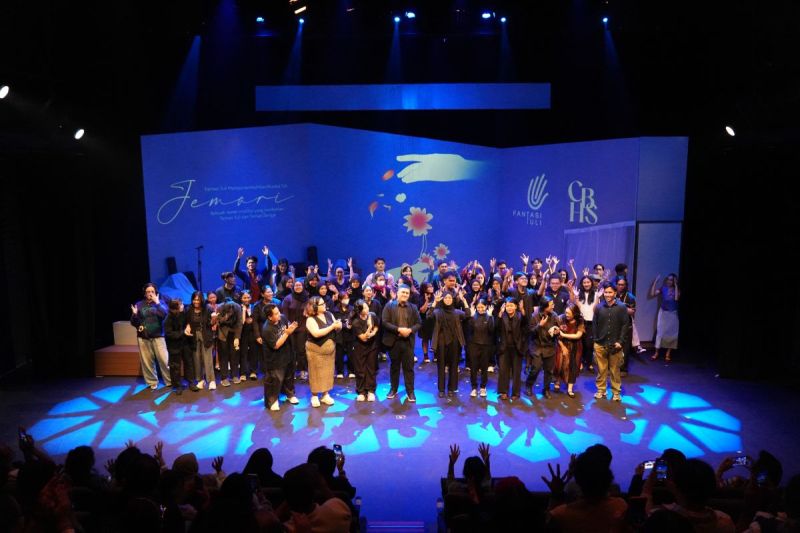
Looking back at the show, I believe Jemari’s artistic success came from just how much heart the show’s creators, cast, and crew put into it. It avoided showing the deaf community as a singularly unique, and different, group. Jemari showed, through prose, directing, and design, that deaf people are just like any other people: they strive to live truthfully in the modern capitalistic world, they want to be heard, they make mistakes; sometimes they are fiercely independent, other times they need help – just like everybody. The deaf community and the hearing community are more alike than we are different.
The story of Jemari is not (just) about the struggles of the deaf community. It’s about the innate human desire to build connections – to oneself, to other people, and to the arts. By placing the deaf story in the context of the larger world, it makes the audience acutely aware that talking, signing, and texting are not special, they are merely methods of communication. What matters most is the intent behind our words, and the action we take to prove our sincerity. And by creating this wonderful work of theatre, the team behind Jemari has proven their earnest desire to bridge people from different communities.

Reader Reviews
To post a comment, you must register and login.