


Review: REDCLIFFE, Southwark Playhouse
This new musical marks Jordan Luke Gage's writing debut
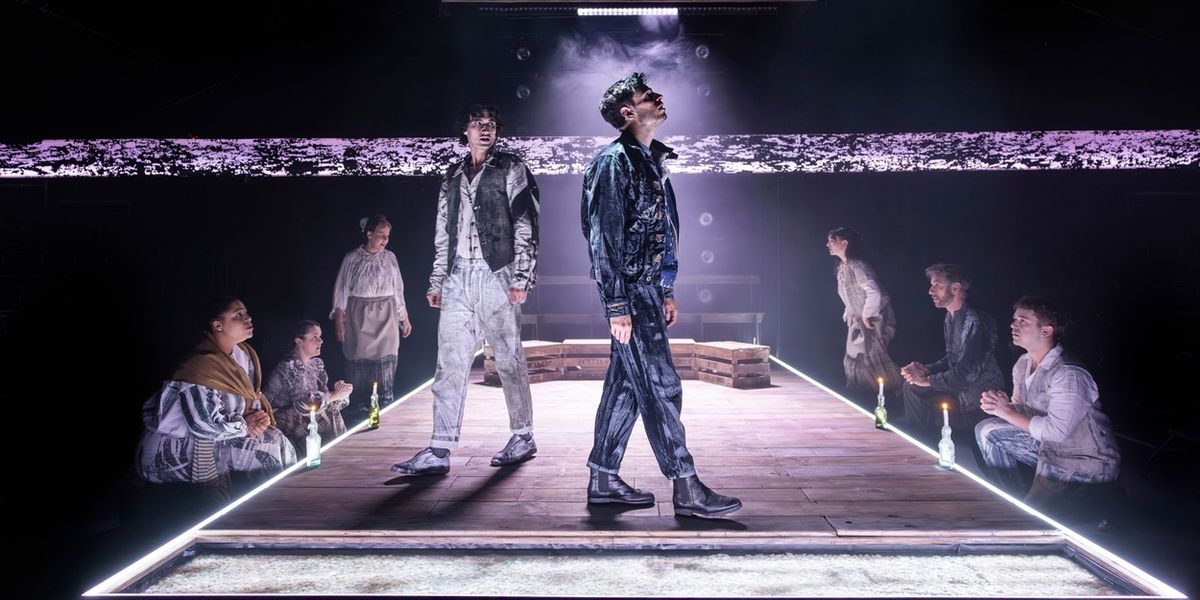
 In early 1753, two men – a footman named William Critchard and a sailor named Richard Arnold – were arrested and executed for ‘buggery’ in the Bristol suburb of Redcliffe. The story, recently uncovered through court documents in local archives, is an unusually detailed account of the prosecution of homosexuality in Britain, and forms the basis of a new musical fable.
The debut musical from veteran West End performer Jordan Luke Gage, Redcliffe is comprised of broadly familiar story beats: a queer person feels a lingering, nebulous sense of being ‘different’, finds a kindred spirit, and affirms their identity in the face of social ostracism and personal tragedy. It’s a story that has been told before, and here it suffers from a lack of specificity.
When characters speak of “kissing in the pouring rain”, it is difficult to place this show confidently in the 18th century. Given the rich trove of evidence for queer life in Georgian Britain, it is a shame that these men, how they conceived of their identities and how they showed their love, are not given more of a sense of time and place. The same goes for the homophobia they receive from acquaintances and the local press, which in this show has an evangelical Christian flavour that seems out of place in the increasingly secular Britain of the time.
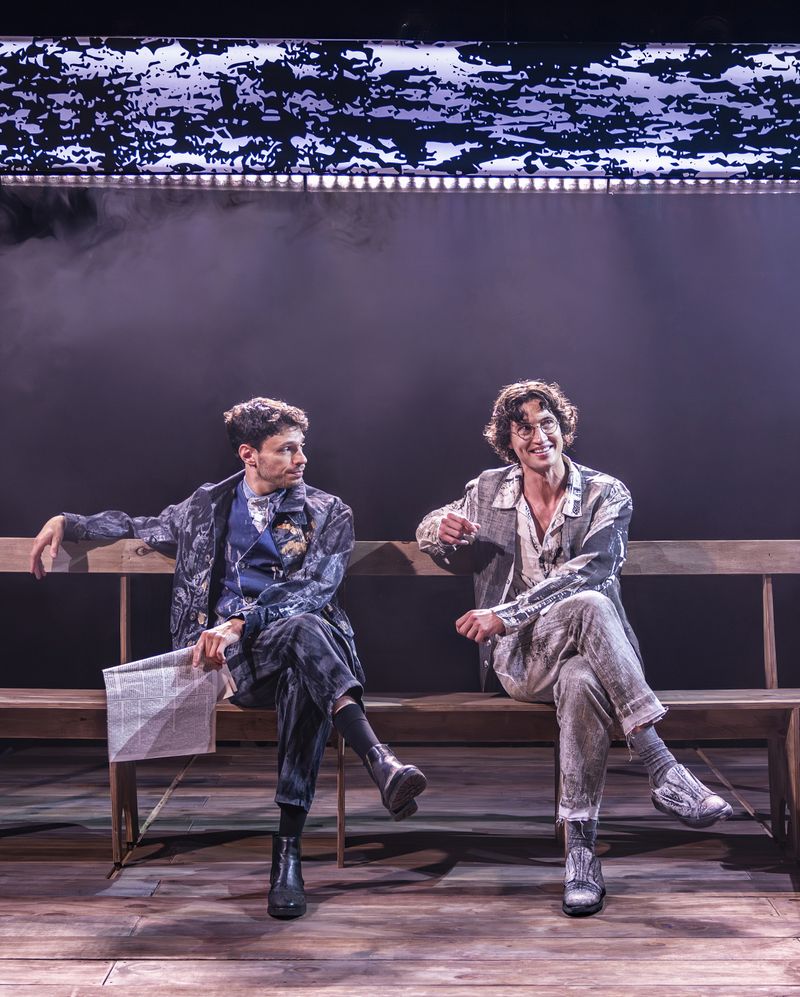
Photo credit: Pamela Raith
What does elevate Redcliffe, though, is its charm and the care it takes in making the interactions between its leads believable. William (Gage, on fine vocal form) and Richard (Daniel Krikler)’s chemistry is tentative, that of two people still trying to figure each other out, yet who share a mutual understanding, and a desire to protect one another from scrutiny.
Gage and Krikler thrive in the subtler moments of William and Richard’s developing bond, as they tiptoe around their shared identity and attraction, but also in the moments of joy, like their flirtatious patter duet ‘A Million Things I Know’. When much of the second act focuses on the wider ensemble, as William’s community start to pick up on rumours of his relationship with Richard, Gage and Krikler’s presences on stage are sorely missed.
Meanwhile, William’s mother Mary (Rebecca Lock) and sister Abigail (Jess Douglas Welsh) provide a sitcom-esque family dynamic that grounds the drama in everyday reality, and underscores William’s sense of duty as his family’s only son. An early number where Mary and Abigail plan William’s imaginary wedding manages threads the needle carefully between comic relief and anticipatory grief for the tragedy that is to come.
The show’s score – music, lyrics and book are by Gage – is playful in its sensibility, with harmonies and irregular rhythms that never go quite where one expects them to. Like the spoken dialogue, though, the songs are often let down by a lyricism that feels at times overliteral and generic, and at others simply awkward; rhyming ‘hallucinogenic’ and ‘planet’ is difficult to excuse.
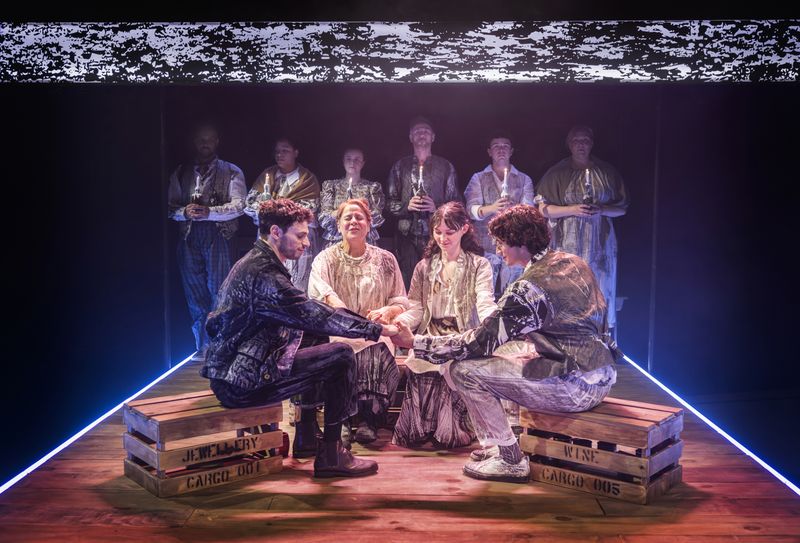
Photo credit: Pamela Raith
Visually, the show resists any kind of twee period references. Instead, the cast are clad in monochrome, distressed takes on Georgian garb, a striking canvas for Matt Hockley’s atmospheric lighting design. Paul Foster directs the cast in an intimate traverse staging somewhat narrower than the space available in the theatre, underlining the isolation and claustrophobia inherent to William’s story.
There is a strong musical somewhere in the lives of these men, and Gage’s sense of character and observational skills as a writer have laid strong foundations. But to really stand out among other historical musicals, Redcliffe needs to have something specific to say about these particular men and their community, rather than vaguely gesturing at homophobia as a problem.
Redcliffe plays at Southwark Playhouse Borough until 4 July
Photo credits: Pamela Raith
Sign up for all the news on the Fall season, discounts & more...







Reader Reviews
To post a comment, you must register and login.