


Review: BILLY BUDD, Glyndebourne
Innocence and the rule of law collide spectacularly in Benjamin Britten's powerful masterpiece
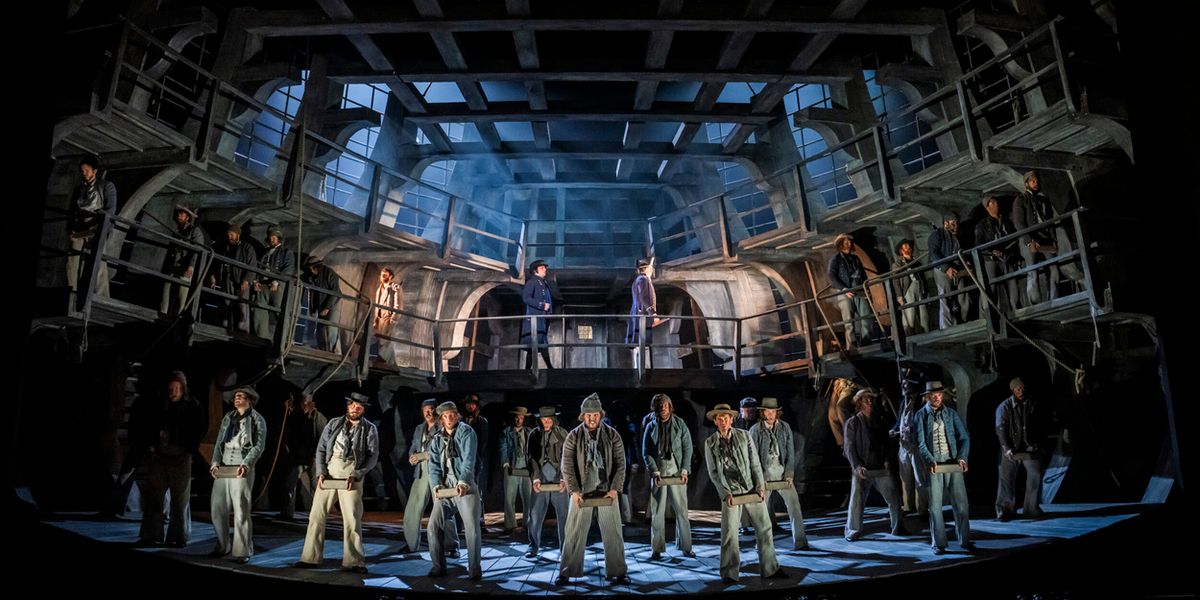

It is 75 years since Benjamin Britten's Billy Budd first appeared on stage: a collaboration between himself and novelist EM Forster to adapt Herman Melville’s novella. The result is a darkly powerful story following the clash between innocence and the rule of law as we meet Billy, a young, handsome, and incredibly well-liked sailor has a severe stammer. This prevents him from defending himself when vindictive Master-at-Arms John Claggart frames him for mutiny. When Billy lashes out and accidentally kills him, Captain Vere has to make the decision to either spare Billy, or abide by naval law and have him hanged. Vere's decision to adhere to the law then haunts him for the rest of his life.
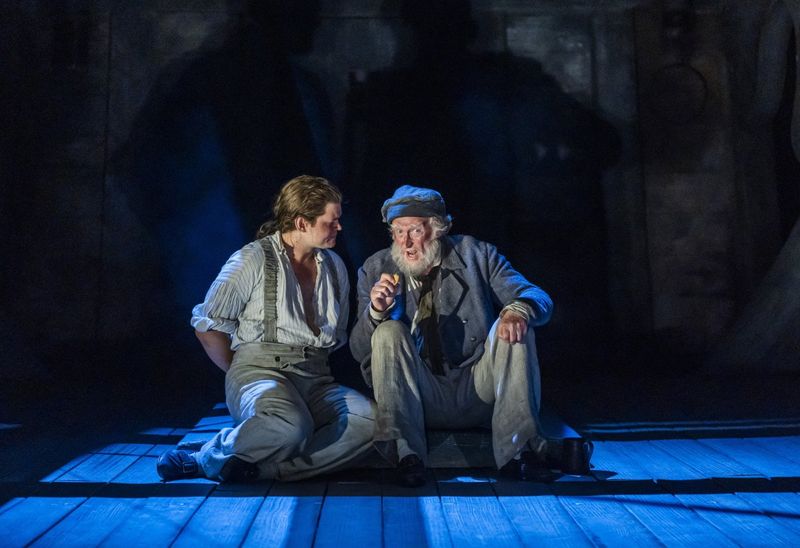
Photo Credit: © Glyndebourne Productions Ltd, Tristram Kenton
Britten's opera was so radical at the time of its premiere due to the not-so-subdued homosexual elements, at a time it was still criminal to be gay. An all-male cast, frequent reflections on Billy's beauty and the hidden longing of Claggart for him are all reflected in this gorgeous second revival of Michael Grandage’s 2010 production, directed by Ian Rutherford.
As tormented Captain Vere, Allan Clayton is still and dignified, revealing internal turmoil as he looks back on the most pivotal decision of his life. His voice drips with emotion and resonance, propelling the tragedy at the heart of the story. Sam Carl's bass baritone drips with malice, particularly in his lower register as Claggart, yet also hints at the internal conflict that rages within. Carl shows real hints of darkness in his body language, viscerally pacing around the stage as he trails fear in his wake.
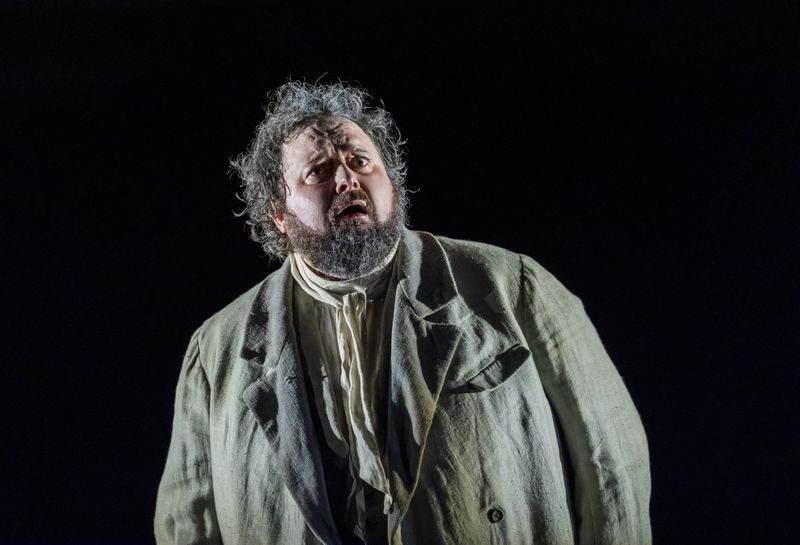
Photo Credit: © Glyndebourne Productions Ltd, Tristram Kenton
Thomas Mole is wide-eyed and flush of cheek as innocent Billy, with a joviality and lightness apparent in both his vocals and his demeanour. Some of the most touching moments are between Mole and Clive Bayley's amiable Dansker, who share genuine affection and care for each other. Mole's vocal strength increases throughout the production, peaking appropriately as he contemplates his own death.
The London Philharmonic Orchestra, conducted by Nicholas Carter, embraces the huge range of the production and vividly portrays every emotion in the score. Billy Budd is an opera that relies heavily on the chorus and The Glyndebourne Chorus rises masterfully to the occasion, with huge sound and incredible energy. The ensemble scenes are immaculately realised, with a fluidity and rhythm that often create the effect of being on the sea itself.
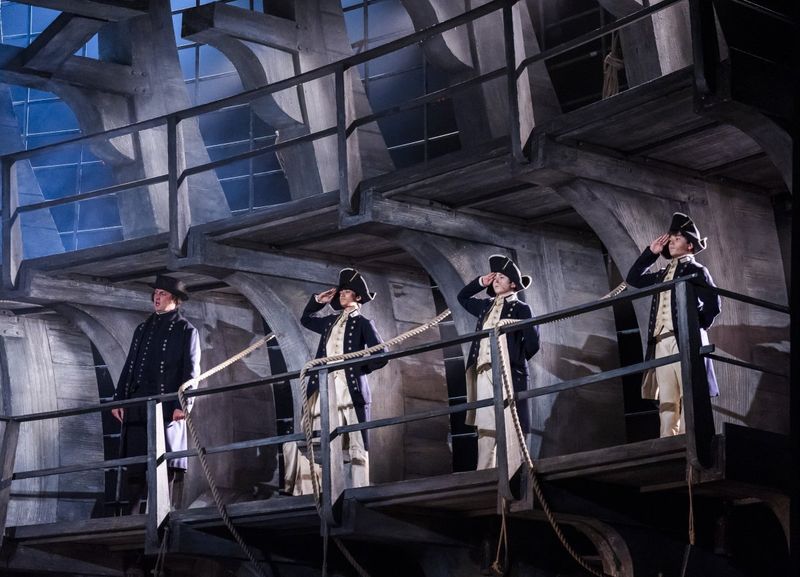
Photo Credit: © Glyndebourne Productions Ltd, Tristram Kenton
Glyndebourne is no stranger to pulling off awe-inspiring sets and Christopher Oram's three-tiered set remains remarkable in its scale, detail and construction. With its curved floor and vast height, the audience is pulled into the claustrophobic bowels of the ship, witnessing the rope-pulling, scrubbing and sleeping arrangements in utterly convincing detail. When an enemy French ship is sighted, a large Red Ensign flag can be seen fluttering in the wind through the gaps in the top layer of the set to wonderful effect. Paule Constable's incredible lighting creates eerie shadows, dark corner and rippling effects like the sea.
Michael Grandage recently called Billy Budd one of the great operas of the 20th century. This haunting and incredibly powerful production shows why is he correct.
Billy Budd runs at Glyndebourne until 30 July
Photo Credits: © Glyndebourne Productions Ltd, Tristram Kenton
Sign up for all the news on the Fall season, discounts & more...
.jpg?format=auto&width=300)
.png?format=auto&width=365)





Reader Reviews
To post a comment, you must register and login.